
PET Silicone Tape for Wheel Hub Mounting Face Masking
Application Solutions · Powder-Coated Wheel Components
PET Silicone Tape for Wheel Hub Mounting Face Masking
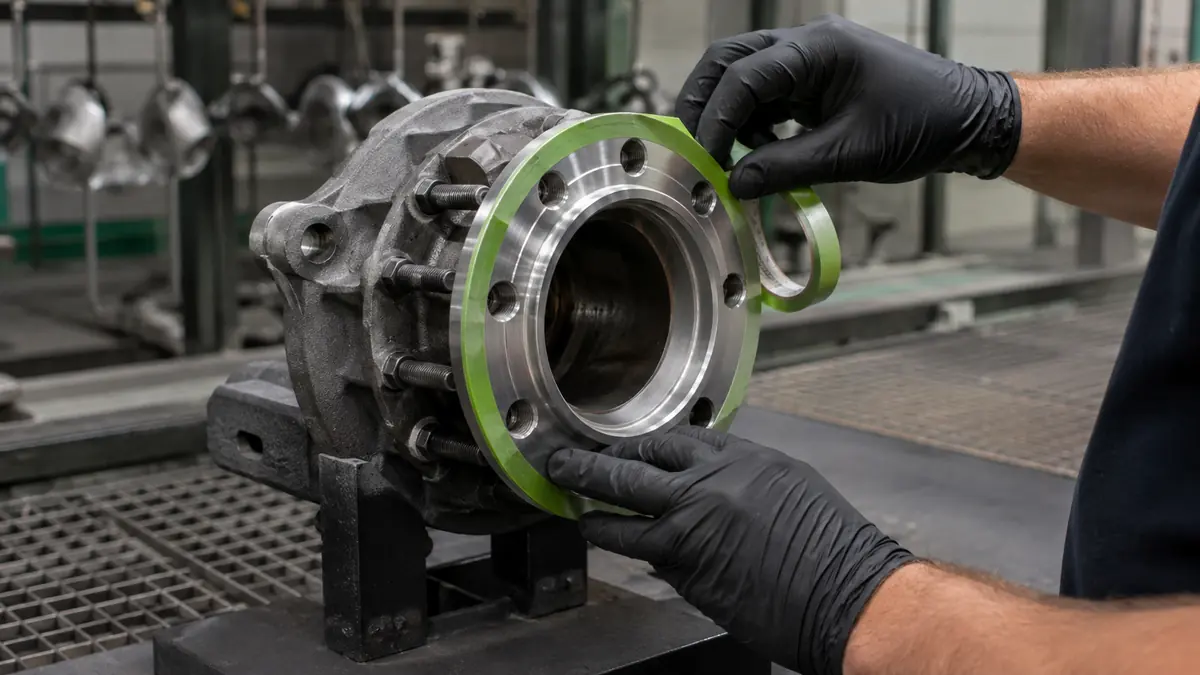
PET silicone tape for wheel hub masking can protect a released mounting face, bolt-seat boundary, pilot diameter, or other specified metal-to-metal interface during powder coating. The mask must follow the part drawing, survive the qualified pretreatment and cure sequence, and remove without damaging the required coating edge.
Quick Answer
Use PET silicone masking tape only on wheel-hub surfaces identified as coating-free by the released drawing and finishing plan. The mounting face, center-pilot interface, bolt-seat area, bearing features, sensor features, and cosmetic exterior do not automatically share one masking boundary. Define each zone before choosing a strip, ring, plug, or combined mask.
Define the Mounting-Face Boundary
The functional purpose of the uncoated area drives the mask. A wheel or brake component may contact a flat annular land, locate on a pilot diameter, or use defined fastener seats. Leaving too little area bare can interfere with the released assembly stack. Leaving too much bare metal can reduce coating coverage and create an unintended corrosion path. The tape operator should not infer the boundary from machining marks alone.
Create a visual standard that shows the datum, inner and outer mask diameters, bolt-hole treatment, chamfer decision, overlap or split position, pull tab, and allowed edge tolerance. If the internal bore or threads also require protection, use a separately specified plug or cap and control the interface between mask formats.
| Hub feature | Possible masking purpose | Release-document check |
|---|---|---|
| Annular mounting face | Preserve a defined assembly contact surface | Inner/outer diameter, flatness area, and coating edge |
| Center pilot | Maintain locating or fit clearance | Diameter, depth, chamfer, and protection method |
| Bolt-seat region | Keep a specified seating surface free of coating | Seat geometry and whether each hole needs a separate mask |
| Bearing or seal feature | Protect a precision interface | Do not combine with the face mask unless the drawing permits it |
| Cosmetic exterior | Receive the released coating system | Avoid unnecessary tape coverage and handling marks |
Select the PET Silicone Tape Construction
Backing and adhesive work as one system
PET film offers a thin, dimensionally stable masking face for many industrial finishing processes. Film thickness affects handling, stiffness, tearing, corner conformity, and the step formed at the coating edge. Silicone pressure-sensitive adhesive affects initial hold, response to heat, removal force, and the chance of transfer on the actual aluminum or coated substrate. Approve a traceable product code rather than a color description.
Use the complete thermal and chemical history
Record cleaning, pretreatment, rinse and dry stages, powder application, oven profile, repeated passes, cooling, storage before removal, and the approved cleaning method. A thick hub body can heat and cool differently from a flat test coupon. A supplier temperature statement is useful for screening, but it does not approve the process.
Control surface condition and handling
Machining fluid, corrosion inhibitor, blasting dust, fingerprints, oxide, moisture, and pretreatment residue can create weak adhesion or edge channels. Define when masking occurs relative to washing and drying. Keep converted rings protected from dust and edge damage, and avoid touching the adhesive at the critical boundary.
Compare Strips, Rings, and Combined Masks
| Mask format | Best-fit situation | Primary control point |
|---|---|---|
| Narrow slit roll | Development, low volume, or changing diameters | Operator tension, overlap, wrinkles, and circular placement |
| Die-cut PET ring | Repeated diameter and defined annular boundary | Inside/outside diameter, tolerance, liner, and orientation |
| Segmented ring | Geometry prevents one-piece installation | Joint direction, gap, overlap, and local edge pressure |
| Ring plus plug or cap | Face and bore need different protection | No exposed gap or excessive material stack at the interface |
| Reusable cover | Robust recurring geometry with room for a fixture | Fit, cleaning, distortion, and maintenance history |
For a die-cut ring, specify dimensions from the engineering datum, not from an image. Add liner split, pull tab, orientation feature, packaging, quantity per kit, and allowable splice policy. A thicker construction can be easier to handle but may create a higher coating step; a thinner one may be more conformable but harder to place without folding.
Recommended Masking Workflow
- Confirm the drawing. Identify every coated and uncoated hub surface.
- Verify revisions. Match hub, tape, mask drawing, powder, and work instruction.
- Inspect the part. Reject burrs, chips, oil, moisture, and damaged machining.
- Prepare the correct format. Protect rings and slit rolls from dust and bent edges.
- Locate from the datum. Do not center the mask by eye from a casting feature.
- Apply without stretch. Seat the ring or strip progressively around the boundary.
- Burnish the perimeter. Use the approved tool and consistent pressure.
- Inspect before coating. Check diameters, joints, wrinkles, tabs, and gaps.
- Run the released cycle. Do not compensate for a weak mask by changing powder settings.
- Remove and inspect. Follow the approved temperature, angle, sequence, and piece count.
Build a Production Validation Plan
Test representative hub sizes, surface finishes, rack positions, thermal masses, operators, and worst-case dwell before release. Include the longest permitted delay between cleaning and masking and between coating and removal. Flat coupons can screen adhesion and removal, but they cannot reproduce the circular boundary, recessed access, masking joints, or heat retention of the real component.
| Validation item | What to observe | Decision evidence |
|---|---|---|
| Placement | Inner/outer boundary, joint, tab, and repeatability | Released gauge, fixture, image standard, or dimensional check |
| Process hold | Lift, wrinkles, shrinkage, powder creep, and bridging | Inspection through the qualified finishing sequence |
| Removal | Peel force, tearing, fragments, residue, and edge chipping | Defined removal window and approved method |
| Assembly interface | Contact area, fit, runout or torque-related requirements | Tests defined by the wheel-component owner |
| Coating protection | Bare-metal extent and finished edge condition | Drawing and coating acceptance criteria |
Troubleshooting Common Defects
If powder enters beneath the mask, first inspect contamination, edge pressure, wrinkles, ring dimensions, joint design, spray direction, and the plug-to-ring interface. If adhesive remains, compare the exact tape lot, metal condition, thermal history, removal delay, peel direction, and cleaning method. If coating chips at the edge, examine powder bridging, film thickness, removal stage, and peel path before increasing adhesion.
Do not use a larger mask as a universal correction. Oversizing may hide placement variation while creating an unacceptable bare area. Correct the datum, geometry, material, or work instruction and repeat the released validation.
↑ Back to contentsRelated Products and Articles
Frequently Asked Questions
Can one PET ring mask the mounting face and center bore?
Only when the released design defines one combined geometry. Many hubs need a face ring plus a separate bore plug or cap so each boundary can be controlled.
Should the tape cover every bolt hole?
Not automatically. The drawing must state whether the hole, seat, chamfer, thread, or surrounding coating area needs protection and which mask format applies.
Does green color identify the temperature rating?
No. Color does not establish PET thickness, adhesive formulation, thermal exposure, removal behavior, or compatibility. Approve the exact construction.
Are die-cut rings always better than slit tape?
They can improve repeated geometry and handling, while slit tape may suit trials or changing diameters. Compare accuracy, labor, waste, liner design, and process performance.
What information should a wheel-hub tape RFQ include?
Provide drawings, contacted materials, surface finish, mask dimensions, pretreatment, cure profile, removal stage, annual volume, packaging, and acceptance tests.
Plan a Wheel-Hub Masking Trial
Share the hub drawing, protected interfaces, metal finish, cleaning and pretreatment sequence, powder and cure profile, current mask format, production volume, removal method, and acceptance checks. JIAO TAO TAO can help shortlist PET silicone tape widths or converted rings for controlled evaluation.
Discuss wheel-hub maskingCustom Die-Cut Tape for Smart Meter Display Window Bonding
Custom Die-Cut Tape for Parking Sensor Bracket Bonding
Related Article
Need help choosing the right industrial tape?
Send us your application details, including temperature, surface material, size, quantity and current problem. Our team will help recommend a suitable tape material or custom die-cut solution.

simon@jiaotaotao.com


+86-136 1277 5969


+86-136 1277 5969
