
Acetate Cloth Tape for Industrial Contactor Coil Finishing
Product Guides · Industrial Control Components
Acetate Cloth Tape for Industrial Contactor Coil Finishing
Acetate cloth tape for industrial contactor coil finishing can provide a conformable outer wrap, retain an approved lead transition, and protect selected winding surfaces during handling and downstream impregnation. The exact tape must be qualified within the contactor’s electrical, thermal, mechanical, and chemical insulation system.

Quick Answer
Choose acetate cloth tape for a contactor coil only after the coil designer defines the tape’s purpose and approved location. The woven backing can follow a bobbin and winding profile more readily than a stiff film, making it useful for outer finishing, local retention, abrasion protection, and selected varnish-receptive wraps. It does not establish the contactor’s voltage rating, insulation coordination, temperature rise, duty category, coil life, magnetic performance, or safety approval.
Define the Contactor-Coil Requirement
An industrial contactor converts coil current into magnetic force that moves an armature and changes the state of its main and auxiliary contacts. The coil may be wound on a bobbin, assembled around a magnetic core, connected to terminals, impregnated, potted, or inserted into a housing. Any tape wrap must remain within the released coil envelope and clear of magnetic pole faces, armature travel, springs, arc-control parts, terminals, fasteners, and ventilation paths.
Separate temporary production holding from permanent insulation. A small strip may retain a sleeved lead until impregnation, while an outer wrap may remain as part of the finished coil. These roles have different requirements for adhesion, varnish wetting, dielectric contribution, service temperature, aging, and inspection. Record the function on the drawing or work instruction so operators do not add wraps to solve unrelated winding or assembly defects.
| Coil input | What to document | Why it matters |
|---|---|---|
| Electrical design | Coil voltage, insulation system, clearances, tests, and abnormal conditions | Defines boundaries the tape cannot establish alone |
| Mechanical envelope | Bobbin, winding OD, core opening, housing, terminals, and armature clearance | Limits total wrap build and edge position |
| Tape function | Outer finish, turn retention, sleeve holding, lead protection, or marking surface | Determines location and permanence |
| Process chemistry | Cleaning, varnish, resin, potting, cure, and lubricant exposure | Controls adhesion, wetting, swelling, and cure behavior |
| Functional duty | Energization pattern, ambient, coil rise, vibration, and service life | Connects material screening to the finished contactor |
Select an Acetate Cloth Tape Grade
Backing weave and conformability
Acetate cloth provides a soft, woven surface that can follow rounded windings and stepped bobbin features. Evaluate weave uniformity, thickness, fray behavior, tensile response, hand tear or cut quality, and the way the edge seats around corners. A tape that is easy to form can still create an uneven finished diameter when pulled with uncontrolled tension.
Adhesive and thermal sequence
Commercial acetate cloth tapes may use different pressure-sensitive adhesive families. Their initial tack, holding power, temperature response, varnish compatibility, and aging can differ substantially. Test the exact grade on the real wire enamel, bobbin polymer, sleeving, terminal insulation, and any prior insulation layer through assembly, cure, conditioning, and service-representative exposure.
Width, color, and supply format
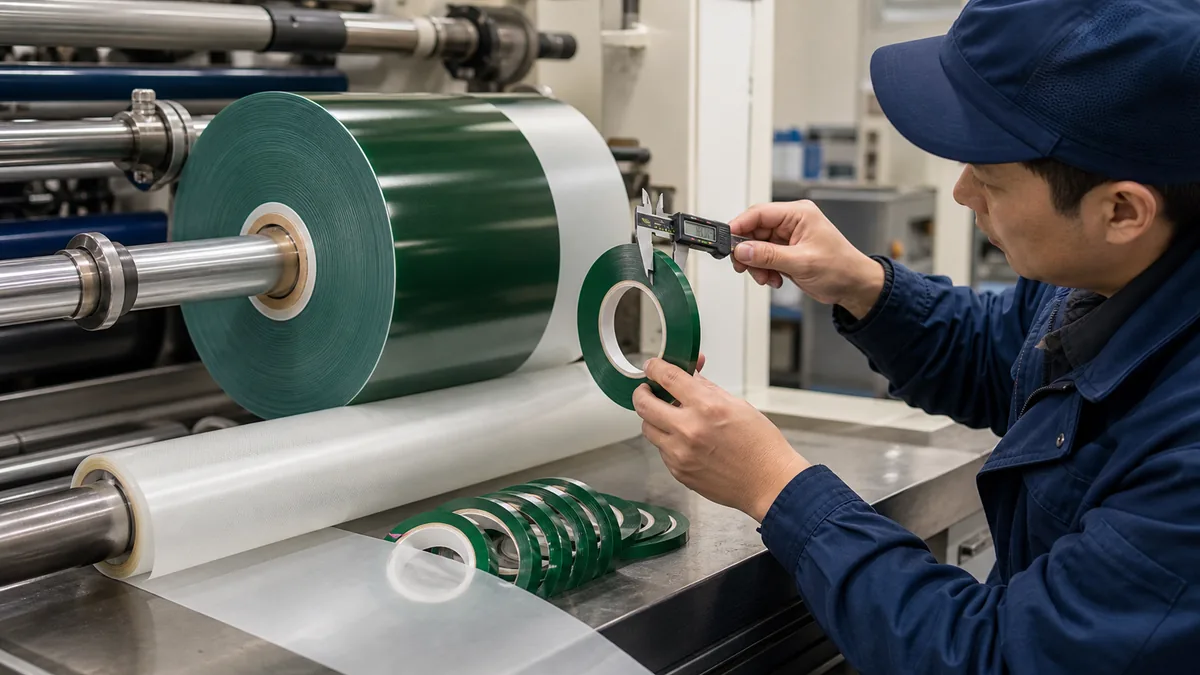
Select width from the coil circumference, flange spacing, lead exits, access, and acceptable seam count. Wide tape reduces turns but can bridge steps and wrinkle; narrow tape follows geometry but adds overlaps and application time. Define roll width, tolerance, length, winding direction, core, splice rules, storage, shelf-life control, lot traceability, and whether a liner is required for converted patches.
| Construction choice | Potential advantage | Qualification focus |
|---|---|---|
| Flexible woven backing | Conforms to curved windings and compact transitions | Fray, stretch, edge stability, and finished thickness |
| Rubber-resin adhesive grade | Practical initial tack on selected coil materials | Heat, varnish, aging, creep, and exact substrate compatibility |
| Acrylic adhesive grade | Alternative aging and chemistry profile | Initial tack, cure exposure, peel, and insulation-system approval |
| Varnish-receptive cloth | May integrate with a qualified impregnation system | Wetting, drainage, bubbles, cure, and retained properties |
| Liner-backed converted part | Controls a local patch or lead-transition geometry | Liner release, registration, edge lift, and removal cleanliness |
Design the Wrap Path and Seam
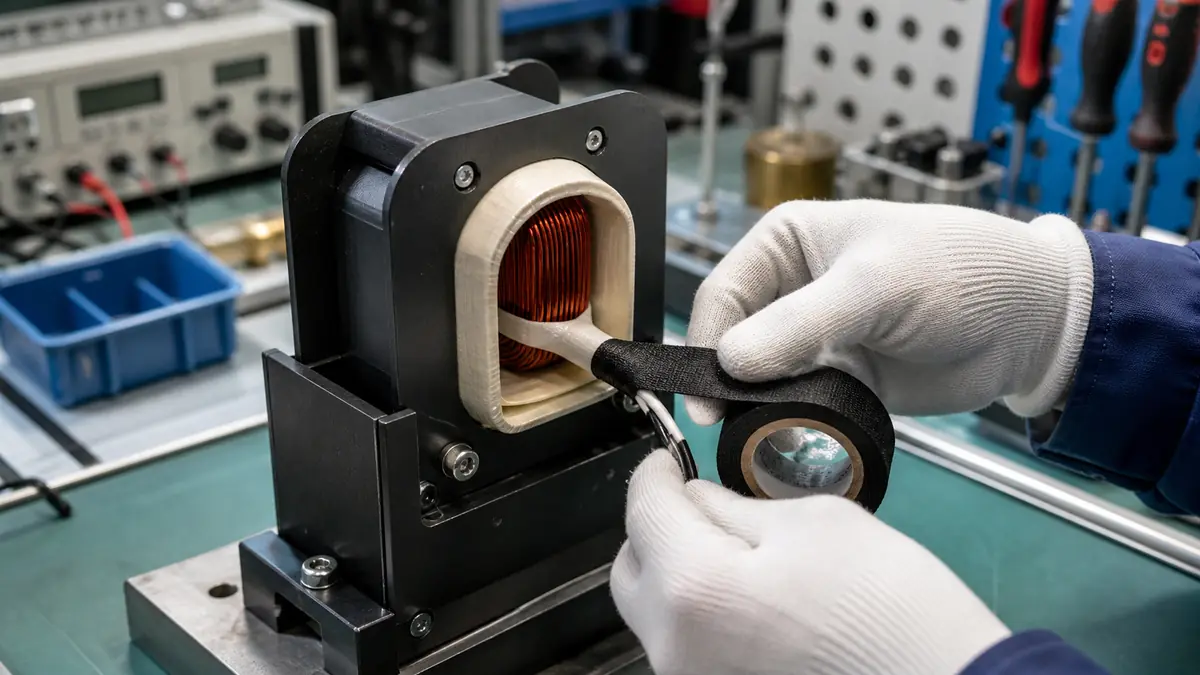
Define the start point, wrap direction, tape face, overlap, tension, lead-exit detail, and finish point. Keep the first and final edges on a robust supported zone rather than on a sharp corner, winding gap, or moving interface. Avoid a seam stack that produces a local high spot and interferes with housing insertion or core assembly. Maintain the specified lead bend radius and do not use tape tension to pull a misplaced lead into position.
Where the coil will be varnished or potted, establish whether the cloth should admit, shed, or remain isolated from the chemistry. A tight wrap may reduce penetration; a loose wrap can create voids, folds, or floating edges. The correct overlap comes from the complete insulation and impregnation design, not a universal percentage. Document visual examples for acceptable edges, wrinkles, fibers, and exposed adhesive.
Controlled Coil-Wrapping Workflow
- Confirm the released build. Verify contactor, coil, tape code, width, wrap drawing, and downstream process.
- Inspect the winding. Check enamel, loose turns, bobbin damage, sleeving, terminals, lead route, and foreign material.
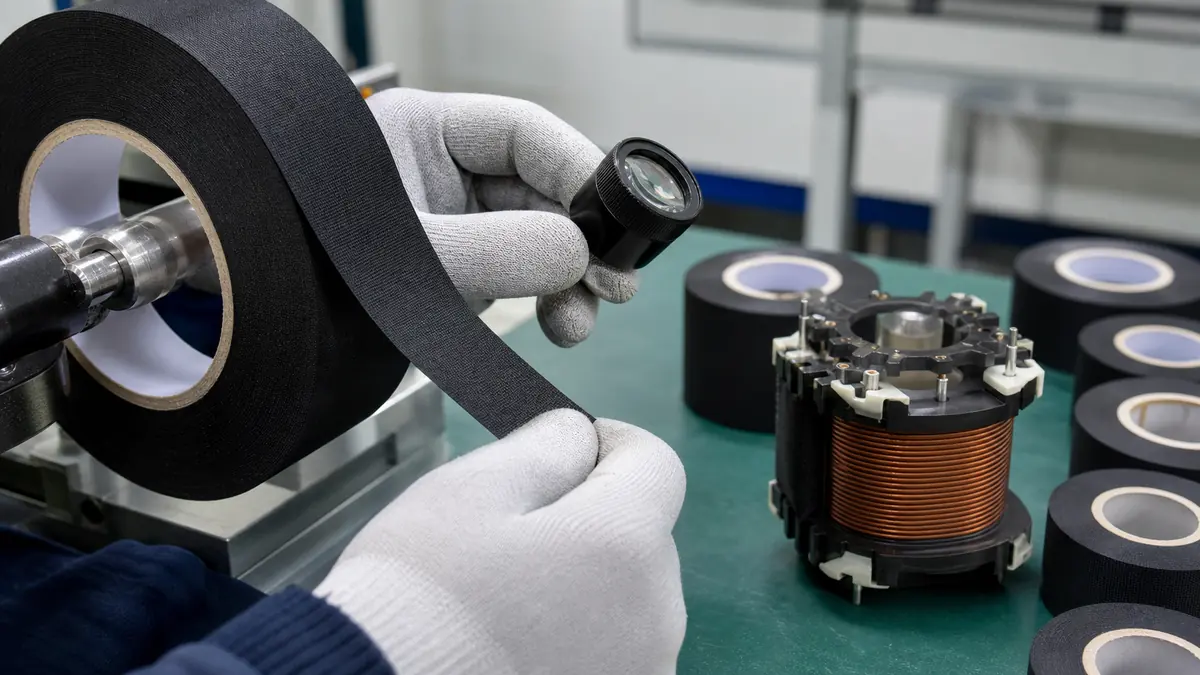
- Verify tape condition. Record lot, storage, shelf condition, width, edge quality, and any approved splice.
- Protect forbidden zones. Keep magnetic faces, armature travel, terminals, fasteners, and ventilation paths clear.
- Anchor at the datum. Start on the specified surface without covering the lead exit or an inspection point.
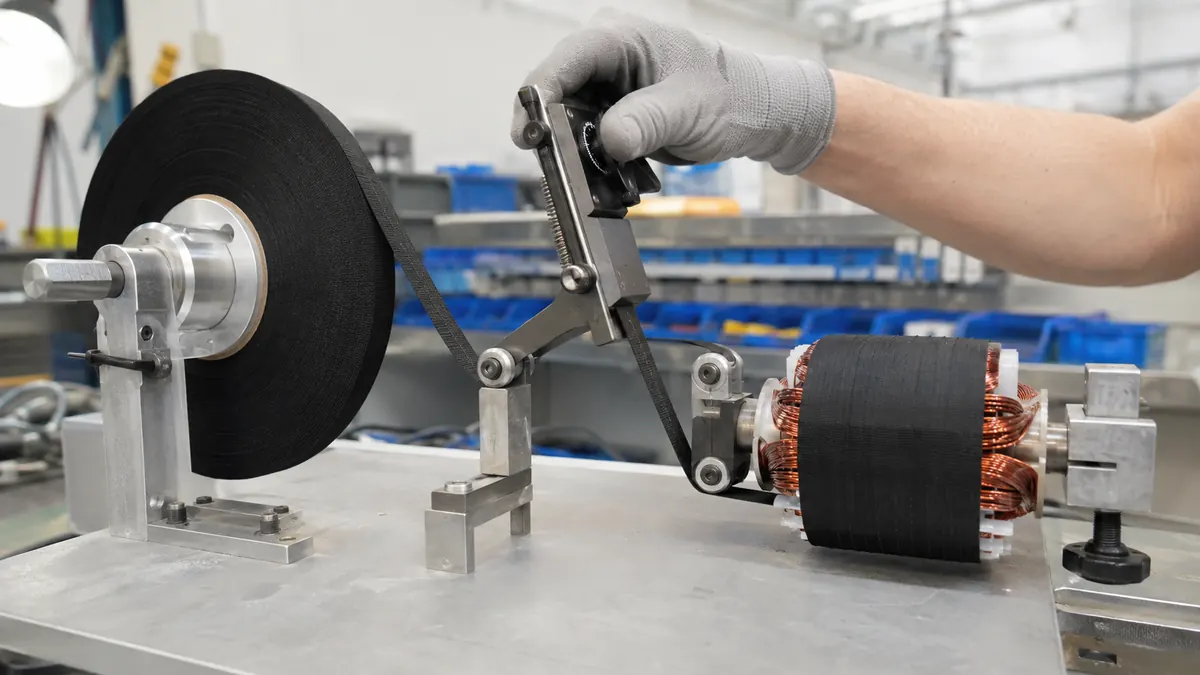
- Wrap with controlled tension. Maintain alignment and overlap without deforming the bobbin or displacing turns.
- Finish cleanly. Cut with a controlled tool away from conductors and seat the final edge on a supported zone.
- Inspect before chemistry. Check coverage, seam, build, fibers, wrinkles, leads, terminals, and core clearance.
- Run the released process. Include the actual varnish, potting, cure, housing insertion, and magnetic assembly.
- Complete final tests. Verify dimensions, electrical checks, coil temperature, pickup/dropout behavior, and contactor function.
Validate the Finished Contactor
Build qualification samples across the approved coil-size and winding-variation range. Include minimum and maximum overlap, realistic operator access, the hottest qualified cure, long dwell before processing, and credible storage conditions. Examine both the tape and neighboring components after assembly; a wrap can look acceptable on the coil yet interfere with housing ribs, core seating, terminal spacing, or airflow.
| Validation group | What to observe | Release question |
|---|---|---|
| Application | Start, overlap, tension, seam, edge seating, fibers, and operator variation | Can the wrap be applied consistently? |
| Downstream process | Wetting, drainage, bubbles, adhesive movement, cure, and color transfer | Is the tape compatible with production chemistry? |
| Assembly fit | Coil OD, core opening, housing insertion, terminals, clearances, and motion | Does added build preserve the mechanical design? |
| Electrical and thermal | Insulation checks, coil resistance, energization, temperature rise, and abnormal tests | Does the finished system meet the owner’s requirements? |
| Durability and function | Vibration, cycling, edge lift, lead condition, armature motion, and contactor operation | Does the approved wrap remain stable in service? |
Troubleshoot Common Coil-Wrap Defects
Edge lift after cure can result from a contaminated winding, wrong adhesive, seam on a tight radius, stored stretch, insufficient final contact, varnish swelling, or movement at a lead exit. Wrinkles may come from excessive tape width, wandering alignment, uneven winding build, or operator tension. A coil that will not fit its housing may have too many overlaps, a stacked seam, an unapproved repair, or tape covering a bobbin feature.
Do not hide a damaged winding, weak terminal joint, insufficient sleeving, or sharp metal edge beneath another layer. Extra tape increases thickness and may block inspection or heat flow without correcting the root cause. Quarantine the part, identify where the defect began, compare against the released visual standard, and change only controlled material or process inputs.
↑ Back to contentsRelated Products and Articles
Frequently Asked Questions
Can acetate cloth tape be used on an industrial contactor coil?
It can be evaluated for an approved finishing, retention, protection, or insulation role when the exact tape and wrap are qualified within the contactor manufacturer’s complete material and test system.
Can the tape replace coil varnish, sleeving, or bobbin insulation?
Not automatically. Those materials perform different electrical, chemical, mechanical, and thermal functions. Any substitution requires design approval and full requalification.
How much overlap should the wrap use?
Use the overlap released on the coil drawing. It must balance coverage, varnish behavior, seam security, finished diameter, application capability, and clearance.
Should the tape be hand-torn or cut?
A controlled cutting method generally gives a more consistent termination and reduces loose fibers. If hand tearing is permitted, define the method and inspect the edge.
What information belongs in an RFQ?
Provide the coil and bobbin drawings, tape function, winding and lead surfaces, width and build limits, wrap pattern, chemistry and cure, operating duty, annual quantity, and qualification requirements.
Prepare a Contactor-Coil Tape Trial
Share the contactor and coil drawings, insulation-system requirements, tape location, winding and bobbin materials, lead route, wrap pattern, varnish or potting process, cure, housing envelope, operating duty, volume, and acceptance tests. JIAO TAO TAO can help shortlist acetate cloth tape constructions and practical slit widths for your evaluation.
Discuss acetate cloth tape for contactor coils
Acetate Cloth Tape Unwind and Tension Control for Coil Wrapping
Related Article
Need help choosing the right industrial tape?
Send us your application details, including temperature, surface material, size, quantity and current problem. Our team will help recommend a suitable tape material or custom die-cut solution.

simon@jiaotaotao.com


+86-136 1277 5969


+86-136 1277 5969
