
Acetate Cloth Tape for Electromagnetic Brake Coil Wrapping
Product Guides · Industrial Brake Components
Acetate Cloth Tape for Electromagnetic Brake Coil Wrapping
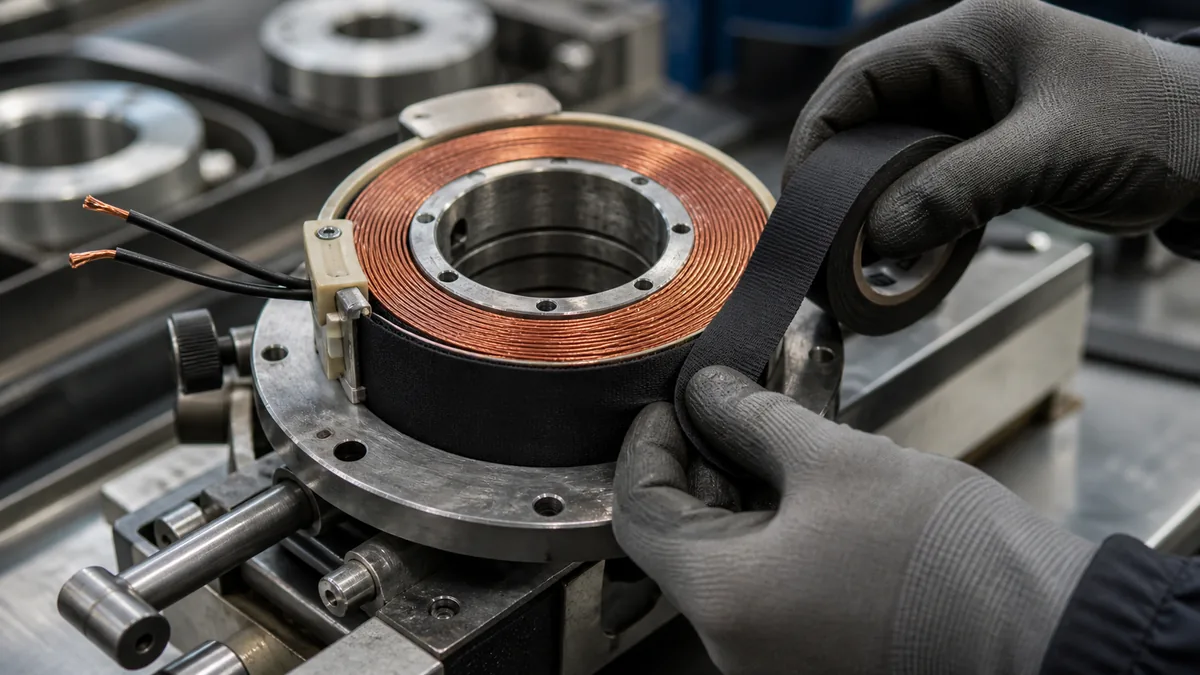
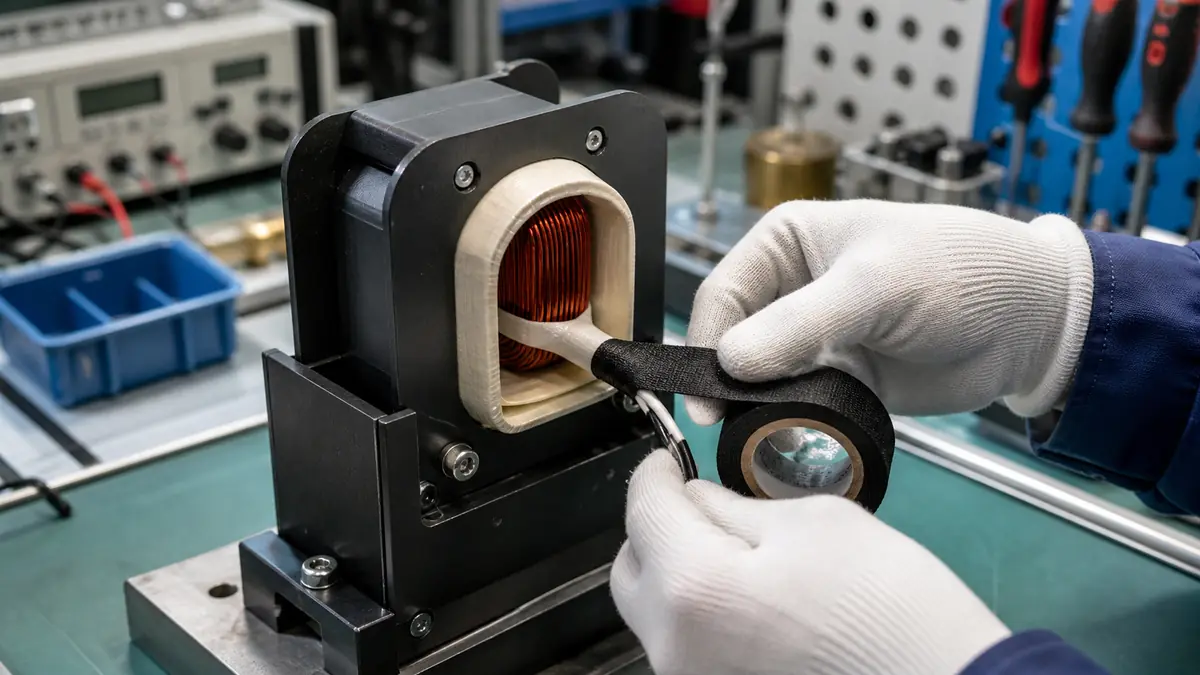
Acetate cloth tape for electromagnetic brake coil wrapping can provide conformable winding retention, lead-transition protection, and a controlled outer surface before varnishing, potting, or housing assembly. The tape must be qualified as one part of the brake coil’s electrical and mechanical insulation system.
Quick Answer
Acetate cloth tape may be considered where a woven, conformable wrap must retain an electromagnetic brake winding, protect an approved lead transition, hold another insulation component, or create a varnish-receptive outer layer. It does not establish the brake’s voltage rating, thermal class, torque, response time, holding force, air gap, or functional safety. Those requirements belong to the released brake assembly and its qualification plan.
Where Acetate Cloth Tape Fits on a Brake Coil
Electromagnetic brakes use an energized or de-energized coil to create magnetic force within a controlled steel circuit. Designs vary, including spring-applied brakes, clutches, holding brakes, and machine or motor-mounted units. The coil may be wound on a bobbin, bonded into a carrier, varnished, potted, or retained by an enclosure. Tape use must respect the magnetic face, friction surfaces, air gap, fasteners, terminals, and heat path.
| Wrap location | Possible function | Main design control |
|---|---|---|
| Outer winding diameter | Contain loose turns and protect the winding during handling | Overlap, tension, outside diameter, and housing clearance |
| Lead exit | Distribute strain and protect against an approved edge | Bend radius, terminal route, and no pinching |
| Bobbin flange | Hold a specified barrier or cover a qualified transition | Flange geometry, creepage, and tape-edge position |
| Varnish interface | Provide a textile surface for selected impregnation systems | Wetting, voids, cure, and chemical compatibility |
| Housing insertion area | Reduce handling abrasion at a defined contact zone | Finished build, insertion force, and heat transfer |
How to Select Acetate Cloth Tape
Backing and adhesive
Acetate cloth offers a flexible woven backing that can follow cylindrical and stepped coil geometry more readily than a stiff film. The weave, thickness, adhesive family, coat weight, and finish influence conformability, fray, hand tearing, holding power, and varnish uptake. Use an exact grade in the bill of materials; generic black cloth tape can represent very different constructions.
Electrical and thermal system
The tape should be reviewed within the coil owner’s insulation coordination and material system. Confirm operating temperature, overload or stall exposure, duty cycle, coil resistance rise, dielectric tests, creepage and clearance, and the effect of the nearby steel body. Do not infer a thermal class, flammability status, or voltage capability from the backing name.
Chemical compatibility
Test the exact tape with magnet-wire enamel, bobbin resin, varnish, potting compound, cleaning process, and cure profile. Look for swelling, adhesive movement, incomplete wetting, bubbles, color transfer, inhibited cure, or loss of adhesion after conditioning.
| Selection input | What to document | Why it matters |
|---|---|---|
| Coil construction | Wire enamel, bobbin, barriers, terminals, and core carrier | Defines contacted materials and electrical boundaries |
| Tape grade | Backing, adhesive, thickness, width, color, and lot | Controls wrap handling and traceability |
| Thermal exposure | Duty cycle, coil rise, ambient, cure, and abnormal conditions | Screens the complete material system |
| Downstream process | Varnish, vacuum, pressure, potting, cure, and housing insertion | Exposes the wrap to chemical and mechanical loads |
| Functional limits | Finished OD, air gap, heat path, lead route, and mounting clearance | Prevents tape from affecting brake assembly |
Design the Wrap Path and Build
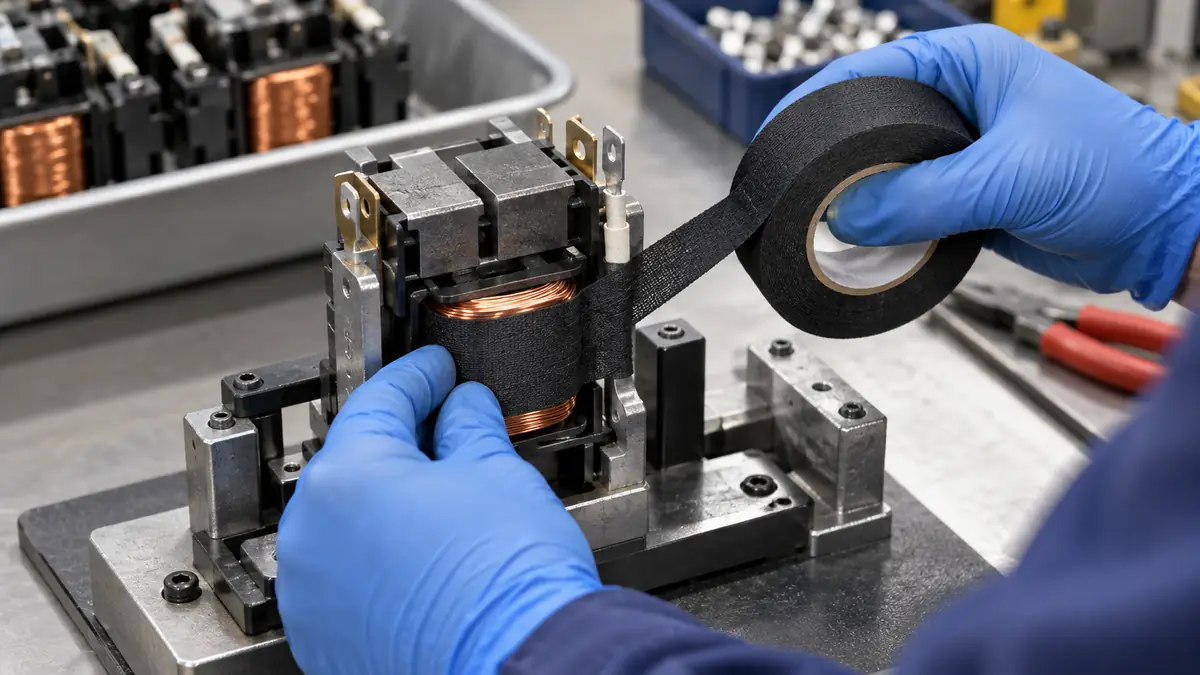
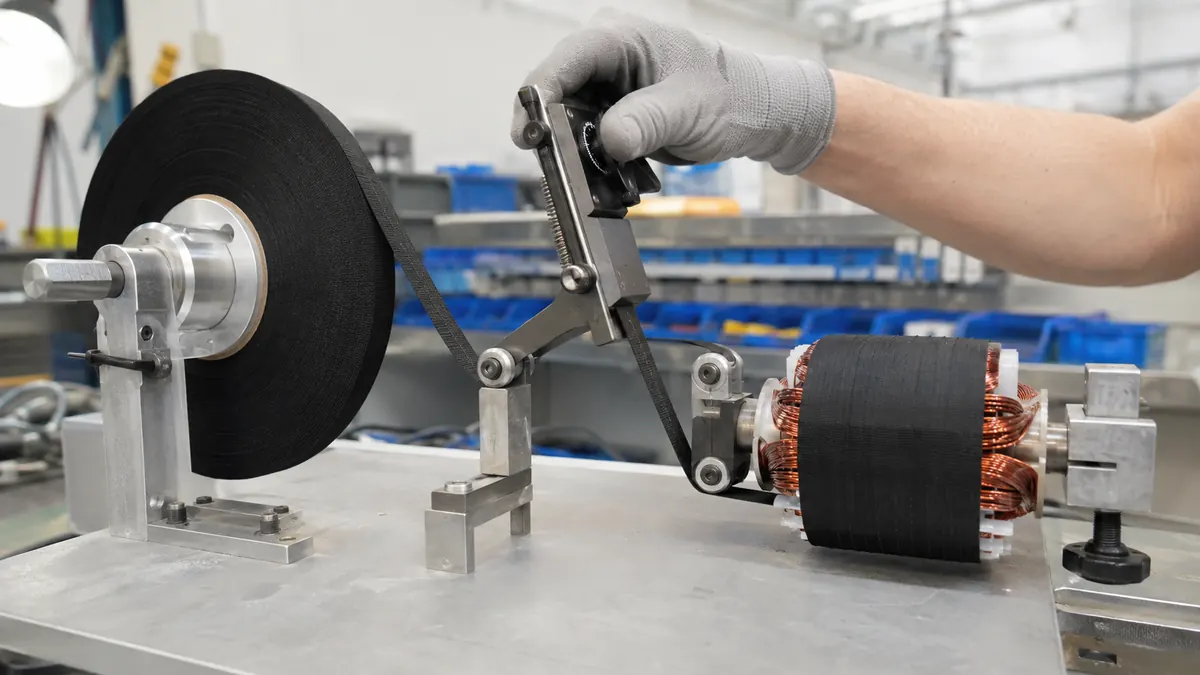
Select tape width from the coil diameter, flange height, lead exits, access, and permitted finished build. A wide tape may bridge steps and wrinkle; a narrow tape may require many overlaps and increase thickness variation. Define start point, wrap direction, overlap, tension, finish point, forbidden zones, and the maximum number of layers on the drawing or work instruction.
Do not pull the tape hard enough to displace turns, deform a plastic bobbin, or concentrate load at the lead exit. The final end should land on a robust, approved zone and remain clear of the magnetic face, friction interface, mounting surfaces, and specified air gap. Use clean cutting tools away from exposed windings.
Recommended Wrapping Workflow
- Confirm the released design. Verify coil, tape, wrap drawing, and downstream process.
- Inspect the winding. Check enamel, loose turns, bobbin, terminals, and foreign material.
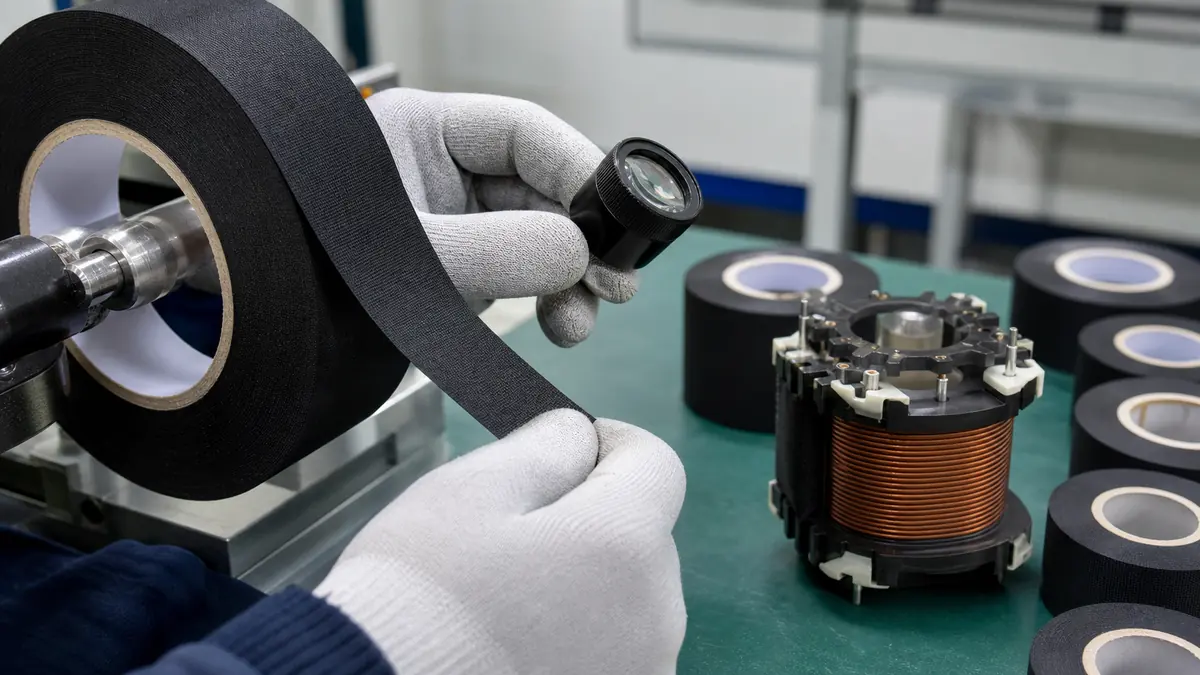
- Verify tape identity. Record grade, width, lot, storage, and shelf condition.
- Protect forbidden zones. Keep magnetic, friction, fastening, and air-gap surfaces clear.
- Anchor the first turn. Start at the approved datum without covering the lead exit.
- Wrap with controlled tension. Maintain alignment and the specified overlap.
- Finish cleanly. Cut on a robust area and press the end without a bulky knot.
- Inspect before chemistry. Check wrinkles, coverage, build, leads, and exposed adhesive.
- Run the real process. Apply the released varnish, potting, cure, and housing sequence.
- Complete final tests. Inspect dimensions, electrical results, temperature, and brake function.
Qualification and Production Validation
Build samples at the largest and smallest approved coil dimensions, minimum and maximum overlap, realistic winding variation, and worst credible cure or potting condition. Include the finished brake housing because compression, heat flow, lead routing, and air-gap control cannot be represented by a loose coil alone.
- Measure finished outside diameter, height, runout, and housing insertion force where specified.
- Inspect tape position, wrinkles, loose fibers, exposed conductors, lead clearance, and chemical wetting.
- Perform the coil owner’s resistance, dielectric, insulation-resistance, temperature-rise, thermal-cycle, vibration, and durability tests.
- Verify brake release/engagement behavior, air gap, torque or holding performance, noise, and wear using approved methods.
- Requalify changes to tape, wire, bobbin, varnish, cure, winding, housing, or wrap geometry.
Troubleshooting Common Wrap Defects
| Observed defect | Check first | Corrective direction |
|---|---|---|
| Wrinkles or tunnels | Tape width, path angle, changing diameter, and support | Adjust width, datum, fixture, and operator method |
| Coil exceeds housing clearance | Overlap, layer count, tape thickness, and winding diameter | Tighten the build stack and wrap specification |
| Lead exit is pinched | Start point, tension, edge placement, and bend radius | Redesign the transition and release tension |
| Tape lifts after cure | Surface condition, stored stress, chemistry, and cure profile | Requalify preparation, grade, and wrap tension |
| Voids remain after impregnation | Wrinkle channels, wetting, vacuum, viscosity, and cure | Improve wrap flatness and validate the chemistry process |
Related Products and Articles
Frequently Asked Questions
Is acetate cloth tape a complete brake-coil insulation system?
No. It can support selected retention, protection, or insulation functions, but the complete coil and brake assembly require approved electrical, thermal, mechanical, and functional validation.
Can the tape remain during varnish or potting?
Only when the exact tape, contacted materials, chemistry, vacuum or pressure conditions, cure profile, and finished tests have been qualified together.
How much overlap should be used?
Use the overlap released for the actual coil geometry and required function. Width, thickness, tension, finished build, chemical wetting, and electrical boundaries all affect the choice.
Can the wrap cover the magnetic or friction face?
Not unless the brake design explicitly allows it. Tape should normally remain clear of magnetic working faces, friction paths, air gaps, fasteners, and other functional interfaces.
What should an RFQ include?
Provide the coil and bobbin drawing, tape function, contacted materials, width, overlap, temperature, varnish or potting system, cure, service exposure, volume, and validation plan.
Build a Controlled Brake-Coil Wrap Trial
Share the coil geometry, insulation system, lead exit, wrap drawing, chemical process, cure profile, thermal duty, finished envelope, and required tests. JIAO TAO TAO can help shortlist an acetate cloth tape grade and slit width for qualification.
Discuss brake-coil wrappingPET Silicone Tape Slitting Tolerances for Automated Masking
Acetate Cloth Tape for Common-Mode Choke Coil Wrapping
Related Article
Need help choosing the right industrial tape?
Send us your application details, including temperature, surface material, size, quantity and current problem. Our team will help recommend a suitable tape material or custom die-cut solution.

simon@jiaotaotao.com


+86-136 1277 5969


+86-136 1277 5969
