
Acetate Cloth Tape Slit-Edge Quality for Coil Wrapping
Product Guides · Precision Converting
Acetate Cloth Tape Slit-Edge Quality for Coil Wrapping
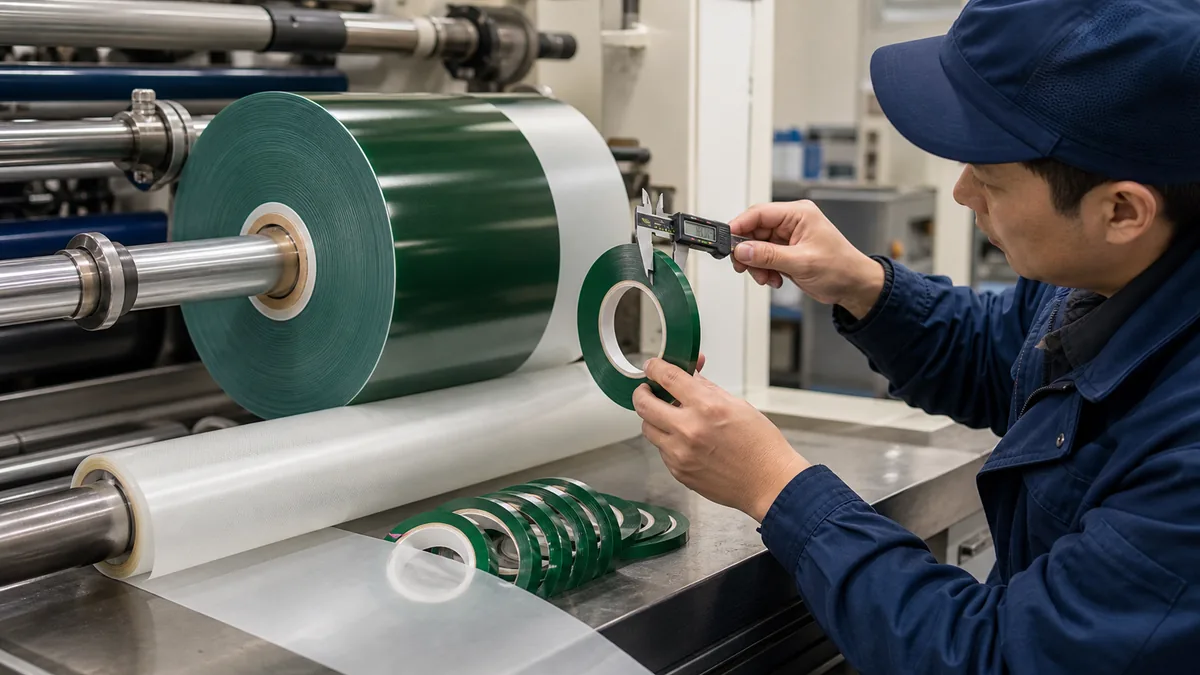
Acetate cloth tape slit-edge quality affects how a narrow roll tracks, unwinds, conforms, and finishes around electrical coils. A controlled converting specification should connect edge appearance and width stability to the real wrapping process instead of accepting a roll only because its nominal size and color look correct.
Quick Answer
Define acetate cloth tape slit-edge quality from the application inward. Record the coil geometry, wrap width, guide path, application speed, overlap, wire sensitivity, varnish or resin process, and foreign-material controls. Then specify the converted roll attributes that support that work: finished width and tolerance, edge appearance, fiber control, winding hardness, roll alignment, core, splice policy, release behavior, packaging, and lot identification.
Why Slit Edges Matter in Coil Wrapping
Acetate cloth has a woven structure. Slitting separates that structure into usable widths, but poor blade condition, unsuitable tension, damaged parent rolls, or uncontrolled winding can leave fuzz, pulled yarns, hard edges, width variation, or debris. These conditions can change how the roll enters a guide and how the tape edge lies beside fine magnet wire or a tight bobbin flange.
Edge quality also interacts with the application method. A hand wrapper can compensate for minor tracking changes that an automatic head cannot. A compact coil with narrow clearances may be more sensitive to fibers and seam build than a large outer wrap. The correct requirement is therefore linked to the released process, not copied blindly from another tape.
| Observed edge condition | Possible process effect | Inspection question |
|---|---|---|
| Loose fibers or fuzz | Debris near winding, terminal, gap, or varnish surface | Are fibers attached, transferable, and within the approved limit? |
| Pulled or rolled edge | Uneven thickness, tracking drift, or a hard wrap line | Does the edge stay flat through unwind and application tension? |
| Width variation | Changed overlap, exposed area, or interference with flanges | How is finished width sampled and recorded across the roll? |
| Telescoped winding | Unstable feed, damaged edges, or poor guide entry | Does the roll remain aligned after transport and conditioning? |
| Adhesive transfer at edge | Blocking, contamination, or variable unwind | What storage, winding, chemistry, and pressure conditions apply? |
Select the Complete Converted Roll
Backing and adhesive remain fundamental
Slitting cannot correct a tape construction that is wrong for the coil. Specify the acetate cloth backing, adhesive family, thickness, color where relevant, and chemical or thermal sequence. Compare current supplier data and representative samples rather than assuming all black cloth electrical tapes behave alike.
Match width to the wrap path
Narrow tape follows small radii and irregular bundles more easily, but it creates more turns and overlap opportunities. Wider tape covers faster while increasing the risk of wrinkles or bridging. Select width from the coil diameter, flange spacing, corner radius, access, overlap, and maximum finished envelope.
Control winding and core presentation
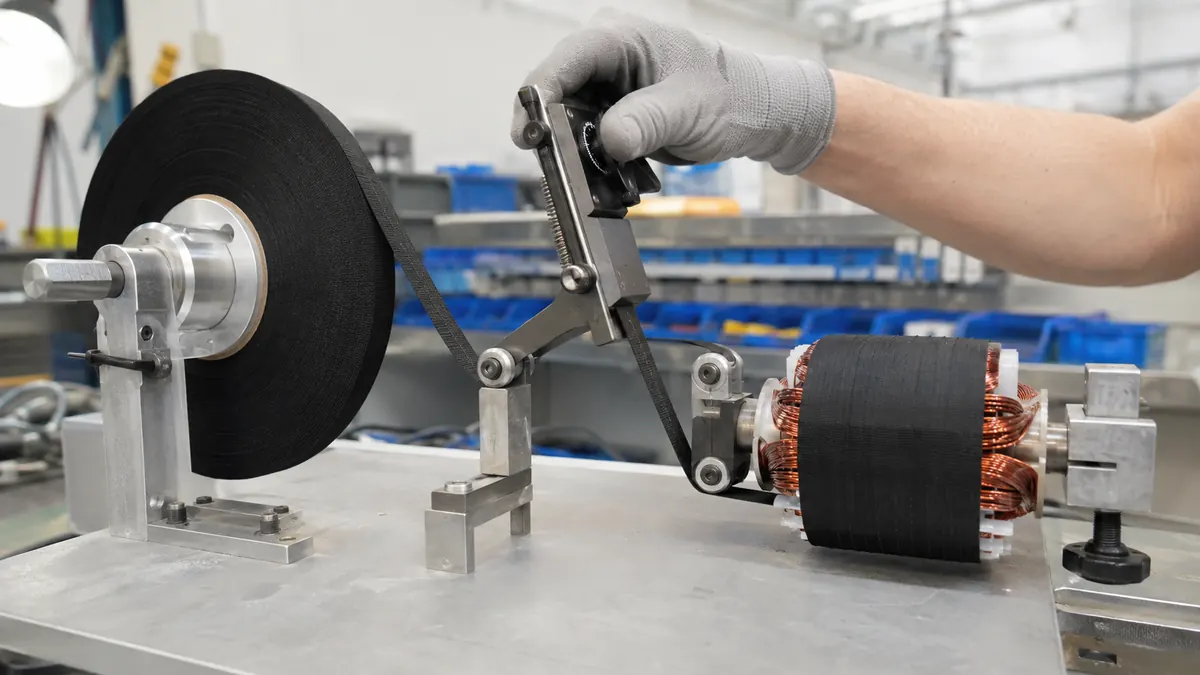
Core inside diameter, core width, roll outside diameter, winding direction, unwind side, tension, splice policy, and end restraint all affect the production handoff. A roll that fits the material description may still be unusable if it does not fit the dispenser, unwinds from the wrong side, or reaches the machine with crushed edges.
| Specification field | What to define | Reason |
|---|---|---|
| Tape construction | Backing, adhesive, thickness, color, and traceable grade | Connects converting quality to material performance |
| Finished width | Nominal value, approved tolerance, and sampling method | Controls coverage, overlap, and guide fit |
| Edge quality | Visual standard, loose-fiber rule, burr or roll-over rule, and sample plan | Turns subjective appearance into an inspection method |
| Roll build | Length, OD, core, alignment, winding direction, and splice policy | Controls dispenser fit and continuous use |
| Packaging | Edge protection, bag, orientation, labels, and lot separation | Preserves the converted condition through transport |
Create an Inspectable Edge-Quality Standard
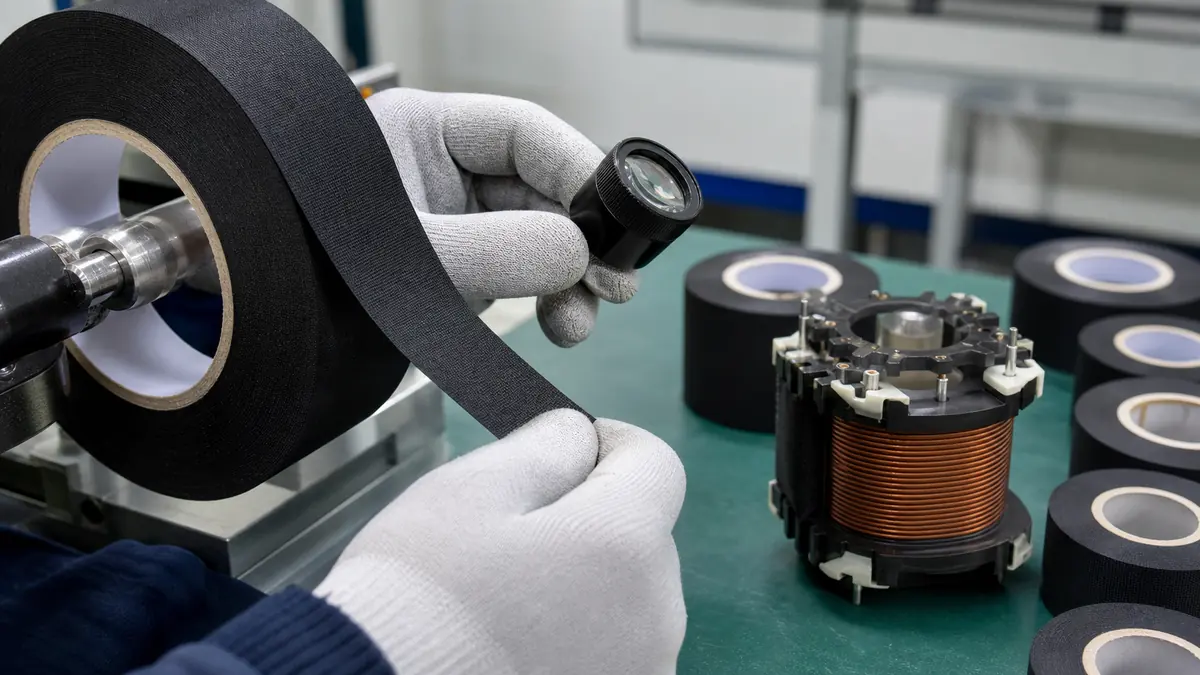
Use approved reference photographs or physical limit samples captured under defined lighting and magnification. State where a roll is sampled, how much tape is unwound before inspection, whether the first wrap is discarded, and how fibers, edge roll-over, adhesive transfer, and width are recorded. Avoid terms such as “no fray” unless the inspection method makes that phrase measurable and reproducible.
Include change control. Blade type, sharpening interval, slitting speed, web tension, parent-roll condition, winding pressure, core supplier, packaging, and storage can all influence the finished roll. The converter and coil manufacturer should agree which changes require notification or requalification.
Recommended Incoming-Inspection Workflow
- Verify identity. Match tape grade, width, lot, core, length, and purchase revision.
- Inspect packaging. Check edge protectors, crushed rolls, moisture, dust, and transport damage.
- Condition as specified. Use the approved inspection environment and stabilization time.
- Check roll build. Examine alignment, telescoping, core fit, end restraint, and winding direction.
- Unwind a controlled sample. Observe release, tracking, noise, blocking, and adhesive transfer.
- Inspect both edges. Use the released lighting, magnification, length, and limit samples.
- Measure width correctly. Follow the defined equipment, locations, and tape handling method.
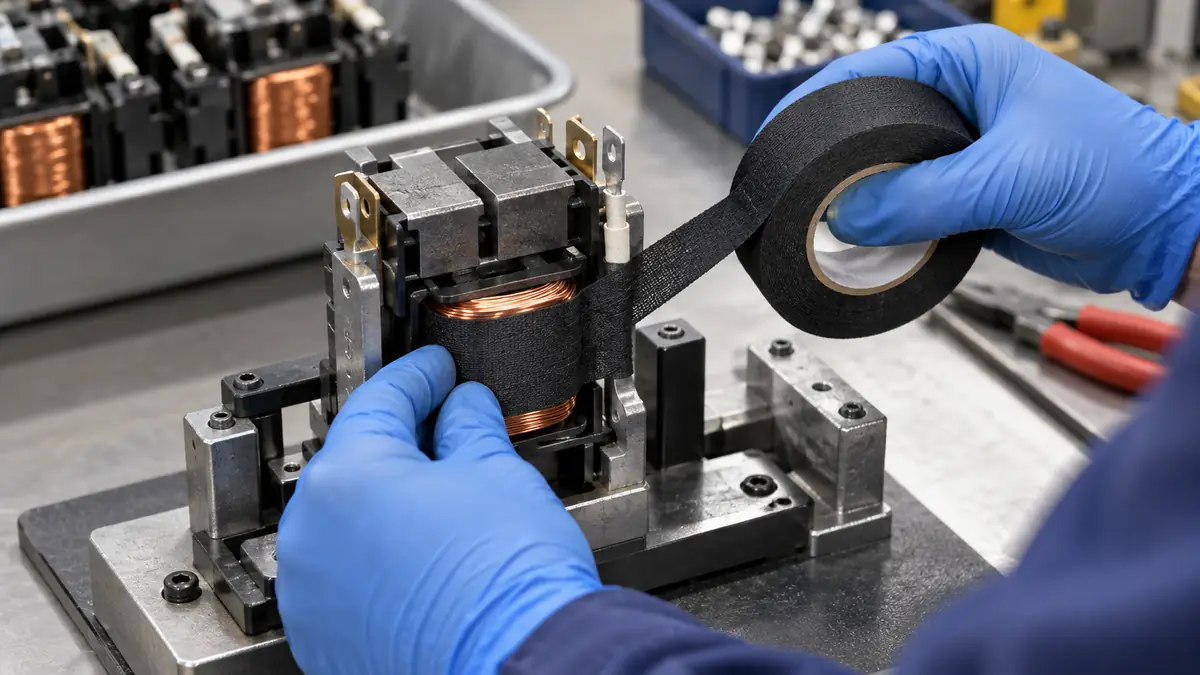
- Run a wrap trial. Confirm actual feed, conformity, overlap, fibers, build, and finish.
Validate Through the Real Coil Process
A good incoming roll must still perform on the target coil. Trial representative minimum and maximum coil geometry, bobbin condition, wire or sleeve materials, guide path, speed, tension, overlap, operator or machine, varnish or potting chemistry, cure, and final housing fit. Record defects by location relative to the tape edge and seam.
- Check tape tracking, wrinkles, edge lift, loose fibers, overlap, and finished outside dimension.
- Inspect magnet wire, sleeving, terminals, bobbin flanges, and adjacent surfaces before they are covered.
- Evaluate wetting, voids, adhesive movement, and edge condition after the approved varnish or resin process.
- Run the assembly owner’s electrical, thermal, mechanical, dimensional, and functional tests.
- Retain roll, parent-roll, converting, packaging, and process traceability for investigation and requalification.
Troubleshooting Converted-Roll Problems
| Observed problem | Check first | Corrective direction |
|---|---|---|
| Fibers appear during unwind | Backing, blade condition, edge handling, tension, and packaging | Contain the lot and review converting plus transport controls |
| Roll tracks toward one guide | Width, telescoping, core fit, winding hardness, and dispenser alignment | Separate roll-build and equipment causes with a controlled trial |
| Edge lifts on the coil | Slit condition, width, corner path, adhesive, tension, and finish point | Correct material, geometry, and application factors together |
| Overlap becomes inconsistent | Width variation, guide position, roll alignment, speed, and part variation | Tighten the released process capability and sampling plan |
| Roll blocks after storage | Adhesive, winding pressure, temperature, age, packaging, and orientation | Review storage and roll-build conditions with the converter |
Related Products and Articles
Frequently Asked Questions
What does good acetate cloth tape slit-edge quality look like?
It is the edge condition that meets the released visual, dimensional, fiber, unwind, and wrap-performance criteria. A photograph alone is not enough without a sampling method.
Can a wider roll reduce coil-wrapping time?
It may reduce turns, but it can wrinkle, bridge corners, or add uneven build. Trial width on the actual geometry and application equipment.
Should acetate cloth tape always be hand torn?
No. Hand tearing may be allowed for some grades and work instructions, while precision coils may require clean converted rolls or pre-cut lengths to control fibers and dimensions.
Is nominal roll width enough for purchasing?
No. Also define tolerance, measurement, edge standard, core, roll build, winding direction, splice policy, packaging, and traceability.
What information belongs in an RFQ?
Provide the tape function, coil drawing, wrap width and overlap, process speed, dispenser, varnish or resin cycle, core and roll limits, packaging, annual volume, and acceptance plan.
Specify a Coil-Wrapping Roll Trial
Share the coil geometry, current tape construction, slit width, dispenser or hand-wrap method, guide path, overlap, edge defect concerns, core and roll limits, chemical process, production volume, and inspection criteria. JIAO TAO TAO can prepare acetate cloth tape rolls for application-specific evaluation.
Discuss slit-edge and roll requirementsAcetate Cloth Tape Unwind and Tension Control for Coil Wrapping
Acetate Cloth Tape for Current Transformer Secondary Lead Protection
Related Article
Need help choosing the right industrial tape?
Send us your application details, including temperature, surface material, size, quantity and current problem. Our team will help recommend a suitable tape material or custom die-cut solution.

simon@jiaotaotao.com


+86-136 1277 5969


+86-136 1277 5969
