
PET Silicone Tape for Motor Coil Winding and Varnish Cure
PET Silicone Tape for Motor Coil Winding and Varnish Cure
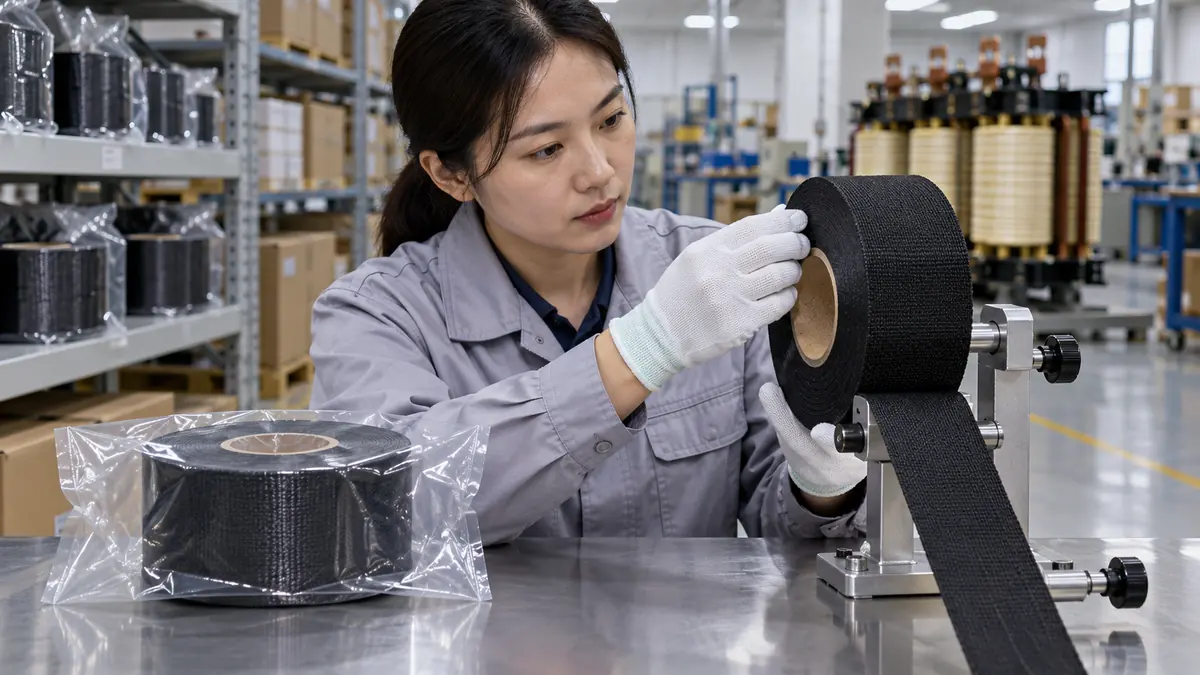
PET silicone tape for motor coil winding is used to hold, identify, separate or protect selected coil and lead areas while a stator moves through winding, handling, varnish application and curing. The correct tape is not chosen from temperature alone. Engineers should match the PET film, silicone adhesive, total construction, wrap geometry and cure sequence to the actual motor design, then validate the complete insulation system.
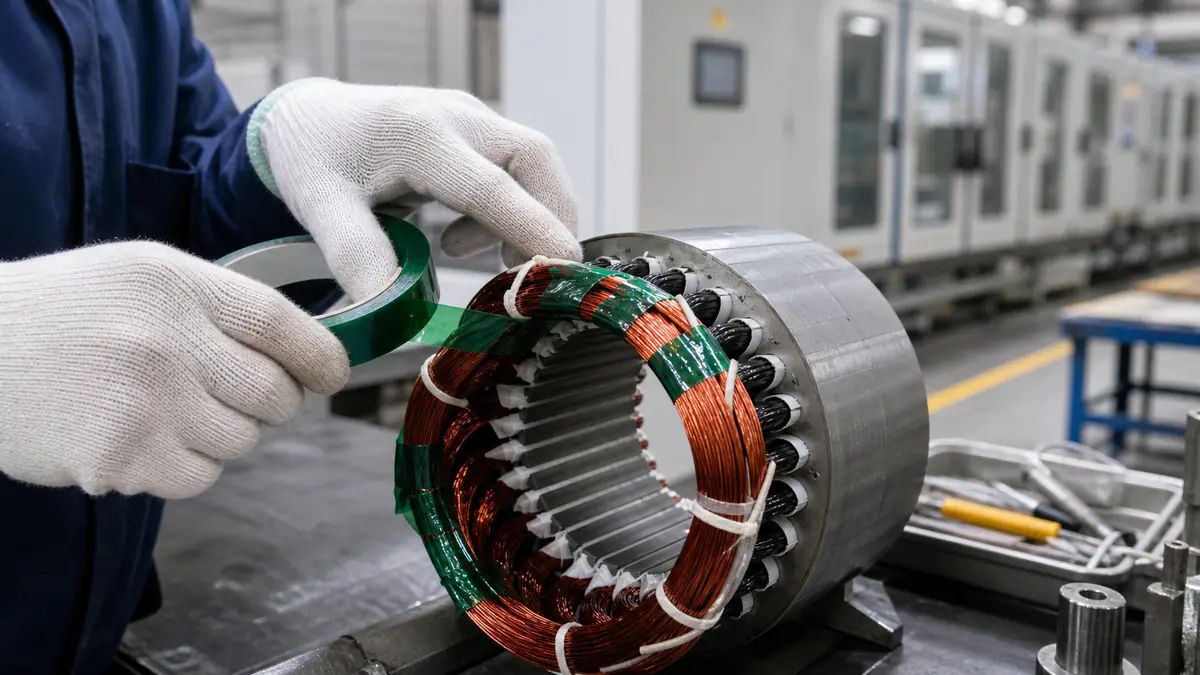
Why PET Silicone Tape Is Used in Motor Manufacturing
Polyester film offers a thin, dimensionally stable backing that can wrap coil ends without adding unnecessary bulk. A silicone pressure-sensitive adhesive is often considered when the process includes elevated-temperature exposure or surfaces that are difficult for general-purpose acrylic adhesives. Depending on the motor design, the tape may secure coil-end turns, hold sleeving in position, bundle lead wires or provide a temporary processing aid.
The tape should not be assumed to define the motor’s electrical rating by itself. Slot liners, enamel wire, varnish, phase insulation, lacing and tape operate as a system. Any dielectric, thermal-class or chemical-compatibility claim must be confirmed against the supplier’s current technical data and the manufacturer’s own qualification plan.
Selection Parameters to Define Before Sampling
| Parameter | What to Specify | Why It Matters |
|---|---|---|
| PET film | Target film thickness, color and required conformability | Affects wrap bulk, tear behavior and visibility during inspection |
| Adhesive | Silicone grade, initial tack and intended permanence | Influences hold during winding, varnish contact and later service |
| Cure exposure | Actual part temperature, ramp, dwell and number of cycles | Oven setpoint alone does not describe the tape’s thermal history |
| Contact surfaces | Enamel wire, sleeving, varnish, metal or other insulation | Adhesion and compatibility vary by surface chemistry |
| Roll format | Width, length, core, unwind and slit tolerance | Controls operator handling and repeatability on the line |
| Electrical role | Holding aid, supplemental insulation or permanent component | Determines the evidence and qualification depth required |
Map the Tape to the Manufacturing Sequence
Coil winding and forming
During winding, the tape must wrap smoothly around the selected geometry without tunneling, excessive stretch or edge lift. A narrow roll may improve control on small coil-end features, while a wider roll can reduce the number of wraps on larger sections. Trial the tape with the actual operator method or application equipment.
Lead securing and pre-varnish handling
Before impregnation, a stator may be transferred, rotated or inspected. The tape should keep leads and sleeving in the intended position without cutting into the wire bundle. High initial tack is not automatically better: excessive adhesion can make rework difficult or disturb fragile insulation when the tape must be repositioned.
Varnish application and curing
Dip, trickle and other impregnation processes expose tape to different liquids, drain times and heating profiles. Compatibility must be checked for swelling, lifting, adhesive migration, discoloration and loss of holding force. Record the temperature at the taped part rather than relying only on the oven controller.
PET Silicone vs PET Acrylic Tape
| Decision Point | PET Silicone Route | PET Acrylic Route |
|---|---|---|
| Elevated-process exposure | Often evaluated when higher-temperature processing is expected | May suit moderate-temperature permanent bonding when qualified |
| Initial tack | Varies by formulation; confirm on coil and sleeving surfaces | Often selected for general permanent adhesion |
| Clean removal | Possible for selected processing grades, subject to dwell and surface | Usually not assumed without application testing |
| Cost and availability | May carry a premium for specialized process needs | Can be economical for less demanding conditions |
This comparison is a screening guide, not a performance guarantee. Review the specific product TDS and test both constructions in the complete motor process.
Application and Validation Checklist
- Define the tape’s function and exact location on the stator.
- Document every surface the adhesive will contact.
- Measure the real cure profile at the taped component.
- Apply samples with production tension, overlap and wrap count.
- Inspect after winding, varnish exposure and cure for lift, residue or movement.
- Complete electrical and reliability testing required by the motor design.
FAQ
Is PET silicone tape the same as polyester tape?
PET is polyester film. The phrase PET silicone tape specifies that the polyester backing uses a silicone pressure-sensitive adhesive rather than an acrylic or rubber adhesive.
Can PET silicone tape be used inside a motor permanently?
It can be evaluated as a permanent component, but approval depends on the exact tape grade and the qualified insulation system. Confirm thermal, electrical and chemical requirements with current technical documentation and application testing.
What information should be sent with an RFQ?
Provide the tape function, contact surfaces, cure profile, target width and thickness, color, roll format, expected volume and any required compliance documents.
Should tape be tested before or after varnish cure?
Both. Initial application checks show handling behavior, while post-cure inspection reveals compatibility, movement, edge lift and adhesive changes caused by the real process.
Related Products and Technical Reading
- Polyester tape and PET film tape product range
- PET high-temperature tape technical guide
- High-temperature tape material selection guide
Request a Motor Winding Tape Sample
Send JIAO TAO TAO your motor type, coil location, cure profile, contact surfaces, required roll size and expected volume. We can help narrow the PET silicone tape options for line trials without substituting assumptions for your qualification process. Contact the technical sales team.
Polyimide Tape for Thermocouple Attachment in Thermal Testing
How to Choose Adhesive Tape Thickness for Insulation and Masking
Related Article
Need help choosing the right industrial tape?
Send us your application details, including temperature, surface material, size, quantity and current problem. Our team will help recommend a suitable tape material or custom die-cut solution.

simon@jiaotaotao.com


+86-136 1277 5969


+86-136 1277 5969
