
How to Prevent Wrinkles in PTFE Heat-Sealing Tape
Industrial Tape Application Guide
How to Prevent Wrinkles in PTFE Heat-Sealing Tape
Prevent wrinkles in PTFE heat-sealing tape by matching backing stability, cleaning the bar, controlling tension and pressure, and validating seal quality.
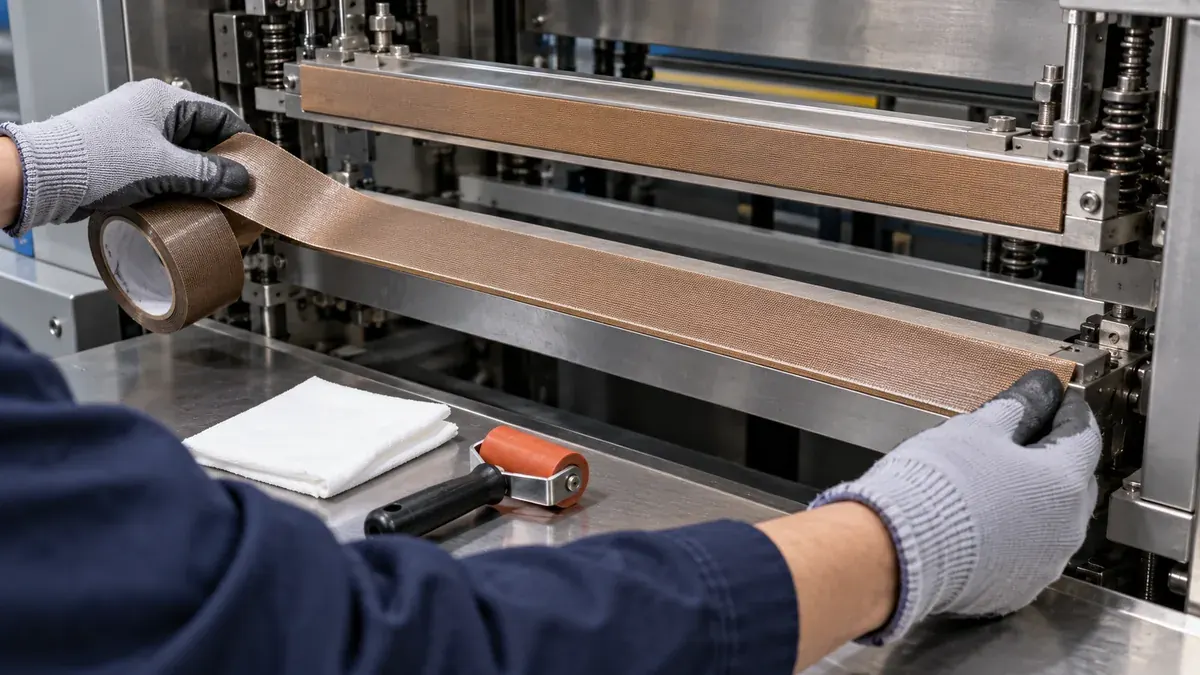
Wrinkles in PTFE heat-sealing tape are usually a system problem, not a cue to pull the tape tighter. Maintenance and packaging engineers should first separate backing movement, bar contamination, uneven installation, trapped air, worn insulation and incorrect temperature/pressure/dwell settings. The objective is a flat release surface and a repeatable seal, not merely a tape that looks smooth while the machine is cold.
This method applies to adhesive-backed PTFE film or PTFE-coated fiberglass release tapes used on impulse and continuously heated sealing bars. It does not cover non-adhesive plumbing thread-seal tape. Technical content reviewed: .
Separate Installation Wrinkles from Heat-Cycle Wrinkles
Photograph and map the defect before removing the tape. A wrinkle present immediately after application points toward installation, debris, damaged insulation or bar geometry. A surface that starts flat but buckles after warm-up points toward dimensional movement, adhesive loss, uneven heating or differential expansion. A wrinkle that appears only after many cycles can indicate wear, polymer buildup or an unsuitable backing.
| Observation | Likely cause group | Evidence to collect |
|---|---|---|
| Wrinkle visible before heat | Uneven pull, trapped air, dirty bar or distorted substrate | Cold-state straightedge, surface photo and installation record |
| Wrinkle grows during warm-up | Backing shrink/swell, adhesive softening or uneven temperature | Time-temperature record and wrinkle location |
| Wrinkle repeats at one machine point | Bar damage, heater/insulator transition or pressure misalignment | Bar flatness and pressure-pattern check |
| Random wrinkles after long use | Abrasion, contamination, edge lift or maintenance interval | Cycle count, wear map and removed-tape condition |
Choose a Dimensionally Stable PTFE Tape Construction
PTFE film versus PTFE-coated fiberglass
Skived or extruded PTFE film provides a smooth non-stick surface and can conform to narrow bars. PTFE-coated fiberglass adds reinforcement and in-plane rigidity. Saint-Gobain notes that fiberglass reinforcement can reduce wrinkling when dimensional stability matters, especially as platen width increases. This is a selection principle; the exact grade still needs equipment-specific approval.
Adhesive and operating temperature
Acrylic and silicone pressure-sensitive adhesives serve different temperature ranges and adhesion needs. Obtain the exact tape's continuous and short-duration limits, not a generic PTFE number. The adhesive must remain attached to the platen; the PTFE face must resist product buildup without blocking heat transfer.
Thickness, thermal transfer and wear
Thicker constructions may last longer but can change heat transfer and the validated seal window. A thin tape can transfer heat quickly yet wear sooner. If thickness changes, re-establish temperature, pressure and dwell rather than copying the old settings.
| Construction | Useful when | Watch closely |
|---|---|---|
| PTFE film tape | Narrow bars, smooth release and conformability matter | Dimensional movement, tear strength and wear |
| PTFE-coated fiberglass tape | Rigidity, dimensional stability and tear resistance matter | Texture transfer, thickness and edge fray |
| Zone tape | Adhesive-free center must sit over a heating element | Zone width, alignment and edge adhesion |
| Premium laminate or filled PTFE | Longer maintenance interval is being evaluated | Cost, heat transfer and machine approval |
Control the Installation Variables
Use the equipment manual to identify the approved bar surface, insulation stack and tape routing. Remove the old construction without gouging the bar. Eliminate adhesive residue with the approved cleaner, inspect flatness and confirm that insulation or heating elements are not proud of the surface. Apply the new tape square to the bar, using only enough tension to keep it flat.
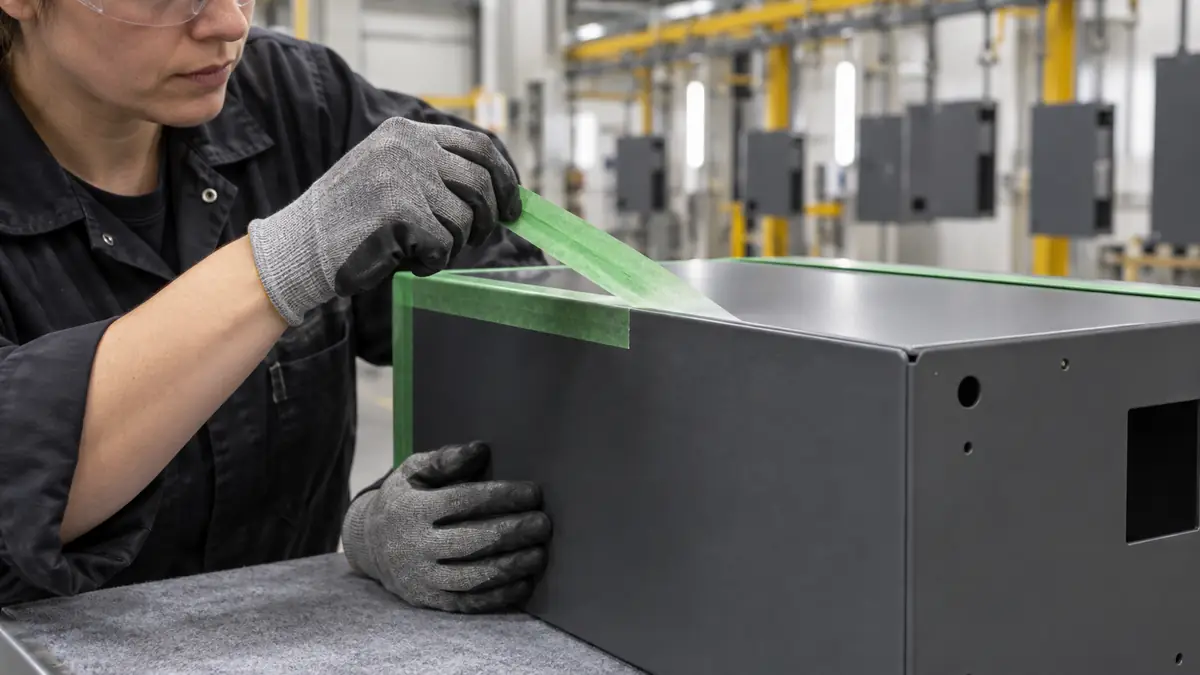
Do not stretch the tape as a wrinkle correction. Stored tension can relax during heat-up and pull at edges or create a transverse ridge. Work progressively from one end with a clean roller or squeegee so air exits ahead of the pressure line. Keep fingers off the adhesive and non-stick face.
Illustrative Width and Wrap-Allowance Check
For a flat bar with a top face width B, two edge wraps of E, and an installation tolerance t on each side, a simple minimum tape width is W = B + 2E + 2t. This is a purchasing check, not an equipment specification. It does not replace the machine maker's routing or a zone-tape drawing.
| Field | Record | Decision |
|---|---|---|
| Bar geometry | Face width, length, radius, wrap and clamp locations | What width and length are required? |
| Tape construction | Backing, reinforcement, adhesive, total thickness and lot | Does the material match the approved baseline? |
| Seal recipe | Temperature or impulse setting, pressure, dwell and cooling | Must the recipe be revalidated? |
| Maintenance condition | Bar cleanliness, flatness, insulation and heater condition | Is tape replacement sufficient or is repair required? |
Safe Tape-Replacement Workflow
- Stop and isolate. Follow the equipment lockout and cool-down procedure.
- Record the failure. Photograph wrinkle location, tape wear, seal defects and machine settings.
- Remove the old tape. Use approved tools; avoid scratching the platen or heating element.
- Clean the bar. Remove residue and product buildup with the machine-approved method.
- Inspect the stack. Check bar flatness, heater, insulation, clamps and edges.
- Measure and cut. Match the released tape code, width, length and zone position.
- Apply progressively. Align square, keep light even tension and roll from one end to expel air.
- Finish edges. Wrap or clamp only as the equipment drawing permits; remove loose fibers.
- Inspect cold. Reject folds, bubbles, ridges, edge lift and misalignment.
- Warm up and qualify. Observe the full warm-up cycle, then validate seals before production release.
Validate Tape Condition and Seal Quality
A flat tape surface is necessary but not sufficient. Run the established seal-validation method using representative package materials and operating extremes. Check appearance, seal width, leak or strength result, release behavior, residue and temperature uniformity as required by the product owner. Packaging for food, medical or pharmaceutical use may require regulated validation outside the scope of this article.
| Stage | Check | Release evidence |
|---|---|---|
| Cold installation | Flatness, alignment, wrap, edges and absence of debris | Visual standard and maintenance sign-off |
| Warm-up | Wrinkle growth, lift, odor, temperature distribution and movement | Observed warm-up record |
| Initial seals | Release, seal position, wrinkles, contamination and appearance | Approved first-piece test |
| Process window | Low/high settings and representative package material lots | Seal test per quality plan |
| Maintenance interval | Wear, PTFE breakthrough, edge lift and cycle count | Trend that defines replacement trigger |
Maintenance Acceptance Record
Retain: machine and bar ID | tape code, width, thickness and lot | heater/insulation condition | cleaner and method | application operator | cold inspection | warm-up observation | validated seal recipe | first-piece results | cycle count or date | failure map | disposition.
Troubleshoot Without Re-Tensioning Blindly
| Symptom | Check first | Controlled action | Recheck |
|---|---|---|---|
| Single ridge across the bar | Installation overlap, trapped air and local debris | Clean and reapply progressively without stretch | Cold flatness and warm-up behavior |
| Many fine wrinkles after heat-up | Backing stability, width, temperature uniformity and adhesive limit | Compare an approved reinforced construction or correct heating fault | Full operating window and seal results |
| Wrinkle always at heater transition | Insulator step, proud element, clamp or bar damage | Repair the stack to the machine specification | Straightedge/inspection plus qualified seals |
| Tape flat but film sticks | PTFE wear, contamination, temperature and packaging film compatibility | Replace worn tape and correct buildup or recipe | Release behavior and seal quality |
| Edge lifts early | Residue, wrap allowance, adhesive system and edge abrasion | Restore surface condition or approved tape geometry | Warm-up and defined maintenance interval |
Related Products, Articles and Technical Sources
Technical sources and scope
Saint-Gobain's heat-sealing tape guidance identifies dimensional stability, reinforcement, strength, heat transfer, friction, wear and adhesive temperature behavior as selection factors. Its reference guide states that backing movement can seed wrinkles and premature failure. A Miller Weldmaster equipment manual instructs installers to pull PTFE tape flat and snug while keeping it wrinkle-free; that instruction applies to its identified equipment. This article's worksheet is illustrative and does not supersede any machine manual.
Frequently Asked Questions and RFQ Checklist
Should PTFE heat-sealing tape be stretched tight?
No. Apply only enough even tension to keep it flat. Excess stretch can relax during heat-up and create lift or wrinkles.
Does fiberglass reinforcement always prevent wrinkles?
No. It can improve dimensional stability, but contamination, bar damage, uneven heat and poor installation can still cause failure.
Can a thicker PTFE tape use the same seal settings?
Do not assume so. Thickness and construction can change heat transfer, requiring the validated seal window to be re-established.
When should heat-sealing tape be replaced?
Use a defined trigger such as PTFE wear-through, edge lift, damage, buildup, wrinkle formation or failed seal validation—not calendar time alone.
What information belongs in a PTFE tape RFQ?
Provide machine and bar drawing, heat mode, operating temperature, pressure, dwell, tape width and thickness, current failure, package material, cycle rate and approval tests.
Specify a Flat, Stable Heat-Sealing Release Surface
Share the machine model, bar dimensions, heater arrangement, seal temperature or impulse profile, pressure, dwell, current tape construction, wrinkle location, cycle rate and validation method. JIAO TAO TAO can prepare PTFE film or PTFE-coated fiberglass tape samples for controlled maintenance trials.
How to Choose Acetate Cloth Tape Width for Coil Wrapping
Related Article
Need help choosing the right industrial tape?
Send us your application details, including temperature, surface material, size, quantity and current problem. Our team will help recommend a suitable tape material or custom die-cut solution.

simon@jiaotaotao.com


+86-136 1277 5969


+86-136 1277 5969
