
Acetate Cloth Tape for Ignition Coil Wrapping
Acetate Cloth Tape for Ignition Coil Wrapping
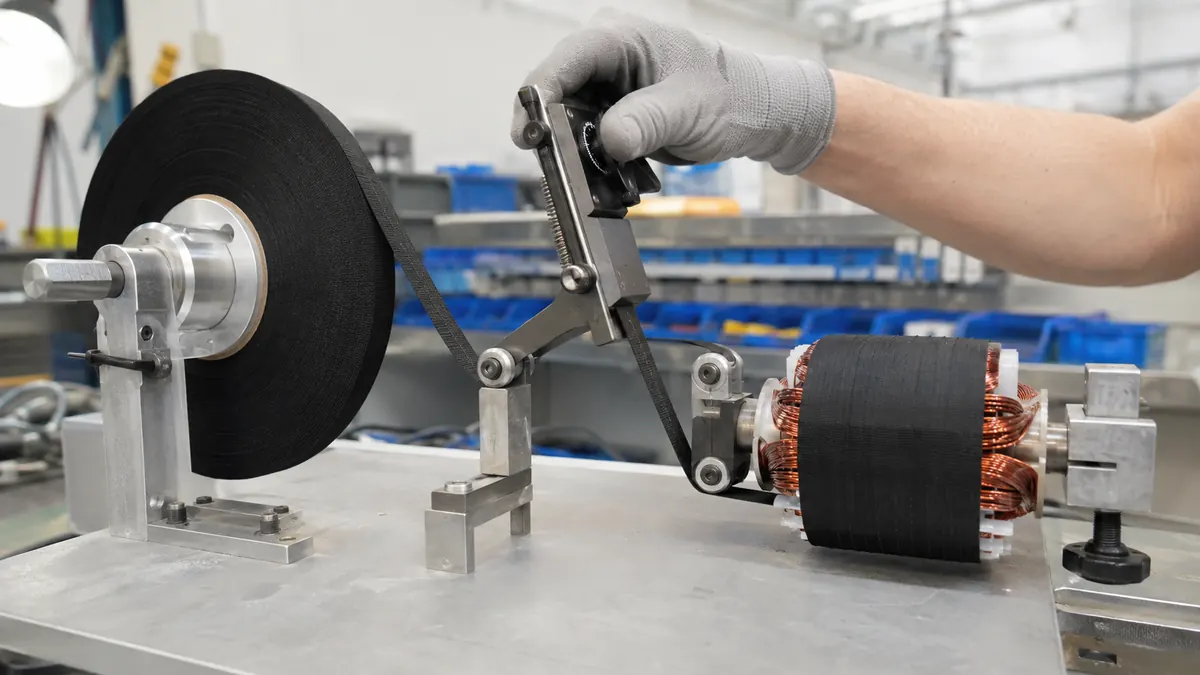
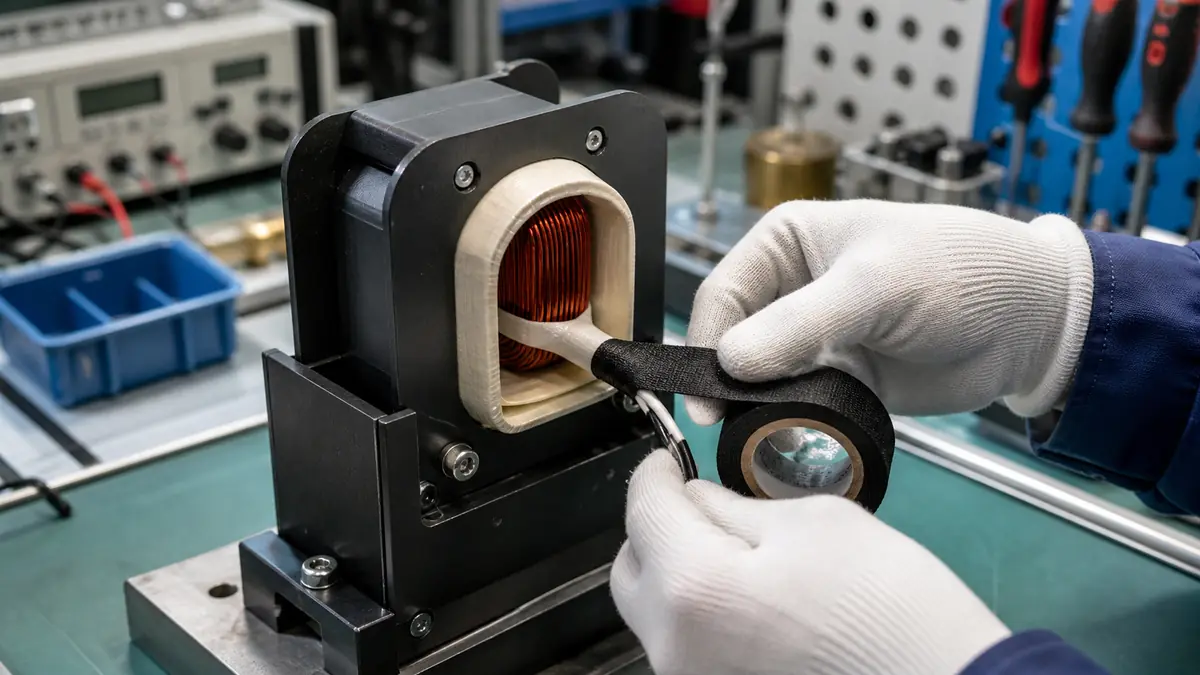
Acetate cloth tape for ignition coil wrapping can provide a conformable protective and insulating layer around selected coil, lead-exit, and bobbin areas before final housing or encapsulation. Its woven backing can follow cylindrical geometry without behaving like a stiff film. The tape is not a substitute for the coil designer's insulation system, clearance, creepage, winding, impregnation, potting, or electrical validation requirements.

Key Takeaways
- Define exactly whether the tape is used for holding, abrasion protection, edge cushioning, lead management, or insulation-system support.
- Control overlap, wrap tension, start and finish positions, lead exits, and total build.
- Verify compatibility with varnish, resin, potting compound, cleaning, and thermal processes.
- Use approved electrical tests on the completed coil assembly; tape appearance alone is not evidence.
- Qualify representative winding and encapsulation conditions before production release.
What Acetate Cloth Tape Can Do in an Ignition Coil
Ignition-coil constructions vary, but many contain fine magnet wire, primary and secondary windings, a bobbin, core, terminals, lead transitions, insulation barriers, housing, and an impregnation or potting system. A cloth-backed tape may be used at an approved stage to secure winding ends, reinforce a transition, cushion a local edge, retain an insulation layer, or protect a coil surface during subsequent handling.
Acetate cloth is valued for conformability and a textile surface that can integrate with selected varnish or resin systems. That does not mean every grade is compatible with every chemical, temperature, or high-voltage design. The complete insulation coordination, material file, flammability requirement, and electrical test plan must be defined by the product owner. Do not infer certification or voltage performance from the generic tape name.
Wrap Locations and Control Points
| Location | Possible function | Main control point |
|---|---|---|
| Outer secondary winding | Surface protection, holding, or support for the next layer | Overlap, tension, thickness build, and exposed wire |
| Lead exit | Strain distribution and abrasion protection at a transition | Bend radius, terminal clearance, and no sharp tape edge |
| Bobbin flange | Retaining an insulation barrier or covering an approved edge | Creepage path, flange geometry, and wrinkle control |
| Core interface | Local cushioning or separation when specified by the design | Total stack, compression, and heat transfer |
| Temporary process hold | Keeping leads or layers positioned before impregnation | Compatibility and whether tape remains in the final assembly |
Information Required Before Selecting Tape
| Parameter | What to document | Why it matters |
|---|---|---|
| Tape construction | Backing weave, thickness, adhesive family, color, width, roll length, and storage | Controls conformability, build, handling, and retention |
| Contacted materials | Magnet-wire enamel, bobbin resin, barriers, terminals, core coating, and existing varnish | Defines adhesion and material-compatibility trials |
| Winding geometry | Coil diameter, flange, edge radii, lead exits, start point, finish point, and allowed overlap | Determines width, tension, wrinkles, and clearance |
| Downstream process | Drying, varnish, vacuum impregnation, potting, cure, cleaning, and housing insertion | The tape experiences more than the wrapping station |
| Service environment | Temperature cycles, vibration, fluids, humidity, and expected lifetime | Guides conditioning of the finished coil assembly |
| Acceptance tests | Dimensions, appearance, continuity, resistance, dielectric, partial discharge, and functional tests as applicable | Defines whether the complete design is acceptable |
Choose Width From Geometry, Not Convenience
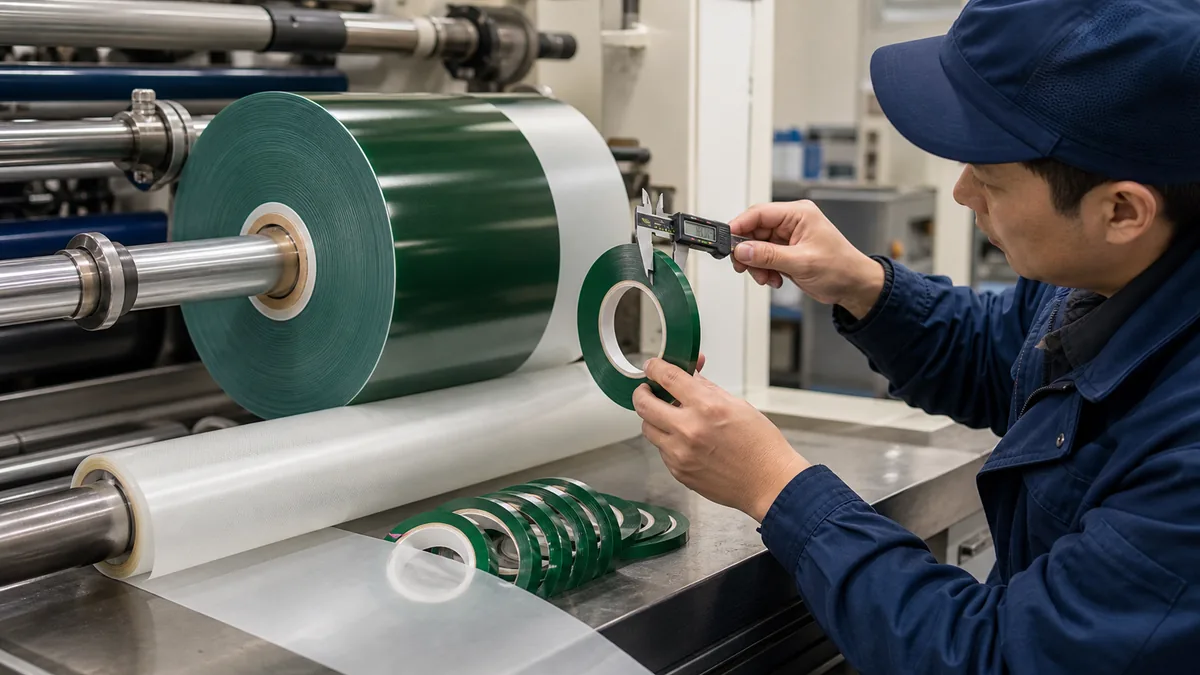
A wide tape can reduce the number of turns, but it may wrinkle around a small diameter or bridge a flange. A narrow tape follows complex transitions more easily but creates more seams and operator steps. Use the approved overlap and the finished build requirement to select width. Include tape-thickness and compression variation in housing or potting clearances.
Control Wrap Tension
Excess tension can shift fine windings, reduce the intended bend radius, deform a bobbin, or store stress that appears later during heat exposure. Too little tension can leave loose edges and channels. Apply the tape without stretching it beyond the released method, and use a controlled fixture or tension device when repeatability is critical.
Review Varnish and Potting Compatibility
The tape may contact solvents, varnish, resin, hardener, release agents, and cure temperatures. Test the exact grade and production chemicals for wetting, swelling, discoloration, adhesive movement, bubbles, delamination, and cure interference. A cloth texture may support resin contact, but representative vacuum, pressure, and cure conditions still need evaluation.
Recommended Wrapping and Validation Workflow
- Confirm the released coil drawing. Mark tape start, direction, overlap, finish, lead exits, forbidden zones, and dimensional limits.
- Inspect the winding. Check wire position, enamel damage, loose turns, debris, bobbin defects, and terminal condition before covering anything.
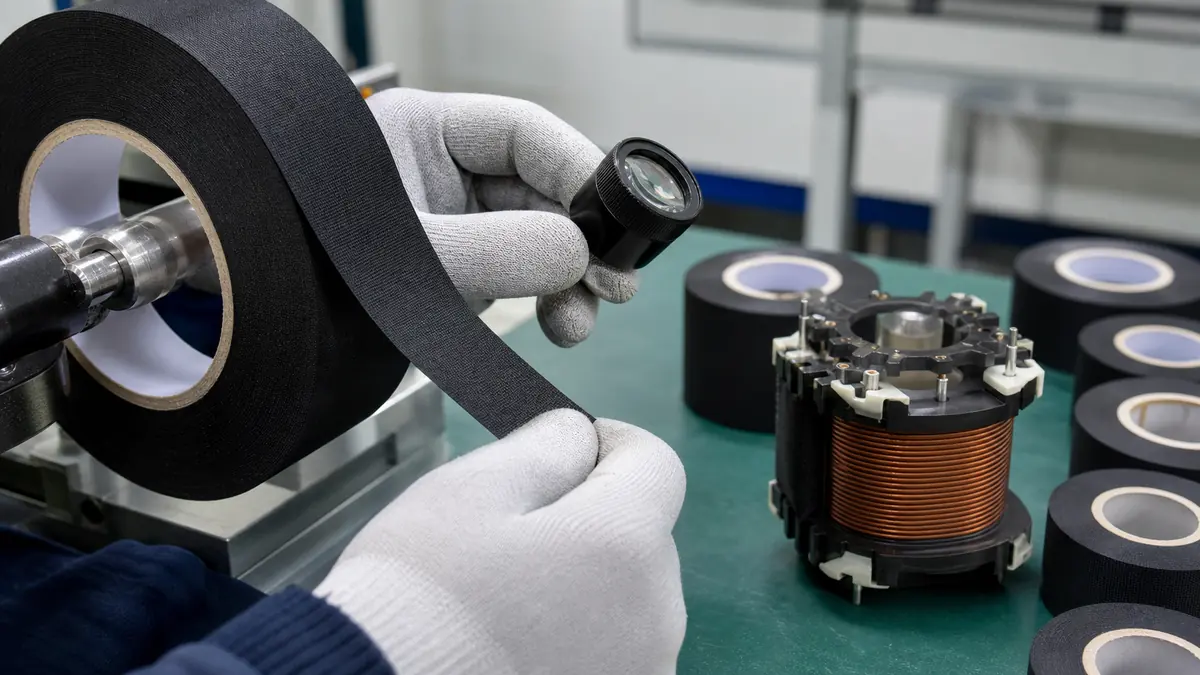
- Verify tape identity. Record grade, width, lot, shelf condition, and storage history.
- Start on the approved surface. Keep the first edge square, avoid sharp creases, and do not place adhesive on unapproved contacts.
- Wrap with controlled overlap. Maintain alignment and tension while protecting lead exits and required clearances.
- Finish without a bulky knot. Cut with a clean tool away from the winding and press the end on a robust zone.
- Inspect before encapsulation. Check exposed wire, wrinkles, edge lift, overlap, diameter, lead clearance, and part count.
- Run the real downstream process. Use representative varnish or potting, vacuum, cure, housing assembly, and conditioning.
- Complete approved tests. Inspect the final assembly and perform the electrical, dimensional, environmental, and functional tests defined by the design owner.
Typical Defects and Corrective Directions
| Defect | Likely checks | Corrective direction |
|---|---|---|
| Wrinkles or tunnels | Tape too wide, excessive angle, poor support, or changing diameter | Adjust width, path, fixture, and operator method |
| Exposed winding at overlap | Insufficient overlap, wandering path, or compressed edge | Add a visual datum and tighten wrap control |
| Lead exit is pinched | High tension, wrong start point, or missing radius support | Release tension and redesign the transition |
| Tape lifts after cure | Surface condition, chemical incompatibility, stored stress, or exposure | Review preparation, material compatibility, wrap tension, and cure profile |
| Voids after potting | Wrinkle channels, trapped air, poor wetting, or process parameters | Improve wrap flatness and re-evaluate impregnation or potting conditions |
Related Products and Articles
- Explore the acetate cloth tape range for electrical wrapping and insulating constructions.
- Review acetate cloth tape for solenoid coil wrapping for another cylindrical winding application.
- Compare small-component controls in the relay coil wrapping guide.
- Share the coil drawing and downstream process for tape-selection support.
Frequently Asked Questions
Is acetate cloth tape a complete ignition-coil insulation system?
No. It can support selected wrapping or protection functions, but the complete insulation system and electrical performance must be designed and validated by the coil owner.
Can the tape remain during varnish or potting?
Only when the exact tape, contacted materials, chemicals, vacuum or pressure conditions, cure profile, and finished tests have been qualified together.
How much overlap should be used?
Use the overlap released on the coil drawing or work instruction. It depends on geometry, width, thickness build, function, and downstream processing.
Why does wrap tension matter?
Too much tension can move windings or load lead exits; too little can leave loose edges and channels. A controlled, repeatable method reduces both risks.
What should an RFQ include?
Provide the coil and bobbin drawings, contacted materials, tape function, width and thickness limits, overlap, downstream chemicals and cure, service exposure, expected volume, and validation plan.
Plan an Ignition-Coil Wrapping Trial
Share the winding and bobbin geometry, lead-exit details, required tape function, approved overlap and build, varnish or potting system, cure profile, service conditions, and electrical test plan. JIAO TAO TAO can help shortlist an acetate cloth tape construction for qualification.
Acetate Cloth Tape for Loudspeaker Voice Coil Lead Insulation
Acetate Cloth Tape for Toroidal Transformer Core Wrapping
Related Article
Need help choosing the right industrial tape?
Send us your application details, including temperature, surface material, size, quantity and current problem. Our team will help recommend a suitable tape material or custom die-cut solution.

simon@jiaotaotao.com


+86-136 1277 5969


+86-136 1277 5969
