
Acetate Cloth Tape for Solenoid Coil Wrapping
Acetate Cloth Tape for Solenoid Coil Wrapping
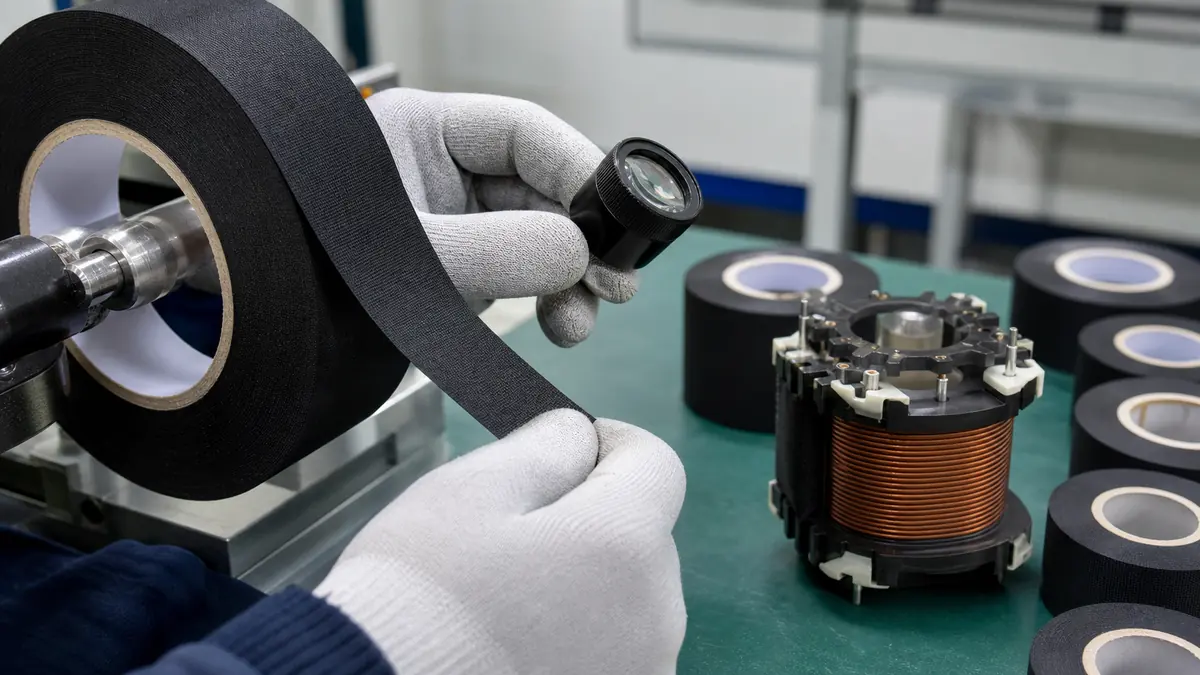
Acetate cloth tape for solenoid coil wrapping can secure the outer winding, reinforce lead exits and provide a conformable protective wrap around compact electromagnetic coils. The woven backing follows curved bobbins better than many stiff films and gives operators a visible, textured wrap surface. Selection must still be based on the exact tape grade, coil geometry, electrical role, operating temperature, impregnation process and qualification requirements. This guide is for coil designers, manufacturing engineers and buyers comparing wrap constructions for validation.
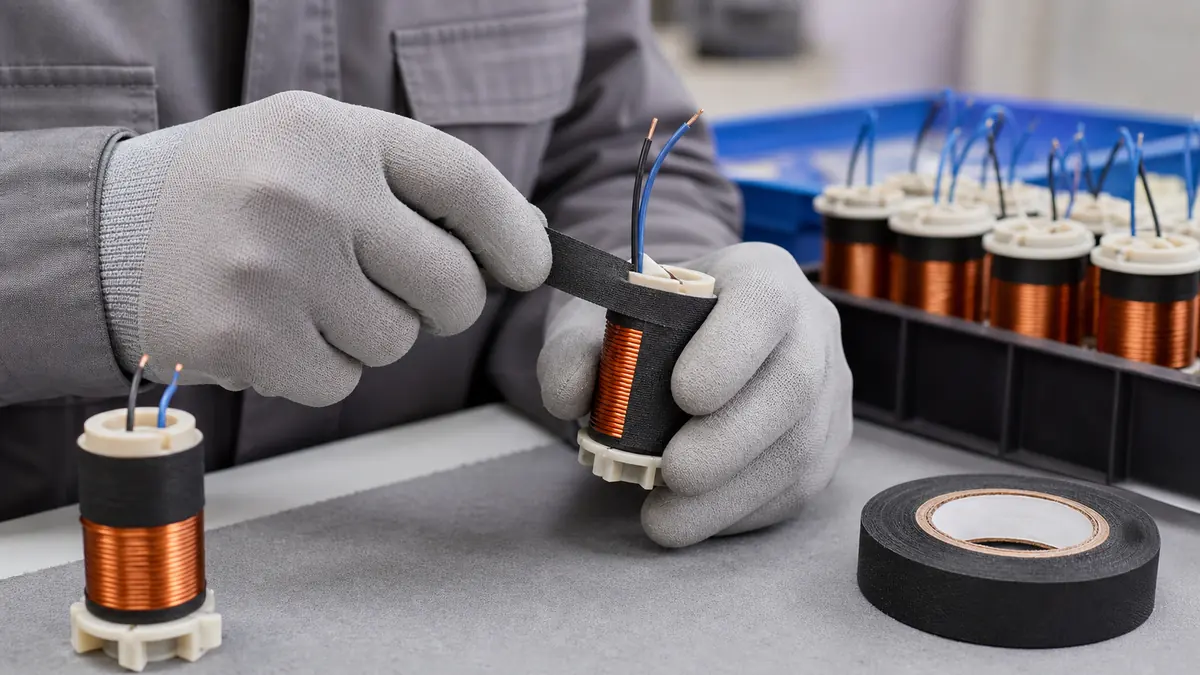
What the Tape Does in a Solenoid Assembly
Solenoid coils appear in valves, actuators, relays, locks and other electromagnetic devices. Depending on the design, an outer tape wrap may hold the final wire turns, keep a lead sleeve in position, protect the winding from handling abrasion or create a neat barrier before the coil enters a housing. The tape is normally one element of the insulation system, alongside enamel wire, bobbin material, sleeves, varnish or encapsulation.
Do not infer the coil’s dielectric or thermal classification from the tape family alone. The equipment designer must qualify the complete construction and confirm any required flame, chemical or electrical documentation for the selected product.
Selection Parameters for Acetate Cloth Tape
| Parameter | What to Define | Why It Matters |
|---|---|---|
| Backing and finish | Acetate cloth grade, color, texture and total thickness | Influences conformability, wrap build and inspection |
| Adhesive system | Supplier grade, initial tack and intended permanence | Affects holding power on wire enamel, sleeves and bobbin flanges |
| Coil geometry | Outside diameter, length, flange shape and lead-exit position | Determines tape width, overlap and wrinkle risk |
| Thermal exposure | Measured operating temperature and process cycles | Must match the current product data and device validation |
| Process chemistry | Varnish, potting, cleaning agents, oils or refrigerants | May change adhesion, swelling, color or long-term compatibility |
| Roll format | Width, length, core, unwind and slit-edge quality | Controls operator handling and consistent wrapping |
Plan the Wrap Around the Coil Geometry
Outer winding hold-down
Position the first end so it cannot create a hard ridge under later layers. Apply even tension and keep the tape flat against the winding. Excessive tension can shift wires, distort a lightweight bobbin or make the tape retract toward the center of the coil.
Lead-exit reinforcement
Lead exits need controlled support without a sharp bend or a thick local stack. Route sleeved leads as defined by the drawing, then use the tape to hold the route rather than forcing the wire into position. Inspect the edge of the wrap so it does not cut or chafe the lead during vibration.
Overlap and end termination
Specify overlap as part of the work instruction. Too little can expose the winding or allow gaps; too much adds bulk and may interfere with the coil housing. Terminate the final end on a stable surface and use the same application pressure for each unit.
Acetate Cloth vs PET Film vs Polyimide Film Tape
| Decision Point | Acetate Cloth | PET Film | Polyimide Film |
|---|---|---|---|
| Conformability | Woven backing can follow curved coil surfaces | Thin and smooth but less cloth-like | Thin film suited to demanding heat and insulation needs |
| Abrasion surface | Textured cloth offers useful handling protection | Smooth surface with low build | Tough thin film with low build |
| Wrap thickness | Usually higher; confirm housing clearance | Often lower for compact builds | Often lower where high-temperature film is needed |
| Selection driver | Conformability and protective cloth wrap | Dimensional stability and economical film wrapping | Higher thermal or electrical demands, subject to grade |
These are material-family tendencies, not guaranteed values. Compare the exact products and test them in the complete coil construction.
Application and Qualification Checklist
- Define whether the tape is a holding aid, protective wrap or qualified insulation component.
- Measure coil diameter, housing clearance and the allowable finished wrap build.
- Apply samples using production tape width, tension, overlap and operator method.
- Inspect wrinkles, gaps, edge lift, lead movement and bobbin distortion.
- Expose samples to the actual heat cycle and any varnish, potting or service fluids.
- Complete electrical, mechanical and aging tests required by the device design.
Common Problems and Corrective Actions
- Wrinkles near the flange: reduce width or tension and review the wrap angle.
- End lifting: check surface contamination, overlap, application pressure and adhesive grade.
- Housing interference: reduce unnecessary overlap or evaluate a lower-build construction.
- Lead movement: revise the routing and add controlled strain relief instead of adding random tape layers.
- Changes after varnish or cure: test chemical compatibility and the measured part temperature.
FAQ
Is acetate cloth tape suitable for every solenoid coil?
No. It is a candidate where a conformable cloth wrap fits the design, but the exact grade must meet the coil’s thermal, electrical, chemical and dimensional requirements.
How wide should the tape be?
Width depends on coil length, diameter, flange geometry, overlap and the operator method. Trial narrow and wide options on the production bobbin and choose the width that wraps flat without excessive layers.
Can acetate tape replace varnish or a bobbin?
Not automatically. Tape, enamel wire, bobbin, sleeves, varnish and encapsulation perform different roles. Any design change requires review and qualification of the complete insulation system.
What should be included in an RFQ?
Provide coil dimensions, tape function, contact surfaces, operating and process temperature, exposure chemicals, target width and thickness, roll format, volume and required documentation.
Related Products and Articles
- Acetate cloth tape product series
- What acetate cloth tape is used for
- PET polyester film tape alternatives
Request Coil-Wrapping Tape Samples
To evaluate acetate cloth tape for solenoid coil wrapping, send JIAO TAO TAO your drawing, coil dimensions, lead-exit detail, operating and process temperature, exposure chemistry, target roll width and expected quantity. The technical team can help shortlist options for line trials and validation. Contact the technical sales team.
Acetate Cloth Tape for Speaker Voice-Coil Insulation
What Is Polyimide Tape? Properties, Uses and Selection Guide
Related Article
Need help choosing the right industrial tape?
Send us your application details, including temperature, surface material, size, quantity and current problem. Our team will help recommend a suitable tape material or custom die-cut solution.

simon@jiaotaotao.com


+86-136 1277 5969


+86-136 1277 5969
