
Polyimide Tape vs Polyester Tape: Which One Should You Use?
Polyimide Tape vs Polyester Tape
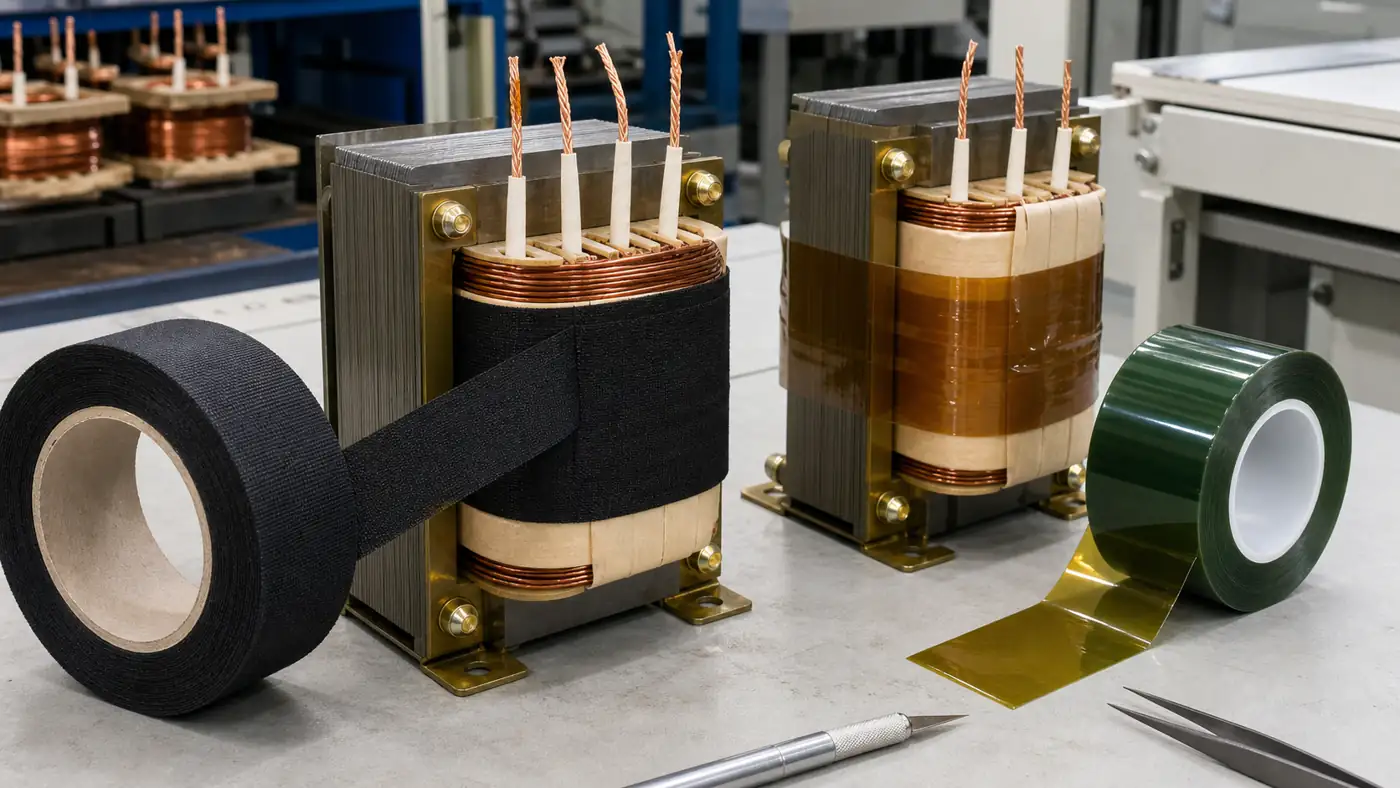
The choice between polyimide tape vs polyester tape depends on temperature, electrical requirements, mechanical behavior, surface, removal, thickness, and cost. Polyimide is commonly selected for demanding high-temperature masking and insulation. Polyester tape can be a practical option for general electrical, holding, splicing, and masking processes when its thermal range is sufficient.
Quick Comparison
| Selection factor | Polyimide tape | Polyester tape |
|---|---|---|
| Typical use | High-temperature masking and insulation | General masking, holding and insulation |
| Appearance | Usually amber | Clear or multiple colors |
| Temperature | Often chosen for demanding heat cycles | Suitable within the specified process limits |
| Cost | Usually higher | Often more economical |
These are general differences, not universal specifications. Finished performance depends on film grade, adhesive chemistry, thickness, and test conditions.
Temperature Resistance
Polyimide film is known for stability in demanding thermal processes, which is why it is widely used around soldering, powder coating, motors, and batteries. Polyester tape can also handle elevated temperatures in suitable constructions. Compare continuous and short-term limits together with dwell time and cycle count.
Electrical Insulation
Both materials can be used in electrical applications. Selection should consider breakdown voltage, dielectric strength, insulation resistance, thermal aging, overlap, edge distance, and the complete system. A material name alone does not establish equipment safety.
Mechanical and Dimensional Behavior
Polyimide tape is available in thin, flexible constructions for tight assemblies. Polyester film offers useful tensile and dimensional properties for many holding, wrapping, and masking tasks. Sharp edges, vibration, abrasion, and repeated flexing require application-specific testing.
Adhesive System Matters
Polyimide and polyester backings can be coated with different pressure-sensitive adhesives. Adhesive choice affects tack, peel adhesion, heat behavior, residue, aging, and surface compatibility. Compare the complete construction rather than assuming the backing controls every property.
Which Tape Fits Each Application?
- PCB solder masking: polyimide is often preferred for demanding reflow or wave-solder profiles.
- Powder coating: validate oven temperature, dwell, coating chemistry, and removal.
- Motor insulation: evaluate thermal class and the complete insulation system.
- General holding: polyester may provide a cost-effective solution.
- Battery insulation: select by location, electrical stress, heat, space, and mechanical risk.
- Die cutting: compare liner, tolerance, dimensional stability, and part geometry.
Decision Checklist
- Define continuous and peak temperatures.
- State whether use is temporary or permanent.
- Identify the substrate and surface condition.
- Set electrical and mechanical requirements.
- Specify residue and removal criteria.
- Compare total thickness, liner, and format.
- Run a production trial before approval.
Explore our polyimide tape solutions and SMT tape selection guide.
Frequently Asked Questions
Is polyimide always better than polyester?
No. Polyimide is useful for demanding heat and insulation, while polyester can be more economical for processes within its range.
Can polyester tape be used for PCB masking?
Some constructions may suit lower-demand processes. Approval must be based on the exact thermal profile and removal requirement.
Can the tapes be substituted at the same thickness?
Not automatically. Backing, adhesive, dielectric properties, heat resistance, and residue can differ even when total thickness is similar.
Conclusion
When comparing polyimide tape vs polyester tape, start with the actual process rather than the material name. Send JIAO TAO TAO your temperature profile, substrate, dimensions, and quantity for a practical recommendation.
Silicone Adhesive Polyimide Tape: Performance and Applications
Polyimide Tape Dielectric Strength: What Engineers Should Check
Related Article

Need help choosing the right industrial tape?
Send us your application details, including temperature, surface material, size, quantity and current problem. Our team will help recommend a suitable tape material or custom die-cut solution.

simon@jiaotaotao.com


+86-136 1277 5969

+86-136 1277 5969
