
Microprismatic vs Glass Bead Reflective Tape: Selection Guide
Microprismatic vs glass bead reflective tape is a comparison of optical constructions, not an automatic ranking of every finished roll. Both return incident light approximately toward its source. The useful result depends on the actual film, colour, viewing geometry, orientation and mounting surface.
For equipment labels, warehouse markers and other visibility projects, start with where the light and observer will be. Then compare the offered materials on the surface you intend to mark. A bright hand-held sample viewed from one position cannot answer every installation question.
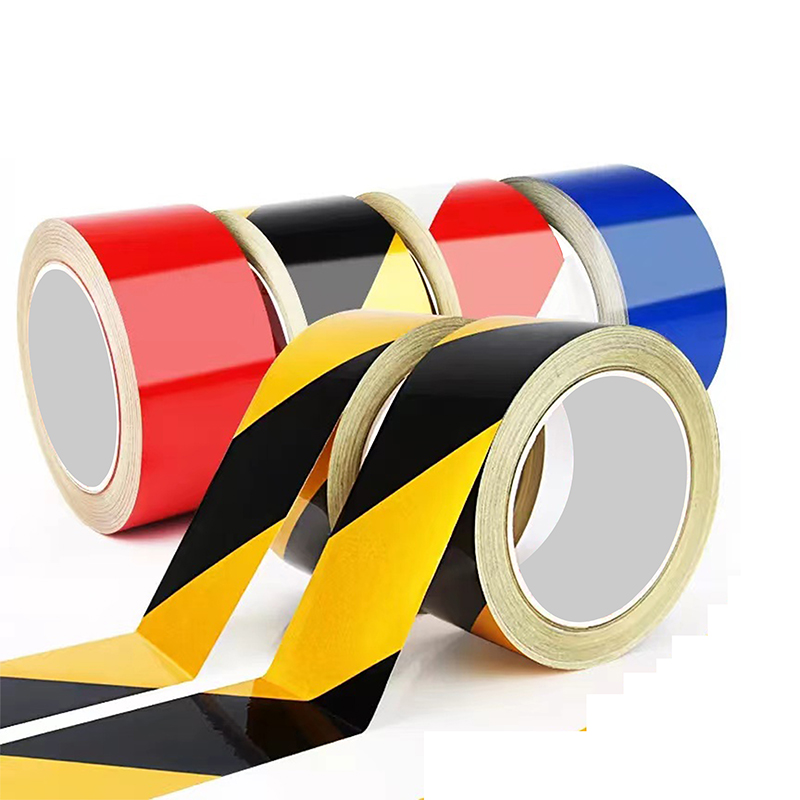
1. How the two reflective constructions work
Glass bead films use small transparent spheres as optical elements. The bead-and-reflector arrangement redirects some incoming light toward the source. Microprismatic films use small prism structures with reflecting faces arranged to return light toward the source. Their optical geometry differs, even when two samples look similar in daylight.
| Selection point | Glass bead construction | Microprismatic construction |
|---|---|---|
| Optical element | Small spheres with a reflecting arrangement | Small shaped prisms |
| What to compare | Actual angular response and colour | Actual angular response, colour and rotation sensitivity |
| Curved installation | Check the complete film and adhesive | Check the complete film and adhesive |
| Evidence needed | Grade-specific data and a representative sample | Grade-specific data and a representative sample |
The JIAOTAOTAO reflective tape listing identifies microprismatic and glass-bead options. Confirm which construction is included in a quotation. The general listing does not establish a particular brightness class or approval for every option.
2. Keep entrance and observation angles separate
Entrance angle describes how the incoming light is directed relative to the surface normal, the imaginary line perpendicular to the tape. A light shining onto the face and a light grazing across it do not create the same optical condition.
Observation angle describes the separation between the illumination and viewing directions at the reflective surface. A person looking from beside a lamp sees a different arrangement from someone standing well to its side. Changing the distance can also change this geometry when the lamp and observer remain separated.
Test reports may define additional components and rotation angles. Ask for the measurement geometry with a result. An isolated brightness number without its colour and angles cannot support a fair comparison between two grades.
3. Check curvature and roll direction together
A curve changes the direction that each small part of the film faces. Even a uniformly applied strip may therefore look different across its width. That optical effect should be considered separately from edge lifting, wrinkles or poor adhesive contact.
Mark the roll direction on the back of trial pieces before removing the liner. Keep their orientation consistent during the initial comparison. If the application requires different directions, evaluate those directions deliberately and request the offered grade's orientation guidance.
Check the radius and whether the surface bends in one or several directions. A film suitable for a gentle curve is not automatically suitable for a tight corner or a recessed shape. Do not force conformity with stretching or heat unless the specific construction and application instructions permit it.
4. Prepare a surface that the adhesive can contact
Identify the actual substrate and coating: a smooth painted panel, textured plastic and bare metal need separate consideration. Confirm that the finish is sound and that any new coating has cured according to its instructions.
- Remove dust, oil, loose material and cleaner residue with a method compatible with the surface.
- Let the surface dry, and check seams or recesses where moisture can remain.
- Use the specified application conditions and pressure method for the offered film.
- Keep fingers away from the adhesive and apply without wrinkles or trapped areas that bridge the surface.
- Inspect edge contact after application and after the trial conditions relevant to the job.
Use the grade's application procedure rather than assuming that every reflective film allows the same cleaning agent, wet application, edge treatment or post-application handling.
5. Compare samples with a recorded viewing setup
Mount samples of the same intended colour on representative panels. Record the construction, lot, roll direction, substrate, preparation and application conditions. Keep patch size and location comparable so the installation does not dominate the comparison.
Observe with a light close to the viewing position, then repeat at the other source and observer positions that matter to the project. Keep the geometry consistent when switching samples. Check the marking on its real curve as well as on a flat control panel.
Photographs are useful records, but automatic exposure can change their appearance. Record camera and lighting conditions and avoid treating a phone image as a calibrated retroreflectivity measurement. Use suitable measured data where the design requires a defined optical acceptance value.
6. Send the installation details with an inquiry
Browse the warning and marking tape range, then tell JIAOTAOTAO the intended marking position, substrate finish, curve shape, light and observer positions, colour, cut size and quantity. Include photographs or a drawing and the destination's documented requirements where applicable.
Request reflective tape samples and grade information for that arrangement. Ask for the construction, angular data and installation instructions that correspond to the actual offered material.
7. Frequently asked questions
Is microprismatic tape always brighter than glass bead tape?
No universal ranking follows from those names. Compare the actual grade, colour and reported viewing geometry. A film can return more light in one arrangement and behave differently when the light, observer or tape orientation changes. Request comparable angular data rather than a single brightness claim.
Will reflective tape glow without a light source?
Retroreflection itself does not create light. It redirects incident light back toward its source. A marking that must remain visible without incident illumination needs a different design requirement; do not treat reflective film and light-emitting or light-storing materials as interchangeable.
Can either construction wrap around a tight curve?
That depends on the complete film and adhesive, not just whether it contains beads or prisms. Check the specified surface geometry and application method. Trial the actual radius without forcing the material to stretch, bridge a recess or lift at an edge.
Does the direction cut from a roll matter?
It can. The optical response of some constructions varies with rotation. Mark the roll direction on sample pieces, keep it consistent in the first comparison and request any orientation instructions for the offered grade. A random patchwork can make a useful comparison difficult.
Does a reflective product description prove road-use approval?
No. A construction name, colour or bright flashlight trial does not establish approval for a regulated marking. Confirm documentation for the exact grade, colour, application and destination requirements before specifying it for that use. General reflective-film availability is not a blanket compliance statement.
PE Protective Film Removal Time: Plan the Full Exposure
Copper Tape Overlap Conductivity: What a Seam Test Shows
Related Article

Need help choosing the right industrial tape?
Send us your application details, including temperature, surface material, size, quantity and current problem. Our team will help recommend a suitable tape material or custom die-cut solution.

simon@jiaotaotao.com


+86-136 1277 5969


+86-136 1277 5969
