
Polyimide Tape for Thermocouple Attachment in Thermal Testing
Polyimide Tape for Thermocouple Attachment in Thermal Testing
Polyimide tape for thermocouple attachment can hold a small sensor junction and lightweight wires against a test surface during controlled heating or cooling. Its thin film, dimensional stability and heat-resistant adhesive make it a practical candidate for many laboratory and production tests. Accurate data still depends on the complete measurement setup: sensor type, contact pressure, wire routing, tape coverage, surface condition and thermal cycle must all be controlled. This guide is for test engineers, laboratory technicians and quality teams standardizing a repeatable attachment method.
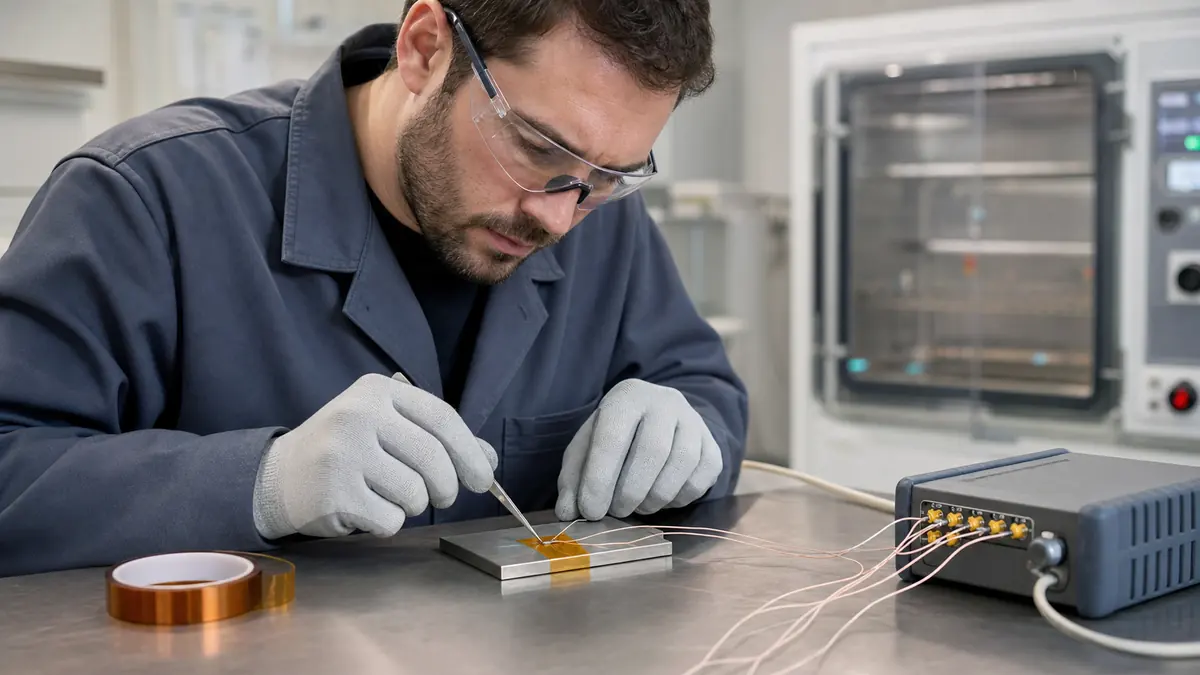
Why Tape Geometry Can Change a Temperature Reading
A thermocouple responds to the temperature at its junction. Tape that bridges over the bead, traps an air pocket or lifts during the cycle can reduce contact with the part. A large patch can also alter local convection or heat flow. The goal is therefore not to cover as much area as possible, but to use a repeatable attachment method that keeps the junction where the test plan defines it.
Polyimide tape does not calibrate the sensor and should not be assumed to protect it beyond the ratings of the wire, junction and instrument. Confirm the tape grade with its current technical data sheet and keep the entire assembly within the limits defined by the test owner.
Parameters to Document Before Selecting Tape
| Parameter | What to Record | Why It Matters |
|---|---|---|
| Surface | Metal, coated panel, polymer, composite or PCB laminate | Surface chemistry and texture influence adhesion and removal |
| Thermal cycle | Measured temperature, ramp, dwell, cooling and cycle count | Defines the real exposure rather than a chamber setpoint alone |
| Sensor geometry | Junction size, wire gauge, insulation and bead profile | Determines tape width and contact method |
| Tape construction | Polyimide film, adhesive type and total thickness | Affects conformability, hold and added thermal mass |
| Test duration | Temporary measurement or extended monitoring | Long dwell can change adhesive behavior and residue risk |
| Removal need | Reusable coupon, cosmetic surface or destructive test part | Controls residue and surface-protection requirements |
Recommended Attachment Method
Prepare and position the junction
Use the cleaning procedure approved for the test surface and allow it to dry. Place the thermocouple junction at the documented measurement location. Avoid touching the adhesive or moving the bead after the reference position has been recorded.
Apply a small primary strip
Use a strip wide enough to hold the junction and immediate wire segment without covering an unnecessarily large area. Apply even pressure around the sensor so the tape conforms to the surface. Do not pull the tape so tightly that it stretches, curls or shifts the bead.
Add wire strain relief away from the junction
A second short strip can secure the wire several centimeters from the measurement point. This reduces the chance that cable movement, chamber loading or instrument connection will lift the primary strip. Route wires consistently so adjacent channels are comparable.
Polyimide Tape vs Other Attachment Options
| Method | Useful When | Main Limitation to Review |
|---|---|---|
| Polyimide film tape | Thin, removable fixation is needed for many controlled thermal cycles | Adhesion, residue and local thermal influence must be validated |
| Aluminum foil tape | A conductive, conformable foil patch is acceptable in the setup | Electrical conductivity and different heat-spreading behavior |
| High-temperature cement | A more permanent bond is required on a compatible surface | Cure time, added mass and difficult removal |
| Mechanical clamp | The part geometry permits defined contact force | Clamp mass, access and pressure can influence the local condition |
This table is a test-planning comparison, not a universal ranking. The attachment method should be selected with the measurement engineer and documented in the procedure.
Common Failure Modes
- Air under the junction: produces inconsistent contact and delayed response.
- Wire pull: moves the bead when the chamber door closes or the cable is routed.
- Edge lift: can occur on contaminated, textured or sharply curved surfaces.
- Oversized tape patch: changes the local boundary condition more than necessary.
- Adhesive residue: may affect reusable test coupons or later coating operations.
- Unrecorded variation: prevents meaningful comparison between test runs.
Validation Checklist for Repeatable Tests
- Choose the sensor, tape grade and attachment geometry before the test series begins.
- Photograph or diagram the junction location and wire direction.
- Run a short trial cycle and inspect lift, movement and surface effects.
- Compare duplicate channels where measurement uncertainty is important.
- Record tape lot, width, strip length and application method in the test report.
- Inspect the surface and sensor after removal, then revise the method if needed.
FAQ
Is Kapton tape the same as polyimide tape for this application?
Kapton is a well-known polyimide film brand name. Buyers should specify the actual polyimide tape construction, adhesive and technical data rather than treating every amber PI tape as identical.
Should the tape cover the thermocouple bead?
The attachment method depends on sensor geometry and the test procedure. Use the minimum repeatable coverage needed to maintain intimate contact, and evaluate whether the patch changes the local thermal condition.
Can polyimide tape stay on for repeated thermal cycles?
Selected grades may be suitable, but repeated-cycle performance depends on temperature, dwell, surface, adhesive and wire load. Inspect after a representative trial and follow the tape supplier’s current data.
How can wire movement be reduced?
Add a separate strain-relief strip away from the junction, route the lead consistently and secure the cable before it enters the chamber or connects to the instrument.
Related Products and Technical Reading
- Polyimide tape product range
- Single-sided polyimide film tapes
- High-temperature tape material selection guide
Request Tape for a Thermal Test Trial
To evaluate polyimide tape for thermocouple attachment, send JIAO TAO TAO the test surface, temperature cycle, sensor and wire dimensions, preferred tape width, dwell time and removal requirement. The technical team can help shortlist constructions for controlled trials. Contact the technical sales team.
PET Silicone Tape for Chemical Etching Masking
PET Silicone Tape for Motor Coil Winding and Varnish Cure
Related Article
Need help choosing the right industrial tape?
Send us your application details, including temperature, surface material, size, quantity and current problem. Our team will help recommend a suitable tape material or custom die-cut solution.

simon@jiaotaotao.com


+86-136 1277 5969


+86-136 1277 5969
