
Best Tape for Reflow Soldering in PCB Assembly
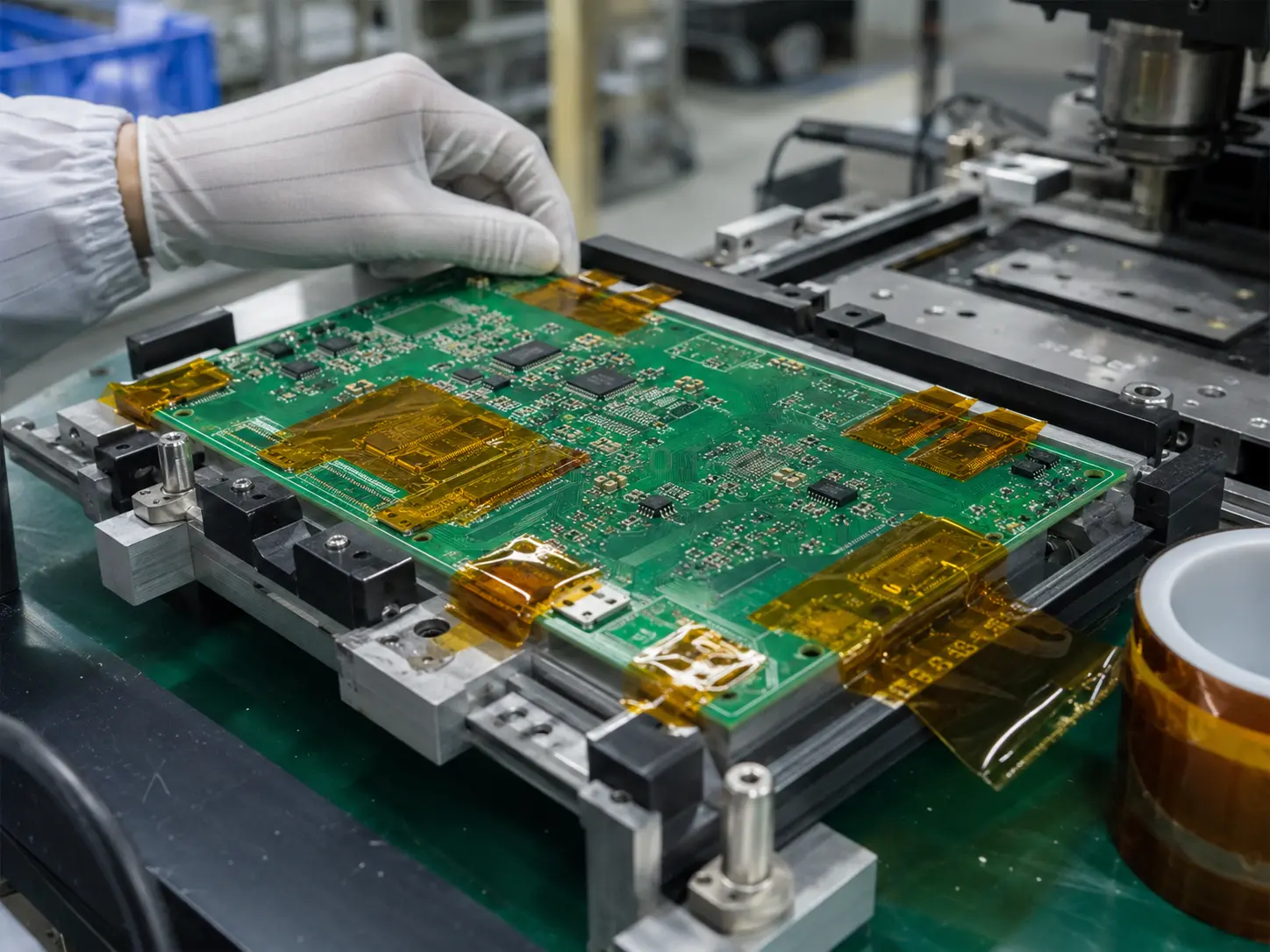
What Tape to Use for Reflow Soldering
For most reflow soldering masking jobs, polyimide tape with silicone adhesive is the best choice. It is used because it handles reflow heat more reliably, keeps masking edges stable, provides electrical insulation, and removes more cleanly than ordinary masking tape after the process.
If your current tape leaves residue, curls during heating, exposes pads or connectors, or contaminates the board after reflow, you are almost certainly using the wrong tape class for the process.

Why Tape Fails in Reflow Soldering
| What You See | What It Usually Means | What the Right Tape Must Do |
|---|---|---|
| Edge lifts during reflow | The backing or adhesive is not stable enough | Stay flat and sealed during the heat cycle |
| Residue after removal | The adhesive system is not suitable for reflow conditions | Remove cleanly after soldering |
| Pad or connector exposure | The tape shrank or shifted under heat | Keep dimensional stability throughout the process |
| Board contamination | Masking material is incompatible with the process | Protect the target area without contaminating the board |
| Static-sensitive handling risk | Standard tape is being used in an ESD-sensitive area | Provide controlled ESD-safe masking when needed |
Best Tape Choice for Reflow Soldering
Polyimide tape is the standard answer in many reflow soldering environments because it combines the three things engineers care about most: thermal stability, electrical insulation, and clean removal.
That makes it the safest choice when the masking point is close to solder heat, sensitive board areas, connectors, pads, FPC sections, or other parts where process failure becomes expensive.
Recommended direction: use single-sided polyimide tape or polyimide tape for most reflow solder masking jobs.

When to Use ESD Polyimide Tape Instead
If the masking job is inside a static-sensitive electronics environment, standard polyimide tape may not be enough from a process control perspective. In that case, the correct upgrade is not a random “higher temperature” tape. It is an ESD-safe polyimide masking solution.
Recommended direction: use ESD polyimide tape or related ESD PI structures when the reflow process needs both heat stability and controlled static behavior.
When PET Silicone Tape Can Work
For some SMT pads, connectors, and test point masking jobs, PET silicone solder masking tape can also be a workable solution if the process window fits it and the board-level requirement is not pushing beyond that material’s practical range.
Recommended direction: use PET silicone solder masking tape when the process is specifically matched to that structure and clean removal on selected PCB masking zones is the target.
But if you want the safer default answer for reflow soldering, polyimide still comes first.

Which Tape Should You Use?
Polyimide Tape
Use it when: you need the most reliable general answer for reflow solder masking, heat stability, insulation, and clean removal.
ESD Polyimide Tape
Use it when: the board or production area is static-sensitive and reflow masking still needs stable thermal performance.
PET Silicone Masking Tape
Use it when: the masking point is process-matched to PET silicone structure and the goal is selective PCB masking with clean removal.
Die-Cut PCB Masking Parts
Use them when: repeated manual cutting is slowing production or causing inconsistent masking shape from board to board.
Quick Decision Table
| Your Main Need | Better Choice |
|---|---|
| Best default tape for reflow solder masking | Polyimide tape |
| Reflow masking in static-sensitive production | ESD polyimide tape |
| Selective PCB pads / connector masking with matched process fit | PET silicone solder masking tape |
| Repeatable masking geometry in production | Die-cut masking parts |
FAQ
What tape should I use for reflow soldering?
For most reflow solder masking jobs, polyimide tape is the best and most common choice because it provides better heat stability, insulation, and clean removal.
Can I use PET tape for reflow soldering?
In some process-matched PCB masking jobs, PET silicone masking tape can work, but polyimide tape is still the safer default choice for reflow soldering.
When should I use ESD polyimide tape?
Use ESD polyimide tape when the board or assembly process is static-sensitive and still needs reliable reflow masking performance.
Why does reflow solder masking tape leave residue?
This usually means the adhesive system is not properly matched to the heat cycle, board surface, or removal condition.
Can reflow solder masking tape be die cut?
Yes. PCB masking materials are often supplied as die-cut dots, strips, tabs, and custom shapes for more repeatable production use.
Conclusion
If you want the shortest professional answer, use polyimide tape for reflow soldering. Upgrade to ESD polyimide when static control matters. Use PET silicone masking tape only when the board process is clearly matched to that structure. The right tape should survive the heat cycle, protect the target area, and come off cleanly without creating more rework than it prevents.
Need the right masking tape for your PCB line? JIAO TAO TAO supports OEM/ODM supply, custom widths, die-cut conversion, and bulk production for polyimide, ESD polyimide, and PCB solder masking tape projects.
+86-13612775969
+86-13612775969
simon@jiaotaotao.com
Send Inquiry Online
Best Heat Resistant Tape for Oven Use
High Temperature Tape for Heat, Masking & Insulation
Related Article
Need help choosing the right industrial tape?
Send us your application details, including temperature, surface material, size, quantity and current problem. Our team will help recommend a suitable tape material or custom die-cut solution.

simon@jiaotaotao.com


+86-136 1277 5969


+86-136 1277 5969
