
PET Silicone Tape for Powder-Coat Grounding Point Masking
PET Silicone Tape for Powder-Coat Grounding Point Masking
PET silicone tape for powder coat grounding point masking keeps selected studs, contact pads, and bonding surfaces free of cured coating so the finished assembly can make its intended electrical or mechanical connection. The tape is a temporary process mask, not proof that the final grounding path is compliant. The drawing, cure profile, metal surface, tape geometry, removal method, and post-coat inspection must all be controlled.

Key Takeaways
- Mask the exact released contact area, not an operator-defined approximation.
- Screen the tape against the complete washer, pretreatment, powder, cure, and cooling sequence.
- Use measured part temperature and dwell time rather than oven setpoint alone.
- Remove the tape in a controlled window and verify bare metal, edge quality, residue, and dimensions.
Why Powder-Coat Grounding Points Need Controlled Masking
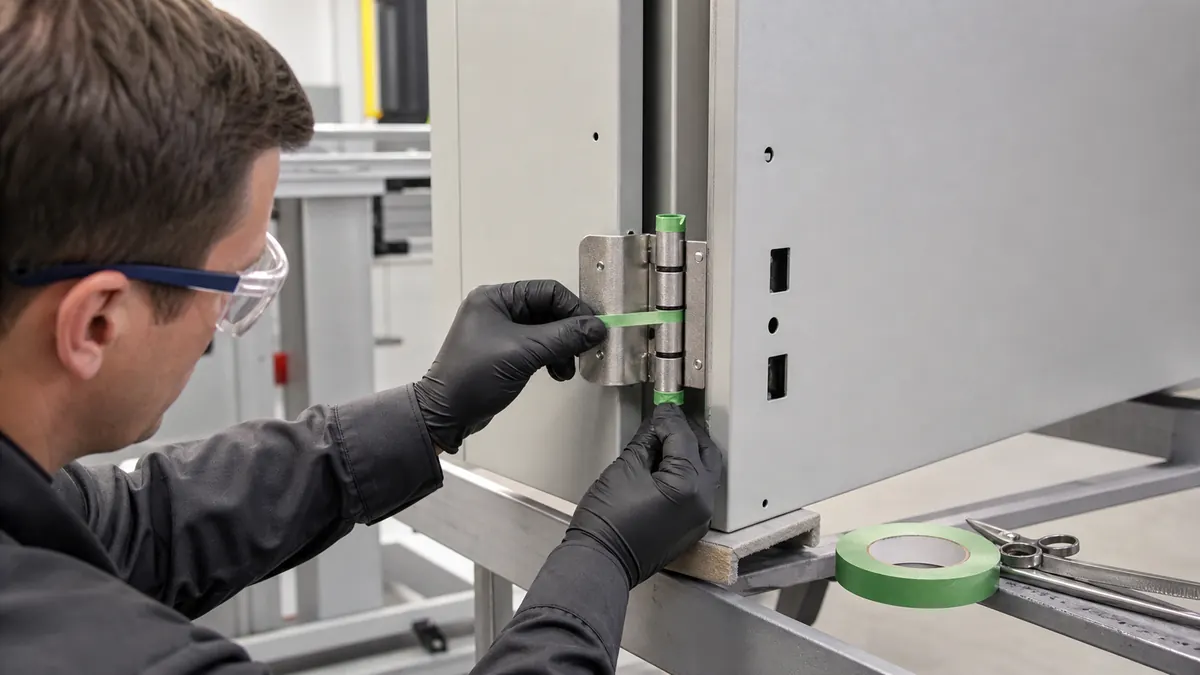
Powder coating creates a durable finish, but the coating also separates hardware from the underlying metal. Control cabinets, frames, brackets, and machine housings often include studs, pads, tabs, or mounting faces that must remain uncoated for a later bonding, grounding, conductive gasket, or precision-fit operation. A general strip of tape can leave an irregular boundary, wrinkle around hardware, or cover too much surface. The masking detail should therefore be treated as a manufactured feature.
PET film with silicone pressure-sensitive adhesive is commonly considered for elevated-temperature masking because the film gives a thin, visible boundary and the adhesive can be formulated for heated removal. Suitability still depends on the actual grade. Before specifying it, review the supplier data sheet and run the full production sequence on the real substrate.
Grounding-Point Mask Formats Compared
| Format | Best fit | Main control point |
|---|---|---|
| Slit roll | Long rectangular bonding strips or simple flat pads | Operator alignment, corner sealing, and overlap |
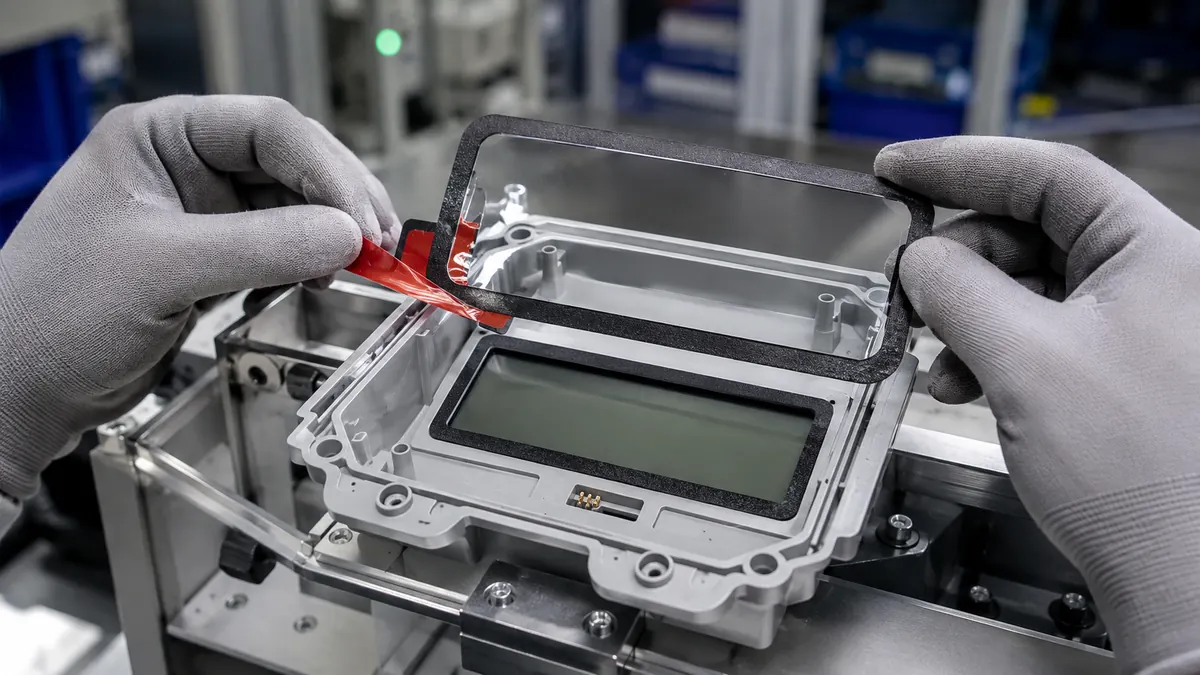
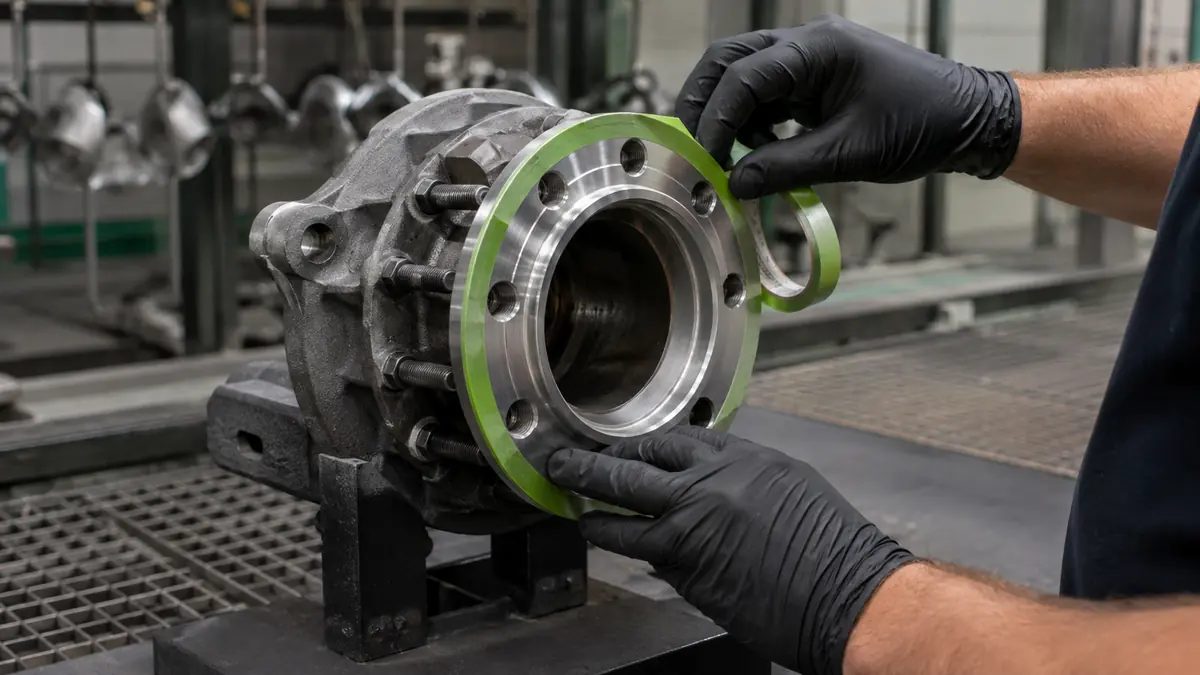
| Die-cut disc or washer | Stud bases, circular contacts, and repeatable hole patterns | Inside/outside diameter and concentric placement |
| Kiss-cut array | High-volume parts with several identical mask locations | Liner release, pick sequence, and orientation |
| Combined tape and reusable plug | Threads plus a surrounding contact land | No exposed gap between the two mask elements |
Data Required Before Selecting PET Silicone Tape
| Parameter | What to record | Why it matters |
|---|---|---|
| Metal and pretreatment | Alloy, finish, washer chemistry, rinse, and dry condition | Adhesion and removal change with surface energy and contamination |
| Cure exposure | Measured part temperature, ramp, dwell, cool-down, and number of cycles | Backings and adhesives respond to real part history, not only oven settings |
| Powder system | Powder type, spray sequence, reclaim conditions, and film build target | Controls edge loading and the force needed to break the coating bridge |
| Mask geometry | Shape, dimensions, tolerance, pull tab, and keep-out areas | Determines usable contact area and removal access |
| Downstream interface | Washer, lug, gasket, fastener, seal, or mating component | Sets the functional surface and dimensional acceptance criteria |
| Inspection | Residue, coating intrusion, bare-metal dimensions, scratches, and corrosion handling | Turns masking quality into a repeatable release decision |
Size the Mask From the Final Interface
Start with the released interface drawing. The mask should expose enough metal for the intended hardware or conductive element while preserving any required coating around it. An oversized mask may create an unprotected corrosion path; an undersized mask can leave coating beneath the washer or lug. Include die-cut and placement tolerances in the stack-up.
Use the Real Cure Profile
Oven air temperature can differ from part temperature, especially on thick brackets or densely loaded racks. Attach temperature sensors to representative parts and document the exposure at the masked feature. Ask the tape supplier for data covering the relevant backing, adhesive, time, and surface, then qualify the combined process.
Plan Removal Before Coating
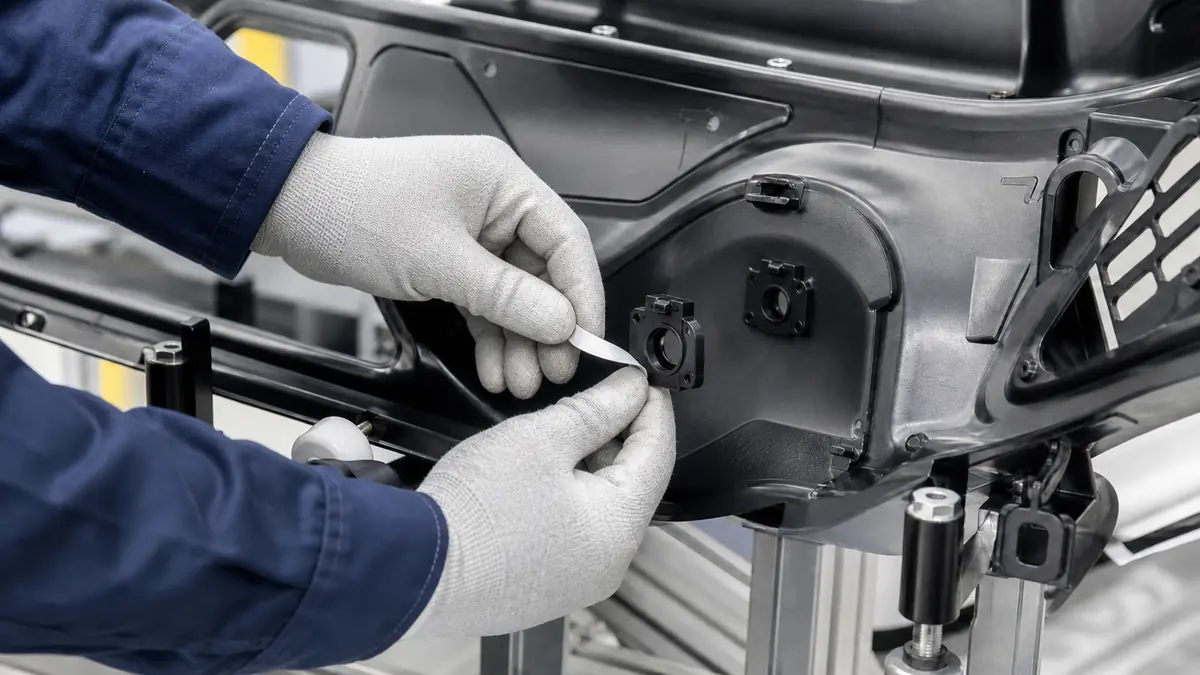
A pull tab can reduce scratching and prevent tools from contacting the finished surface. Removal while the part is too hot can deform the mask or expose operators to heat; waiting too long can make a coating bridge harder to break cleanly. Establish a safe, tested temperature window and peel direction.
Recommended Application and Inspection Workflow
- Confirm the mask drawing. Identify every stud, pad, mating face, thread, and no-mask zone.
- Release the surface condition. Apply tape only after the approved cleaning or pretreatment step and within its allowed hold time.
- Place without stretching. Align from a datum, press the perimeter, and avoid wrinkles, trapped powder, or lifted corners.
- Inspect before spraying. Verify count, location, edge seal, pull-tab direction, and any plug-to-tape junction.
- Run the production cure. Include representative rack density, orientation, and cooling conditions.
- Remove by the approved method. Peel at the released part temperature without scraping the contact surface.
- Inspect the exposed feature. Check dimensions, coating intrusion, residue, scratches, oxidation, and hardware fit.
- Verify the finished assembly. Perform the electrical or mechanical acceptance test required by the responsible design authority.
Troubleshooting Powder-Coat Masking Defects
| Defect | Likely checks | Corrective direction |
|---|---|---|
| Powder under the edge | Surface contamination, corner lift, insufficient pressure, or unsuitable adhesive | Stabilize cleaning and application; retest the tape grade and geometry |
| Jagged coating boundary | Thick powder bridge, blunt removal angle, or late removal | Review film build, tab design, peel direction, and removal window |
| Adhesive transfer | Excess exposure, incompatible surface, aged tape, or incorrect removal | Recheck cure history, storage, adhesive system, and peel conditions |
| Mask shifts on the rack | Stretching, low initial contact, vibration, or complex contour | Use a die-cut shape, improve datum control, and avoid tension during placement |
Related Products and Articles
- Explore the polyester tape product range for process-masking constructions.
- Review the existing PET high-temperature tape technical guide for material fundamentals.
- For repeatable discs, washers, and arrays, see custom die-cutting capabilities.
- Send the part drawing and cure profile for a format review.
Frequently Asked Questions
Can PET silicone tape mask a cabinet grounding stud during powder coating?
It can be a suitable temporary mask when the specific tape grade is qualified for the metal, pretreatment, powder, measured cure profile, geometry, and removal method. The finished grounding connection still needs its required electrical verification.
Should the stud threads be covered with tape?
Threads are often better protected by a correctly sized cap or plug, while a die-cut tape washer defines the surrounding contact land. The approved method should match the hardware geometry and coating process.
How large should the bare grounding pad be?
Use the released assembly drawing and interface stack. Include washer or lug dimensions, coating clearance, corrosion strategy, die-cut tolerance, and placement tolerance rather than choosing a generic pad size.
Will PET silicone tape always remove without residue?
No tape is residue-free under every condition. Test the exact grade after the full washer, cure, cooling, storage, and removal sequence on representative parts.
What should an RFQ include?
Provide the substrate, pretreatment, powder system, measured temperature profile, mask drawing, tolerances, roll or die-cut format, quantity, removal timing, and inspection criteria.
Prepare a Grounding-Point Mask Trial
Share the cabinet or bracket drawing, contact hardware, metal and pretreatment, powder chemistry, measured cure profile, required exposed area, removal method, and inspection plan. JIAO TAO TAO can help shortlist a PET silicone tape width or die-cut format for your process qualification.
Custom Die-Cut Tape for Battery Vent Membrane Bonding
Custom Die-Cut Tape for Speaker Mesh and Acoustic Vent Bonding
Related Article
Need help choosing the right industrial tape?
Send us your application details, including temperature, surface material, size, quantity and current problem. Our team will help recommend a suitable tape material or custom die-cut solution.

simon@jiaotaotao.com


+86-136 1277 5969


+86-136 1277 5969
