Kapton Tape for PCB Solder Masking & Gold Fingers
Kapton Tape for PCB Solder Masking and Gold Finger Protection
Kapton tape for PCB applications is a heat-resistant polyimide adhesive tape used to protect gold fingers, connectors, contacts and sensitive circuit areas during soldering, SMT reflow, wave soldering, tin plating and electronic assembly.
Its thin polyimide film, high-temperature silicone adhesive, electrical insulation and dimensional stability make it suitable for precise PCB masking where ordinary plastic or PVC tape may shrink, soften or leave excessive adhesive residue.
Why Is Kapton Tape Used on PCBs?
Printed circuit boards contain conductive contacts, gold fingers, connectors, test points and components that may need temporary protection during manufacturing. These areas must remain free from solder, flux, coating and contamination.
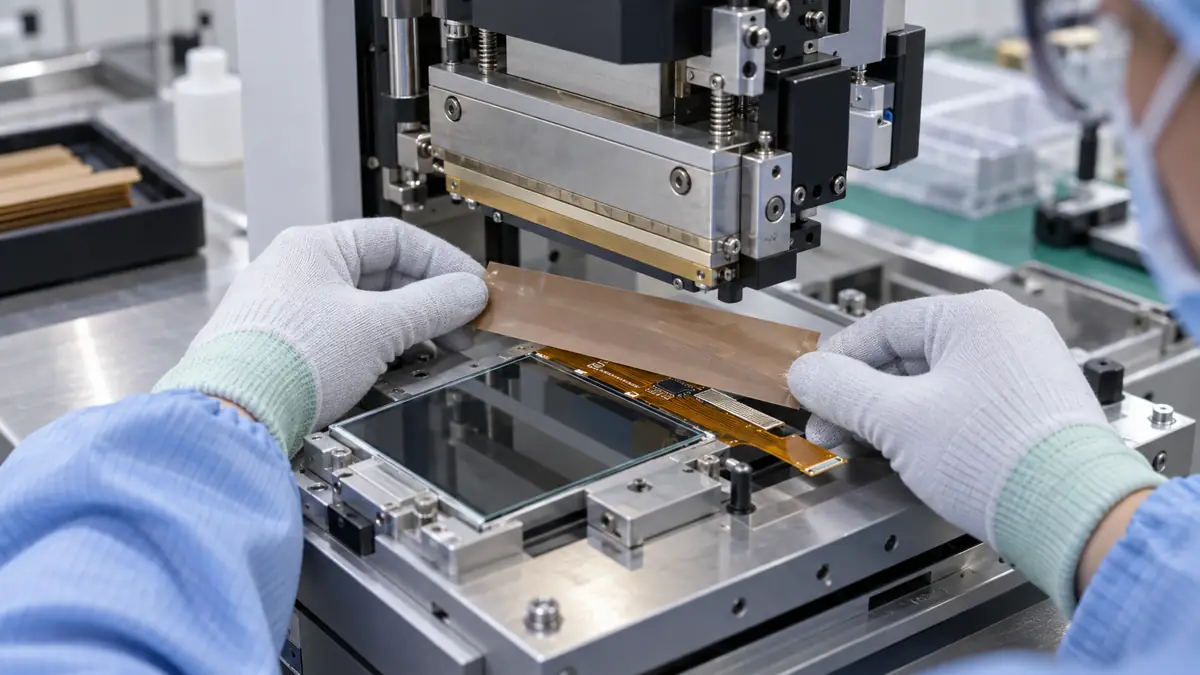
Polyimide tape provides a thin and stable masking layer that can withstand elevated processing temperatures while maintaining a precise masking edge. It is therefore commonly used in PCB assembly, electronics repair, flexible circuit production and component manufacturing.
Kapton is a well-known polyimide film trade name. In the adhesive tape market, the terms Kapton tape and polyimide tape are often used to describe similar high-temperature masking and insulation products.
Main PCB Applications of Polyimide Tape
PCB Gold Finger Protection
Gold fingers are conductive contacts located along the edge of a circuit board. They must remain clean and free from solder, coating, dust and process contamination.
Polyimide tape can be applied directly over the gold fingers before soldering, coating or assembly. After processing, the tape is removed to expose a clean contact surface.
SMT Reflow Masking
During surface-mount assembly, a PCB passes through a controlled heating cycle. Selected connectors, terminals, sensors and sensitive areas may require temporary masking.
High-temperature polyimide tape helps maintain position and dimensional stability during the reflow process. The exact tape grade should be selected according to the peak temperature, exposure duration and substrate surface.
Wave Soldering Protection
Wave soldering exposes the lower surface of a circuit board to molten solder. Polyimide tape can protect contacts, holes, edge connectors and other areas that must not be soldered.
The tape should be applied firmly without wrinkles, bubbles or lifted edges. Poor application may allow solder or flux to enter beneath the masking area.
PCB Tin-Plating Masking
During selective tin plating and other surface-treatment processes, polyimide tape can isolate areas that must remain untreated. Its thin profile helps create a precise masking line around contacts and conductive surfaces.
Temporary Component Fixation
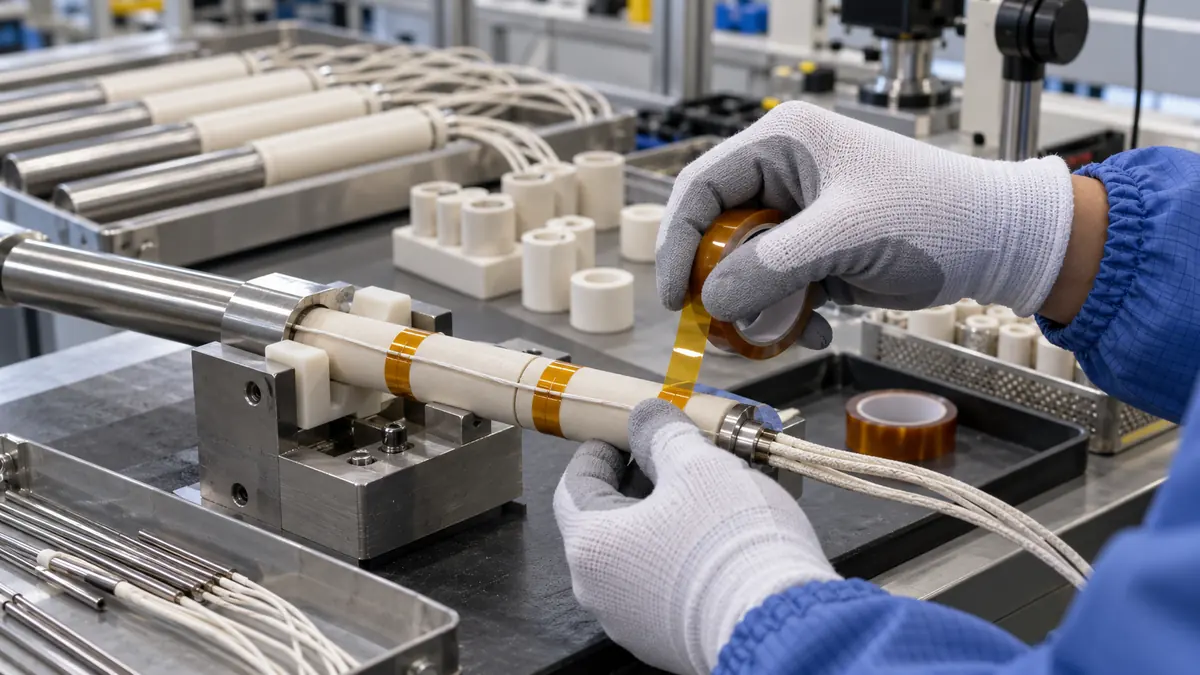
Polyimide tape may temporarily hold wires, thermocouples, flexible circuits or small components during assembly, testing and thermal processing.
PCB Repair and Rework
During soldering repair, technicians use narrow polyimide tape to protect nearby components, plastic connectors and circuit traces from direct heat, solder splashes and accidental contact.
Key Benefits of Kapton Tape for PCB Manufacturing
| Property | Benefit for PCB Processing |
|---|---|
| High-temperature resistance | Suitable for soldering, reflow and thermal processing |
| Thin polyimide film | Provides precise masking around small PCB features |
| Dimensional stability | Reduces shrinking, curling and masking-line movement |
| Electrical insulation | Helps isolate conductive parts and electronic components |
| Silicone adhesive | Maintains adhesion during elevated-temperature processing |
| Conformability | Fits around connectors, edges and irregular PCB surfaces |
| Clean-removal potential | Can reduce residue when the correct grade and process are used |
Typical Polyimide Tape Specifications for PCB Applications
Product specifications vary according to film thickness, adhesive formulation and application requirements. Typical industrial options include:
| Property | Typical Specification |
|---|---|
| Backing material | Polyimide film |
| Adhesive | High-temperature silicone adhesive |
| Film thickness | Approximately 0.025–0.050 mm |
| Total thickness | Approximately 0.035–0.100 mm |
| Continuous temperature range | Approximately −73°C to 260°C, depending on grade |
| Standard roll length | Commonly 33 m |
| Available width | Approximately 3–500 mm or custom slit widths |
| Common color | Amber, with other colors available |
| Optional versions | ESD, flame-retardant, double-sided and die-cut grades |
These values are general reference ranges. Buyers should review the technical data sheet and test the tape using the actual PCB process before mass production.
How to Apply Kapton Tape to PCB Gold Fingers
- Clean the PCB surface. Remove oil, dust, moisture, flux residue and other contaminants from the gold fingers and surrounding area.
- Select the correct tape width. Use a width that covers the required contact area without masking nearby components or test points.
- Align the masking edge. Position the tape carefully along the boundary of the gold fingers or protected area.
- Apply uniform pressure. Press the tape firmly from one side to the other to reduce bubbles, wrinkles and lifted edges.
- Inspect the masking area. Confirm that there are no gaps through which solder, flux or coating may penetrate.
- Complete the production process. Carry out soldering, reflow, coating or plating within the validated temperature and time limits.
- Allow appropriate cooling. Follow the tested process before removing the tape.
- Remove at a controlled angle. Peel the tape slowly and evenly to reduce stress on the PCB surface and minimize adhesive residue.
How to Choose the Correct PCB Masking Tape
1. Confirm the Peak Temperature
Determine the highest temperature reached during reflow, wave soldering, hot-air repair or other processing. Also confirm the total exposure time.
A tape suitable for a short thermal cycle may not be suitable for continuous high-temperature use.
2. Check the PCB Surface
Adhesion may differ on gold-plated contacts, solder mask, copper, laminate, aluminum and plastic connectors. Test the tape on the actual board surface.
3. Select the Correct Thickness
Thin polyimide tape is often preferred for precise masking around small contacts and components. A thicker tape may provide more mechanical protection but may be less conformable.
4. Evaluate Adhesive Residue
Residue control is critical for gold fingers, connectors and conductive contacts. Test the complete heating, cooling and removal cycle before approving a tape.
5. Determine ESD Requirements
Standard polyimide tape is electrically insulating. ESD polyimide tape should be considered when sensitive electronic components require controlled static performance.
6. Select Standard Rolls or Die-Cut Parts
Standard rolls are suitable for flexible manual application. Custom die-cut masks can improve placement accuracy and reduce production time in repetitive PCB assembly.
Standard Polyimide Tape vs ESD Polyimide Tape
| Comparison | Standard Polyimide Tape | ESD Polyimide Tape |
|---|---|---|
| Main function | Heat-resistant masking and electrical insulation | Heat-resistant masking with controlled static performance |
| Typical application | General PCB solder masking and insulation | Static-sensitive electronics and component assembly |
| Surface resistance | Insulating grade | Typically controlled within a specified ESD range |
| Identification | Often amber | May be black or specially marked, depending on grade |
Do not assume that every black polyimide tape is ESD-safe. Confirm the surface-resistance specification and relevant test data before use.
Polyimide Tape vs PET Tape for PCB Masking
| Feature | Polyimide Tape | PET High-Temperature Tape |
|---|---|---|
| Backing | Polyimide film | Polyester film |
| Heat resistance | Generally higher | Suitable for many medium and high-temperature processes |
| Electrical insulation | Excellent for demanding electronic applications | Suitable for general insulation and surface protection |
| Cost | Generally higher | Generally more economical |
| Recommended use | Reflow, soldering, gold fingers and sensitive electronics | General masking, protection and selected PCB processes |
Polyimide tape is normally selected for higher-temperature PCB processes and demanding electrical insulation. PET tape can be considered when the process temperature is lower and cost efficiency is important.
Why Does PCB Masking Tape Leave Residue?
Residue can result from a mismatch between the tape and the manufacturing process. Common causes include:
- Processing temperature exceeds the tape limit.
- The tape remains on the PCB for too long.
- The surface contains flux, oil or cleaning chemicals.
- Excessive pressure causes adhesive displacement.
- The adhesive formulation is unsuitable for the substrate.
- The tape is removed at an incorrect temperature or angle.
- The same tape is reused for different process conditions.
The most reliable solution is to test the tape using the complete production cycle, including surface cleaning, application pressure, heating, cooling and removal.
Common PCB Masking Problems and Solutions
| Problem | Possible Cause | Recommended Action |
|---|---|---|
| Tape lifts during reflow | Contaminated surface or insufficient adhesion | Clean the board and test a suitable adhesive grade |
| Solder enters beneath the tape | Wrinkles, bubbles or incomplete edge sealing | Apply uniform pressure and inspect the masking edge |
| Adhesive residue remains | Excessive heat or prolonged exposure | Review temperature, time and removal conditions |
| Tape shrinks or curls | Backing material is unsuitable for the process | Use a dimensionally stable high-temperature film |
| Gold fingers are damaged during removal | Excessive adhesion or incorrect removal angle | Use controlled peel speed and validate adhesive strength |
Custom PCB Masking Tape and Die-Cut Solutions
Custom converting can improve consistency in high-volume PCB production. Instead of manually cutting standard rolls, manufacturers can use pre-shaped masking parts matched to the board design.
Available converting formats may include:
- Narrow slit polyimide tape rolls
- Pre-cut strips for gold fingers
- Polyimide discs and circles
- Washers and ring-shaped insulation parts
- Connector and terminal masking shapes
- Custom sheets and kiss-cut parts
- ESD polyimide die-cut components
- Double-sided polyimide bonding parts
A custom shape can reduce operator errors, improve masking alignment and increase assembly efficiency.
PCB Polyimide Tape Manufacturer
JIAO TAO TAO is an industrial adhesive tape manufacturer based in Dongguan, Guangdong, China. Established in 2009, the company operates a 6,000 m² manufacturing facility with coating, slitting, rewinding, cutting, online testing and custom die-cutting capabilities.
Polyimide tape can be supplied for PCB solder masking, gold finger protection, SMT reflow, battery insulation, transformers, motors and other high-temperature electronic applications.
Available manufacturing services include:
- Custom width and roll length
- Single-sided and double-sided polyimide tape
- Standard and ESD grades
- Custom die-cut PCB masking parts
- Sample testing and application support
- OEM packaging and private-label services
Learn more about polyimide tape properties and applications or view our single-sided polyimide tape .
Frequently Asked Questions
Can Kapton tape be used for PCB soldering?
Yes. Polyimide tape is widely used to protect PCB gold fingers, connectors, contacts and nearby components during soldering, SMT reflow, wave soldering and electronic repair.
Will polyimide tape damage PCB gold fingers?
A properly selected tape should not damage the contact surface when it is applied to a clean board and removed using a validated process. Adhesion, temperature, dwell time and removal angle should be tested first.
Does Kapton tape leave residue after reflow?
A suitable high-temperature silicone-adhesive tape can generally be removed cleanly within its recommended temperature and exposure limits. Results vary according to the PCB surface and processing conditions.
What thickness of polyimide tape is suitable for PCB masking?
Thin constructions are commonly preferred for precise gold-finger and connector masking. The correct thickness depends on the required insulation, mechanical protection and conformability.
Can polyimide tape withstand lead-free soldering?
Selected polyimide tapes are designed for elevated-temperature PCB processing. The exact grade must be checked against the actual peak temperature and heating duration.
What is the difference between standard and ESD polyimide tape?
Standard polyimide tape provides heat-resistant masking and electrical insulation. ESD polyimide tape additionally provides controlled surface resistance for static-sensitive electronic applications.
Can PCB masking tape be custom die-cut?
Yes. Polyimide tape can be converted into strips, discs, rings, sheets and custom shapes matched to PCB contacts, terminals and component layouts.
What information is needed to select PCB masking tape?
Provide the peak temperature, heating duration, PCB surface, masking dimensions, required tape thickness, residue requirement, ESD requirement and estimated order quantity.
Polyimide Tape for Lithium Battery Insulation
Polyimide Tape for EV Battery Insulation
Related Article
Need help choosing the right industrial tape?
Send us your application details, including temperature, surface material, size, quantity and current problem. Our team will help recommend a suitable tape material or custom die-cut solution.