
Industrial Double-Sided Tape for Metal Nameplate Bonding
Industrial Double-Sided Tape for Metal Nameplate Bonding
Industrial double-sided tape for metal nameplate bonding creates a clean fastener-free attachment on electrical cabinets, machinery panels and industrial housings. Success depends on more than peel strength: the adhesive must wet out both the nameplate and the coated enclosure, while the carrier thickness must bridge surface texture without allowing the plate to move under heat, vibration or handling.
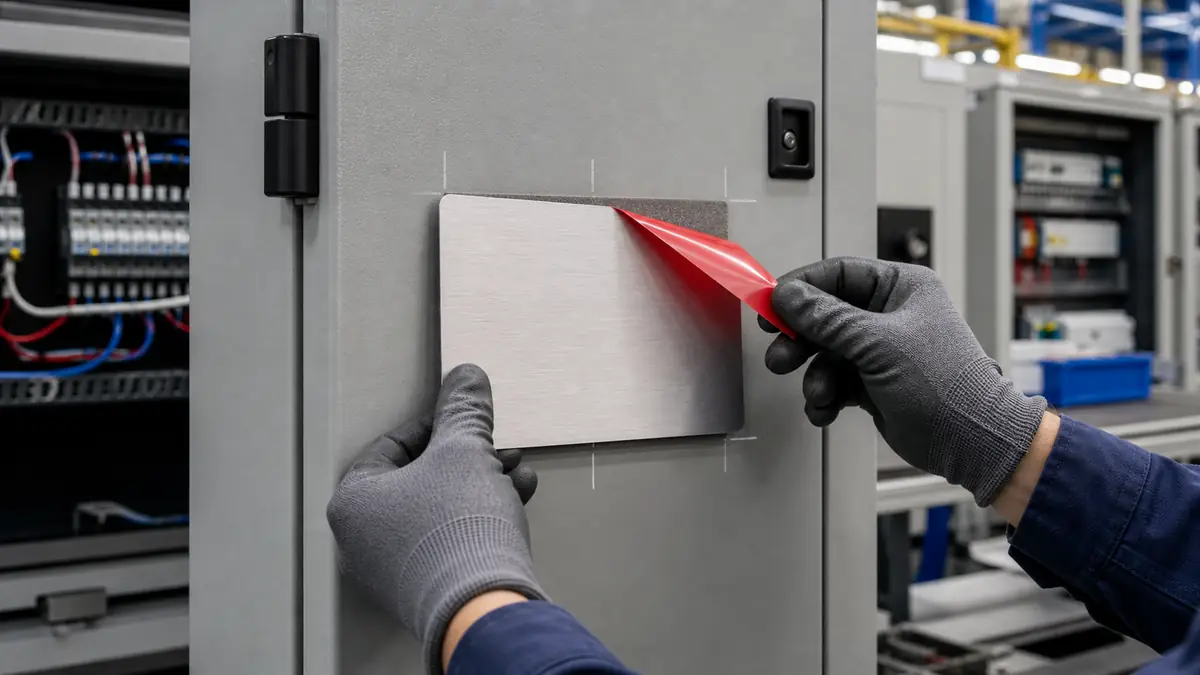
Start With Both Bonding Surfaces
The nameplate may be anodized aluminum, stainless steel, coated metal or a rigid plastic. The cabinet may have a smooth paint finish, a textured powder coat or a molded polymer surface. These combinations change the real contact area available to the adhesive. A tape that performs well on smooth aluminum can lose effective contact on a coarse powder coat unless it has enough conformability and thickness.
Ask the coating supplier whether the surface contains additives, low-surface-energy modifiers or texture agents. Production parts should be used for testing because flat laboratory panels rarely represent the final enclosure.
Nameplate Bonding Selection Parameters
| Parameter | Define in the RFQ | Why It Matters |
|---|---|---|
| Nameplate | Material, size, thickness, finish and back-surface treatment | Controls stiffness, surface energy and available bond area |
| Enclosure coating | Paint or powder type, gloss and texture | Texture can reduce adhesive contact and create edge gaps |
| Tape carrier | Foam, PET film, tissue or transfer adhesive | Balances gap filling, thinness and die-cut stability |
| Service environment | Indoor/outdoor, heat, humidity, vibration and cleaners | Determines the aging and compatibility tests required |
| Assembly method | Manual placement, fixture, roller pressure or automation | Affects alignment, pressure consistency and takt time |
| Conversion | Perimeter frame, full-area pad, tabs and liner design | Influences application speed and trapped-air risk |
Compare Tape Constructions
| Construction | Best Fit | Watch Points |
|---|---|---|
| Double-sided PE foam tape | Textured coatings, slight gaps and vibration damping | Visible edge thickness, compression and long-term shear |
| Double-sided PET film tape | Thin nameplates and smooth, well-matched surfaces | Limited ability to bridge coarse powder-coat texture |
| Tissue double-sided tape | Economical indoor lamination on compatible smooth surfaces | Moisture, edge durability and demanding service conditions |
| Transfer adhesive | Very thin bond lines and full-area converting | Handling, stretch and difficult liner removal |
Perimeter Frame or Full-Area Bond?
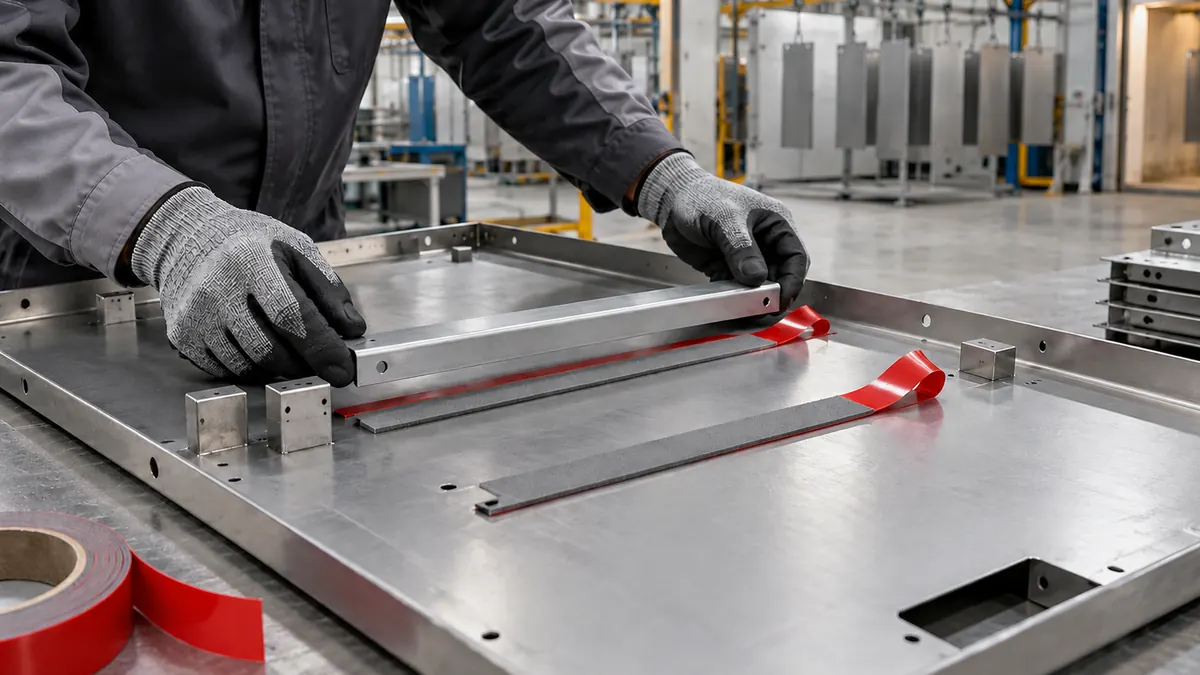
Perimeter die-cut frame
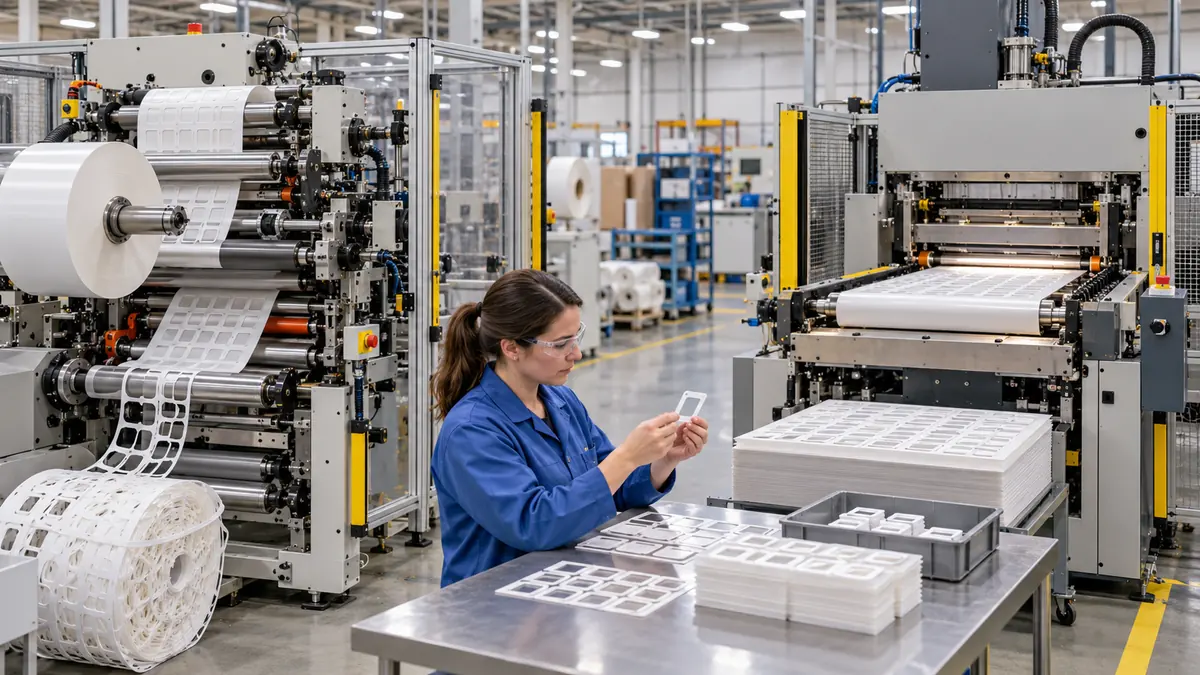
A perimeter frame reduces material use and can simplify air escape during placement. It must still provide enough bond area to resist peeling at corners. Rounded internal and external corners often handle stress better than sharp die-cut corners.
Full-area adhesive pad
A full-area pad supports the plate across its surface and can reduce drumming or flex. It requires controlled lamination to prevent trapped air and may be harder to remove during rework. Split liners or pull tabs can make placement more repeatable.
Application Process for Reliable Bonding
- Condition parts and tape: bring materials into the qualified application-temperature window.
- Prepare surfaces: remove dust, oil and release contamination with an approved cleaning process.
- Apply tape to the nameplate: use even roller pressure without stretching the carrier.
- Use an alignment fixture: set datum points so the plate does not need to be peeled and repositioned.
- Apply final pressure: press the full bonded area, especially corners and edges.
- Allow dwell before loading: evaluate the chosen adhesive’s bond build before packing or testing.
How to Validate the Bond
Qualification should use production nameplates, coated panels and the intended cleaning method. Evaluate edge lift, shear movement, plate flatness and appearance after the exposures that matter to the product. Depending on the cabinet, this may include temperature cycling, humidity, vibration, cleaner contact and outdoor weathering. Do not convert generic tape data into a cabinet-life claim without testing the final assembly.
Common Sourcing Mistakes
- Choosing only by nominal peel value measured on a smooth standard panel.
- Ignoring coarse powder-coat texture or coating contamination.
- Using a thin film tape where a conformable foam carrier is needed.
- Leaving square die-cut corners that concentrate peel stress.
- Testing immediately after assembly without allowing the adhesive to build bond.
- Specifying a roll but not the liner, tabs or die-cut format needed by operators.
FAQ
What tape is best for a nameplate on powder-coated metal?
A conformable acrylic foam or PE foam tape is often screened first for textured coatings, while thin PET tape may suit smoother surfaces. The coating and plate must be tested as a pair.
Can double-sided tape replace rivets or screws?
It can provide fastener-free attachment for suitable nameplates, but the final design must be validated for load, environment, safety and service life.
How thick should nameplate mounting tape be?
Use the thinnest construction that still wets out the surface texture and maintains the required bond. Coarse coatings usually need more conformability than smooth painted metal.
Should the tape cover the whole nameplate?
Not always. A perimeter frame can work efficiently, while full-area pads add support. The best pattern depends on plate stiffness, edge stress, appearance and assembly method.
Related Products and Buying Guides
- Industrial double-sided tape product range
- PE foam double-sided tape
- PE foam tape buying guide for industrial applications
Request a Converted Nameplate Tape Sample
Send JIAO TAO TAO the nameplate drawing, back-surface material, enclosure coating, service environment, target thickness and preferred liner format. We can help compare roll, perimeter-frame and full-pad options for assembly trials. Request a sample or converting review.
Industrial Double-Sided Tape for Appliance Control Panel Bonding
Application Solutions for Polyimide (Kapton) Tape
Related Article
Need help choosing the right industrial tape?
Send us your application details, including temperature, surface material, size, quantity and current problem. Our team will help recommend a suitable tape material or custom die-cut solution.

simon@jiaotaotao.com


+86-136 1277 5969


+86-136 1277 5969
