
PE Foam Tape: 2026 Industrial Buying Guide for Engineers & Procurement Managers
PE Foam Tape: 2026 Industrial Buying Guide for Engineers & Procurement Managers
Direct Answer: PE foam tape is a pressure-sensitive adhesive tape with a closed-cell polyethylene foam backing, used for bonding, gasketing, cushioning, sealing, and electrical insulation across industrial and construction applications. It is valued for its conformability, moisture resistance, and reliable adhesion to low-energy surfaces — available in single-sided and double-sided configurations from thicknesses of 0.5 mm to 12 mm.
▶ Quick Facts: PE Foam Tape at a Glance
| Material / Backing | Closed-cell Polyethylene (PE) foam |
| Adhesive System | Acrylic (standard) / Hot-melt rubber / Silicone (high-temp) |
| Thickness Range | 0.5 mm – 12 mm (custom available) |
| Temperature Resistance | –40 °C to +80 °C (standard acrylic); up to +150 °C (silicone variants) |
| Dielectric Strength | ≥ 10 kV/mm (varies with thickness; per IEC 60454 / ASTM D149) |
| Tensile Strength | ≥ 25 N/25 mm (typical, ASTM D1000) |
| Core Industrial Uses | Electrical insulation, industrial masking, gasketing, panel bonding, vibration damping |
| Certifications | RoHS compliant; UL 510 (flame-retardant grades) |
What Is PE Foam Tape?
Polyethylene foam tape (PE foam tape) is a pressure-sensitive adhesive tape constructed from a closed-cell cross-linked or non-cross-linked polyethylene foam substrate coated with one or two layers of pressure-sensitive adhesive. The closed-cell structure of the backing prevents moisture absorption, maintains consistent thickness under compression, and provides inherent electrical insulation properties.
Unlike open-cell foam tapes (such as polyurethane-based variants), PE foam resists water ingress, solvents, and many industrial chemicals at the cellular level. This makes it structurally reliable in outdoor, high-humidity, and chemically aggressive environments — conditions commonly encountered in electrical enclosures, HVAC assemblies, and automotive component manufacturing.
The tape is available in two primary bonding configurations:
- Single-sided PE foam tape — adhesive on one face; used for cushioning, surface protection, and vibration damping where only one surface requires bonding.
- Double-sided PE foam tape — adhesive on both faces; used for panel mounting, nameplates, gasket replacement, and structural bonding between dissimilar substrates.

Why PE Foam Tape Is Used for Industrial Applications
PE foam tape outperforms many conventional fastening and sealing methods — mechanical clips, liquid adhesives, rubber gaskets — in environments where weight reduction, installation speed, and long-term bond integrity are critical priorities. Four technical properties drive its widespread industrial adoption.
High Dielectric Strength
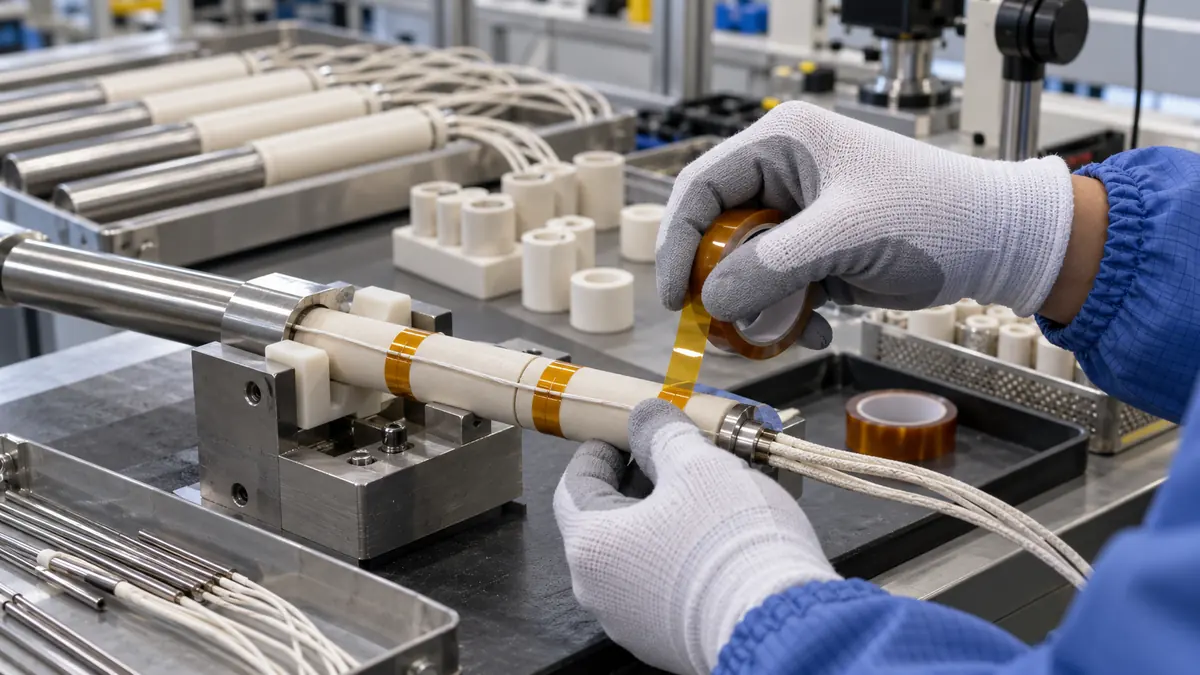
The closed-cell polyethylene matrix is a natural electrical insulator. Standard-grade PE foam tape achieves a dielectric strength of ≥ 10 kV/mm when tested per ASTM D149, making it suitable for use in transformer insulation, motor winding protection, and electronic component isolation. In applications governed by IEC 60454 — the international standard for pressure-sensitive adhesive tapes for electrical purposes — PE foam tape qualifies as a Class B or Class F insulating material depending on the grade.
Excellent Heat Resistance
Standard acrylic-adhesive PE foam tape maintains structural integrity and adhesive performance from –40 °C to +80 °C. Silicone-adhesive variants extend the upper limit to +150 °C, enabling deployment in under-hood automotive assemblies and proximity to industrial heating elements. The foam backing does not melt, flow, or outgas at these operating temperatures — a critical differentiator versus thermoplastic foam alternatives.
Chemical Stability & Solvent Resistance
PE foam's non-polar molecular structure renders it resistant to aliphatic hydrocarbons, alcohols, dilute acids, and alkaline cleaning agents encountered during manufacturing processes. This solvent resistance is directly relevant for industrial masking applications: PE foam tape maintains its geometric form and adhesive contact during powder coating, anodizing, and electroplating operations, then removes cleanly without adhesive residue transfer to the masked substrate.
Mechanical Durability & Conformability
The compressible foam core absorbs impact and distributes mechanical stress across bonded joints, functioning as an integrated vibration damper. Its conformability allows the tape to bridge surface irregularities — weld seams, embossed panels, curved profiles — maintaining consistent adhesive contact without air pockets. Tensile strength of ≥ 25 N/25 mm (ASTM D1000) ensures the tape resists shear forces in bonded assemblies subjected to dynamic loading.
Key Types of PE Foam Tape
Not all PE foam tape products are interchangeable. Selection depends on the bonding geometry, operating environment, and substrate chemistry. The following are the most widely specified variants in industrial procurement.
1. Double-Sided PE Foam Tape (Acrylic Adhesive)
This is the most common configuration among double sided foam tape manufacturers. Both faces carry a high-tack solvent-borne or water-borne acrylic adhesive. Acrylic adhesive systems provide UV resistance, long-term aging stability, and compatibility with powder-coated metals, ABS, and polycarbonate substrates. Typical applications: display panel mounting, nameplate bonding, automotive trim attachment, and industrial signage.
2. Single-Sided PE Foam Tape (Hot-Melt Adhesive)
A hot-melt rubber adhesive on one face provides higher immediate tack — useful where quick-positioning of gaskets or cushioning pads is required before a fixture is applied. Hot-melt formulations offer lower temperature resistance (typically max +60 °C) compared to acrylic but deliver superior initial peel adhesion at room temperature. Common in HVAC assembly, packaging machinery cushioning, and furniture edge protection.
3. Flame-Retardant (FR) PE Foam Tape
FR grades incorporate halogen-free or halogenated flame retardant compounds into the foam matrix, achieving UL 94 V-0 or UL 510 fire resistance ratings. These are specified in electrical panel construction, battery enclosure sealing, and any wiring harness application governed by UL listing requirements or IEC 60695 flammability standards. This variant is the preferred choice in electrical insulation materials applications.
4. Cross-Linked PE Foam Tape (XLPE)
Cross-linked polyethylene (XLPE) foam undergoes radiation or chemical cross-linking, producing a finer, more uniform cell structure. XLPE foam tape offers superior compression recovery, tighter thickness tolerances (±0.05 mm), and improved chemical resistance versus non-cross-linked PE. It is the preferred backing for precision die-cutting operations where dimensional accuracy is critical — sensor gaskets, sealing rings for IP-rated enclosures, and medical device component bonding.

Factors That Affect PE Foam Tape Performance
Thickness
Foam thickness directly governs gap-filling capacity, compression load distribution, and electrical insulation effectiveness. Thicker foam (e.g., 3–6 mm) accommodates larger surface irregularities and acts as a more effective vibration damper, but increases compression under mechanical load. Thin-foam grades (0.5–1.0 mm) are preferred in electronics assembly where component height tolerances are tight. For electrical insulation, dielectric strength scales approximately linearly with thickness: a 1.0 mm tape rated at 10 kV/mm provides a working insulation voltage of approximately 10 kV (before safety derating factors are applied).
Backing Material Quality
Cell uniformity, density (kg/m³), and cross-linking degree determine the consistency of foam mechanical properties across a roll. Industrial-grade PE foam from certified manufacturers maintains a cell structure variance of less than ±5%, ensuring that die-cut parts perform consistently across production batches. Irregular or recycled-content foam backing is a common cause of bonding failures in field applications.
Adhesive Type: Acrylic vs. Silicone
Acrylic adhesives offer the best balance of UV resistance, plasticizer resistance, and bond strength retention over time — suitable for 80–90% of industrial bonding applications. Silicone adhesives are specified when the operating temperature exceeds +80 °C, or when bonding to silicone rubber, PTFE, or other low-energy surfaces that acrylic adhesives cannot adequately wet. Silicone systems cost 30–50% more but are irreplaceable in high-temperature electrical or automotive scenarios.
Temperature Rating
Specify operating temperature range before selecting a product. Exceeding the adhesive's upper temperature limit causes cohesive failure (adhesive flows) or converts a pressure-sensitive bond into a non-removable fused bond. Below the lower temperature limit, acrylic adhesives lose peel strength by up to 60%, which is critical for outdoor masking or cold-storage equipment sealing.
PE Foam Tape Specifications and Technical Data
The following data table reflects typical performance parameters for industrial-grade acrylic double-sided PE foam tape. Values are representative of standard product offerings from qualified manufacturers and should be verified against individual product data sheets (TDS) prior to specification.
| Parameter | Standard Grade | High-Performance (XLPE) | Test Method |
|---|---|---|---|
| Thickness (foam + adhesive) | 0.5 / 1.0 / 2.0 / 3.0 / 5.0 mm | 0.5 / 0.8 / 1.0 / 1.5 / 2.0 mm | ASTM D1000 / ISO 1110 |
| Adhesive Type | Solvent-borne acrylic (double-sided) | High-tack acrylic / silicone option | — |
| Foam Density | 30–50 kg/m³ | 33–45 kg/m³ (±5%) | ISO 845 |
| Tensile Strength | ≥ 25 N/25 mm | ≥ 35 N/25 mm | ASTM D1000 |
| Elongation at Break | ≥ 200% | ≥ 250% | ASTM D1000 |
| Peel Adhesion (180°, steel) | ≥ 3.0 N/cm | ≥ 4.5 N/cm | ASTM D3330 / PSTC-101 |
| Dielectric Strength | ≥ 10 kV/mm | ≥ 12 kV/mm | ASTM D149 / IEC 60454 |
| Temperature Resistance | –40 °C to +80 °C | –50 °C to +100 °C (acrylic) / +150 °C (silicone) | UL 510 / IEC 60068 |
| Moisture Resistance | Closed-cell; water absorption <1% (v/v) | <0.5% (v/v) | ASTM D570 |
| Compression Set (25%, 22h, 70 °C) | ≤ 25% | ≤ 15% | ISO 1856 |
| Color | White / Grey / Black (standard) | White / Grey / Black / Custom | — |
| Roll Width | 6 mm – 1,200 mm (slit-to-order) | 6 mm – 1,200 mm (slit-to-order) | — |
| Compliance | RoHS 2.0 | RoHS 2.0; UL 510 (FR grade) | — |
Note: All specifications above represent typical values at 23 °C / 50% RH after 24-hour dwell time. For critical applications, request a certified test report (CTR) and product TDS from the manufacturer before specification.
Industrial Applications of PE Foam Tape

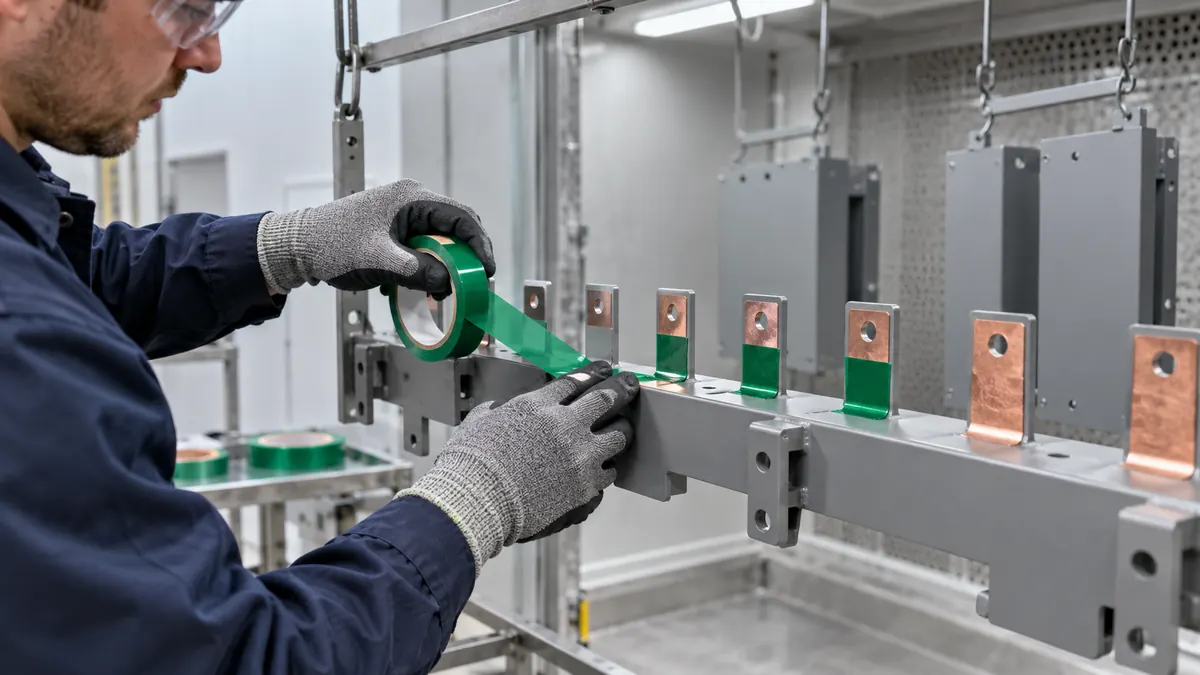
1. Electrical Insulation in Power Distribution Equipment
PE foam tape is deployed as inter-layer insulation in transformer windings, bus bar wrapping, and capacitor packs. The closed-cell foam provides a consistent dielectric barrier that compresses to fill gaps between conductor layers without cracking or delaminating under thermal cycling. Its low moisture absorption (<1% v/v) is critical for maintaining insulation resistance in humid electrical rooms. Flame-retardant grades that comply with IEC 60454 Class F are required by IEC 61439 for low-voltage switchgear assemblies.
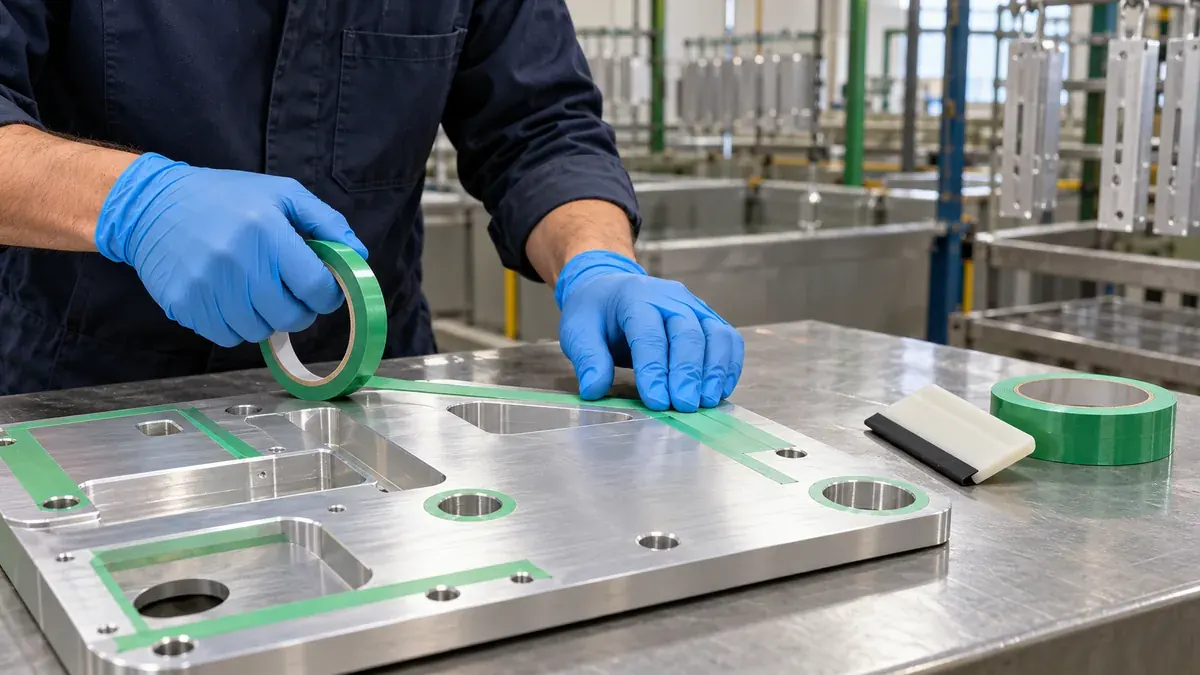
2. Industrial Masking During Surface Treatment
In metal finishing — powder coating, anodizing, e-coating, and hot-dip galvanizing — PE foam tape is applied over threads, precision bores, connectors, and bearing seats to mask surfaces that must remain uncoated. The foam's dimensional stability under oven cure temperatures (typically 160–200 °C for powder coat cycles) and its residue-free removal after processing are essential performance criteria. Custom die-cut masking plugs and caps are produced directly from PE foam tape rolls by the fabricator.
3. Automotive Body Panel Bonding & Trim Attachment
Double-sided PE foam tape replaces mechanical fasteners for attaching exterior body side mouldings, emblems, mirror housings, and decorative trim on passenger and commercial vehicles. OEM automotive specifications typically require adhesion to painted steel or aluminium at peel forces exceeding 4.0 N/cm after 72-hour humidity conditioning. The foam core simultaneously seals the bonded joint against water ingress and dampens road vibration transmitted to the trim component.
4. HVAC, Construction & Gasketing
In HVAC systems, PE foam tape is used to seal ductwork joints, air-handling unit panels, and refrigerant pipe insulation seams, providing both airtight sealing and thermal break functionality. In building construction, it is applied as a compressible spacer between curtain wall profiles and glazing units, compensating for thermal expansion differential between glass and aluminium framing. The foam's compression recovery ensures sustained sealing pressure across temperature cycles without permanent set.
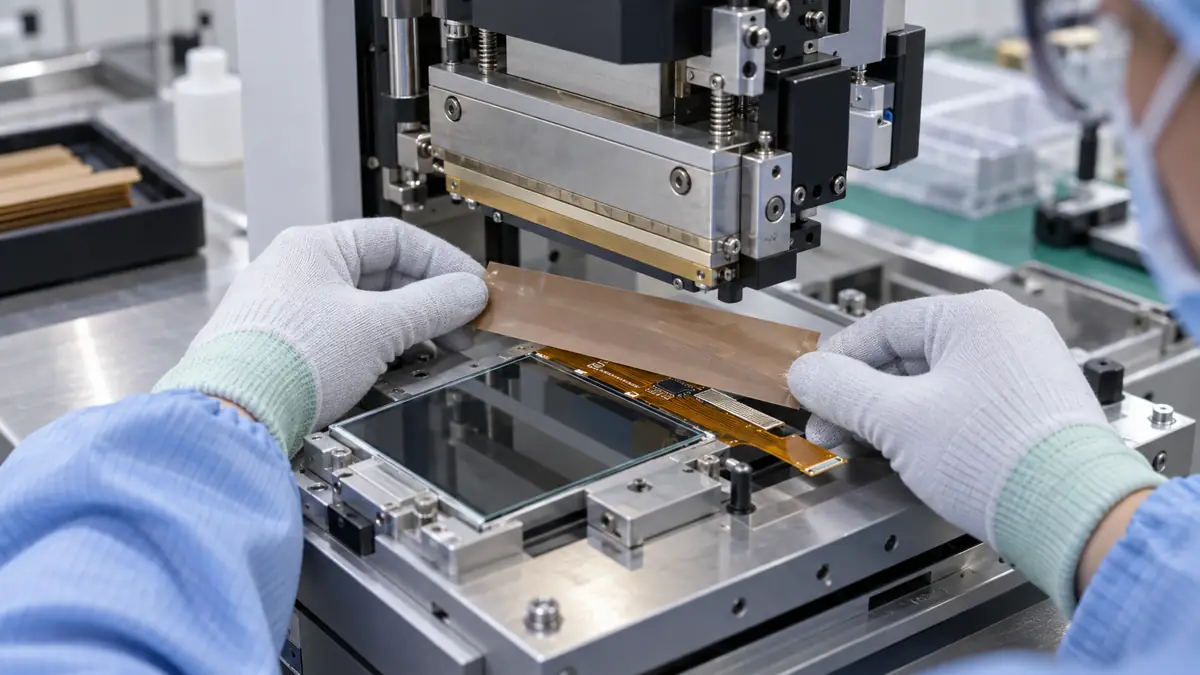
5. Electronic Component Mounting & EMI Gasketing
In PCB assembly and consumer electronics manufacturing, thin PE foam tape (0.5–1.0 mm) provides compliant mounting of LCD panels, camera modules, and battery packs within device housings. When combined with a conductive coating or interspersed with conductive particles, PE foam tape also serves as an EMI gasket in RF-shielded enclosures — a growing application in 5G base station equipment and automotive ECU housings.
How to Choose the Right PE Foam Tape
Selecting the correct tape specification for an industrial application requires a structured evaluation of the operating environment and substrate characteristics. The following four-step framework is used by procurement engineers to narrow specification requirements before engaging manufacturers.
Step 1: Confirm Operating Temperature Range
Identify the minimum and maximum temperature the bonded joint will experience — including peak process temperatures (e.g., powder coat oven cycles) and long-term service temperatures. If the application exceeds +80 °C continuous, specify a silicone adhesive system. For cryogenic storage or cold-room environments below –30 °C, verify low-temperature peel retention data with the manufacturer.
Step 2: Choose Backing Thickness
Measure the surface roughness and gap tolerance of the substrates to be bonded. As a general guideline: surfaces with Ra > 200 µm or gaps of 0.5–1.0 mm require at minimum a 1.0 mm foam grade; gaps of 2–5 mm require 3–5 mm foam. For electrical insulation, calculate required dielectric withstand voltage and divide by the tape's rated dielectric strength (kV/mm) to determine minimum required thickness, then apply a safety factor of 1.5×.
Step 3: Select Adhesive Type Based on Substrate
Match adhesive chemistry to substrate surface energy:
- Painted metals, ABS, PC, acrylics: Standard acrylic adhesive (surface energy ≥ 36 mN/m).
- Polypropylene, HDPE, powder-coated textured surfaces: High-tack or primer-activated acrylic.
- Silicone rubber, PTFE, fluoropolymers: Silicone adhesive only.
- Porous / fibrous surfaces (textile, wood, foam): Hot-melt rubber with high wet-out rate.
For substrates below 32 mN/m surface energy, adhesion promoters or primers may be required regardless of adhesive type.
Step 4: Evaluate Manufacturer Certifications
For regulated industries (automotive, electrical, medical), verify that the manufacturer holds relevant quality certifications. Key documents to request:
- ISO 9001:2015 quality management system certification.
- RoHS 2.0 compliance declaration (required for EU market access under Directive 2011/65/EU).
- UL 510 listing for flame-retardant tape grades (required for UL-listed electrical equipment in North America).
- IATF 16949 automotive quality certification (required for OEM automotive supply chain qualification).
- Product-specific Test Reports (TDS + CTR) for dielectric strength, peel adhesion, and compression set.
Where to Source High-Quality PE Foam Tape
For industrial procurement teams sourcing PE foam tape at scale, selecting a manufacturer with vertical integration — foam compounding, adhesive coating, slitting, and die-cutting in a single facility — provides the most consistent product quality and shortest lead times. Evaluating double sided foam tape manufacturers against the criteria below ensures supply chain reliability.
- Bulk roll and master roll availability: Standard master roll widths of 600 mm and 1,200 mm allow downstream slitting to any custom width without yield waste.
- Custom width slitting and die-cutting: Precision slitting to ±0.5 mm tolerance and CNC die-cutting of complex gasket geometries from customer-supplied CAD files, with prototyping turnaround of 3–5 business days.
- Industrial OEM manufacturing: Private-label and OEM manufacturing with custom color, thickness, adhesive formulation, and liner type available for orders above MOQ thresholds.
- Global shipping support: Export experience covering North America, Europe, Southeast Asia, and the Middle East, with compliance documentation for customs clearance (HS code classification, MSDS/SDS, Certificate of Origin).
- Sample qualification: Free sample rolls available for laboratory adhesion and dielectric testing before committing to volume orders.
For sourcing PE foam tape directly from a vertically integrated manufacturer with ISO-certified production, engineers and procurement managers can review full technical data sheets and request custom quotes through the PE foam tape product page at clothadhesive.com.
Additional related product categories from the same manufacturer include industrial polyethylene foam tape for electrical insulation and custom die-cut PE foam tape for automotive OEM applications — both available with full technical documentation and B2B volume pricing.

Frequently Asked Questions (People Also Ask)
Conclusion
PE foam tape occupies a critical position in industrial assembly and electrical insulation materials engineering. Its combination of closed-cell moisture resistance, high dielectric strength, conformability, and broad adhesive chemistry options makes it a technically versatile and commercially competitive solution across electrical insulation, industrial masking, automotive bonding, HVAC sealing, and electronic component mounting.
For procurement teams, the key specification decisions — thickness, adhesive type (acrylic vs. silicone), foam grade (standard PE vs. cross-linked XLPE), and flame retardancy — must be matched systematically to operating temperature, substrate surface energy, and applicable certification requirements. Engaging manufacturers who offer ISO 9001-certified production, full TDS documentation, and custom die-cutting capability significantly reduces qualification risk and shortens time-to-production.
Source PE Foam Tape from a Qualified Industrial Manufacturer
Request technical data sheets, custom width samples, or a volume quotation from a vertically integrated PE foam tape manufacturer with global export experience.
View PE Foam Tape Products Request a QuoteOfficial manufacturer: www.clothadhesive.com
Double Sided Foam Tape Manufacturers Guide
High Temperature Masking Tape for Automotive Spray Painting | Body Shop Distributor Guide
Related Article
Need help choosing the right industrial tape?
Send us your application details, including temperature, surface material, size, quantity and current problem. Our team will help recommend a suitable tape material or custom die-cut solution.

simon@jiaotaotao.com


+86-136 1277 5969


+86-136 1277 5969
