
Industrial Double-Sided Tape for Appliance Decorative Panel Bonding
Buying Guides · Appliance Assembly
Industrial Double-Sided Tape for Appliance Decorative Panel Bonding
Industrial double-sided tape for appliance decorative panel bonding can attach a stainless-steel, coated-metal, glass, or polymer fascia to a refrigerator, dishwasher, cooker, or commercial-appliance door without visible fasteners. Reliable selection starts with the complete panel and door stack, not a generic peel value.

Quick Answer
Choose double-sided tape for an appliance decorative panel by defining both substrates, panel size and stiffness, door construction, bond width, gap, edge appearance, temperature and humidity, cleaning chemicals, opening cycles, handle loads, assembly method, and service strategy. Compare acrylic foam, PE foam, PET film-carrier, tissue, and transfer-adhesive constructions on production parts. Use a fixture and staged liner so the panel contacts once, in the correct position, under controlled pressure.
Define the Decorative-Panel Assembly
Decorative appliance panels vary from thin stainless skins and painted-steel fascias to glass inserts, molded polymer panels, and multi-layer doors. The backing structure may be powder-coated steel, galvanized sheet, molded ABS, painted plastic, or a formed frame with gaps and ribs. Each pair presents different surface energy, texture, stiffness, thermal movement, and cleaning exposure.
Separate the tape's functions. It may provide permanent retention, hold a panel while clips or fasteners are installed, maintain a cosmetic gap, damp vibration, seal a selected edge, or distribute stress. Those roles require different bondline thicknesses and validation. A large door panel also creates peel at corners and ends when the panel and door expand differently or when the assembly flexes during opening and closing.
| Assembly input | What to document | Why it matters |
|---|---|---|
| Decorative panel | Material, size, thickness, stiffness, finish, back coating, edge shape, and flatness | Controls load, stress, adhesion, and appearance |
| Door or frame | Metal or polymer, coating, texture, ribs, gaps, curvature, and dimensional tolerance | Defines real contact area and required conformity |
| Bond function | Permanent retention, positioning, spacing, damping, or secondary sealing | Sets carrier and durability requirements |
| Service | Temperature cycles, humidity, kitchen oils, detergents, steam, UV, and door cycles | Screens adhesive and foam compatibility |
| Appearance and service | Visible edge, bondline color, gap, squeeze-out, repair, and panel replacement | Drives tape geometry and removal planning |
Compare Industrial Double-Sided Tape Families
Acrylic foam tape
Acrylic foam tape can distribute stress, accommodate limited surface variation, and provide a durable viscoelastic bondline for suitable panels. Thickness can bridge texture and support a consistent cosmetic gap, but it also changes panel position and edge visibility. Foam stiffness, color, compression, adhesive chemistry, and panel movement require full-size evaluation.
PE foam tape
Double-sided PE foam tape can provide conformability and immediate handling strength for selected indoor appliance details. Compare foam cohesion, compression set, moisture exposure, edge sealing, temperature cycling, and compatibility with the exact coating or polymer. It should not be chosen only because a thicker black tape hides a gap.
Film-carrier, tissue, and transfer adhesive
PET film-carrier tape creates a thin, dimensionally stable bond on smooth, well-matched surfaces and converts cleanly into strips or frames. Tissue tape offers hand conformity for lighter laminations. Transfer adhesive provides a very thin layer but depends heavily on liner support and careful application. These thin constructions have limited ability to bridge door distortion, ribs, coarse powder texture, or panel bow.
| Tape family | Potential fit | Main qualification concern |
|---|---|---|
| Acrylic foam | Large panels, limited gap compensation, stress distribution, and durable mounting | Thickness, edge peel, viscoelastic movement, and appearance |
| PE foam | Conformable mounting on selected indoor surfaces | Foam cohesion, compression set, temperature, moisture, and edge exposure |
| PET film double-sided tape | Thin bondline on smooth, flat metal or polymer surfaces | Limited gap filling and higher stress concentration |
| Tissue double-sided tape | Lightweight indoor lamination with manual handling | Moisture resistance, carrier tear, and long-term load |
| Transfer adhesive | Very thin full-area or converted bonds | Stretch, trapped air, liner control, and difficult rework |
Design the Bond Path and Release Liner
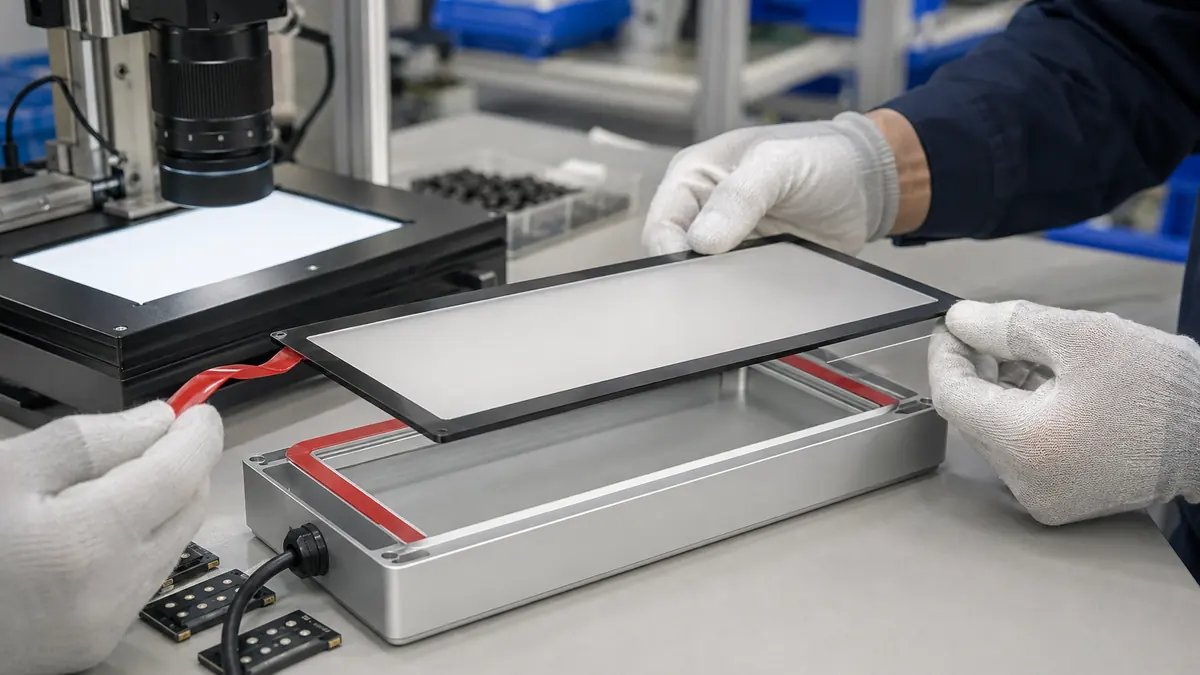
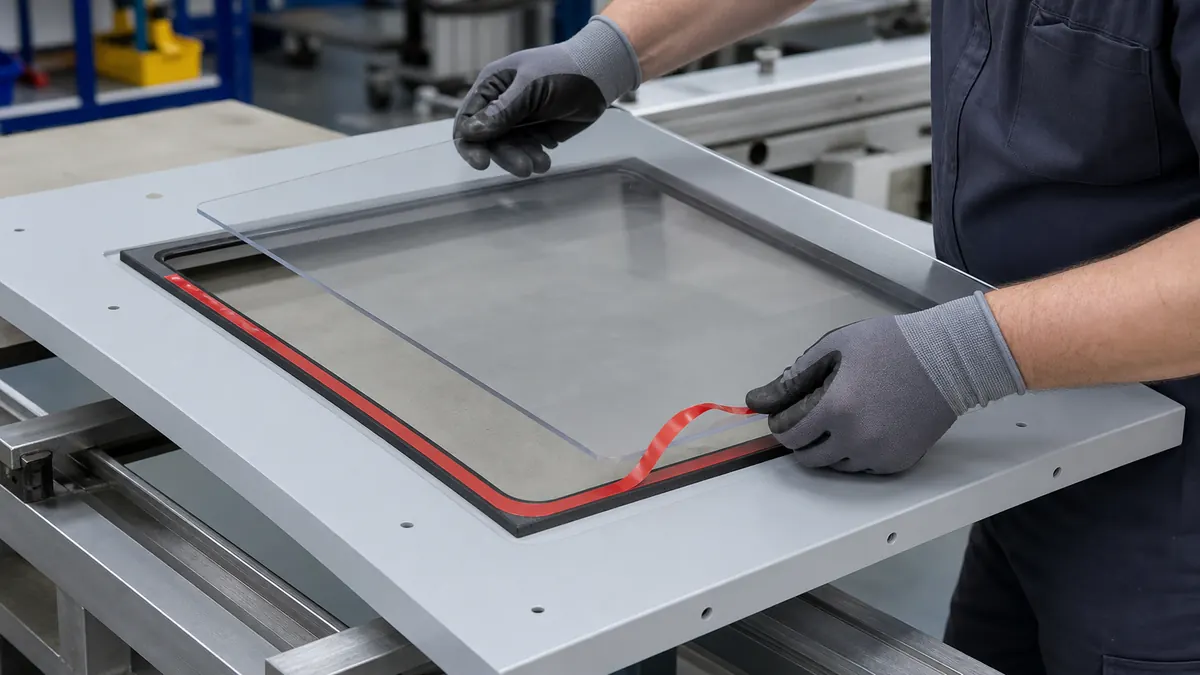
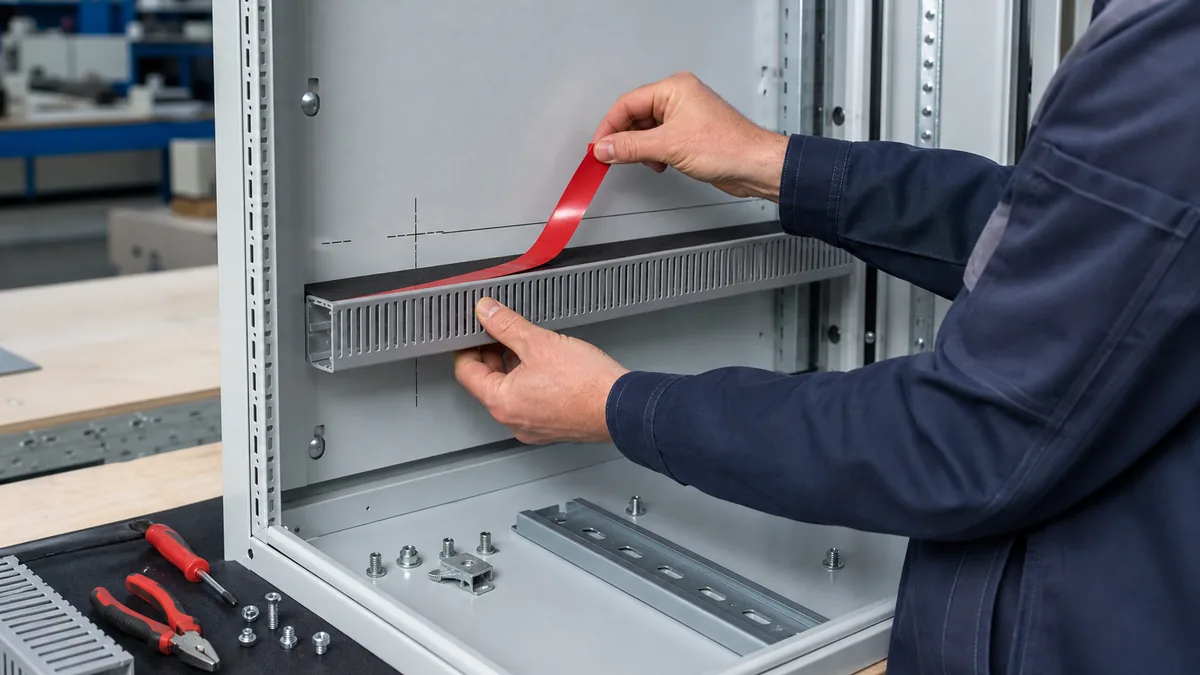
Define whether the tape follows a perimeter, parallel rails, a cross-braced pattern, selected pads, or a full-area laminate. The pattern must support panel stiffness and load without trapping air, blocking a drain, covering a clip, or creating a visible ridge. Keep strip ends and corners away from exposed peel paths where possible, and use rounded turns or converted frames rather than sharp hand-spliced corners.
A split or staged liner can let the operator locate the panel against fixture stops before exposing the complete adhesive. Extended pull tabs should remain accessible without becoming trapped under the panel. For automation, specify roll direction, liner stiffness, splice rules, part pitch, vision contrast, and the relationship between the converted tape and the panel datum.
Controlled Appliance-Panel Assembly Workflow
- Confirm released components. Verify panel, door, tape, liner, clips, fasteners, and fixture revision.
- Inspect both surfaces. Reject warp, dents, oil, mold release, dust, wet paint, loose coating, and damaged edges.
- Condition materials. Bring parts and tape into the approved application environment.
- Prepare surfaces. Use only the validated cleaner, wipe, drying time, and primer when specified.
- Apply tape to the first part. Follow the drawing without stretching foam or touching adhesive.
- Roll down the first bond. Use controlled pressure along the complete strip or converted frame.
- Stage the liner. Expose only the zones needed to establish alignment in the fixture.
- Locate the panel once. Use stops, pins, vacuum support, or another approved datum.
- Remove liners and consolidate. Apply the defined pressure path without bowing the fascia.
- Condition and inspect. Protect the assembly from premature load and verify edge contact, gap, flushness, and appearance.
Validate the Full-Size Door Assembly
Flat coupons help compare materials but cannot reproduce a large fascia's bow, door flex, corner peel, thermal expansion, handle loads, slam cycles, or visible bondline. Test the largest and most flexible panel, narrowest approved bond width, roughest coating texture, coldest application condition, highest service temperature, realistic cleaners, and credible dimensional extremes.
| Validation group | What to examine | Release question |
|---|---|---|
| Assembly capability | Placement, liner removal, pressure, trapped air, gap, edge contact, and takt time | Can the process build the panel repeatably? |
| Initial quality | Flushness, corner contact, panel bow, visible bondline, and noise | Does the assembly meet cosmetic and dimensional limits? |
| Environmental aging | Temperature cycles, humidity, steam, cleaners, oils, UV where relevant, and storage | Does the selected stack remain compatible? |
| Mechanical use | Door cycles, slam, vibration, handle load, transport, and service orientation | Does the bond support the released load path? |
| Service and failure | Edge lift, creep, panel release, residue, coating damage, and removal method | Are failure criteria and repair actions defined? |
Troubleshoot Decorative-Panel Bonding
Corner lift often involves surface contamination, narrow bond width, sharp geometry, panel bow, coarse powder texture, inadequate pressure, or thermal mismatch. Creep or panel movement can involve foam softness, sustained load, high temperature, insufficient dwell, or an unsupported panel. A visible ridge can result from excessive tape thickness, uneven flange height, strip joints, or concentrated pressure.
If the tape bonds to the door but releases from the panel, inspect the fascia back coating, protective film, oil, release treatment, adhesive compatibility, and rolling process. If paint or powder detaches with the tape, the limiting interface may be the coating-to-substrate bond rather than the tape. Do not solve that failure only with lower adhesion; investigate and release the complete surface system.
↑ Back to contentsRelated Products and Articles
Frequently Asked Questions
What double-sided tape is best for an appliance decorative panel?
The best construction depends on both surfaces, panel size and stiffness, gap, bond path, service temperature, moisture, cleaners, appearance, and load. Compare foam and thin-carrier options on the full assembly.
Can tape replace screws or clips on an appliance door?
Only when the responsible product design and validation approve the adhesive load path. Tape must not be assumed to replace required mechanical retention or safety features.
Should tape cover the entire panel?
Not automatically. Perimeter strips, rails, pads, and full-area bonds create different stress, air-release, cost, rework, and appearance behavior. Use a drawing-based pattern.
Why use a split release liner?
A split liner lets the operator expose a small locating zone first, align the panel in a fixture, and then remove the remaining liner without premature contact.
What information belongs in an RFQ?
Provide panel and door drawings, materials and finishes, flatness and gap tolerances, bond function, tape path, assembly method, environment, cleaner, loads, qualification plan, volume, and liner preference.
Build a Full-Size Appliance-Panel Trial
Share the fascia and door drawings, panel material and back coating, door finish, bond path, gap and appearance limits, service temperature and humidity, cleaning chemistry, door loads and cycles, fixture concept, liner sequence, annual volume, and validation requirements. JIAO TAO TAO can help shortlist foam, film-carrier, transfer, or converted adhesive-frame constructions for production trials.
Discuss appliance decorative panel bonding
Industrial Double-Sided Tape for Temporary Vibration Sensor Mounting
Related Article

Need help choosing the right industrial tape?
Send us your application details, including temperature, surface material, size, quantity and current problem. Our team will help recommend a suitable tape material or custom die-cut solution.

simon@jiaotaotao.com


+86-136 1277 5969


+86-136 1277 5969
