
Industrial Double-Sided Tape for Appliance Control Panel Bonding
Industrial Double-Sided Tape for Appliance Control Panel Bonding
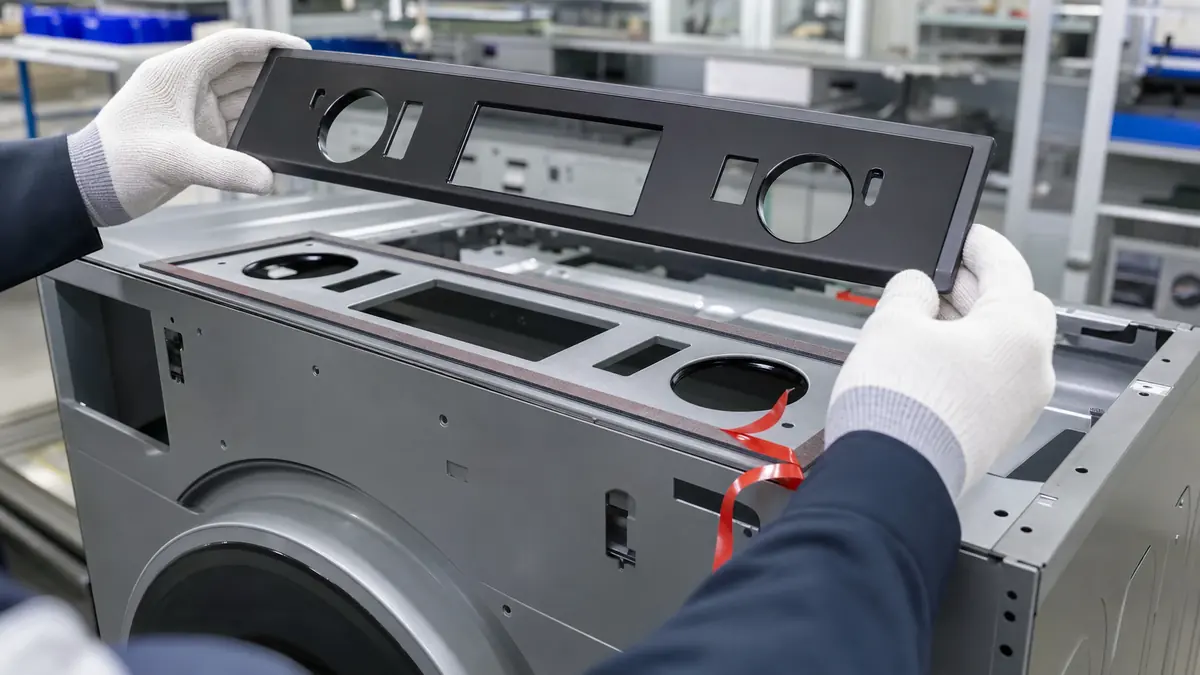
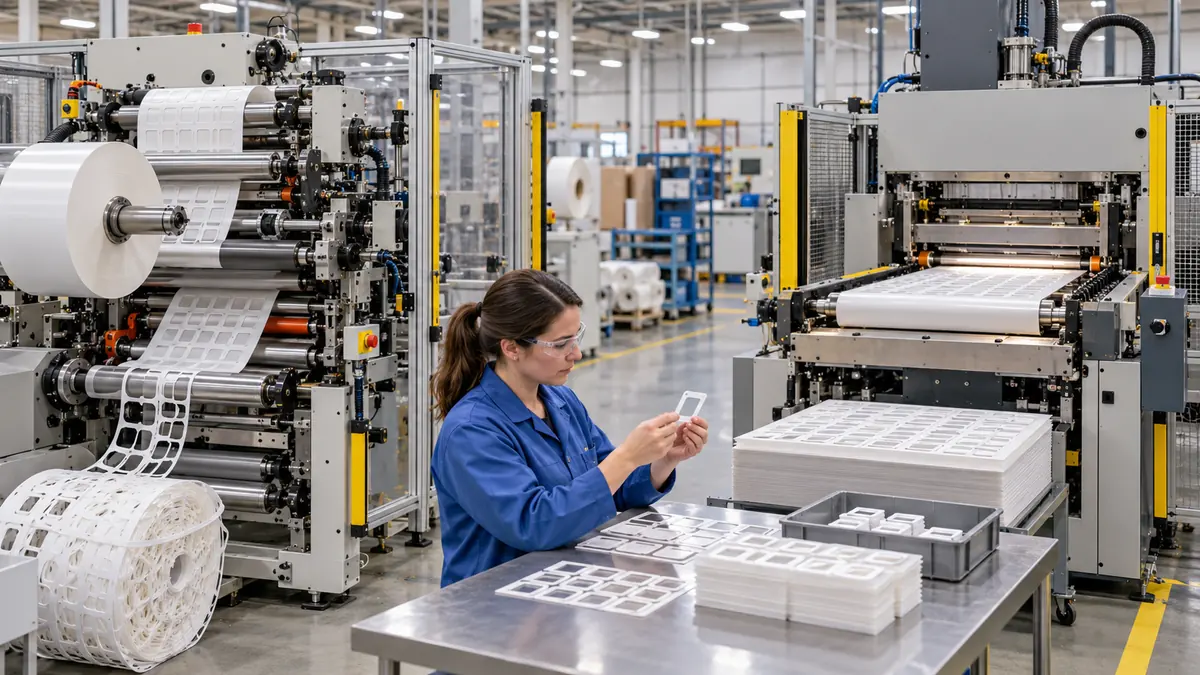
Industrial double-sided tape for appliance control panel bonding attaches a fascia, display window, decorative trim or printed overlay without exposed screws. The tape must wet out both surfaces, maintain a controlled bondline and tolerate assembly loads, cleaning, temperature changes and vibration. A foam carrier can bridge texture and add compliance, while a thin film or tissue construction can suit smooth parts with tight dimensional limits. This buying guide helps appliance engineers and sourcing teams define the application before requesting samples.
Map the Control-Panel Assembly Before Choosing Tape
“Control panel” can describe very different bond pairs: a polycarbonate display window to a painted steel door, an ABS fascia to a molded housing, a printed graphic overlay to a flat bezel, or a glass panel to a frame. Surface energy, coating texture, stiffness, joint width and loading differ across these combinations. Identify both exact materials and any paint, hard coat, ink, texture or mold-release residue.
Also define whether the tape is the primary attachment or works with clips and screws. A hybrid joint may use tape for positioning, sealing and vibration control while mechanical features carry service loads. The qualification plan should match the real joint function.
Carrier Options for Appliance Panel Bonding
| Tape Construction | Best-Fit Condition | Main Selection Check |
|---|---|---|
| PE or EVA foam tape | Textured surfaces, small gaps and vibration damping | Compression, recovery, edge sealing and visible bondline |
| Acrylic foam tape | Higher-demand permanent panel and trim bonding | Substrate compatibility, joint stress and service environment |
| PET film double-sided tape | Thin, dimensionally stable bonds on smooth surfaces | Low gap-filling ability and surface-flatness requirement |
| Tissue double-sided tape | Lightweight lamination and economical flat-part assembly | Moisture, heat, edge exposure and converting strength |
| Transfer adhesive | Very thin bondline and complex converted shapes | Handling, liner release and limited gap bridging |
Specification Checklist for a Tape Supplier
| Parameter | What to Specify | Assembly Risk Controlled |
|---|---|---|
| Substrates | Resin grade, glass, metal, paint, ink and surface texture | Poor wet-out or unexpected chemical interaction |
| Bond geometry | Bond width, perimeter, corners, holes and unsupported spans | Peel concentration and local lift |
| Gap and thickness | Part flatness, tolerance stack and target bondline | Rocking, squeeze-out or incomplete contact |
| Service profile | Temperature, humidity, cleaners, steam, UV and vibration | Adhesive aging and carrier degradation |
| Assembly method | Manual or automated placement, pressure, dwell and fixtures | Variation between operators and shifts |
| Serviceability | Permanent joint or planned panel replacement | Rework damage and maintenance time |
| Delivery format | Slit rolls, die-cut frames, sheets, tabs and liner type | Placement speed and orientation errors |
Design the Bondline to Resist Peel
Pressure-sensitive adhesive joints perform best when loads stay in shear or compression. A stiff fascia that is forced flat against a warped housing stores peel stress at the corners. Improve part flatness, increase practical bond width, use generous corner radii and avoid placing tape across features that prevent full contact. If a display window or glass panel is exposed to impact, evaluate the entire assembly and any mechanical retention required for safety.
Surface Preparation and Assembly Controls
Clean without damaging coatings or printed layers
Use an approved cleaner and lint-free method for each surface. A solvent that is safe on bare metal may haze plastic, soften ink or attack a hard coat. Confirm dryness and control the time between cleaning and bonding.
Apply at a controlled temperature
Parts and tape should be within the validated application-temperature window. Cold surfaces can reduce initial wet-out, while overheated or freshly molded parts may carry moisture or release contamination. Define an environmental condition for assembly rather than relying on room-temperature assumptions.
Use pressure across the full perimeter
A fixture or roller helps create repeatable contact on a frame-shaped die cut. Pressing only at the center can leave corners and narrow ribs under-applied. For decorative panels, protect the visible face while applying pressure.
Respect dwell before testing or packing
Pressure-sensitive adhesive builds contact over time. Establish a dwell before handling, leak checks, functional testing, shipping or exposure to elevated temperature. The required time should come from testing the selected tape and real surfaces.
Validation Plan for Appliance Assemblies
- Bond production-intent parts made with the actual plastic, paint, glass, ink and texture.
- Record cleaning, application temperature, pressure, fixture and dwell.
- Measure initial fit, gap, edge appearance and panel registration.
- Run required temperature, humidity, cleaner, steam and vibration exposures.
- Inspect corner lift, foam compression, creep, bubbles, discoloration and adhesive migration.
- Perform assembly-specific load, leak, electrical-clearance or safety checks as required.
- Approve the exact tape, die-cut drawing, liner, packaging and work instruction together.
Common Buying Mistakes
- Choosing from a generic peel number without testing the actual coating or plastic.
- Using a thin film tape where the housing texture requires gap filling.
- Using thick foam to hide part warp while creating an unacceptable visible edge.
- Ignoring cleaner, steam, heat or service-removal requirements.
- Qualifying a roll sample but not the final die-cut frame and liner.
- Testing immediately after assembly without the specified dwell.
FAQ
Is foam tape always best for an appliance control panel?
No. Foam helps bridge texture and gaps, but a thin PET, tissue or transfer construction may be better for smooth, flat parts with a tight bondline. Choose from the real tolerance stack and environment.
Can double-sided tape bond glass to painted metal?
Potentially, but the exact glass treatment, paint, cleaner, joint geometry, temperature and safety requirement must be tested. Mechanical retention may still be required.
Should control-panel tape be supplied as a die-cut frame?
A frame can improve alignment, perimeter contact and assembly speed when the design is stable. Specify tabs, orientation, liner release and tolerances for manual or automated placement.
How can corner lift be reduced?
Check part flatness, stored peel stress, bond width, corner radius, cleaning, pressure and dwell. Do not treat stronger adhesive as the only solution.
Related Products and Articles
- Industrial double-sided tape product range
- PE foam double-sided tape for compliant mounting
- Foam tape material and application overview
- Double-sided tape for metal nameplate bonding
Request an Application Sample
To evaluate industrial double-sided tape for appliance control panel bonding, send JIAO TAO TAO the part drawing, both substrates and coatings, bondline limit, assembly method, service environment, cleaner exposure and validation requirements. The technical team can help shortlist roll or die-cut constructions for trials. Send your control-panel application.
Custom Die-Cut Tape for Busbar Phase Isolation
Industrial Double-Sided Tape for Metal Nameplate Bonding
Related Article
Need help choosing the right industrial tape?
Send us your application details, including temperature, surface material, size, quantity and current problem. Our team will help recommend a suitable tape material or custom die-cut solution.

simon@jiaotaotao.com


+86-136 1277 5969


+86-136 1277 5969
