
Acetate Cloth Tape for Small Transformer Bobbin Wrapping
Product Guides · Electrical Insulation
Acetate Cloth Tape for Small Transformer Bobbin Wrapping
Acetate cloth tape for transformer bobbin wrapping can provide a conformable outer finish, hold selected lead transitions, and add abrasion protection around a compact wound component. The tape must be chosen as part of the transformer's approved insulation system, with the exact adhesive, cloth thickness, wrap pattern, varnish or resin exposure, thermal duty, and finished dimensions verified together.

Quick Answer
Small bobbins leave little room for uncontrolled insulation build. A soft cloth backing can follow corners and winding transitions more easily than a stiff film, but every overlap adds thickness. The correct design balances coverage, workability, lead protection, and finished component dimensions.
What the Outer Bobbin Wrap Must Do
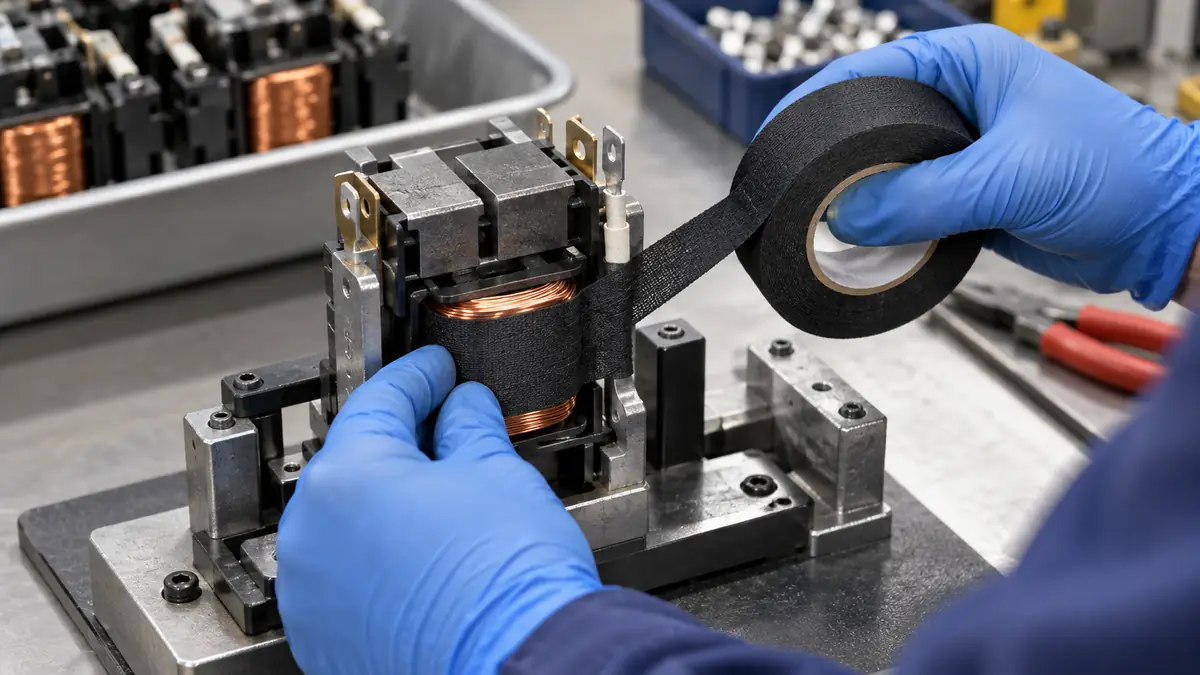
After the primary and secondary windings, barriers, margins, leads, and other insulation components are installed, an outer wrap may finish the coil package and hold selected features until the next operation. Depending on the released transformer design, acetate cloth tape may cover a local conductor transition, retain sleeving, protect winding edges from handling, or create a printable identification surface.
The wrap should not hide crossed leads, damaged enamel, loose wire, poor solder joints, insufficient margins, or an overfilled winding window. These issues must be corrected before the tape is applied.
| Wrap function | How acetate cloth may help | Engineering boundary |
|---|---|---|
| Outer finishing | Creates a conformable, abrasion-resistant surface around the winding | Final dimensions and clearances still come from the drawing |
| Lead-transition holding | Secures an approved sleeve or insulated lead route | Tape should not create a sharp bend or carry pull load |
| Local electrical separation | Adds a selected cloth insulation layer | Required dielectric performance must be proven in the complete design |
| Varnish-receptive wrap | Some cloth constructions accept or absorb compatible varnish | Wetting and cure response depend on the exact cloth and adhesive |
| Identification surface | Provides a matte area for approved marking in some grades | Ink compatibility and legibility need a separate trial |
How to Select an Acetate Cloth Tape Grade
Start with the approved insulation system
The transformer design owner should identify the required insulation system, thermal class, electrical test conditions, creepage and clearance needs, and material approvals. Similar-looking black tapes can use different cloth weights, adhesive chemistries, flame treatments, and total thicknesses. Request the current technical data for the exact product code.
Compare adhesive behavior through the full process
Initial tack must hold the wrap on enamel wire, insulation film, paper, sleeving, or an underlying tape surface. Later the adhesive may encounter varnish, resin, solvent, heat, pressure, and storage aging. Evaluate edge lift, migration, softening, hardening, and interaction with all process chemicals.
Choose width and thickness as a pair
A wider tape can cover the coil in fewer turns but may wrinkle at short radii or bridge a corner. A narrow slit width follows a small bobbin more easily but creates additional seams. Total thickness and overlap determine whether the wrapped component still fits its core, clamp, housing, or potting fixture.
| Selection input | What to record | Why it changes the choice |
|---|---|---|
| Electrical design | Voltage, insulation role, dielectric tests, margins, and lead spacing | Tape cannot be selected from temperature alone |
| Thermal duty | Continuous temperature, hot spots, cure cycles, and abnormal test conditions | Cloth and adhesive see different thermal loads |
| Process chemistry | Varnish, resin, potting compound, cleaner, flux residue, and ink | Chemicals affect adhesion, wetting, and long-term condition |
| Geometry | Bobbin dimensions, corner radii, winding envelope, lead exits, and core window | Controls slit width, overlap, and maximum build |
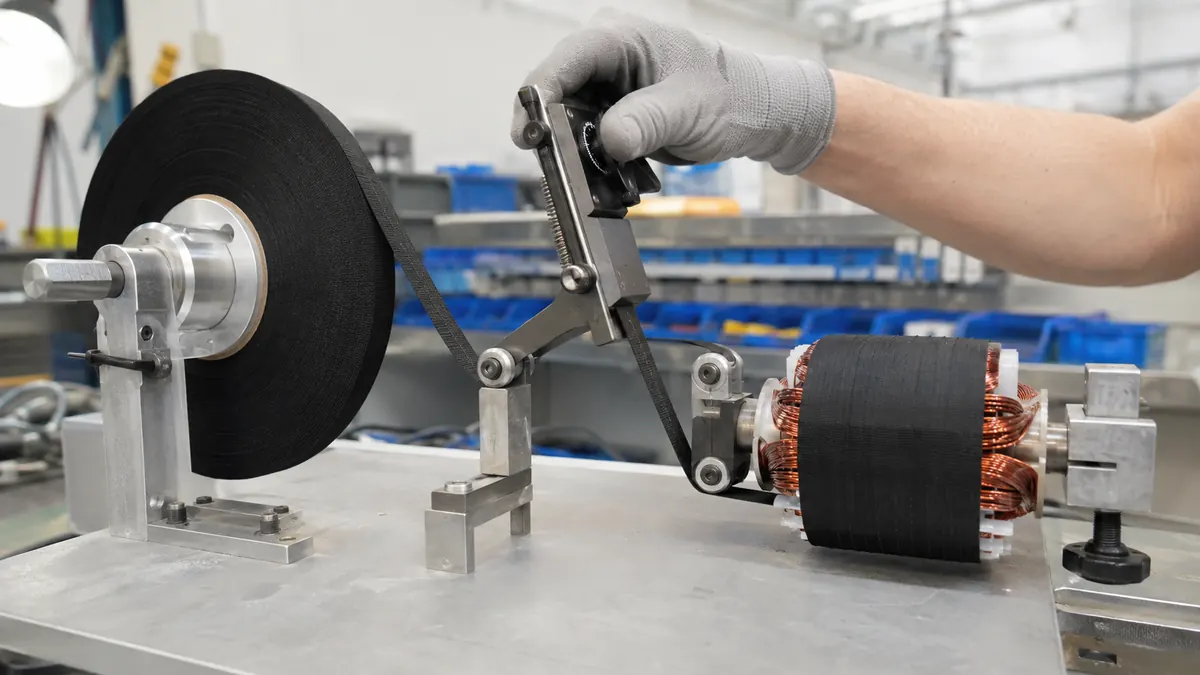
| Production format | Hand wrap, guided dispenser, pre-cut length, liner, color, and packaging | Presentation affects cycle time and repeatability |
Designing the Wrap Pattern
The drawing or work instruction should show the starting edge, wrap direction, overlap window, covered surfaces, lead and pin keep-outs, finish position, and maximum completed dimensions. An operator note such as “wrap twice” can be ambiguous: it may mean two full layers, two turns, or two strips applied to different areas.
Protect lead exits without locking in stress
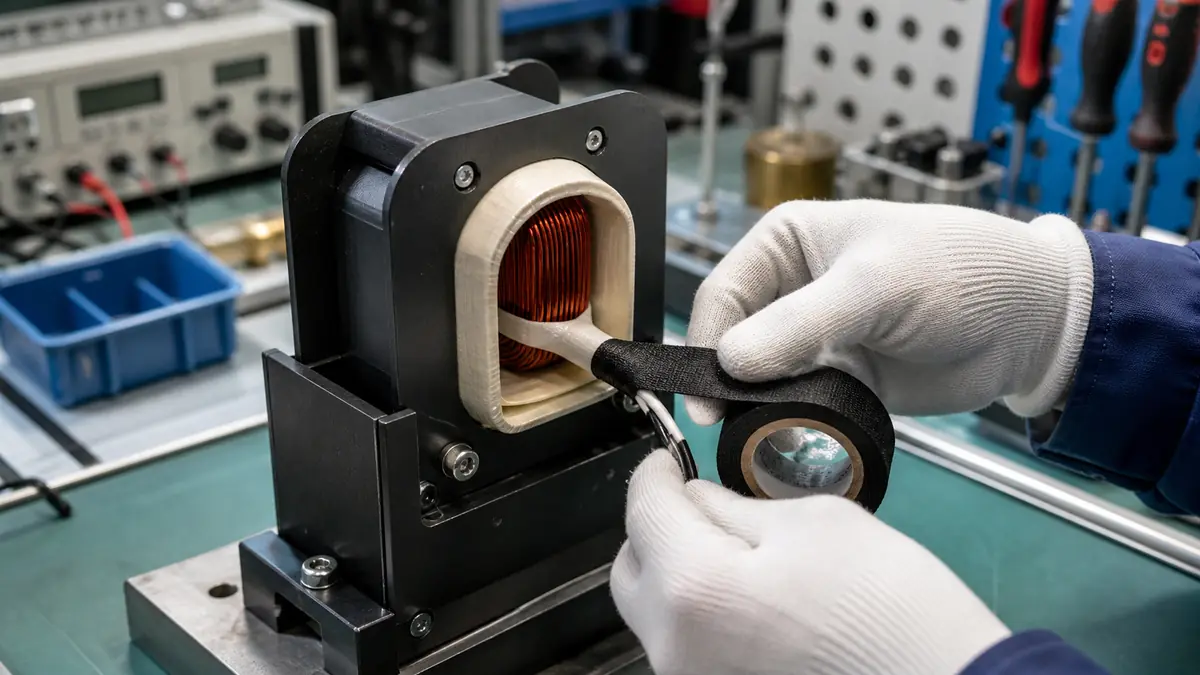
Leads should follow their designed bend radius and sleeve route before they are taped. Do not pull a lead into position and use adhesive force as the only restraint. Place the tape edge away from the most active bend and keep required solder terminals, inspection points, and pin clearances accessible.
Avoid excessive overlap at corners
Stacked seams can create a hard ridge that rubs a lead or prevents the assembly from seating. Stagger terminations where the design allows, control tension, and measure the largest finished envelope rather than only the flat tape thickness.
Recommended Bobbin-Wrapping Workflow
- Confirm the released build. Verify bobbin, wire, insulation materials, lead sleeves, tape code, width, and work-instruction revision.
- Inspect before covering. Check winding position, margins, enamel condition, barriers, lead routing, solder joints, and foreign material.
- Prepare only as approved. Keep oil, loose fibers, and contamination away without exposing the assembly to an unauthorized solvent.
- Set the start point. Anchor the tape on the specified face, away from a pin, sharp corner, lead exit, or required inspection area.
- Wrap with controlled tension. Conform the cloth without displacing windings, cutting into insulation, or stretching leads.
- Maintain the overlap window. Follow the documented path and keep stacked layers within the allowed build.
- Finish securely. Press the final overlap and locate its edge where subsequent handling will not lift it.
- Measure and inspect. Check coverage, wrinkles, fray, exposed adhesive, lead clearance, and the maximum winding envelope.
- Run downstream processes. Complete only the approved varnish, cure, potting, marking, and test sequence.
Inspection and Qualification
Use production-representative bobbins across the expected dimensional range. Qualification should include the real winding tension, barrier system, tape lot, wrap operator or equipment, varnish or resin cycle, core installation, housing fit, and electrical tests specified for the transformer. A tape coupon on steel cannot reproduce small-corner wrinkling or chemical interaction inside a wound component.
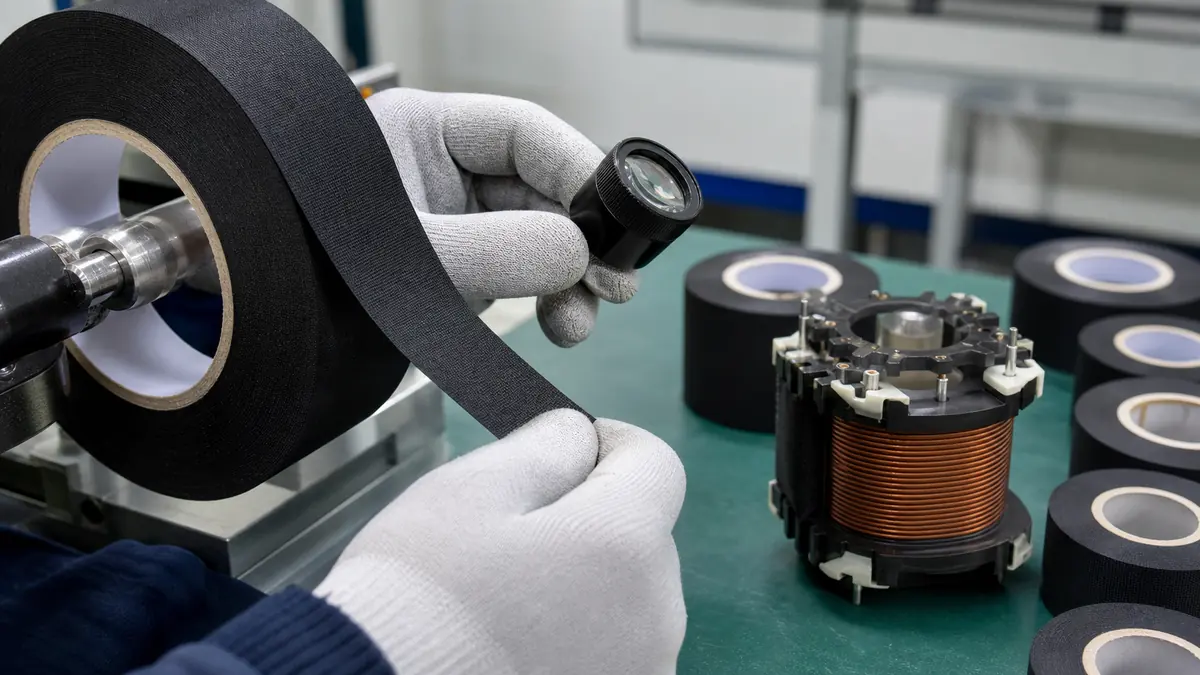
- Confirm tape identity, width, thickness, color, adhesive, shelf condition, and storage history.
- Measure the completed winding envelope at the specified locations.
- Inspect edges, seams, wrinkles, cloth fray, exposed adhesive, and lead or pin interference.
- After varnish or cure, check wetting, hardness, voids, migration, discoloration, and tape position.
- Perform the design's approved dielectric, insulation-resistance, thermal, mechanical, and functional tests.
- Record all material revisions and require change control for tape or process substitutions.
Common Problems and Corrective Directions
| Observed issue | Checks | Corrective direction |
|---|---|---|
| Wrinkles at bobbin corners | Tape width, cloth conformability, tension, corner radius, and wrap angle | Screen a narrower slit width or revise the wrap path |
| Final edge lifts | Surface, adhesive, overlap length, termination location, and handling time | Move the seam to a protected face and standardize application pressure |
| Core or housing no longer fits | Tape thickness, layer count, seam stacking, and winding overfill | Reduce uncontrolled build and measure before release |
| Varnish does not wet uniformly | Cloth treatment, adhesive coverage, overlap, varnish viscosity, and cure | Qualify the exact tape-varnish combination and process window |
| Lead insulation is damaged | Tape edge, lead bend, sleeve position, pull load, and hidden winding defect | Correct lead routing and use the specified protective components |
Related Products and Articles
- Explore the acetate cloth tape product range.
- Review the site's fabric and cloth electrical tape selection guide.
- Compare constructions in acetate cloth tape vs polyester tape.
- Send your transformer bobbin drawing and process details for sample discussion.
Frequently Asked Questions
Why is acetate cloth tape used on small transformer bobbins?
Its woven backing can conform around compact coil geometry, provide local abrasion protection, hold selected transitions, and accept compatible varnishes in some constructions. Suitability depends on the complete approved insulation design.
Can acetate cloth tape replace interlayer insulation?
Not automatically. Interlayer film, paper, margins, barriers, and tape perform different functions. Any material substitution requires transformer-design approval and representative electrical and thermal validation.
How much overlap should be used?
There is no universal percentage. Specify overlap from the bobbin geometry, tape width, required coverage, electrical role, allowable thickness, and application method.
Should the tape absorb transformer varnish?
Only when the selected insulation system and process require it. Test wetting, cure, voids, adhesion, and electrical performance with the exact tape and varnish.
What should a transformer tape RFQ include?
Provide the bobbin and winding dimensions, insulation system, tape function, thermal requirement, adhesive preference, varnish or resin cycle, width and thickness limits, wrap drawing, required approvals, annual quantity, and validation plan.
Define a Better Bobbin-Wrap Trial
Share the transformer construction, winding envelope, lead-exit geometry, insulation-system requirements, varnish or potting process, thermal duty, desired slit width, and acceptance tests. JIAO TAO TAO can help shortlist an acetate cloth tape construction for production evaluation.
Discuss transformer bobbin wrappingAcetate Cloth Tape for Common-Mode Choke Coil Wrapping
Acetate Cloth Tape for Film Capacitor Outer Wrapping
Related Article
Need help choosing the right industrial tape?
Send us your application details, including temperature, surface material, size, quantity and current problem. Our team will help recommend a suitable tape material or custom die-cut solution.

simon@jiaotaotao.com


+86-136 1277 5969


+86-136 1277 5969
