
Acetate Cloth Tape vs Polyester Tape for Electrical Insulation
Acetate Cloth Tape vs Polyester Tape for Electrical Insulation
Acetate cloth tape and polyester tape are both used for electrical insulation, but they solve different manufacturing problems. Acetate cloth tape is soft, conformable and abrasion resistant, making it useful for transformer coils, motor windings and wire harnesses. Polyester tape provides a thinner, smoother and more dimensionally stable film for layer insulation, holding and general electrical assembly.
The correct choice depends on the component geometry, temperature class, required insulation build, mechanical protection and adhesive system—not simply on which tape has the higher published temperature rating.
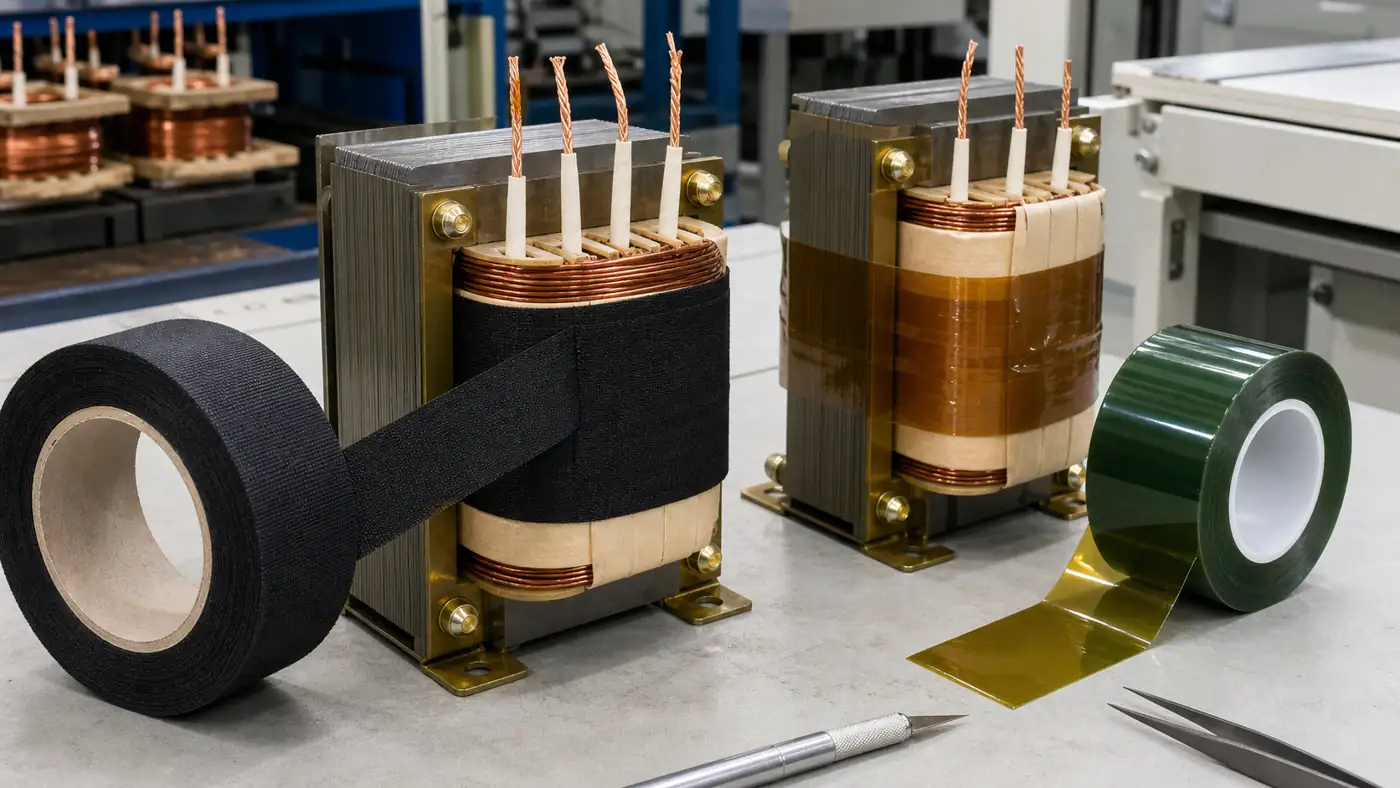
Quick Comparison
| Selection Factor | Acetate Cloth Tape | Polyester Tape |
|---|---|---|
| Backing | Woven acetate cloth | PET polyester film |
| Surface | Matte and fabric textured | Smooth and glossy |
| Conformability | Excellent around coils and irregular shapes | Good on flat or gently curved surfaces |
| Abrasion protection | Strong fabric-based protection | Good film protection with lower bulk |
| Typical use | Transformer wrapping, motor windings, harnessing | Layer insulation, coil holding, masking and general assembly |
| Thickness profile | Usually thicker and softer | Usually thinner and more dimensionally stable |
What Is Acetate Cloth Tape?
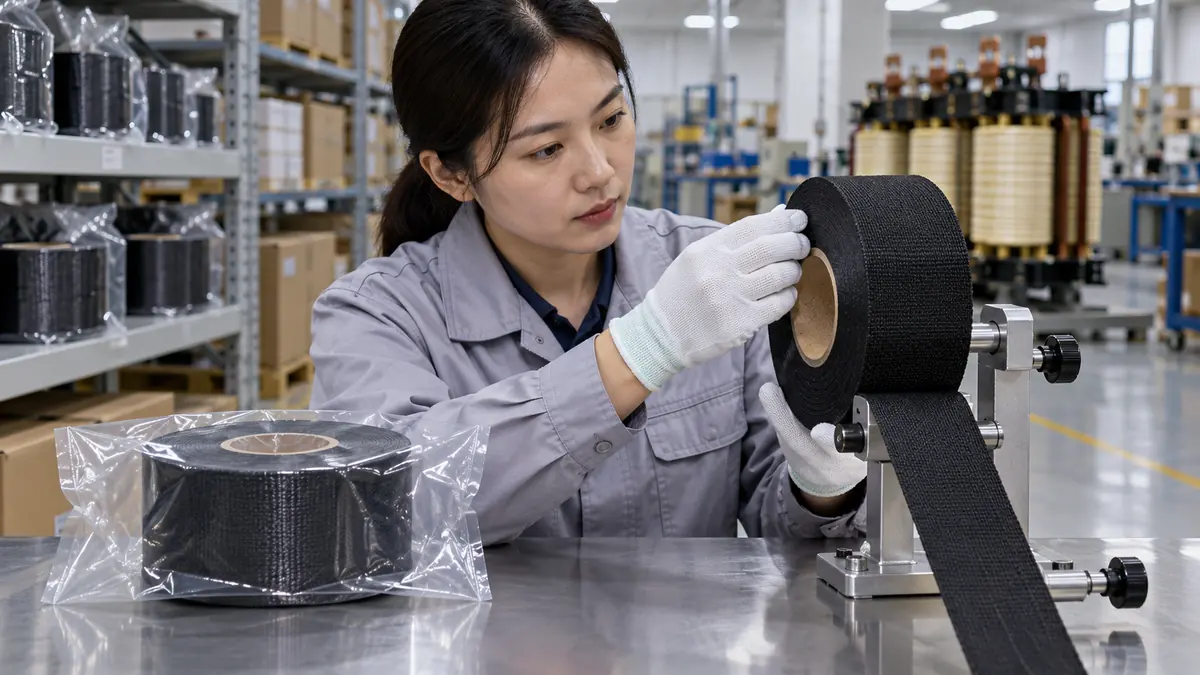
Acetate cloth tape uses a woven acetate-fiber backing coated with a pressure-sensitive adhesive. Its fabric structure allows the tape to follow coil corners, wire bundles and uneven electrical components without producing a rigid edge. The woven surface also provides abrasion resistance and can accept ink or identification marks more readily than a smooth film.
In transformer and motor production, these characteristics make acetate cloth tape useful for outer wrapping, coil finishing, lead anchoring, crossover protection and areas where the insulation must flex around a compact assembly.
What Is Polyester Electrical Tape?
Polyester electrical tape uses PET film as its backing. The film is thin, strong and dimensionally stable, so it is widely used where manufacturers need controlled insulation thickness, clean edges and consistent machine or manual application. Polyester tape may use acrylic or silicone adhesive depending on the operating temperature, bonding surface and removal requirement.
PET film tape is commonly selected for layer insulation, coil holding, capacitor and transformer assembly, surface protection and selected high-temperature masking processes. The exact tape grade must be qualified against the real thermal and electrical requirements.
Which Tape Is Better for Transformer Coils?
Choose Acetate Cloth Tape When
- The tape must wrap tightly around irregular windings or sharp transitions.
- A soft fabric edge is preferred near leads and crossover points.
- Abrasion resistance and mechanical protection are important.
- The outer wrap must remain flexible during assembly.
Choose Polyester Tape When
- The design requires a thin and predictable insulation build.
- The application surface is flat or only gently curved.
- Clean slit edges and dimensional stability are priorities.
- The tape is used for layer insulation, holding or process masking.
Many transformer constructions use more than one insulation material. Polyester film may provide thin layer insulation, while acetate cloth tape protects and finishes the outside of the winding. The materials should therefore be evaluated as parts of a complete insulation system rather than as universal substitutes.
Adhesive Selection Matters
The backing is only one part of tape performance. Acrylic adhesive often provides strong aging resistance and practical bonding for general electrical assembly. Silicone adhesive is typically considered for higher-temperature processing or surfaces that require stable adhesion through heat. Rubber-based systems may provide strong initial tack but must be checked carefully against the intended temperature and service life.
Ask the supplier for the exact construction and technical data. Two tapes with similar appearance can behave differently because of adhesive coat weight, curing, backing treatment and total thickness.
How to Compare Samples
- Define the insulation location. Record whether the tape is used between layers, around the outside of a coil, over a lead or on a wire harness.
- Measure available space. Confirm the maximum insulation build and bend radius.
- Use real substrates. Test on the actual enamel wire, bobbin, film, metal or plastic surface.
- Run the complete heat cycle. Include winding, varnish, curing, aging and service temperatures where applicable.
- Inspect mechanical behavior. Look for lifting, flagging, wrinkling, edge cutting and abrasion.
- Verify electrical performance. Test the complete assembly to the applicable product specification.
Common Selection Mistakes
| Mistake | Why It Causes Problems | Better Approach |
|---|---|---|
| Selecting by color | Color does not confirm backing or adhesive performance | Verify material construction and test data |
| Using temperature rating alone | Dwell time and substrate affect adhesion | Test the complete thermal profile |
| Ignoring total thickness | Excess build can change coil dimensions | Measure film, adhesive and finished overlap |
| Testing only on steel | Production surfaces may bond differently | Use actual component materials |
Frequently Asked Questions
Is acetate cloth tape electrically insulating?
Yes, industrial acetate cloth tape is widely used for electrical insulation and mechanical protection. Qualification must be based on the exact tape grade and finished assembly requirements.
Is polyester tape thinner than acetate cloth tape?
Polyester film constructions are generally thinner and smoother, while acetate cloth constructions are usually thicker, softer and more conformable.
Can the two tapes be used together?
Yes. A transformer may use polyester tape for thin layer insulation and acetate cloth tape for outer wrapping, lead fixation or abrasion protection.
Which tape is better for irregular coils?
Acetate cloth tape is often preferred because its woven backing conforms well around corners, leads and uneven winding surfaces.
Can these tapes be supplied in custom widths?
Yes. Both materials can be slit to narrow widths or converted into custom shapes, subject to material and tolerance requirements.
How to Choose Adhesive Tape Thickness for Insulation and Masking
Related Article
Need help choosing the right industrial tape?
Send us your application details, including temperature, surface material, size, quantity and current problem. Our team will help recommend a suitable tape material or custom die-cut solution.

simon@jiaotaotao.com


+86-136 1277 5969


+86-136 1277 5969
