
1000 Degree Tape: What Actually Works

1000 Degree Tape: What Actually Works
Most buyers searching for “1000 degree tape” are not really looking for an ordinary adhesive tape that continuously works at a true 1000° environment. They are trying to solve a failure: tape burns, shrinks, leaves residue, lifts at the edge, or sticks to a hot surface and causes downtime.
That is why professional selection starts with the failure mode, not with a marketing phrase.
Why “1000 Degree Tape” Is Often the Wrong Question
| What the Customer Says | What the Real Problem Usually Is | What Needs to Be Clarified |
|---|---|---|
| I need 1000 degree tape | The current tape burns or fails under heat | Actual operating temperature and dwell time |
| I need tape that survives the furnace | The process may be masking, shielding, or insulation | Whether the tape is adhesive-backed or not |
| I need heatproof tape for hot metal | The real need may be release, not masking | Whether the surface must stay non-stick |
| I need tape that will not burn | The current product is outside its design window | Continuous vs short exposure |
What Usually Fails First
| Failure You See | What It Means | What the Correct Solution Must Do |
|---|---|---|
| Adhesive turns soft, messy, or carbonized | The adhesive system cannot survive the heat cycle | Stay stable or avoid adhesive where necessary |
| Tape shrinks and exposes the protected area | The backing is not dimensionally stable enough | Maintain shape during the process |
| Residue remains after removal | The tape is outside its clean-removal window | Peel cleanly after heating |
| Hot product sticks to the tape surface | The surface property is wrong for release use | Provide non-stick behavior |
| Tape works at first but fails later | The process is longer or harsher than expected | Match the real cycle, not just the peak number |
Solution 1: For Most Real Heat Processes, Start with the Actual Job
In many factories, the requested number is higher than the real continuous operating condition. What the line actually needs is a tape that masks cleanly, holds its edge, and removes without residue after the cycle.
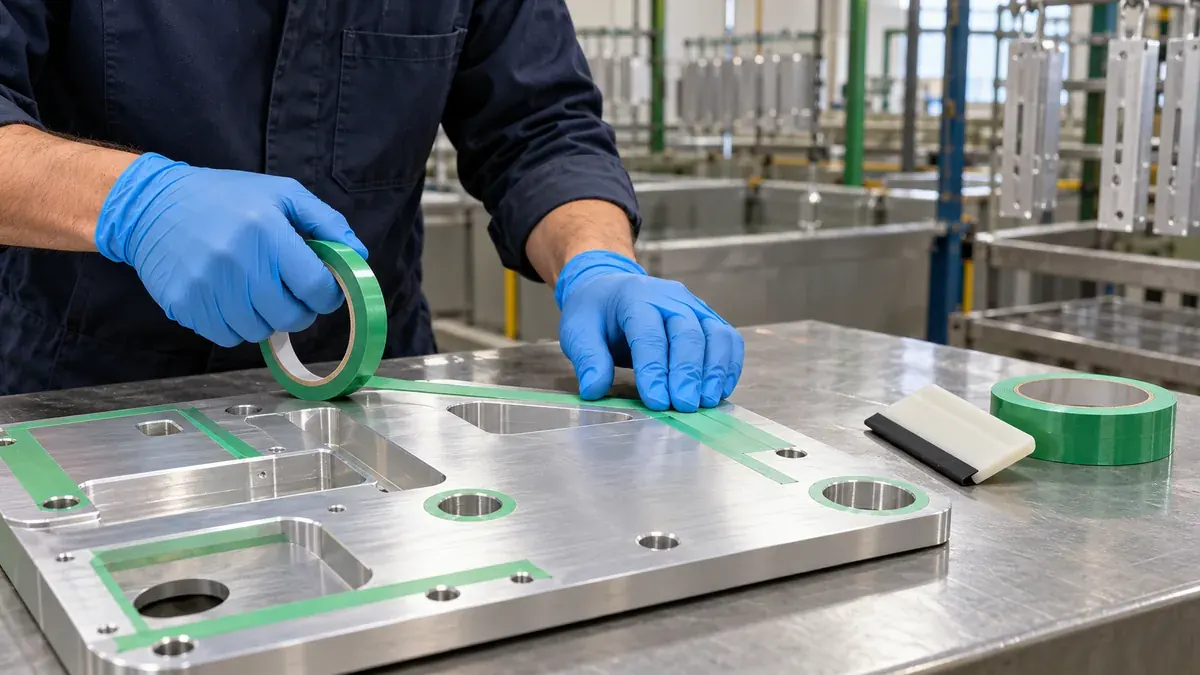
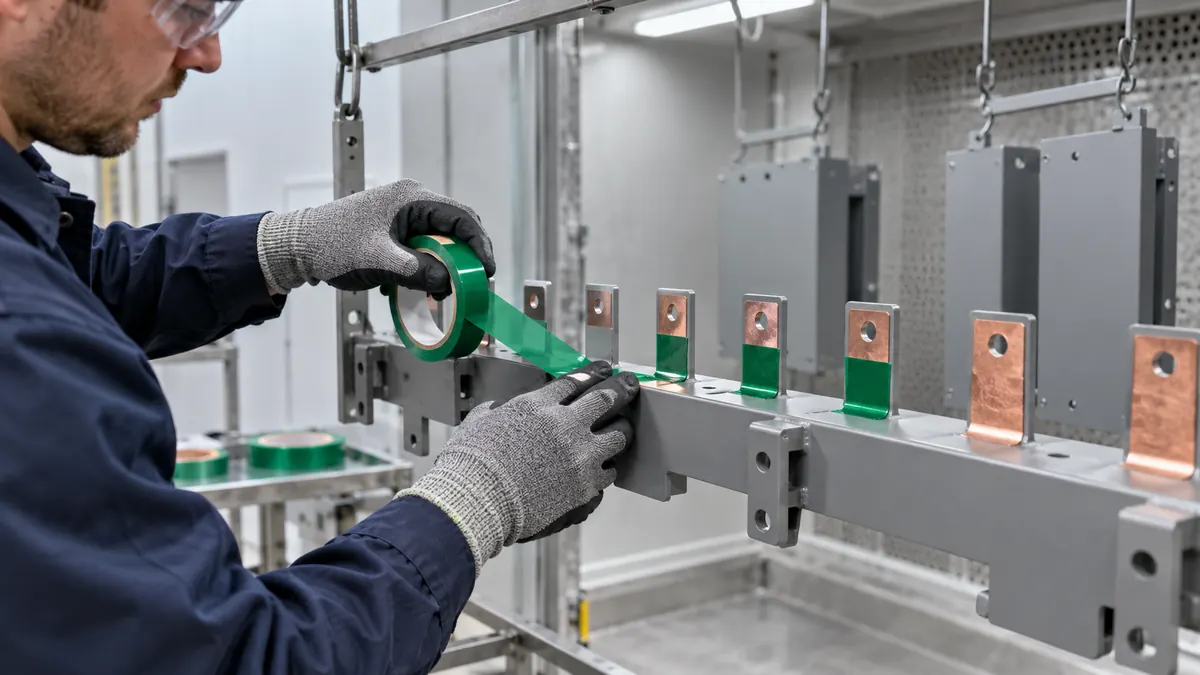
Recommended solution: if the job is mainly masking or general industrial heat-resistant protection, start with PET silicone tape or the broader high temperature resistant tape guide.
This is usually the right route when the real problem is residue, shrinkage, or unstable masking, not true refractory exposure.
Solution 2: For Higher-Heat Electronics, Move to Polyimide
When the real requirement is higher thermal stability plus insulation, the professional answer is usually not “find a 1000-degree tape.” It is to switch to the right electronics-grade material class.
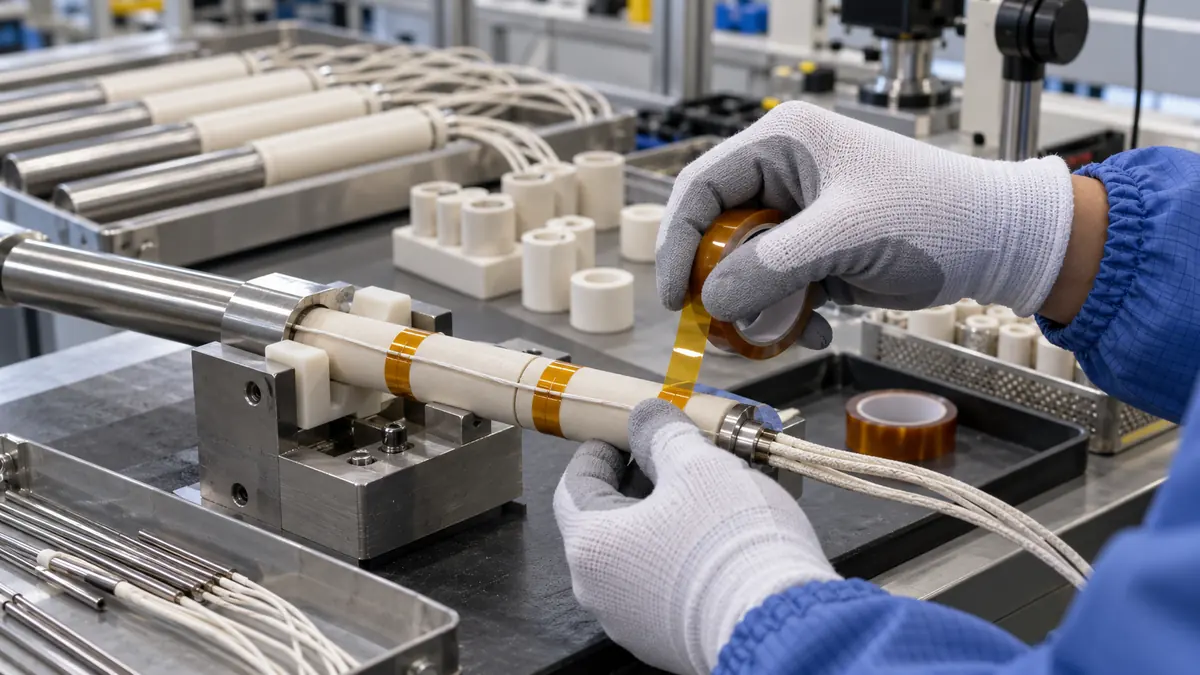
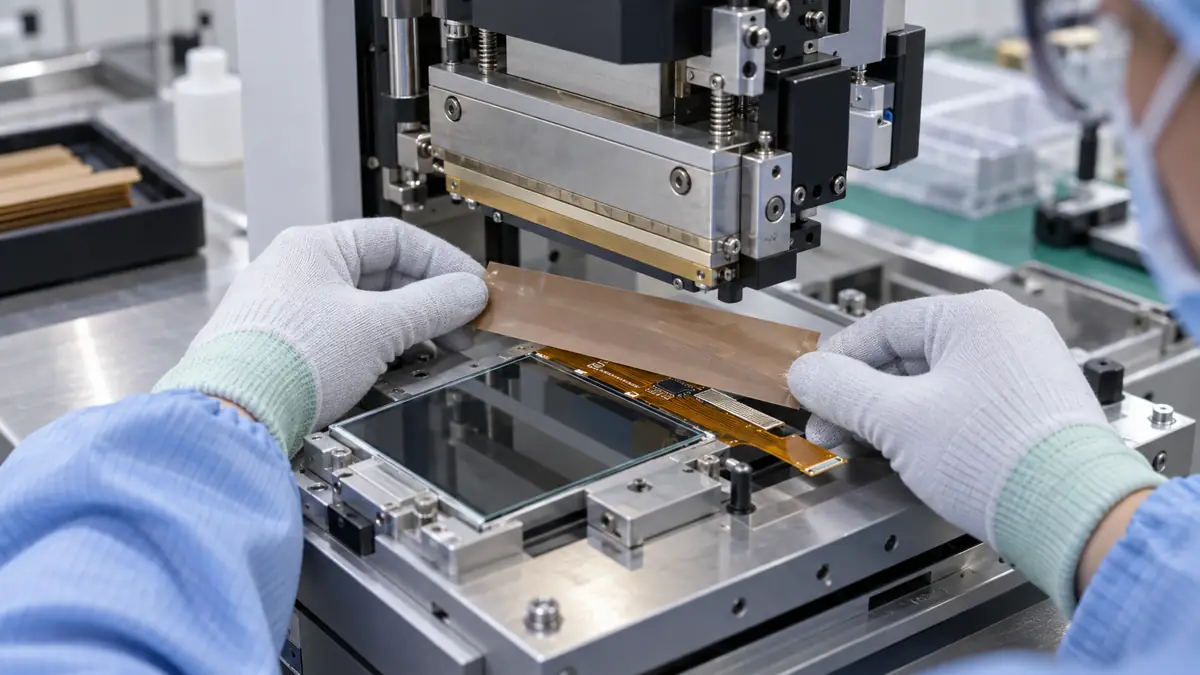
Recommended solution: use polyimide tape when the process needs better heat performance and stronger insulation stability in electronics work.
This is the better route for PCB masking, solder-process protection, transformer insulation, and higher-precision thermal jobs.
Solution 3: For Hot Non-Stick Surfaces, Use PTFE Instead
This is not primarily a masking problem. It is a release-surface problem. If material must move cleanly across a hot surface, a non-stick solution is usually more important than a “higher temperature number” on a datasheet.
Recommended solution: use PTFE tape when the real issue is non-stick performance, low friction, and hot-surface protection.
This is the correct route for hot rollers, sealing bars, guide surfaces, and repeated thermal contact points.
Solution 4: If You Truly Mean 1000°C, Ordinary Adhesive Tape Is Usually Not the Answer
At true 1000°C-class exposure, the professional decision is often to stop looking at ordinary pressure-sensitive tape. The correct route is usually a non-adhesive heat shielding, refractory wrap, ceramic-based barrier, or mechanical insulation design.
The right question becomes: Do you need masking, shielding, wrapping, or insulation? Once that is clear, material selection becomes more accurate.
Which Direction Fits Your Real Problem?
PET Silicone Tape
Use it when: the real problem is masking failure, residue, and shrinkage in general industrial heat processes.
Polyimide Tape
Use it when: the real problem is higher-heat electronics work and stronger insulation requirements.
PTFE Tape
Use it when: the real problem is sticking, drag, and hot-surface release failure.
Non-Adhesive Heat Shielding
Use it when: the process is truly near refractory temperature and standard adhesive tape is no longer the right product category.
Quick Decision Table
| Your Main Problem | Better Direction |
|---|---|
| Residue, lifting, or shrinkage after heating | PET silicone tape |
| Higher-heat electronics and insulation demand | Polyimide tape |
| Hot-surface sticking or drag | PTFE tape |
| True 1000°C-class exposure | Non-adhesive heat shielding or refractory solution |
FAQ
Is there really a 1000 degree adhesive tape?
That depends on whether you mean 1000°F or 1000°C, how long the exposure lasts, and whether the job is masking, insulation, or heat shielding. Many standard adhesive tapes are not the correct solution for true 1000°C-class exposure.
What tape should I use if ordinary tape burns in heat?
If the job is masking or insulation, start with PET silicone tape or polyimide tape depending on the real process severity. If the problem is sticking on a hot surface, move to PTFE tape.
Can polyimide tape handle 1000 degrees?
Polyimide tape is a higher-heat electronics material, but it should be chosen based on the real operating condition, not by assuming it is a universal 1000-degree solution for every application.
What if I truly need a solution near 1000°C?
In that case, the correct route is often non-adhesive heat shielding, ceramic-based barriers, or refractory materials rather than ordinary pressure-sensitive adhesive tape.
Why do buyers often search for 1000 degree tape by mistake?
Because they see tape burning or leaving residue and assume they only need a higher temperature claim, when the real need is the correct material family for masking, insulation, or release.
Conclusion
The professional answer to “high temperature tape 1000 degrees” is not one product name. It is a selection process. If the real issue is residue, lifting, or shrinkage, start with PET silicone tape. If the real issue is higher-heat electronics insulation, move to polyimide. If the real issue is hot-surface sticking, move to PTFE. And if the environment is truly near 1000°C, step out of ordinary adhesive tape selection and move into heat-shielding or refractory design.
Need help identifying the right heat-resistant material for your process? JIAO TAO TAO supports OEM/ODM supply, custom widths, slit rolls, die-cut conversion, and project-based recommendation for PET, polyimide, and PTFE tape applications.
+86-13612775969
+86-13612775969
simon@jiaotaotao.com
Send Inquiry Online
Custom Die Cut Tape for Precision Assembly
Double Sided Tape for Clothes: Best Uses & Tips
Related Article
Need help choosing the right industrial tape?
Send us your application details, including temperature, surface material, size, quantity and current problem. Our team will help recommend a suitable tape material or custom die-cut solution.

simon@jiaotaotao.com


+86-136 1277 5969


+86-136 1277 5969
