
3D Printer Kapton Tape for High-Temperature Printing

3D Printing Build Surface Solution
3D Printer Kapton Tape for High-Temperature Printing
3D printer Kapton tape is a polyimide adhesive tape used on heated build plates to improve first-layer adhesion, thermal stability and clean part release during high-temperature printing. It is commonly used for ABS, PETG, Nylon and engineering filaments when the printer bed requires a smooth, heat-resistant and replaceable build surface.
Direct Answer
Kapton tape for 3D printing helps create a stable build surface on heated beds. It supports controlled adhesion during printing and cleaner release after cooling. For industrial users, the main selection factors are polyimide film quality, adhesive type, tape width, bed temperature, filament type, surface cleanliness and replacement frequency.
- Recommended for heated glass, aluminum and flat build platforms.
- Commonly used with ABS, PETG, Nylon, PA composites and engineering filaments.
- Useful for reducing warping and improving first-layer consistency.
- Also used for insulation around heating elements, thermistor wires and printer assemblies.
- Sample testing is recommended before bulk or production use.
What Is 3D Printer Kapton Tape?
3D printer Kapton tape is a heat-resistant polyimide tape used as a build surface, thermal barrier or insulation material in 3D printing equipment. In heated bed applications, the tape is applied to glass plates, aluminum plates or other flat build surfaces to create a smooth and replaceable printing layer.
The tape is widely used in FDM printing environments where bed adhesion, heat stability and clean release are important. It is especially useful when standard build surfaces cannot provide consistent adhesion for higher-temperature filaments.
Why Kapton Tape Is Used on Heated Build Plates
Heated build plates experience repeated heating and cooling cycles. A suitable Kapton tape surface can help maintain stable contact between the first printed layer and the build platform while still allowing parts to release after cooling.
Stable First-Layer Adhesion
A smooth polyimide surface helps the first layer bond more consistently, which can reduce edge lifting and warping.
Heat-Resistant Surface
Polyimide film is selected for printing environments that require stable surface behavior under elevated bed temperatures.
Clean Release After Cooling
After the printed part cools, the tape surface can support cleaner removal compared with aggressive adhesive coatings.
Replaceable Build Surface
Kapton tape can be replaced when worn, helping production users maintain a consistent bed surface.
Suitable Filaments and Printing Conditions
Kapton tape is often selected for higher-temperature 3D printing materials where bed adhesion is more demanding than standard PLA printing. Actual performance depends on filament type, bed temperature, surface cleaning, tape installation and printer calibration.
| Filament or Use Case | Why Kapton Tape May Help | Buyer Note |
|---|---|---|
| ABS and ABS blends | Supports first-layer grip and helps reduce warping on heated beds. | Bed temperature and enclosure conditions should be tested. |
| PETG | Provides controlled adhesion and smoother surface release. | Avoid excessive bonding by testing print settings first. |
| Nylon / PA | Helps maintain a heat-stable platform surface for engineering filaments. | Dry filament and stable chamber temperature are also important. |
| Carbon-filled filaments | Provides a replaceable surface for abrasive and engineering-grade prints. | Check wear and replace tape when surface damage appears. |
| Industrial print farms | Helps standardize surface replacement and bed preparation routines. | Custom roll width and sheets may improve workflow efficiency. |
Kapton Tape vs Other Build Surface Options
Build surface choice depends on filament type, printer temperature, replacement cost and production workflow. Kapton tape offers a practical balance of heat resistance, smooth surface quality and replaceability.
| Build Surface Option | Common Limitation | Kapton Tape Advantage |
|---|---|---|
| Blue masking tape | Lower heat tolerance and shorter service life on heated beds. | Better stability for elevated-temperature printing. |
| PEI sheet | Higher replacement cost and less flexible for custom bed sizes. | Thin, flexible and easy to replace in strips or sheets. |
| Adhesive spray | Residue buildup and inconsistent coating thickness. | Cleaner and more repeatable surface preparation. |
| Glass-only bed | Poor adhesion for some high-temperature filaments. | Improved grip while keeping a smooth bed surface. |
Installation Tips for 3D Printer Beds
Correct installation is important because trapped air, dust, oil or uneven overlap can affect first-layer quality. Before applying Kapton tape, the build plate should be clean, dry and flat.
- Clean the build plate with a suitable cleaner and remove dust, oil and old adhesive residue.
- Apply the tape slowly from one edge to reduce air bubbles.
- Use a plastic card or soft scraper to press the tape evenly across the surface.
- For large beds, use wide tape or carefully aligned strips with minimal gaps.
- Heat the bed and recheck calibration before production printing.
- Replace the tape when the surface becomes scratched, contaminated or uneven.
For more general handling guidance, see our how to use PI tape guide.
Industrial and B2B Application Scenarios
In industrial 3D printing, Kapton tape is used not only as a build surface, but also as a heat-resistant insulation and protection tape inside printer assemblies. It can support prototyping labs, printer manufacturers, repair workshops, education labs and production print farms.
Printer Bed Surface
Applied to heated glass or aluminum plates to provide a smooth, replaceable and heat-resistant surface.
Heating Assembly Protection
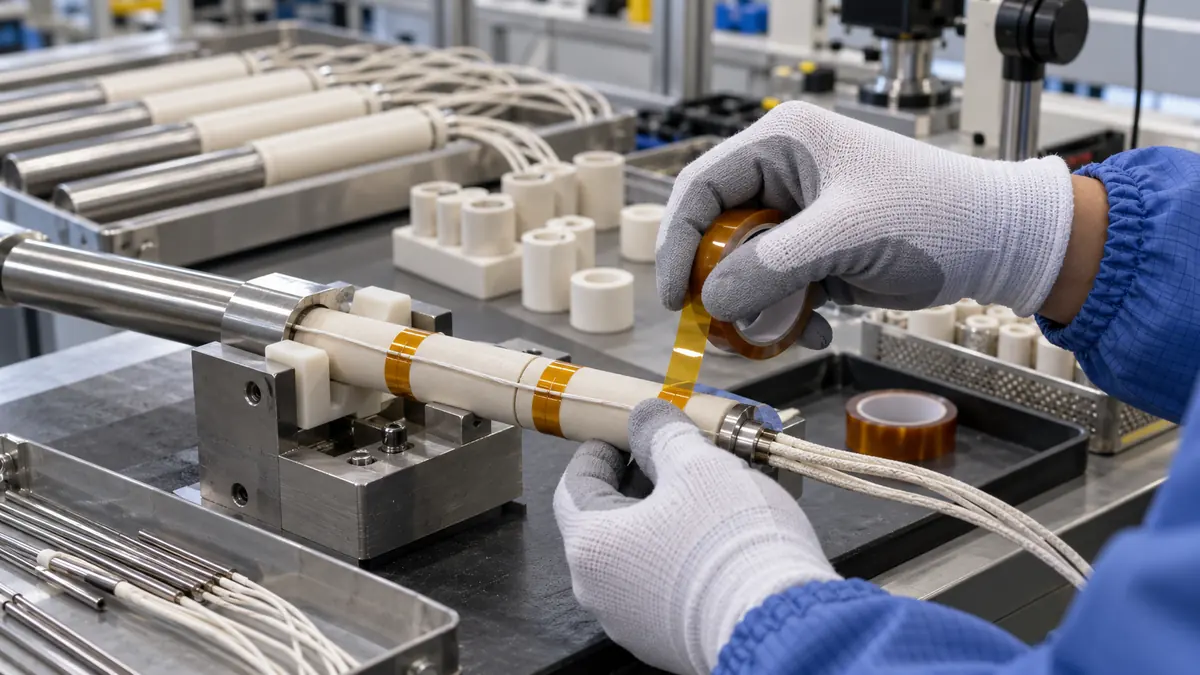
Used around heating elements, thermistor wires and high-temperature zones where insulation is required.
Print Farm Maintenance
Custom widths and roll lengths can help standardize bed surface replacement across multiple printers.
OEM Printer Assembly
Polyimide tape can be supplied as rolls, sheets or die-cut parts for printer manufacturing and repair kits.
How to Choose Kapton Tape for 3D Printing
Buyers should select Kapton tape according to printer bed size, operating temperature, filament type, replacement frequency and installation method. For production use, custom width, roll length and sheet format can reduce waste and speed up maintenance.
| Selection Factor | What to Confirm | Recommended Note |
|---|---|---|
| Material | Polyimide film backing | Confirm film thickness and surface requirement. |
| Adhesive | Silicone adhesive or other adhesive system | Silicone adhesive is commonly used for high-temperature processes. |
| Width and Length | Printer bed size and replacement method | Custom options available for rolls, sheets and slit widths. |
| Bed Surface | Glass, aluminum or heated build platform | Test adhesion and release on the actual surface. |
| Printing Conditions | Bed temperature, filament and enclosure environment | Depends on material, thickness and adhesive type. |
| Samples | Small roll, sheet or slit sample | Sample testing is recommended before bulk order. |
For product selection, compare polyimide tape and single-sided polyimide tape options.
Frequently Asked Questions
What is 3D printer Kapton tape used for?
3D printer Kapton tape is used on heated build plates to improve first-layer adhesion, thermal stability and clean part release. It is also used for insulation around heating elements, thermistor wires and printer assemblies.
Is Kapton tape good for 3D printing?
Yes. Kapton tape can be useful for high-temperature 3D printing because it provides a smooth, heat-resistant and replaceable build surface when installed correctly.
Which filaments work with Kapton tape?
Kapton tape is commonly used with ABS, PETG, Nylon, PA composites and other engineering filaments that require a heated build surface. Actual results should be tested with the printer and filament settings.
Can Kapton tape be used on a heated bed?
Yes. Kapton tape is often applied to heated glass or aluminum build plates. The suitable temperature depends on the tape material, adhesive type and printing process.
How do you apply Kapton tape to a 3D printer bed?
Clean the bed surface, apply the tape slowly from one edge, press it evenly with a plastic card, remove air bubbles and recalibrate the bed before printing.
Does Kapton tape leave residue on the print bed?
A suitable tape can remove cleanly, but residue depends on adhesive type, bed temperature, heating time and surface condition. Testing is recommended before production use.
How do you choose the right width?
Choose a width that covers the printer bed with minimal seams. For large beds, custom slit rolls or sheet formats can reduce overlap and improve surface consistency.
Can Kapton tape be supplied in custom sizes?
Yes. Polyimide Kapton-style tape can be supplied in custom widths, roll lengths, sheets or die-cut formats according to printer bed size and industrial assembly requirements.
Request Polyimide Tape for 3D Printing
If your project requires Kapton-style polyimide tape for 3D printer heated beds, high-temperature printing, printer assembly insulation or custom replacement surfaces, JIAO TAO TAO can help review film thickness, adhesive type, width, roll length, sheet format and sample requirements.
Kapton Tape Datasheet: Key Specifications and Technical Properties
Heat Proof Adhesive Tape – High Temperature Industrial Applications
Related Article
Need help choosing the right industrial tape?
Send us your application details, including temperature, surface material, size, quantity and current problem. Our team will help recommend a suitable tape material or custom die-cut solution.

simon@jiaotaotao.com


+86-136 1277 5969


+86-136 1277 5969
