
Evolving Industrial Demand for Teflon Adhesive in High-Performance Environments

Teflon Adhesive Demand Trends in Industrial Applications
Industry Background
Industry demand changes
Shifts in Industrial Bonding Requirements
Industrial demand for advanced adhesive materials is no longer driven solely by bonding strength. Manufacturers and system designers are placing greater emphasis on thermal stability, chemical inertness, and long service life. This has resulted in noticeable changes in how adhesive materials are specified and evaluated.
In electronics manufacturing and electrical insulation, compact designs and higher power densities have increased surface temperatures and exposure to reactive substances. Under these conditions, standard organic adhesives may degrade, prompting a shift toward high temperature adhesive solutions that maintain bonding integrity over extended operational cycles. At the same time, industries such as chemical processing and industrial equipment manufacturing require bonding systems that do not react with solvents, fuels, or corrosive agents, reinforcing demand for chemical resistant adhesive technologies.
As a result, procurement trends increasingly favor materials that reduce maintenance frequency and support predictable lifecycle performance, even if initial material costs are higher.
Technology / Materials Development Trends
One clear direction involves improving adhesion to a wider range of substrates, including metals, engineered plastics, and composite materials, while preserving the inherent properties of fluoropolymer adhesive systems. Another direction centers on optimizing viscosity and curing behavior to better align with automated manufacturing lines and precision assembly processes.
In parallel, material engineers are exploring ways to balance flexibility and mechanical stability, ensuring that industrial bonding applications can withstand vibration, thermal cycling, and dimensional changes without loss of adhesion. These developments reflect a broader industry focus on materials that integrate seamlessly into modern production environments rather than requiring specialized handling.
Impact on the manufacturing end
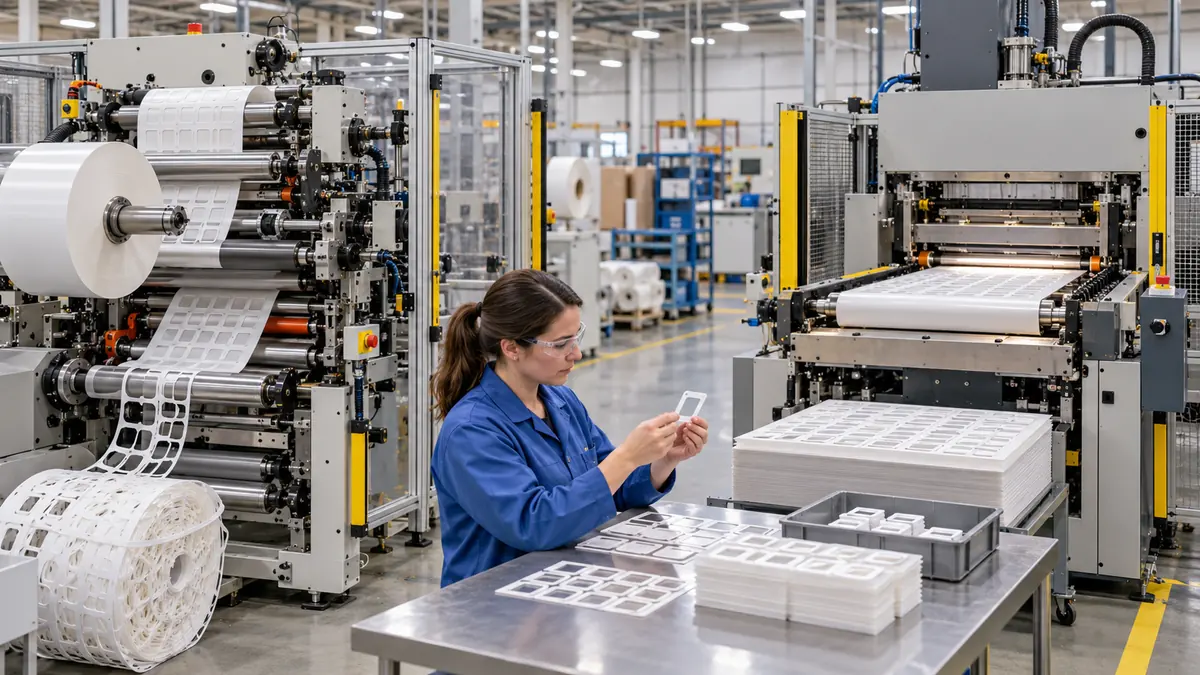
For manufacturers and suppliers, the evolving role of Teflon adhesive introduces both operational and strategic considerations. On the production side, processing requirements such as surface preparation, application methods, and curing parameters must align with high-throughput manufacturing systems. This often necessitates tighter process control and closer collaboration between material specialists and equipment engineers.
From a supply perspective, consistency and traceability are becoming increasingly important. Industrial buyers expect adhesive materials to deliver uniform performance across batches, particularly when used in regulated or safety-critical environments. As a result, manufacturers are prioritizing quality management systems and material characterization capabilities to meet these expectations.
Additionally, the shift toward performance-driven material selection influences inventory strategies. Suppliers may need to support a broader range of adhesive grades tailored to specific thermal, chemical, or electrical requirements, rather than relying on a limited portfolio of general-purpose solutions.
Application Area Expansion
The application scope of Teflon-based adhesive materials continues to broaden across industrial sectors, reflecting their adaptability to demanding conditions:
-
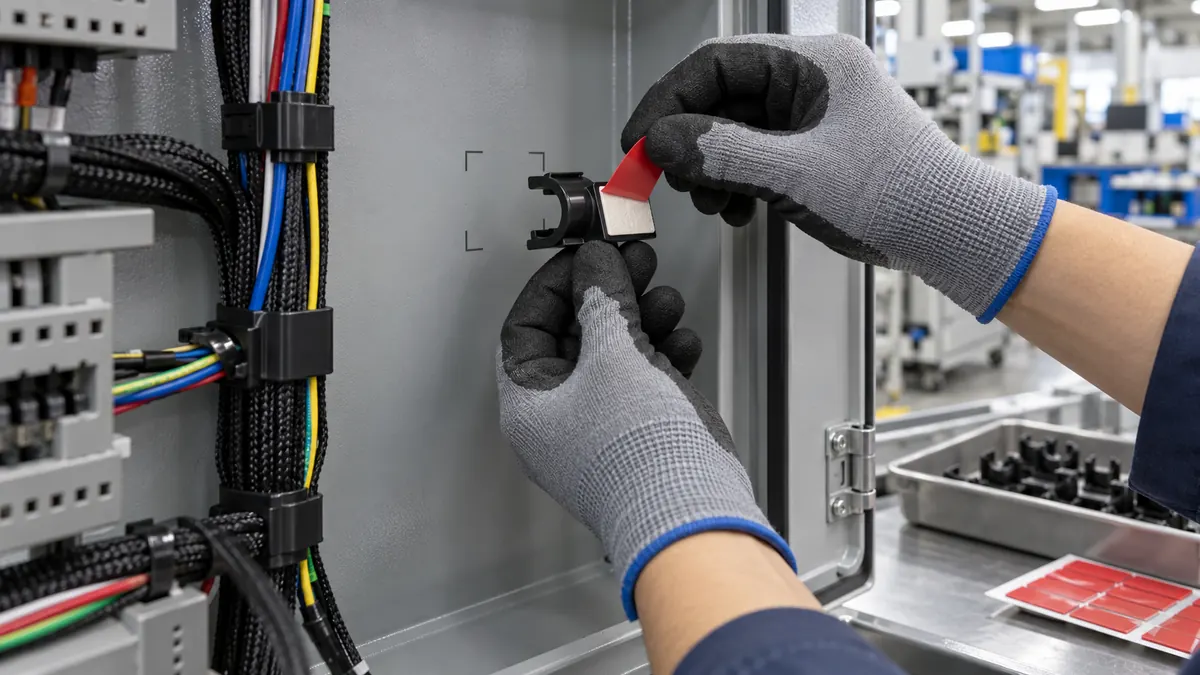
Electrical insulation systems: Teflon adhesive supports stable bonding in high-voltage environments where dielectric reliability is critical.
-
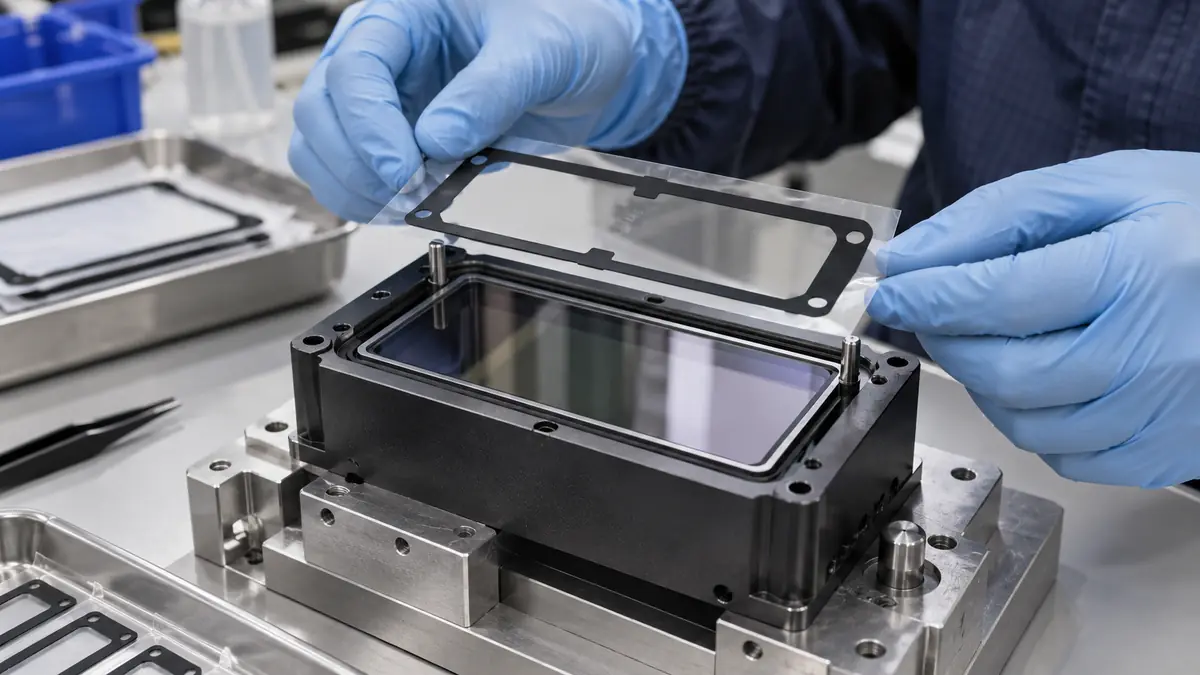
Electronics manufacturing assemblies: PTFE adhesive enables component fixation in areas exposed to sustained heat and flux residues.
-
Chemical processing equipment: Chemical resistant adhesive solutions are used where exposure to corrosive media is unavoidable.
-
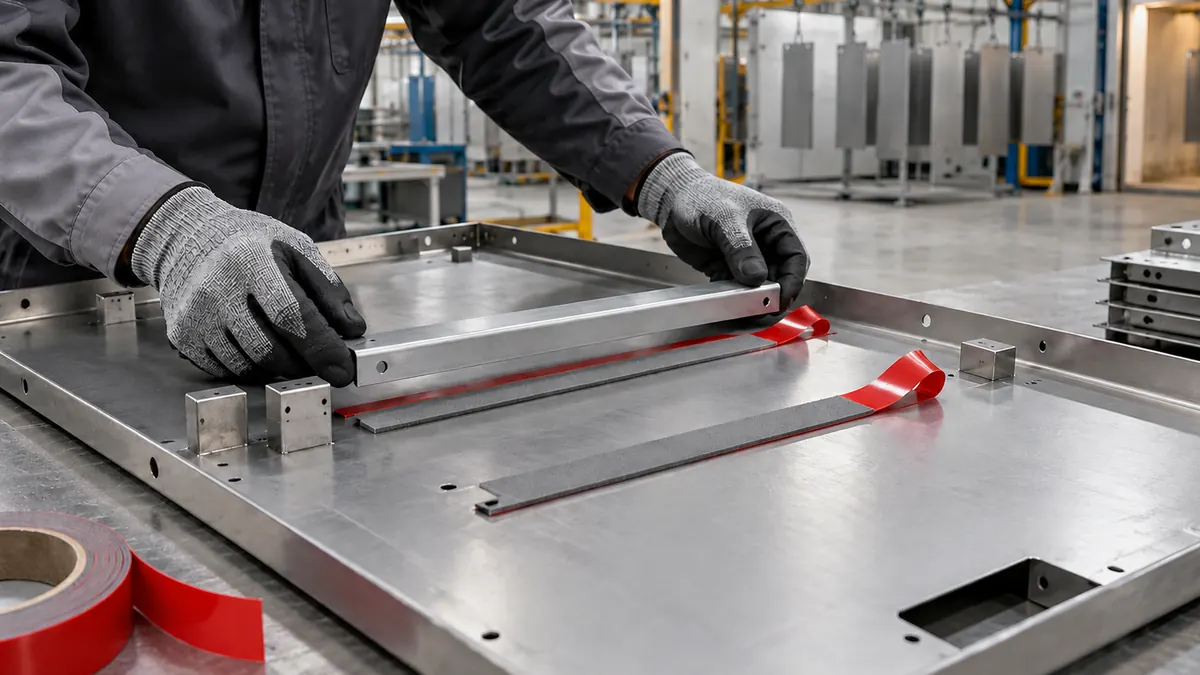
Industrial machinery components: High temperature adhesive materials contribute to long-term bonding performance under continuous thermal load.
-
Aerospace and transportation subsystems: Fluoropolymer adhesive applications address requirements for lightweight, durable, and chemically inert bonding.
Kapton Polyimide Film: Properties & Uses
What are the differences between polyimide tape and polyester tape?
Related Article
Need help choosing the right industrial tape?
Send us your application details, including temperature, surface material, size, quantity and current problem. Our team will help recommend a suitable tape material or custom die-cut solution.

simon@jiaotaotao.com


+86-136 1277 5969

+86-136 1277 5969
