
Silicone Adhesive Polyimide Tape: Performance and Applications
Silicone Adhesive Polyimide Tape Explained
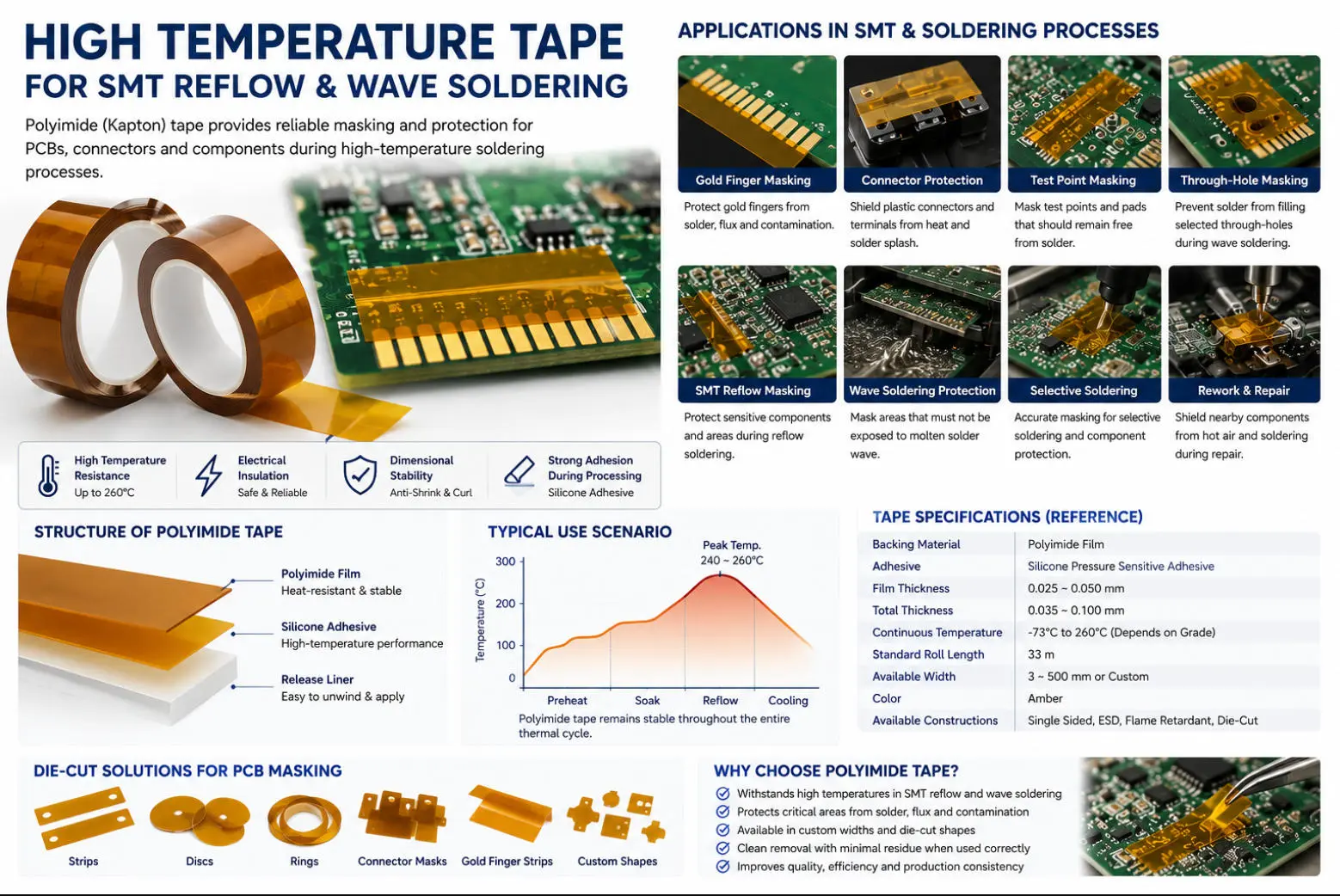
Silicone adhesive polyimide tape combines a dimensionally stable polyimide film backing with a pressure-sensitive silicone adhesive. This construction is commonly considered for high-temperature masking, PCB processing, powder coating, electrical insulation, motor and transformer work, and other applications that require adhesion during a demanding thermal cycle.
Quick Answer
The polyimide backing provides film support, while the silicone adhesive controls surface contact, holding power, and removal behavior. The usable temperature of the finished tape is limited by the complete construction and exposure conditions. Buyers should verify peak temperature, dwell time, substrate, cycle count, residue limit, and electrical requirements.
How the Construction Works
Polyimide Film Backing
The film contributes flexibility, dimensional stability, mechanical support, and dielectric insulation. Film thickness affects conformability, edge profile, puncture resistance, and the space occupied in a wrapped or layered assembly.
Silicone Pressure-Sensitive Adhesive
The adhesive wets the surface under application pressure and maintains useful contact through the specified process. Performance depends on coating weight, formulation, surface energy, cleanliness, temperature, dwell, and removal method. Silicone adhesive is not automatically residue-free on every substrate.
Optional Release Liner
Liner-backed tape is useful for die cutting, sheets, tabs, and precision components. The liner protects the adhesive during converting and handling. It is removed before installation and is not part of the final insulation thickness.
Why Silicone Adhesive Is Used for Heat
Silicone pressure-sensitive adhesives are widely used where conventional systems may lose useful performance during elevated-temperature processing. A published heat limit is meaningful only with exposure time and test conditions. A short soldering peak does not prove suitability for continuous operation at the same temperature.
Typical Applications
- SMT reflow and wave soldering: masking contacts, gold fingers, and selected PCB areas.
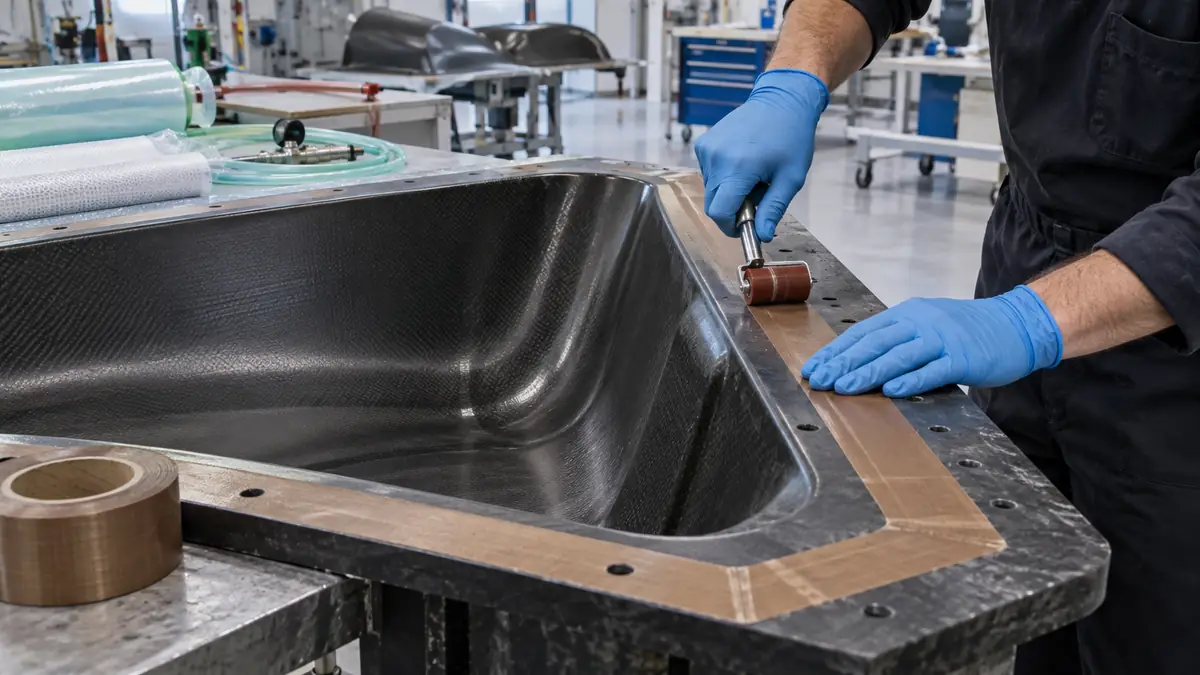
- Powder coating: protecting metal surfaces through an oven cycle.
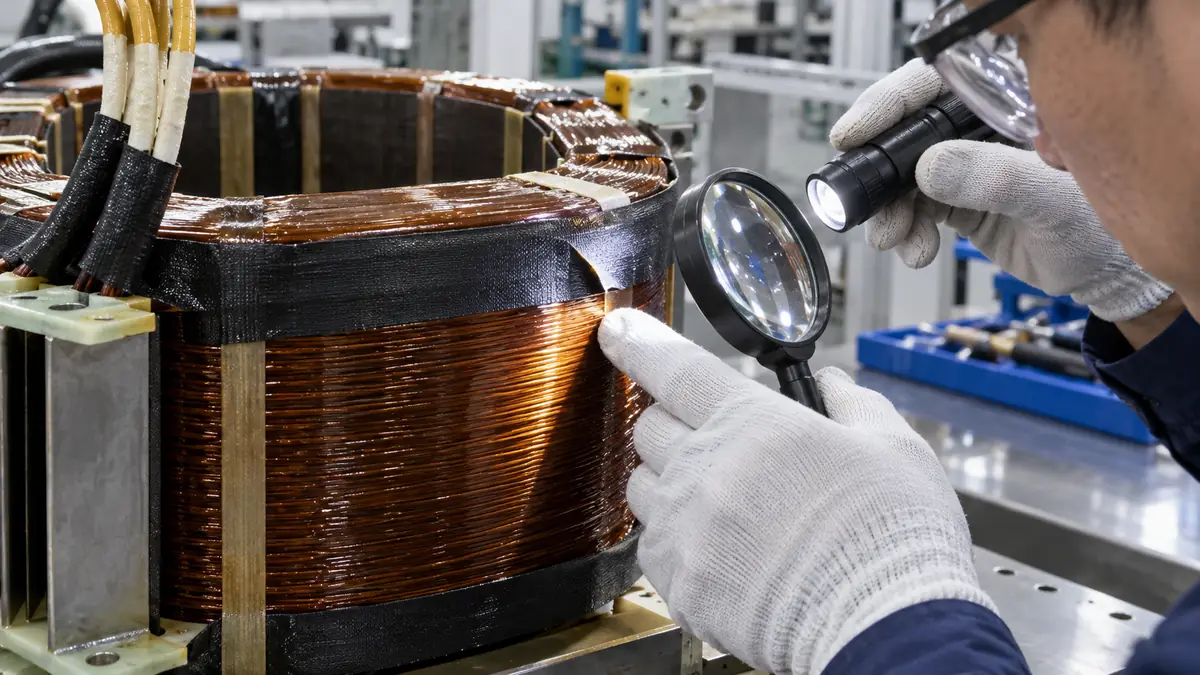
- Motors and transformers: coil wrapping, lead holding, and slot insulation support.
- Battery assembly: location-specific insulation and protection.
- Die-cut parts: custom shapes, tabs, discs, and liner-backed components.
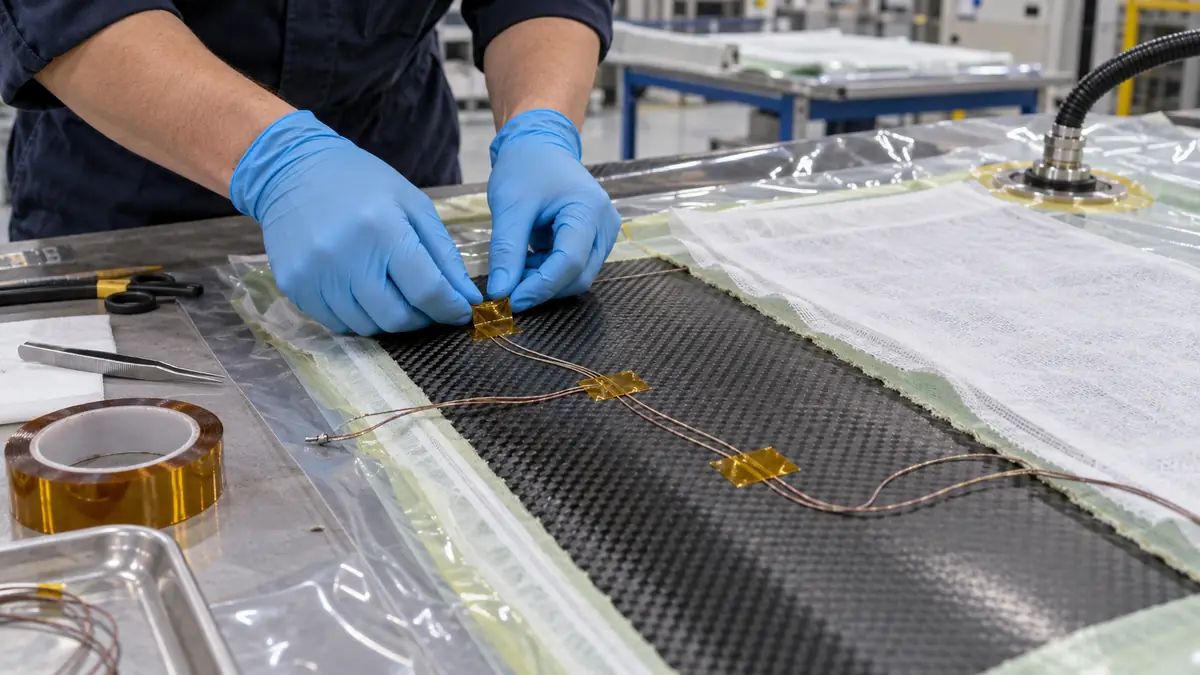
- High-temperature splicing: joining compatible process materials under validated conditions.
Selection Criteria
| Question | Why it matters |
|---|---|
| What is the thermal profile? | Peak, dwell, cooling, and cycles affect adhesion and residue |
| What is the substrate? | Metal, solder mask, glass, plastic, and paint interact differently |
| Temporary or permanent? | Removal differs from long-term insulation |
| What thickness and format? | Rolls, liners, die cuts, and tolerances affect processing |
| What failure criteria? | Lifting, residue, shrinkage, and dielectric performance must be defined |
Application Test Procedure
- Clean and dry the production surface.
- Apply with controlled pressure and no excessive stretching.
- Allow the planned dwell before heating.
- Run the full thermal profile and repeated cycles where needed.
- Inspect for lifting, shrinkage, bubbling, and discoloration.
- Remove at the validated temperature, angle, and speed.
- Measure residue, adhesion, dimensions, or dielectric performance.
Review our polyimide tape product range and technical data downloads.
Frequently Asked Questions
Is silicone adhesive polyimide tape removable?
Many constructions are used for temporary masking, but removability depends on the exact adhesive, substrate, heat, dwell, aging, and peel method.
Does it withstand every high-temperature process?
No. Each tape has specific continuous and short-term limits. Exposure time, surface, and acceptance criteria must be considered.
Can it be die cut?
Yes. Liner-backed constructions can be converted into custom shapes, but liner, tolerance, adhesive flow, roll direction, and handling must be specified.
Conclusion
Silicone adhesive polyimide tape is versatile for demanding masking and insulation, but success depends on the complete construction and application test. Contact JIAO TAO TAO with your substrate, heat cycle, dimensions, residue limit, and annual quantity.
Polyimide Tape for Battery Busbar Laser-Welding Spatter Shielding
Polyimide Tape vs Polyester Tape: Which One Should You Use?
Related Article

Need help choosing the right industrial tape?
Send us your application details, including temperature, surface material, size, quantity and current problem. Our team will help recommend a suitable tape material or custom die-cut solution.

simon@jiaotaotao.com


+86-136 1277 5969

+86-136 1277 5969
