
Silicone Adhesive Polyimide Tape for PCB Masking
Silicone Adhesive Polyimide Tape: Technical Guide for PCB Masking, High-Temperature Insulation, and Clean Removal
SEO Title: Silicone Adhesive Polyimide Tape for PCB Masking
SEO Meta Description: Learn how silicone adhesive polyimide tape delivers high-temperature resistance, electrical insulation, and clean removal for PCB masking and electronics assembly.
SEO URL Slug: /silicone-adhesive-polyimide-tape
Keywords: Silicone Adhesive Polyimide Tape
Author: JIAOTAOTAO Product Department - xindy
Table of Contents
Direct Answer & Quick Facts
What is Silicone Adhesive Polyimide Tape? It is a high-temperature insulation tape constructed with polyimide film and silicone pressure-sensitive adhesive, designed for demanding electronics and industrial processes that require stable adhesion, electrical insulation, and clean residue-free removal. It is widely used in PCB masking, SMT processing, motor winding, and high-temperature protection zones.
Compared with lower-temperature adhesive systems, silicone adhesive gives the tape better thermal stability and cleaner performance after exposure to heat. That makes it a practical choice where engineers need both process reliability and post-process surface cleanliness.
- Material type: Single-sided polyimide film tape
- Adhesive system: Silicone pressure-sensitive adhesive
- Temperature resistance limit: Continuous up to 260°C, short-term peak up to 300°C+
- Dielectric strength: ≥ 6.5 kV/mm (typical)
- Core industrial uses: PCB masking, SMT protection, motor winding, electrical insulation, electronics assembly and repair
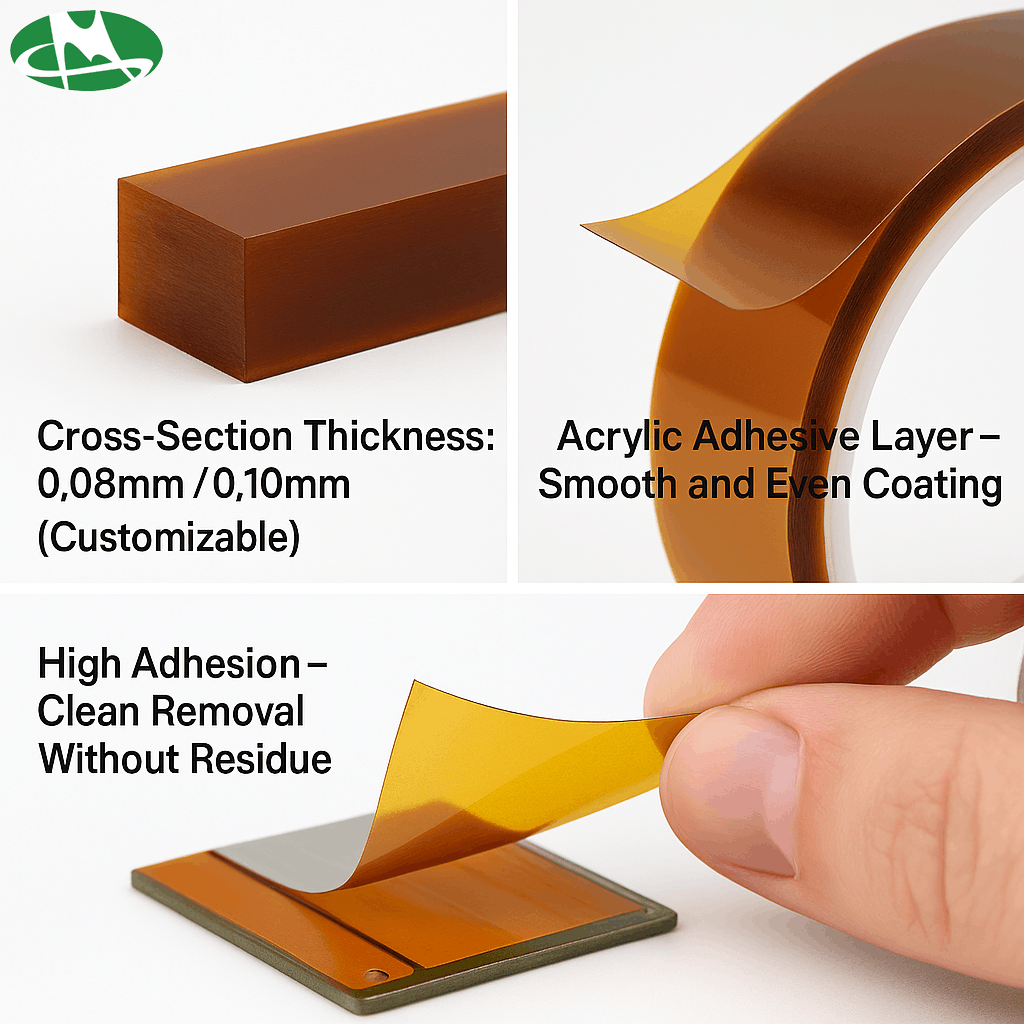
Technical Specifications & Material Science
Why silicone adhesive matters in polyimide tape
Polyimide film is already well known for its dimensional stability, thermal resistance, and dielectric insulation. The adhesive system determines whether the tape can maintain stable bonding under heat and still remove cleanly after exposure. In this construction, silicone adhesive is the key reason the tape can perform in elevated-temperature environments such as soldering, SMT masking, and electronics manufacturing.
The product page specifies polyimide film as the backing, silicone pressure-sensitive adhesive as the adhesive system, continuous temperature resistance up to 260°C, short-term peak up to 300°C+, dielectric strength ≥ 6.5 kV/mm, and thickness range 0.025 mm – 0.125 mm. The page also states that the tape offers excellent electrical insulation, excellent chemical resistance, and stable adhesion with clean removal at high temperature.
Representative product listings on the page include JTT01-04, JTT01-06L, JTT01-07(50), PI-50120, and PI-100150, indicating that this series covers multiple thicknesses and liner options for different converting or process requirements.
Engineering note: for high-temperature insulation tapes, the main selection variables are backing stability, adhesive chemistry, continuous vs. short-term heat exposure, dielectric requirement, and whether residue-free removal is critical. Silicone adhesive polyimide tape is chosen when all of those matter at the same time.
| Property | Published Value | Notes |
|---|---|---|
| Backing Material | Polyimide Film | Product-page specification |
| Adhesive Type | Silicone Pressure-Sensitive Adhesive | High-temperature, clean-removal design |
| Thickness Range | 0.025 mm – 0.125 mm | Customizable |
| Temperature Resistance | 260°C continuous / 300°C+ short peak | Published on product page |
| Dielectric Strength | ≥ 6.5 kV/mm | Typical published value |
| Electrical Insulation | Excellent | Product-page statement |
| Chemical Resistance | Excellent | Product-page statement |
| Color | Amber | Standard product color |
| Width | Customizable | Factory-supported converting range |
For technical evaluation, buyers often compare data against test frameworks such as ASTM D1000 and electrical tape guidance such as IEC 60454-1. These standards provide reference context for insulation tape testing, but formal approval should still be based on the actual process, substrate, and dwell temperature.

Industrial Applications
1. PCB manufacturing and SMT masking
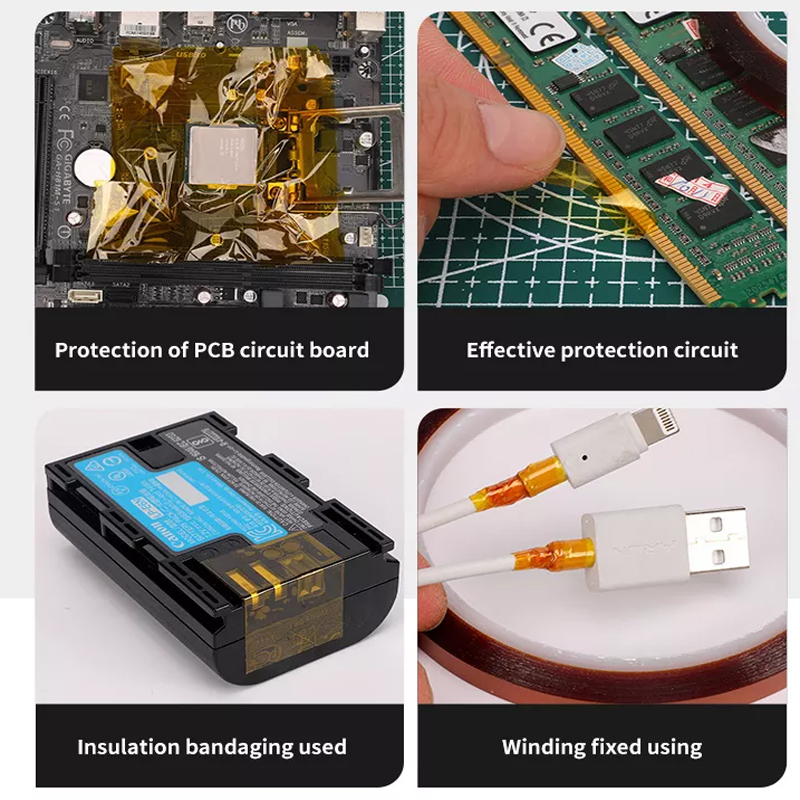
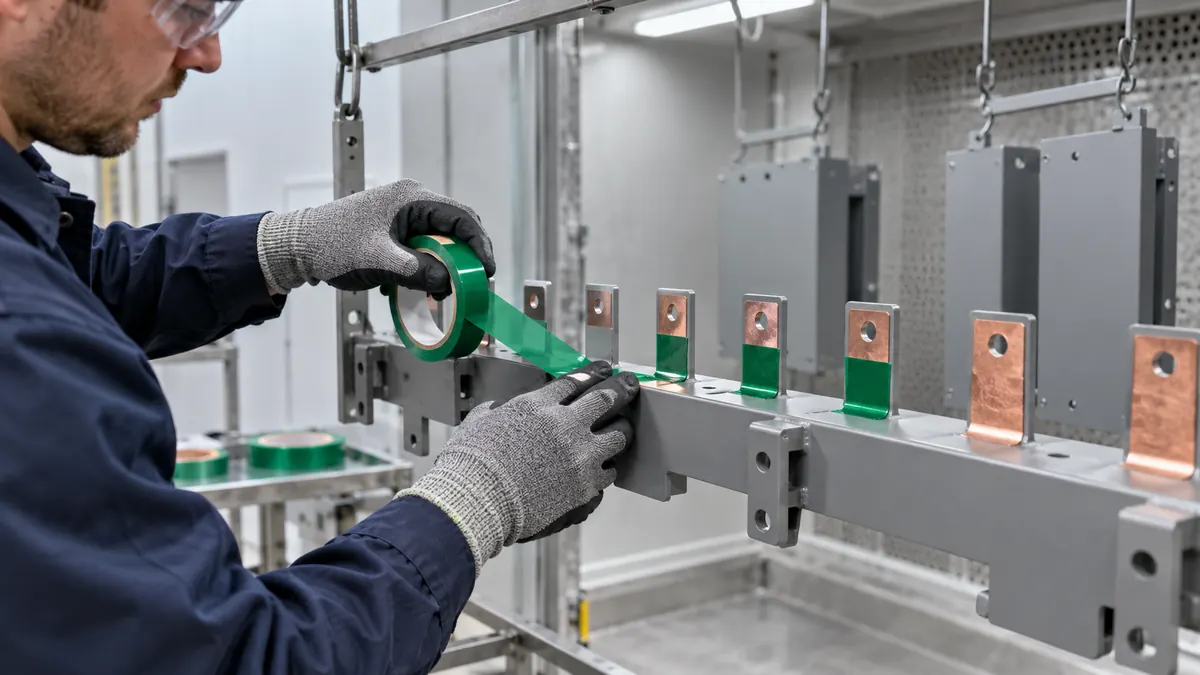
This is one of the most common uses listed on the product page. During PCB and SMT processing, the tape must withstand elevated temperatures while protecting selected areas from contamination or exposure. Silicone adhesive polyimide tape is used because it stays stable under heat and removes cleanly after processing.
2. High-temperature soldering and reflow processes
In soldering and reflow-related processes, heat resistance alone is not enough. The adhesive must also remain controlled and avoid leaving contamination. Silicone adhesive is especially suitable here because it maintains bonding under heat and supports residue-free removal after short-term thermal exposure.
3. Motor winding and electrical insulation
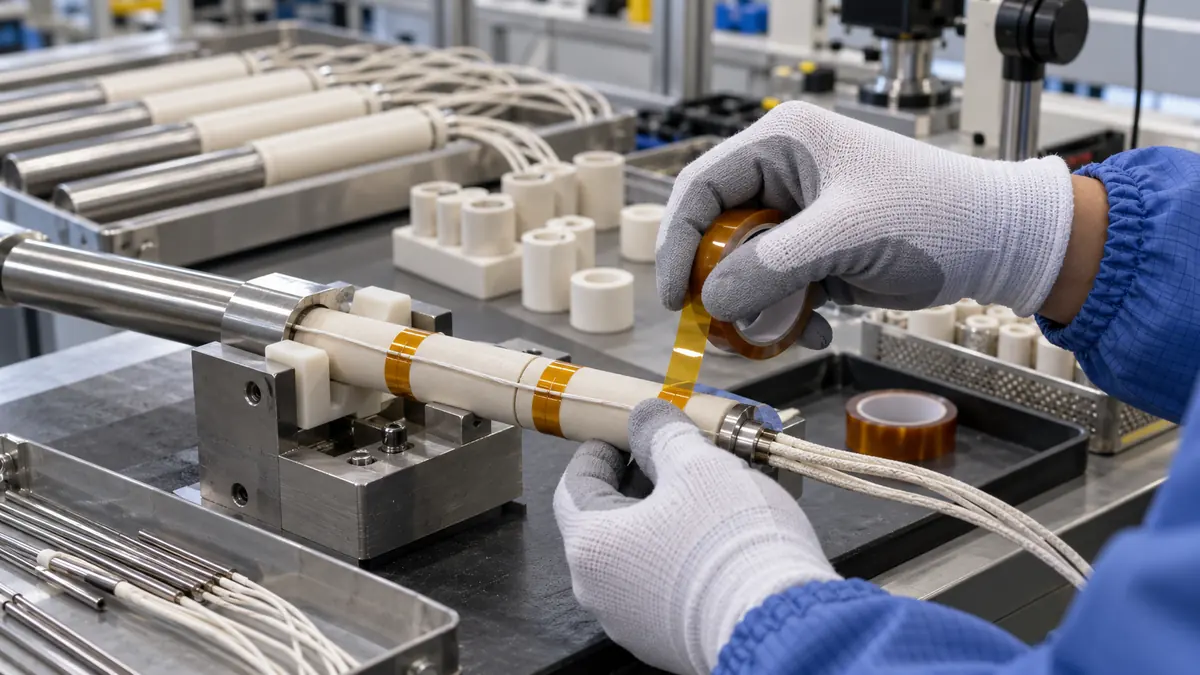
For motor winding and electrical insulation, the tape must provide consistent dielectric performance and stable backing integrity. Polyimide film delivers the thermal and electrical backbone, while silicone adhesive helps the material stay reliable during wrapping or assembly in elevated-temperature environments.
4. Electronics assembly and repair
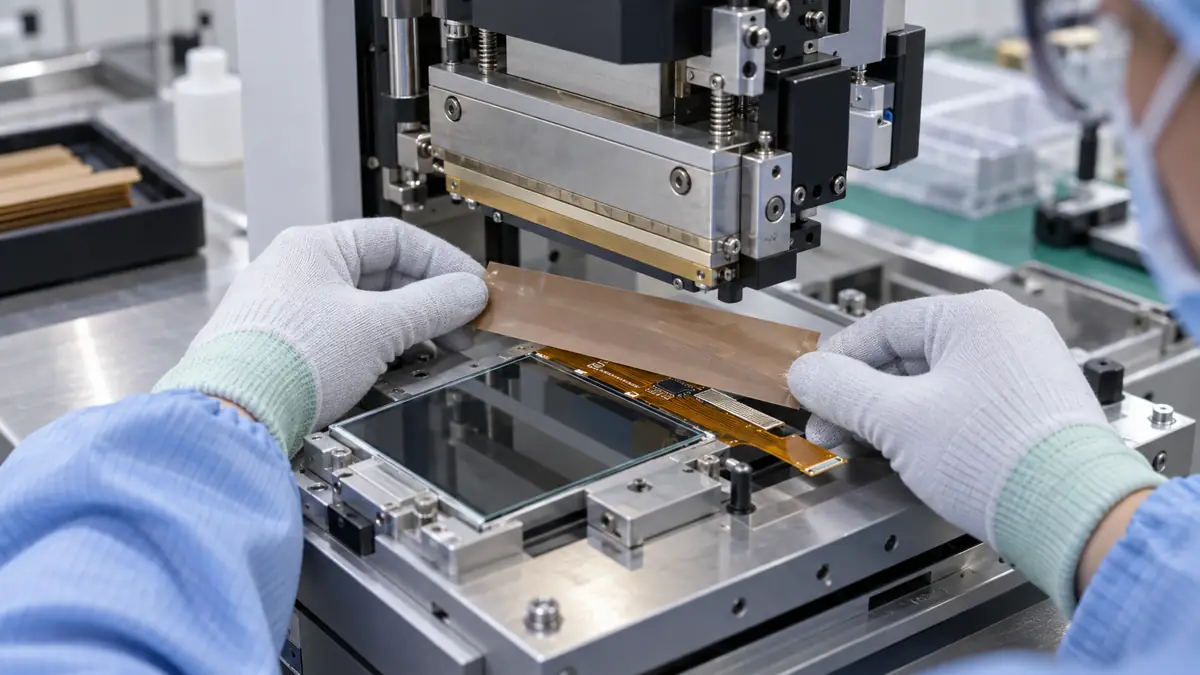
The product page also lists electronics assembly and repair. In these applications, clean removal matters because post-process cleanliness affects downstream assembly quality. That makes silicone adhesive polyimide tape more practical than lower-temperature or residue-prone alternatives when thermal protection and reworkability both matter.
Application insight: silicone adhesive polyimide tape is selected when the process needs high heat resistance, electrical insulation, and clean removal after exposure. That three-part combination is what makes it different from general-purpose masking tapes.
Material Comparison
Silicone Adhesive Polyimide Tape vs. Acrylic Adhesive Polyimide Tape
| Comparison Item | Silicone Adhesive Polyimide Tape | Acrylic Adhesive Polyimide Tape |
|---|---|---|
| Heat capability | Higher | Lower; often chosen for moderate-temperature use |
| Clean removal after heat | Better suited to heat-exposed removal | Application-dependent |
| Best use case | SMT, solder masking, high-temp insulation | Lower-temperature insulation or bonding |
| Procurement logic | Choose when heat and residue-free removal both matter | Choose when process temperature is lower and cost balance matters more |
Polyimide Tape vs. PET High Temperature Tape
Both are used in high-temperature processes, but polyimide tape generally provides a higher thermal ceiling and stronger fit for demanding electronics insulation or solder-adjacent masking. PET high-temperature tape may be suitable for many industrial masking tasks, but for 260°C-class insulation work, silicone adhesive polyimide tape is usually the safer engineering choice.
Customization & Supply Capabilities
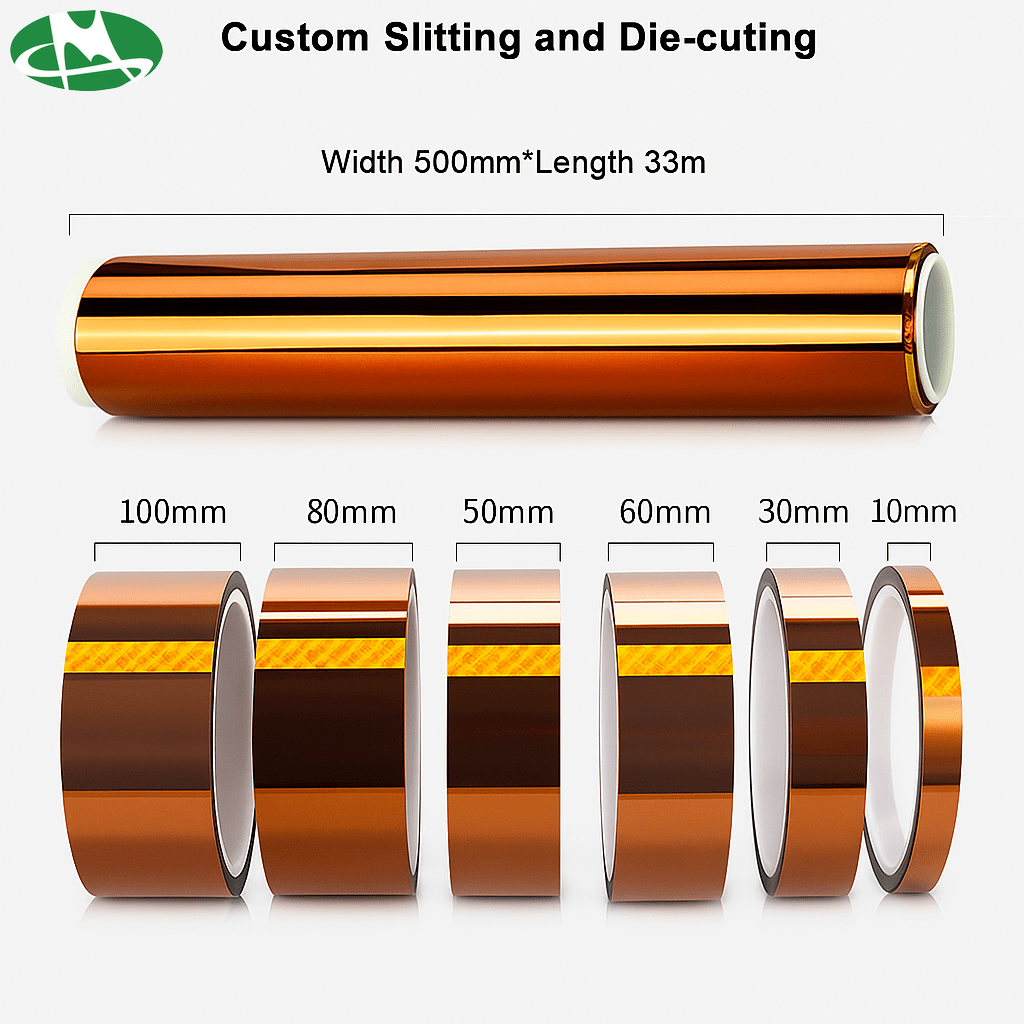
As a manufacturer, JIAOTAOTAO can support industrial buyers with more than stock rolls. The page states that width is customizable, and the product listings show multiple thicknesses and liner configurations. That means the tape can be aligned to different masking widths, insulation builds, and process requirements.
- Custom widths: suitable for local masking and insulation builds
- Multiple thickness options: from 0.025 mm to 0.125 mm product range
- Liner options: selected models include liner-based configurations
- Slitting and rewinding: for production-ready roll formats
- MOQ flexibility: suitable for trial and scale-up stages
- Free samples for testing: useful for process and residue validation
- OEM supply: for distributors and industrial buyers
FAQ
1. What temperature can silicone adhesive polyimide tape withstand?
The product page states continuous use up to 260°C and short-term peak up to 300°C+. Actual suitability depends on dwell time, substrate, and whether the tape is used for masking, insulation, or temporary protection.
2. Why is silicone adhesive used on polyimide tape?
Silicone adhesive is used because it maintains more stable performance at elevated temperatures and is better suited to clean removal after heat exposure. That makes it practical for PCB masking, solder-adjacent work, and electronics manufacturing.
3. Is this tape suitable for electrical insulation?
Yes. The page specifically states excellent electrical insulation and a typical dielectric strength of ≥ 6.5 kV/mm. That makes it relevant for applications such as motor winding, electrical assembly, and insulation in high-temperature environments.
4. Does silicone adhesive polyimide tape leave residue?
The product page positions it as a clean-removal solution for demanding applications. Residue performance still depends on substrate type, exposure temperature, dwell time, and peel conditions, so real-process validation is recommended for critical surfaces.
5. What thickness should buyers choose?
The published range is 0.025 mm to 0.125 mm. Thinner grades are often preferred for tight masking or minimal build, while thicker grades may be chosen when additional handling strength or insulation build is required.
6. Can width be customized?
Yes. The product page explicitly states that width is customizable. This is useful for electronics manufacturers and industrial users who need line-ready roll formats matched to narrow masking zones or specific insulation widths.
7. How should buyers test it before volume purchase?
Testing should include heat exposure, removal behavior, surface cleanliness, dielectric need, and fit on the actual substrate. The most reliable method is to evaluate the selected thickness and roll format under real production or repair conditions.
Conclusion & B2B CTA
Silicone Adhesive Polyimide Tape is a specialized high-temperature insulation tape for applications that require thermal stability, electrical insulation, and clean residue-free removal in one material. It is especially useful for PCB masking, SMT processes, motor winding, electronics assembly, and repair-related protection.
Request a Data Sheet | Get a Free Sample | Contact Manufacturer Directly
Product Link: Silicone Adhesive Polyimide Tape
WhatsApp / WeChat: +86-136 1277 5969
Email: simon@jiaotaotao.com
Official Website: www.clothadhesive.com
Clear Polyimide Tape Parameter Guide
Die Cut Polyimide Tape for Precision Insulation
Related Article
Need help choosing the right industrial tape?
Send us your application details, including temperature, surface material, size, quantity and current problem. Our team will help recommend a suitable tape material or custom die-cut solution.

simon@jiaotaotao.com


+86-136 1277 5969

+86-136 1277 5969
