
Polyimide Tape High Temperature – What Is It Used For?

Polyimide Tape High Temperature – What Is It Used For?
Polyimide tape high temperature performance makes it a critical material in electronics manufacturing, electrical insulation, and thermal protection. Unlike standard polyester or PVC tapes, PI tape is engineered to maintain mechanical strength, dielectric stability, and adhesive reliability under extreme heat conditions.
In real-world industrial SERP data, users searching for polyimide tape high temperature are not looking for definitions. They are searching for solutions: SMT masking during reflow soldering, insulation for motors and transformers, and heat-resistant protection for sensitive components.
This page addresses those exact pain points.

Industry Background
High-temperature processes are now standard across electronics, PCB assembly, lithium battery production, and motor winding industries. Reflow soldering temperatures often exceed 240–260°C, while conventional adhesive tapes begin to fail above 120–150°C.
As a result, polyimide tape has become the default choice in industries such as:
-
SMT & PCB assembly lines
-
Semiconductor packaging
-
Electric motor and transformer insulation
-
Aerospace and automotive electronics
-
Battery module assembly
PI tape for electronics dominates SERP results because it solves three industrial problems simultaneously: heat resistance, electrical insulation, and clean removability.
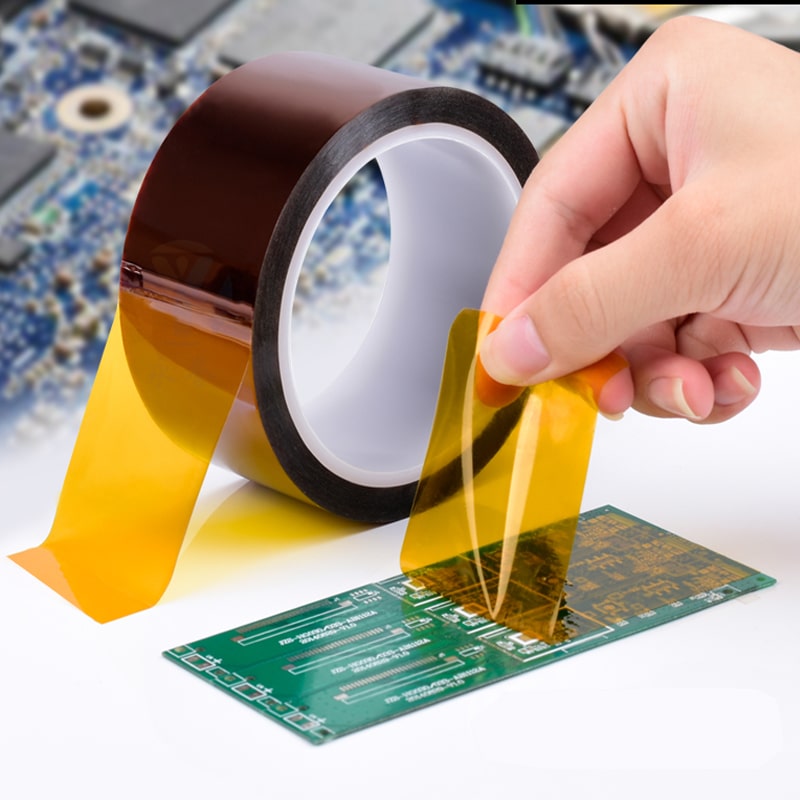
Technical Principle of Polyimide Tape
Polyimide tape is constructed from polyimide film coated with a high-performance adhesive (typically silicone or acrylic).
Key technical characteristics:
-
Thermal stability: Continuous resistance up to 260°C
-
Dielectric strength: Excellent electrical insulation
-
Low outgassing: Suitable for cleanroom and electronics use
-
Chemical resistance: Stable against solvents and flux
Silicone adhesive variants are preferred for SMT masking polyimide tape, while acrylic adhesive types are often selected where stronger bonding at lower temperatures is required.

Selection Guide – How to Choose the Right PI Tape
Choosing the wrong polyimide tape is one of the most common reasons for production defects.
1. Temperature Requirement
If your process exceeds 230°C, always select high temperature polyimide tape with silicone adhesive.
2. Application Surface
-
Smooth PCB surface → standard PI tape
-
Rough or textured surface → thicker PI tape or higher tack adhesive
3. Electrical Insulation
For motors or transformers, prioritize polyimide insulation tape with certified dielectric strength.
4. Clean Removal
For masking applications, ensure the tape leaves no adhesive residue after thermal cycling.
Common Mistakes in Using Polyimide Tape
Even experienced manufacturers make avoidable mistakes:
-
❌ Using PET tape instead of PI tape in reflow soldering
-
❌ Selecting acrylic adhesive for ultra-high temperature cycles
-
❌ Ignoring tape thickness in tight-tolerance assemblies
-
❌ Assuming all “Kapton tapes” have identical performance
In SERP analysis, many complaints originate from misapplication, not product defects.
FAQ – Polyimide Tape High Temperature
Q1: What temperature can polyimide tape withstand?
Most high-quality polyimide tape withstands up to 260°C continuous exposure, with short-term peaks even higher.
Q2: Is polyimide tape the same as Kapton tape?
Kapton is a brand name. Polyimide tape is the material category. Many manufacturers produce Kapton tape alternatives.
Q3: Can PI tape be used for electrical insulation?
Yes. Polyimide insulation tape is widely used in motors, transformers, and electronic components.
Q4: Does PI tape leave residue?
High-grade silicone adhesive PI tape is designed for clean removal after high-temperature exposure.
? Recommendation
→ Anchor: polyimide tape high temperature
→ Anchor: silicone adhesive polyimide tape
PET Tape High Temperature – What Is PET Polyester Tape Used For?
Global Adhesive Raw Material Price Update 2026: Impact on Tape Manufacturing & Supply Chain Stability
Related Article
Need help choosing the right industrial tape?
Send us your application details, including temperature, surface material, size, quantity and current problem. Our team will help recommend a suitable tape material or custom die-cut solution.

simon@jiaotaotao.com


+86-136 1277 5969

+86-136 1277 5969
