
Polyimide Tape for EV Battery Insulation

Polyimide Tape for EV Battery Insulation
EV battery manufacturers need insulation materials that fit the actual cell format, assembly process and operating environment. Polyimide tape is often considered for cell wrapping, terminal protection, busbar-area insulation and temporary process masking because it combines a thin film backing with electrical insulation, heat resistance and dimensional stability.
The correct tape, however, cannot be selected by colour or thickness alone. Battery assemblers should evaluate the backing film, adhesive system, total thickness, dielectric requirement, application temperature, service temperature, surface condition and removal requirement before approving a material.
Where Polyimide Tape Is Used in EV Battery Assembly
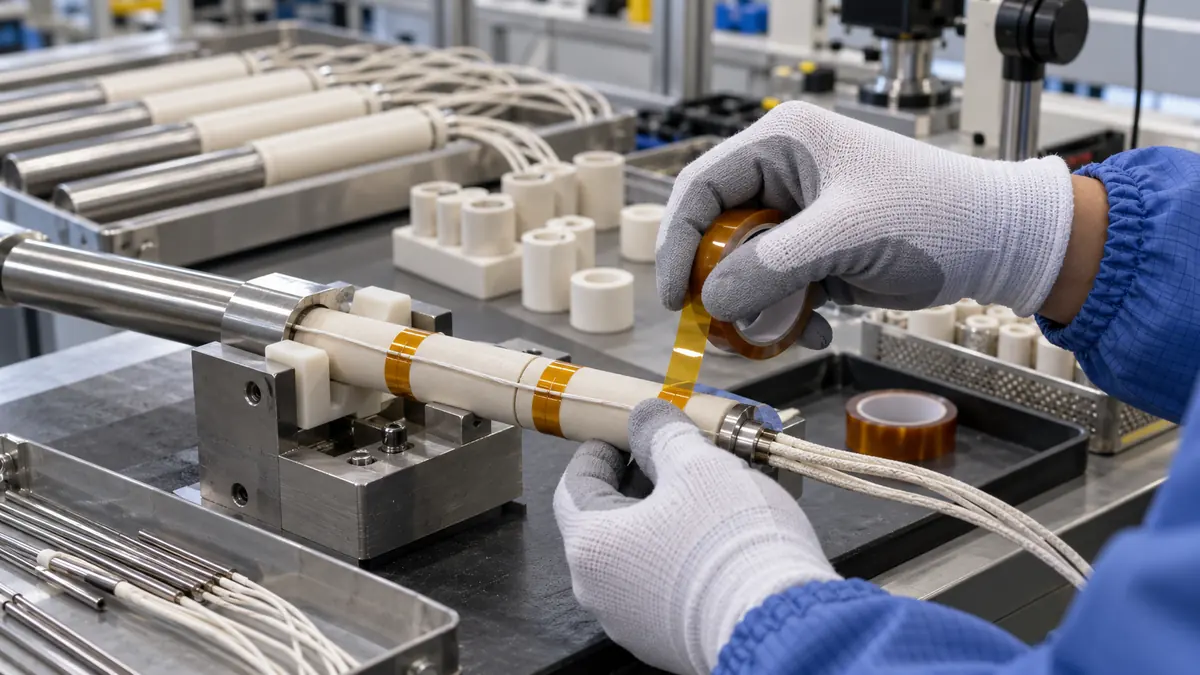
Cell and component insulation
Polyimide tape can provide a thin insulating layer between conductive components and nearby metal surfaces. It may be applied around selected cell areas, tabs, leads, sensor wiring or small components where space is limited.
The exact insulation design should always follow the battery manufacturer's electrical and mechanical validation requirements. Tape is one part of an insulation system, not a substitute for pack-level safety design.
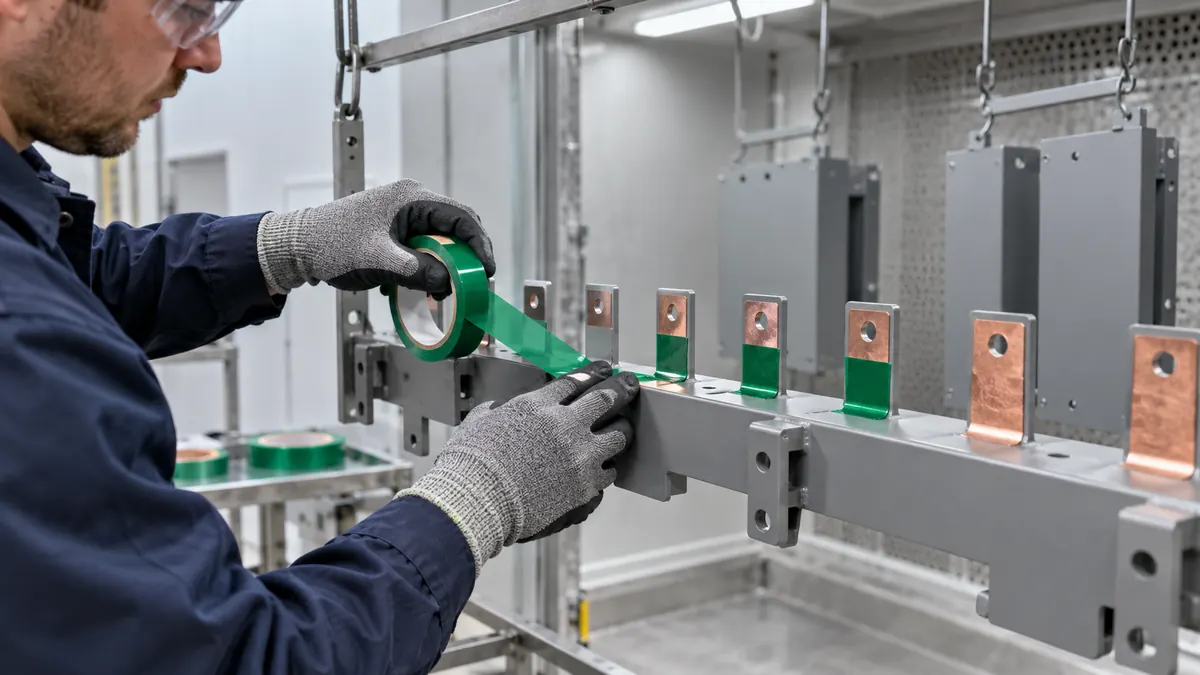
Terminal and tab protection
Battery terminals and tabs can require protection during handling, welding preparation or module assembly. A precisely sized tape or die-cut part can cover a defined area without adding unnecessary material around the component.
For repeatable positioning, buyers should specify the part shape, liner type, pull tab, tolerance and presentation format. Individual pieces, sheets and roll-fed die cuts suit different production methods.
Busbar-area insulation
Polyimide film tape may be used around selected busbar or interconnection areas where a thin electrical barrier is required. The design must account for creepage distance, clearance, edge coverage and movement during assembly.
An adhesive that bonds well to a clean metal surface may behave differently on a powder-coated, contaminated or textured surface. Surface testing is therefore essential before volume production.
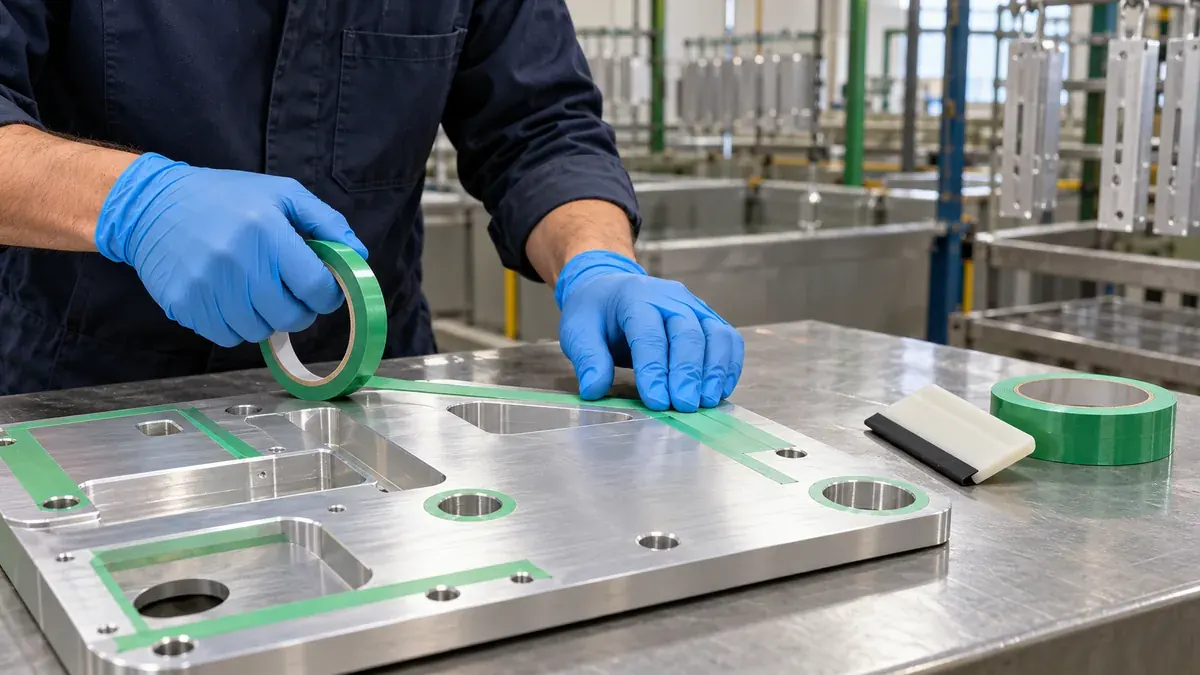
Temporary process masking
Some battery components require temporary protection during coating, bonding or other manufacturing steps. In these applications, clean removal can be as important as initial adhesion.
The purchasing specification should state the peak process temperature, exposure duration, cooling condition and required removal window. A short high-temperature cycle and prolonged heat exposure can produce different adhesive behaviour.
How Battery Manufacturers Should Select the Tape
1. Define the real temperature profile
Do not specify only the highest temperature shown on a general data sheet. Record the process temperature, exposure time, number of heating cycles and temperature reached at the tape location. Ask the supplier to recommend a construction for that complete profile.
2. Identify every contact surface
List the surfaces to which the tape will bond, such as aluminium, steel, coated metal, polymer film or another insulation material. Include surface texture, cleanliness and any release agents or process oils that may affect adhesion.
3. Set the electrical requirement
Define the required insulation performance for the finished component. Film thickness alone does not determine whether the complete construction is suitable. Qualification should use the actual supplied tape and the customer's own test method.
4. Choose the adhesive according to the process
Silicone and acrylic adhesive systems offer different adhesion, temperature and removal characteristics. The right option depends on the substrate, dwell time, heat cycle and whether the tape is permanent or temporary.
5. Decide between rolls and die-cut parts
Standard rolls are flexible for prototyping and varied manual work. Custom die-cut polyimide tape can improve positioning and reduce trimming for repeated production tasks. The better format depends on volume, labour method, placement accuracy and material utilisation.
Information to Include in an RFQ
An effective request for quotation should include:
- Application area and component drawing
- Cell format or battery component type
- Backing and adhesive preference, if already approved
- Required total thickness and width
- Peak temperature and exposure duration
- Permanent or removable application
- Contact surface and surface condition
- Roll, sheet or die-cut format
- Monthly forecast and trial quantity
- Required test reports and inspection criteria
Providing these details helps the supplier recommend a construction based on the process instead of quoting a generic tape.
Practical Sampling and Validation
Start with a controlled sample trial using production-representative surfaces. Check application handling, edge lifting, adhesion after dwell, behaviour after the intended heat cycle and removal performance where relevant.
For die-cut parts, also verify dimensions, liner release, pick-up method and placement accuracy. Record the material code and lot information used in every trial so that results can be traced during approval.
Frequently Asked Questions
Is polyimide tape suitable for every EV battery insulation area?
No. Suitability depends on the electrical, thermal, mechanical and chemical requirements of the specific location. The battery manufacturer must validate the complete insulation design.
Should battery manufacturers choose silicone or acrylic adhesive?
There is no universal answer. The decision depends on the substrate, heat exposure, adhesion target and removal requirement. Testing both constructions on the actual component is often the most reliable approach.
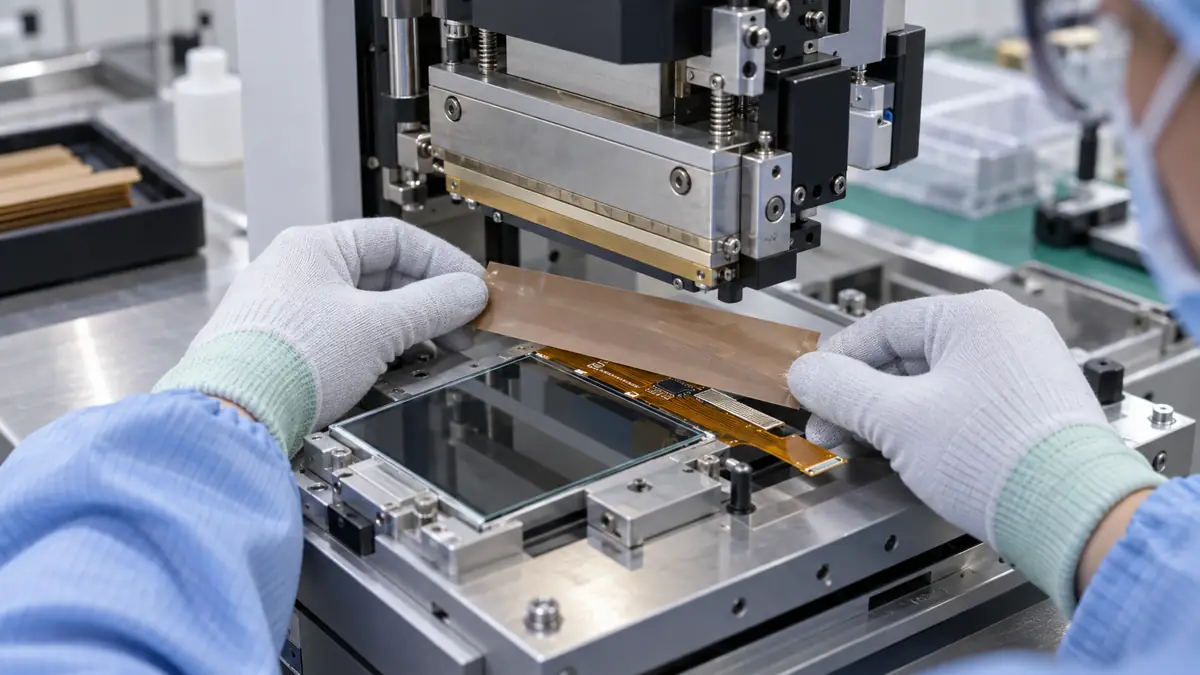
Can polyimide tape be supplied as custom die-cut parts?
Yes. Polyimide tape can be converted into custom shapes with liners, pull tabs or sheet presentation for repeatable assembly. Dimensions and tolerances should be confirmed from the customer's drawing.
What should buyers test before placing a bulk order?
Buyers should test adhesion, insulation performance, heat-cycle behaviour, dimensional fit and removal characteristics where applicable. Testing should use real production surfaces and conditions.
Conclusion
Selecting polyimide tape for EV battery insulation begins with the application, not the catalogue. When cell manufacturers, module assemblers and pack producers clearly define temperature, surfaces, electrical requirements and converting format, they can compare materials more accurately and reduce avoidable production trials.
JIAOTAOTAO supplies polyimide tape in different adhesive, thickness, width and die-cut options. Send your application conditions and drawing to receive a material and converting recommendation for evaluation.
Kapton Tape for PCB Solder Masking & Gold Fingers
Custom Die Cut Manufacturer for Precision Parts
Related Article
Need help choosing the right industrial tape?
Send us your application details, including temperature, surface material, size, quantity and current problem. Our team will help recommend a suitable tape material or custom die-cut solution.

simon@jiaotaotao.com


+86-136 1277 5969

+86-136 1277 5969
