
How to Remove Backing on Double - Sided Tape
How to Remove Backing on Double-Sided Tape: A Practical Guide
Removing the backing from double-sided tape can be difficult when the release liner is thin, the adhesive is soft, or the tape has already been applied to a surface. The safest method is to lift one corner first, then peel the backing slowly at a low angle without stretching the tape.
Quick answer: To remove backing on double-sided tape, start from one corner and use your fingernail, tweezers, a plastic lifting tool, or gentle heat. For stubborn backing, rubbing alcohol may help soften the adhesive edge. Avoid excessive force, high heat, or strong solvents unless the surface has been tested first.
1. Manual Removal Methods
Using Your Fingers
For small pieces of double-sided tape, the simplest method is to remove the backing by hand. Find one corner of the release liner and gently lift it with your fingernail. Once a small part of the liner is separated, hold the tape steady and peel the backing away in a slow, smooth motion.
This method works best for wider tape, pre-cut tape pieces, and tapes with a firm release liner. Avoid pulling too quickly because stretching the tape may reduce adhesive contact and affect the final bonding result.

Using Tweezers
If the tape is very thin or the edge is difficult to lift by hand, tweezers can provide better control. Use the pointed tips to grip the edge of the backing, then pull the liner away slowly while keeping the adhesive side flat.
Tweezers are especially useful for narrow tape strips, precision assembly, model building, electronic components, jewelry work, and other applications where the tape must stay clean and accurately positioned.

2. Heat-Assisted Removal
Using a Hair Dryer
Gentle heat can make the tape more flexible and help the backing separate more easily. Set a hair dryer to low or medium heat, hold it about 6 to 8 inches away from the tape, and move it evenly across the surface for 30 to 60 seconds.
After warming the tape, try to lift one corner of the backing. Peel slowly and keep the tape supported so it does not stretch. This method is suitable for many household, craft, and general repair applications.

Using a Heat Gun
A heat gun provides stronger heat and may help with larger tape areas or stubborn release liners. Keep the heat gun about 8 to 10 inches away from the tape and move it continuously in a sweeping motion. Heat the tape briefly for 15 to 30 seconds, then test whether the backing can be peeled away.

3. Solvent-Based Removal
Using Rubbing Alcohol
Rubbing alcohol, also known as isopropyl alcohol, can help loosen adhesive at the edge of the tape. Apply a small amount to a cotton ball or soft cloth, place it near the backing edge for a few minutes, and then try to lift the liner gently.
This method is useful when the backing is stuck because of pressure, aging, or adhesive transfer. It may also help clean light adhesive residue after the backing is removed.

Using Acetone Carefully
Acetone is a stronger solvent and may help separate difficult backing layers, but it should be used with extreme caution. Apply a very small amount to a cotton swab and touch only the backing edge. Wait briefly, then try to peel the liner away.
Acetone may damage plastics, coatings, painted surfaces, fabrics, and some finished materials. Use it only in a well-ventilated area and test the surface before applying it to the visible area.

4. Tool-Assisted Removal
Using a Tape-Lifting Tool
A tape-lifting tool has a thin, flat edge that can be inserted between the tape and the backing. Slide the tool gently under the release liner at a low angle, then lift and peel the backing away along the tape length.
This method is efficient for long strips of double-sided tape, production work, large labels, mounting tapes, and applications where clean separation is important.

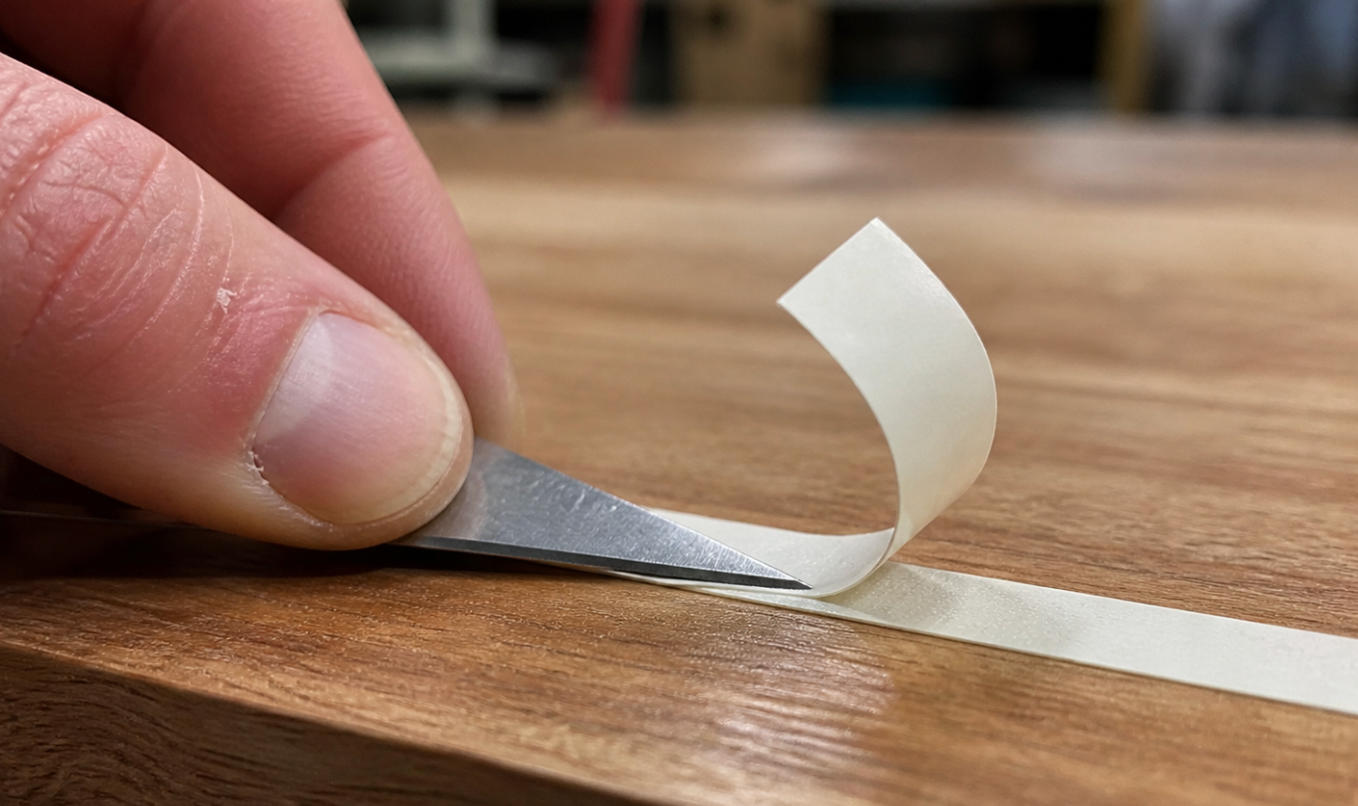
Using a Razor Blade or Scraper
A razor blade or scraper can be used on flat, hard surfaces when the backing is difficult to start. Hold the blade at a low angle and carefully insert it between the tape and the liner. Move slowly along the tape to lift the backing without cutting the adhesive layer.
5. Which Method Should You Choose?
The best way to remove backing from double-sided tape depends on tape thickness, liner material, surface type, and the size of the area. The table below can help you choose a suitable method.
| Situation | Recommended Method | Why It Works |
|---|---|---|
| Small tape pieces | Fingers or fingernail | Simple, fast, and does not require extra tools. |
| Thin or narrow tape | Tweezers | Provides better control and reduces adhesive contact. |
| Large tape area | Tape-lifting tool | Helps peel the backing evenly along the tape length. |
| Backing feels stuck | Hair dryer or rubbing alcohol | Heat or mild solvent can loosen the liner edge. |
| Flat hard surface | Plastic scraper or low-angle blade | Helps start the backing edge when fingers cannot lift it. |
| Delicate surface | Tweezers or plastic lifting tool | Reduces the risk of scratching or chemical damage. |
Conclusion
Removing backing on double-sided tape is easier when you start from one corner, peel slowly, and choose the right method for the surface. Fingers and tweezers work well for small or precise pieces, while gentle heat, rubbing alcohol, and lifting tools can help with larger or more difficult applications. For delicate materials, always test heat, solvents, and tools on a hidden area first.
Need double-sided tape, custom die-cut adhesive parts, or industrial adhesive tape for assembly, bonding, insulation, or mounting applications? Contact JIAO TAO TAO for material selection and custom tape solutions.
6. Frequently Asked Questions
Why is the backing hard to remove from double-sided tape?
The backing may be hard to remove because the tape is very thin, the liner edge is not exposed, the adhesive is soft, or the tape has been pressed firmly onto the surface. Starting from a corner and using tweezers or a lifting tool usually helps.
Can I use heat to remove the backing from double-sided tape?
Yes. Gentle heat from a hair dryer can soften the adhesive and make the backing easier to peel. Avoid excessive heat because it may damage plastic, paint, foam, fabric, or other heat-sensitive materials.
Is rubbing alcohol safe for removing tape backing?
Rubbing alcohol is generally safer than stronger solvents, but it should still be tested first. It may help loosen adhesive near the edge of the backing and clean light residue after removal.
Can acetone be used on double-sided tape?
Acetone can loosen adhesive, but it may damage many plastics, painted surfaces, fabrics, and coatings. Use acetone only in a well-ventilated area and only after testing the surface.
What tool is best for removing backing from long tape strips?
A tape-lifting tool or plastic scraper is usually best for long tape strips. These tools help lift the release liner evenly without pulling the tape out of position.
How can I avoid damaging the tape adhesive?
Peel the backing slowly at a low angle, avoid touching the adhesive with fingers, and do not stretch the tape. If the backing is stuck, use gentle heat or a small amount of rubbing alcohol at the edge.
What Is Double Sided Adhesive Tape?
When Should You Take Off Painter's Tape?
Related Article
Need help choosing the right industrial tape?
Send us your application details, including temperature, surface material, size, quantity and current problem. Our team will help recommend a suitable tape material or custom die-cut solution.

simon@jiaotaotao.com


+86-136 1277 5969


+86-136 1277 5969
