
High Temperature Tape for Powder Coating Masking
High Temperature Tape for Powder Coating Masking
High temperature tape for powder coating protects threads, holes, grounding points, sealing surfaces and other areas that must remain free of powder during electrostatic spraying and oven curing. PET silicone tape is a practical option for many standard cure cycles, while polyimide tape is often selected for higher temperatures or more demanding masking conditions.
The correct tape must stay attached through pretreatment, spraying and curing, create a sharp masking line, and remove without tearing or leaving excessive adhesive residue.
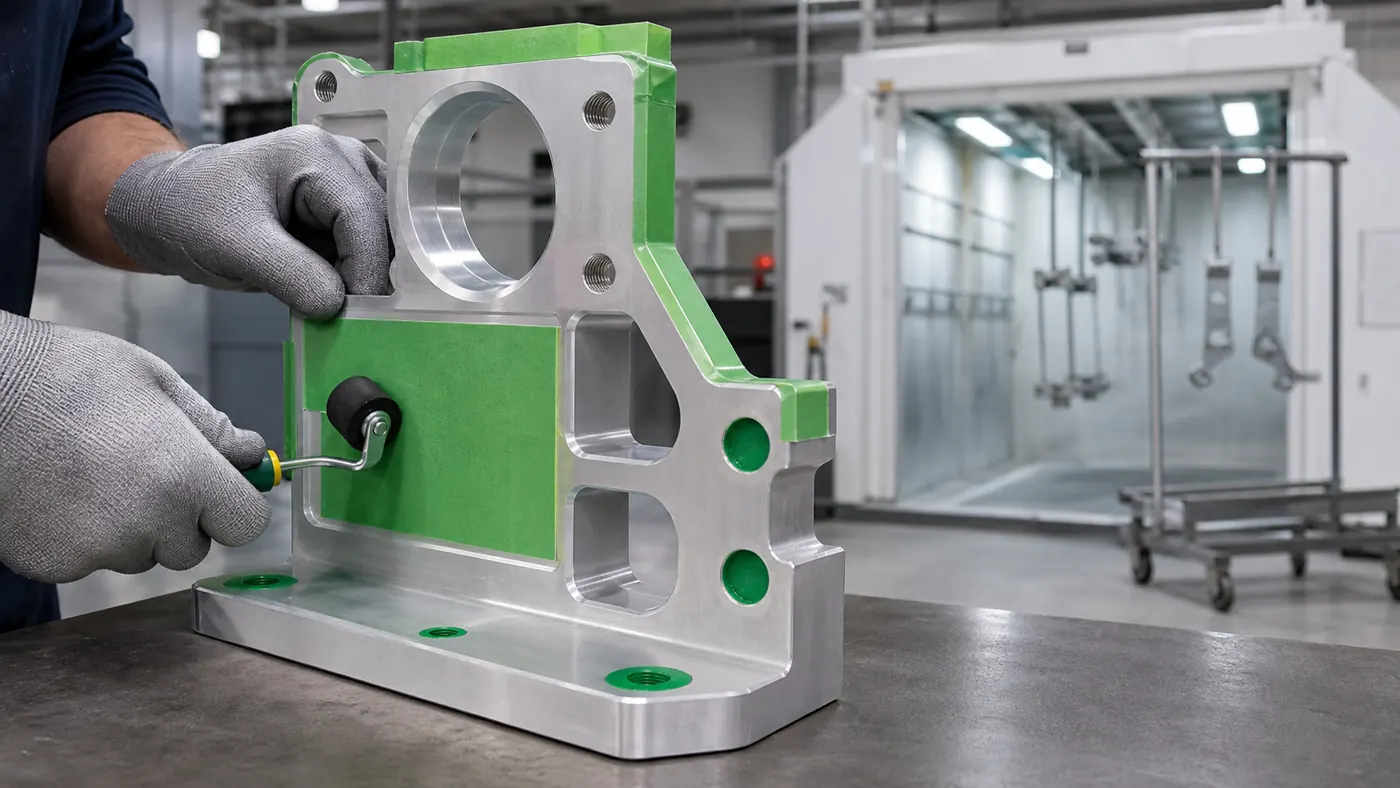
Why Is Special Masking Tape Needed for Powder Coating?
Powder coating uses electrostatically charged powder followed by heat curing. Ordinary packaging or office tape may soften, shrink, lift or leave residue in the oven. A purpose-selected high-temperature masking tape uses a dimensionally stable film and a heat-resistant pressure-sensitive adhesive.
Common areas that require masking include:
- Threaded holes and studs
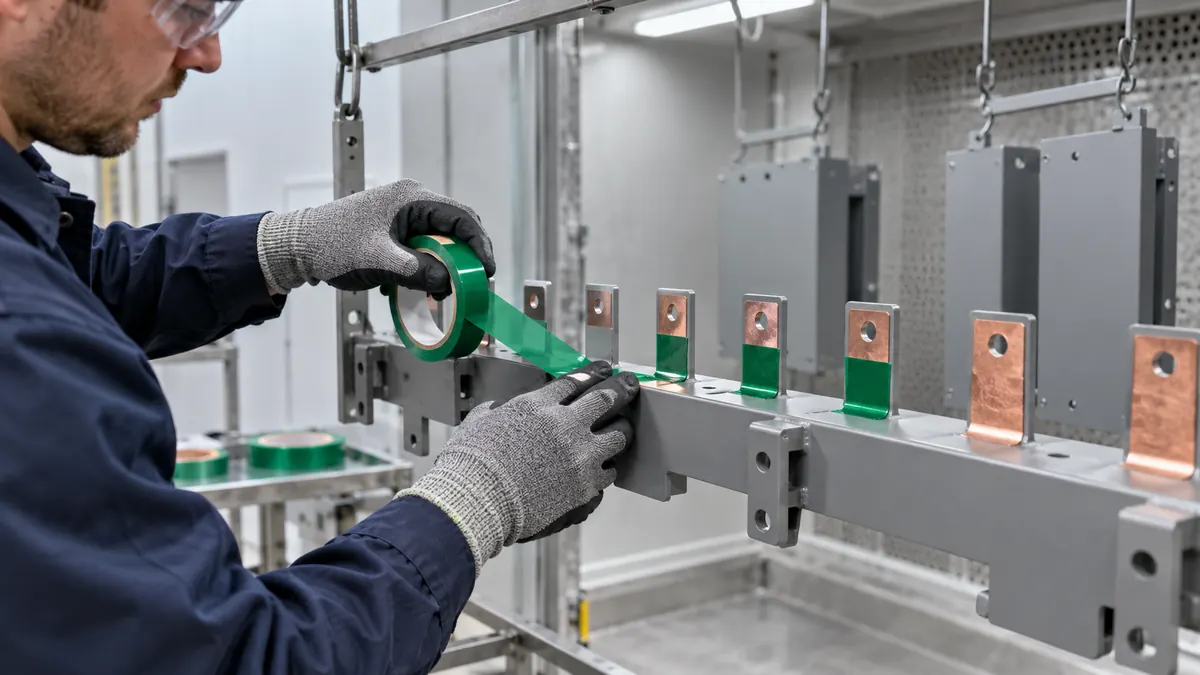
- Grounding and electrical contact points
- Bearing, gasket and sealing surfaces
- Machined faces and precision edges
- Weld, assembly and fastening locations
- Identification areas that must remain uncoated
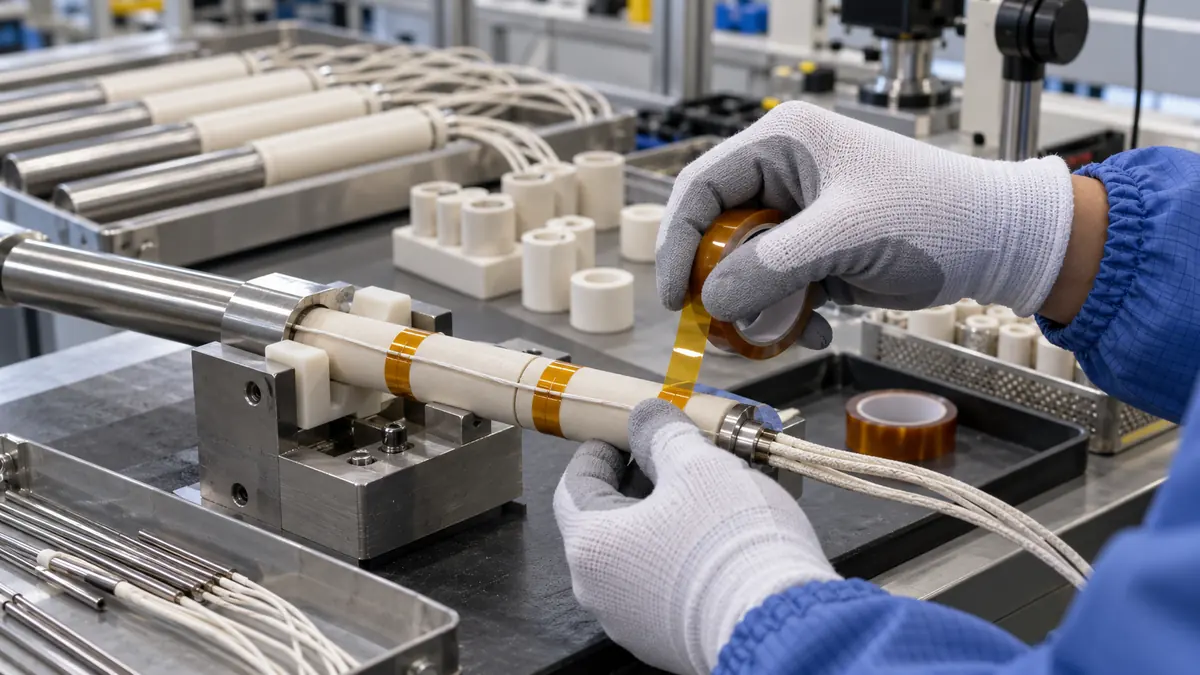
PET Silicone Tape vs Polyimide Tape
| Feature | PET Silicone Tape | Polyimide Tape |
|---|---|---|
| Backing | Polyester film | Polyimide film |
| Typical role | Standard powder coating and industrial masking | Higher-temperature or demanding cycles |
| Cost | Generally more economical | Generally higher |
| Common color | Green | Amber |
| Masking precision | Sharp lines on flat and gently curved surfaces | Sharp lines with strong thermal stability |
PET silicone tape is often suitable when the validated oven cycle falls within the product's temperature and dwell-time limits. Polyimide tape may be preferable when the cycle is hotter, longer or requires greater dimensional stability. Selection should be based on the supplier's technical data and a trial using the actual part and cure profile.
Key Selection Factors
Actual Metal Temperature
Record both the oven setting and the temperature reached by the part. Large or thick components may heat and cool differently from small test panels.
Cure Time and Repeated Cycles
A short exposure and a prolonged bake place different stress on the backing and adhesive. Confirm whether the tape will pass through one or several heating cycles.
Surface and Pretreatment
Adhesion varies on aluminum, steel, stainless steel, zinc-coated metal and chemically pretreated surfaces. The surface should be dry and free from oil, dust and loose contamination before masking.
Required Masking Geometry
Roll tape works well for edges and broad areas. Die-cut discs, washers and custom shapes improve repeatability for holes, contacts and high-volume production.
Residue and Edge Quality
Test for adhesive transfer, tape shrinkage, edge lift and powder penetration after the complete cure cycle. A clean peel alone is not enough if the masking line is irregular.
How to Apply Powder Coating Masking Tape
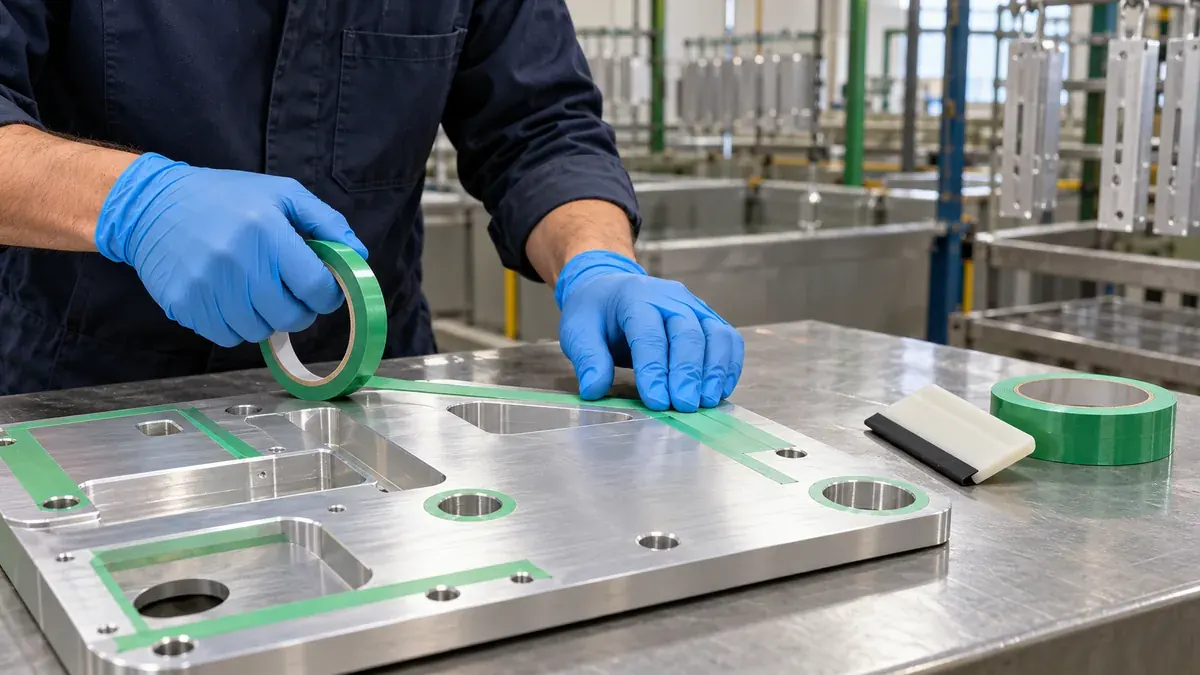
- Clean and dry the part. Remove oil, moisture, dust and pretreatment residue from the masking area.
- Choose the correct width or shape. Cover the required area without extending into surfaces that should receive coating.
- Apply uniform pressure. Press from the center outward to avoid bubbles, wrinkles and lifted edges.
- Seal the boundary. Pay particular attention to corners, holes and changes in surface height.
- Inspect before spraying. Confirm that all critical contact and sealing surfaces are fully protected.
- Run the validated coating cycle. Keep temperature and dwell time within the approved range.
- Remove using the approved method. Peel at a controlled speed and angle at the validated part temperature.
- Inspect the finished edge. Check for residue, powder leakage, tearing and surface damage.
Common Masking Problems and Solutions
| Problem | Possible Cause | Recommended Action |
|---|---|---|
| Tape lifts before curing | Contaminated surface or insufficient initial adhesion | Improve cleaning and test a compatible adhesive grade |
| Powder enters below the edge | Wrinkles, gaps or poor pressure | Apply uniformly and seal edges before spraying |
| Tape shrinks in the oven | Backing is unsuitable for the cure profile | Use a tape validated for the actual temperature and time |
| Adhesive residue remains | Excess heat, long dwell or incompatible adhesive | Review the process and evaluate another construction |
| Masking line tears | Coating bridges across the tape edge | Validate removal timing and score the coating only when the process permits |
| Hole coverage varies | Manual cutting is inconsistent | Use standardized die-cut discs or plugs |
Custom Masking Formats
High-temperature tape can be converted to match the part and production method. Common formats include narrow slit rolls, discs, dots, rings, washers, tabs, sheets and kiss-cut parts on release liners. A dimensional drawing, part photo or sample helps the converter recommend the correct shape and tolerance.
Frequently Asked Questions
What tape is best for powder coating?
PET silicone tape is a practical choice for many standard powder coating cycles. Polyimide tape may be preferred for higher temperatures or longer exposure. The correct grade must be validated using the actual oven profile and substrate.
Can ordinary masking tape be used for powder coating?
Ordinary masking tape may shrink, lift or leave residue during oven curing. Use tape designed and tested for elevated-temperature industrial masking.
Why does powder coating tape leave residue?
Common causes include excessive temperature, extended dwell time, surface contamination, too much application pressure or an adhesive that is incompatible with the substrate.
Can high-temperature tape be die-cut?
Yes. PET and polyimide tapes can be converted into discs, rings, washers and custom shapes for repeatable masking of holes, contacts and machined surfaces.
When should masking tape be removed?
Removal timing depends on the coating, part temperature and tape construction. Validate a controlled procedure that produces a clean edge without damaging the coating or leaving residue.
High Temperature Masking Tape Manufacturer
JIAO TAO TAO supplies PET silicone and polyimide tapes in standard rolls, custom slit widths and die-cut shapes for powder coating and other high-temperature masking applications. Send the substrate, oven profile, masked dimensions, residue requirement and estimated quantity for sample selection and testing.
View PET silicone high-temperature tape or request a powder coating tape recommendation.
PTFE Tape for Composite Mold Release Surfaces
Best Heat Resistant Tape for Sublimation Heat Press
Related Article
Need help choosing the right industrial tape?
Send us your application details, including temperature, surface material, size, quantity and current problem. Our team will help recommend a suitable tape material or custom die-cut solution.

simon@jiaotaotao.com


+86-136 1277 5969


+86-136 1277 5969
