
High Temp Tape for Powder Coating Explained
High Temp Tape for Powder Coating Explained
High temp tape for powder coating is used to protect specific areas of a part during spray application and oven curing, while still allowing clean removal after the coating cycle. In industrial finishing, tape selection affects edge quality, rework rate, and process consistency. This article explains what high temperature masking tape actually does, why polyester tape is often used in powder coating lines, and what production teams should evaluate before choosing a masking material.
What Is High Temp Tape for Powder Coating?
High temp tape for powder coating is a masking material designed to remain stable during coating application and elevated-temperature curing. Its job is simple in theory but demanding in practice. It must block powder from reaching protected areas, hold its edge during heating, and remove without damaging the surface or leaving contamination behind. In real production, that means the tape has to handle temperature, air flow, surface tension, and sometimes chemical exposure, all within the same masking cycle.
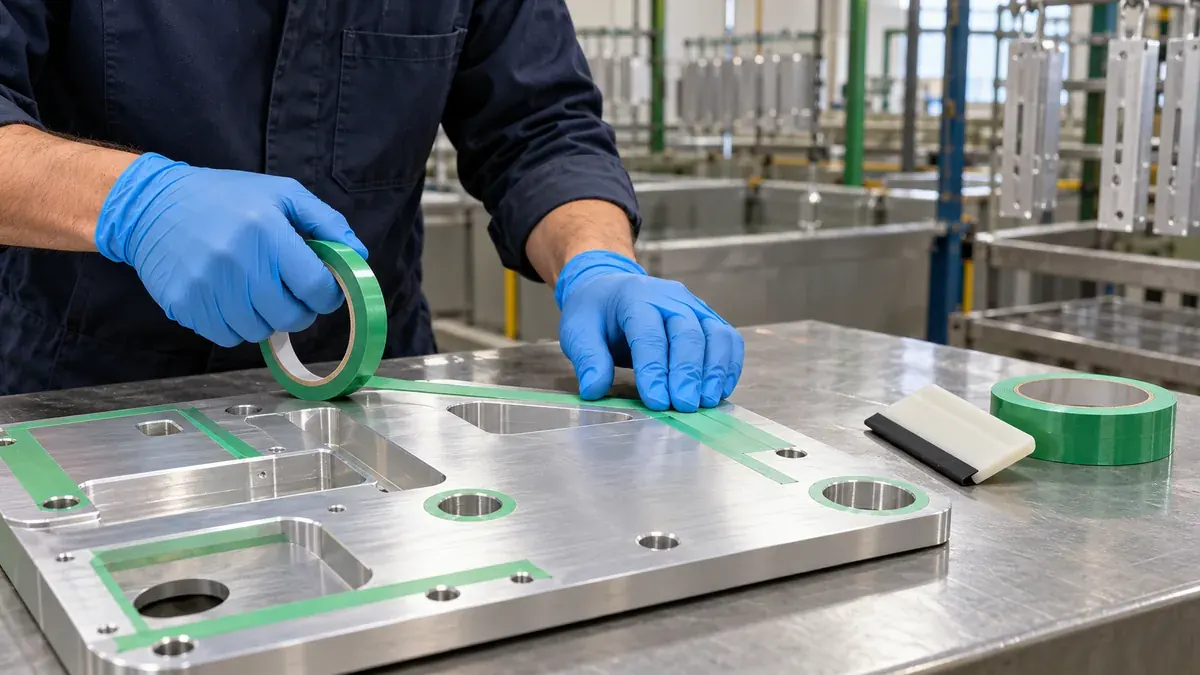
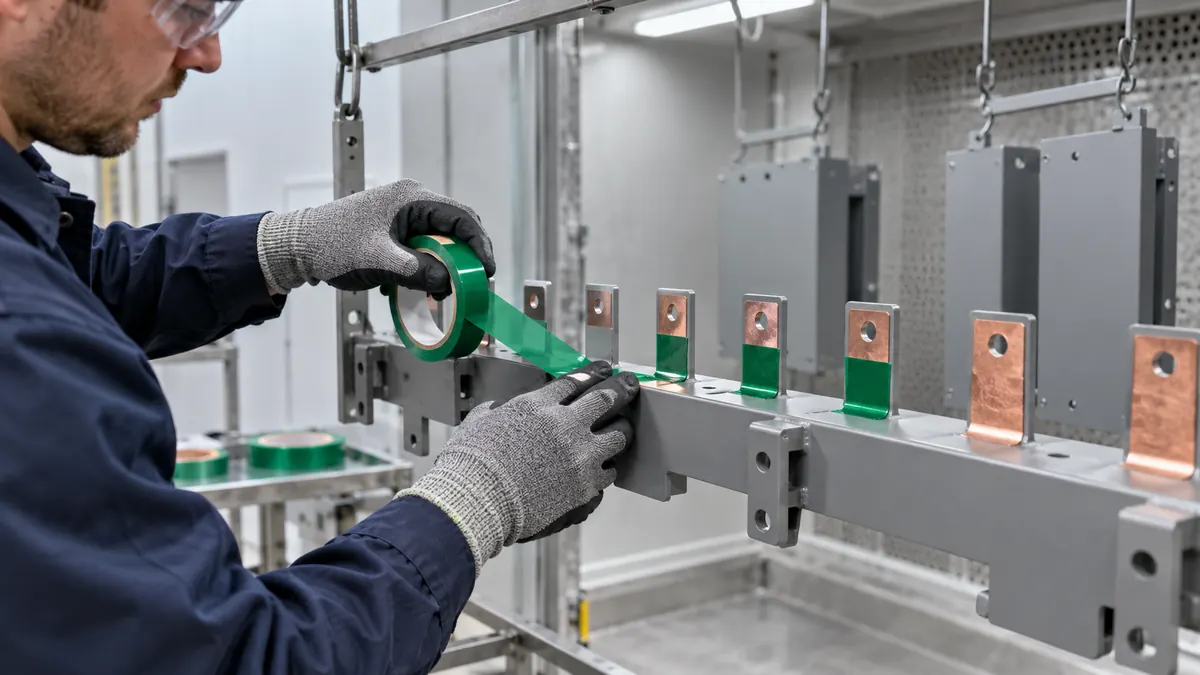
This type of tape is typically used to protect threaded holes, grounding points, sealing faces, contact surfaces, labels, and functional zones that must stay free from coating. If the tape lifts, shrinks, or leaves residue, the masking result may look acceptable at first but still create downstream problems. That is why masking tape is not just a consumable. In powder coating, it is part of the quality control system.
Why Polyester Tape Is Commonly Used
Polyester tape is widely used in powder coating because PET film offers a useful balance of heat resistance, mechanical strength, electrical insulation, and chemical resistance. Compared with lower-performance masking materials, polyester film is less likely to deform under heat and is better suited to applications where clean lines matter. In industrial finishing, that means it can help produce sharper masked boundaries and more predictable removal after the cure cycle.
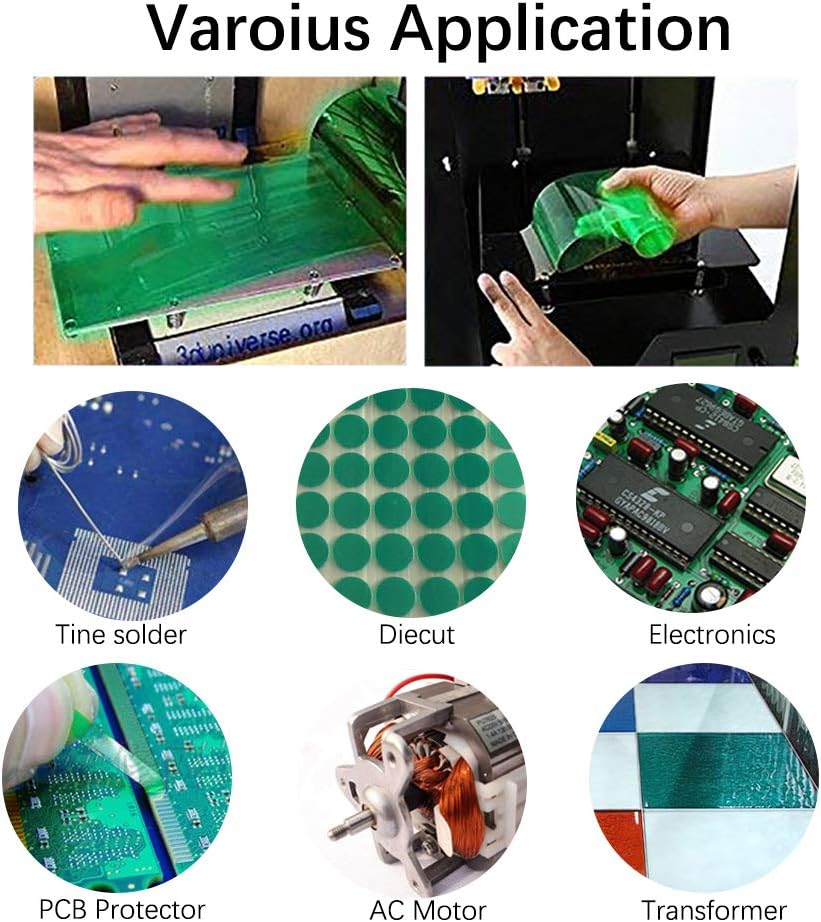
Polyester tape is also used beyond powder coating, including electronics, electrical engineering, automotive manufacturing, and PCB processing. That wider industrial use is important because it shows the material is trusted in environments where thermal stability and process reliability matter. In other words, polyester film is not just a coating accessory. It is a general industrial material platform with properties that fit multiple technical workflows.
What Properties Matter in Powder Coating Masking
When people discuss high temp tape for powder coating, they often focus only on temperature resistance. That matters, but it is not the whole picture. Dimensional stability is just as important, because a tape that shrinks or distorts can create poor edge definition. Adhesive behavior also matters. The tape needs enough holding power to stay in place during spraying and curing, but it must still remove cleanly after the process. Mechanical strength affects handling and application accuracy, especially when narrow strips or detailed masking patterns are involved.
Chemical resistance can also play a role. In some production environments, tape may encounter pretreatment agents, cleaning residues, or nearby process chemicals before or after coating. Electrical insulation may not be the primary reason for using the tape in powder coating, but it becomes relevant when the same masking material is used in adjacent electronics or electrical workflows. This is why experienced buyers look at the full property profile rather than selecting tape on color or appearance alone.
Where Masking Failures Usually Come From
Most masking failures come from mismatch between the tape and the actual process. A tape may look suitable on paper but still underperform if the cure cycle is longer than expected, the substrate surface is difficult, or the geometry makes edge sealing harder than normal. Edge lift is one of the most common issues. Once a small section lifts, powder can reach the protected area and the masking line becomes inconsistent. Residue after removal is another frequent problem, especially when the wrong adhesive system is used for the process conditions.
Application method also matters. Even a good polyester masking tape can give poor results if the tape width is wrong, if the operator stretches it excessively during placement, or if removal timing is inconsistent. In production terms, masking performance is the result of material, method, and process working together. A failure is rarely caused by only one variable.
How to Think About Tape Selection
A useful way to evaluate high temp tape for powder coating is to start with the part, not the catalog. Ask which surfaces must remain coating-free, how sharp the masking edge needs to be, what the cure profile looks like, and whether the same tape may be used in multiple departments. For simple flat masking, standard slit rolls may be sufficient. For repeated geometries, die-cut shapes or narrow custom widths may be more efficient. If the plant runs several high-temperature or electrical processes, polyester tape may offer operational advantages because the same material family can serve multiple functions.
For industry users, the goal is not to find a universal answer. It is to find a tape that performs consistently on the real line, with the real substrate, under the real cure schedule. That is why trial testing on production parts is still valuable even when the material family is already known. A technically correct selection is based on process fit, not just on product category.
Practical note: In powder coating, a tape that survives heat but produces poor edges or messy removal is not truly the right tape. Process consistency matters more than a single headline property.
Summary
High temp tape for powder coating is a process-control tool, not only a masking accessory. For many industrial applications, polyester tape is widely used because PET film provides heat resistance, electrical insulation, chemical resistance, and mechanical strength in a form that supports precise masking. The best selection depends on edge quality requirements, substrate condition, cure profile, and removal behavior. In practical terms, successful powder coating masking comes from matching the tape to the process rather than choosing by temperature label alone.
Explore Polyester Tape for Industrial Masking
If you are evaluating high temp tape for powder coating, review polyester tape options and compare material types based on your coating line, masking precision, and process conditions.
View Polyester Tape Category Visit Official Website
Contact: simon@jiaotaotao.com
High Heat Tape for Powder Coating Beginner Guide
High Temp Masking Tape for Powder Coating Guide
Related Article
Need help choosing the right industrial tape?
Send us your application details, including temperature, surface material, size, quantity and current problem. Our team will help recommend a suitable tape material or custom die-cut solution.

simon@jiaotaotao.com


+86-136 1277 5969


+86-136 1277 5969
