
Die Cut Polyimide Tape for Precision Insulation
Die Cut Polyimide Tape: Technical Guide for Precision Insulation, PCB Masking, and Custom High-Temperature Components
Table of Contents
Direct Answer & Quick Facts
What is Die Cut Polyimide Tape? It is a precision-converted insulation material made from polyimide film with high-temperature silicone adhesive, supplied in custom shapes instead of standard roll-only format. It is designed for applications where engineers need accurate placement, tight dimensional control, thermal resistance, and reliable electrical insulation. :contentReference[oaicite:1]{index=1}
Compared with standard roll tape, die cut polyimide tape improves assembly repeatability, reduces manual trimming, and supports automated or semi-automated production processes. That is why it is widely used in PCB and FPC insulation, battery modules, motors, transformers, and other high-temperature electronic assemblies. :contentReference[oaicite:2]{index=2}
- Material type: Polyimide film insulation tape, precision die cut
- Adhesive system: Silicone PSA; acrylic available for lower-temperature applications
- Temperature resistance limit: −40°C to 260°C, peak 280°C on the technical table; another section states −60°C to 260°C continuous with short-term peaks up to 300°C for 2 hours
- Dielectric strength: High dielectric insulation performance; page header also states ≥150 kV/mm, which appears unusually high and should be validated before formal specification use
- Core industrial uses: PCB/FPC insulation, battery modules, motor and transformer insulation, precision industrial masking and assembly
Technical Specifications & Material Science
What makes die cut polyimide tape different from standard roll tape
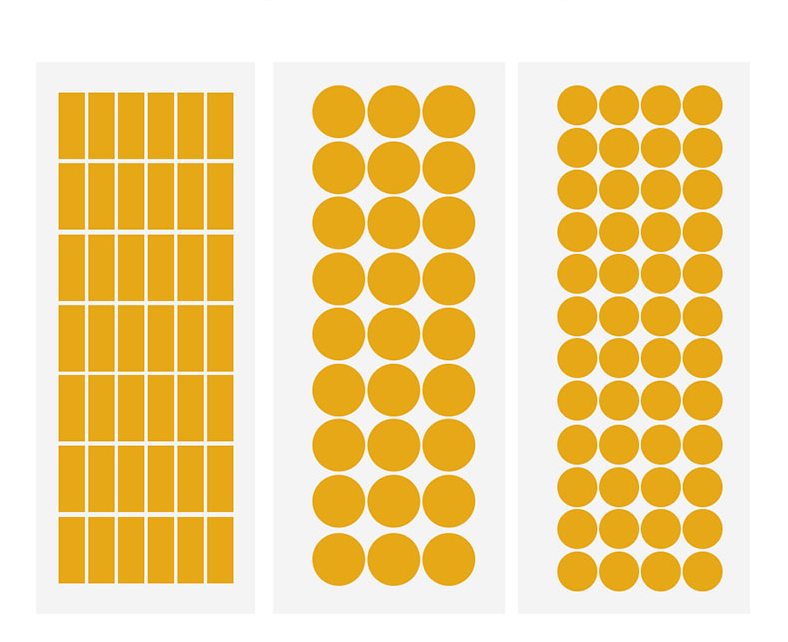
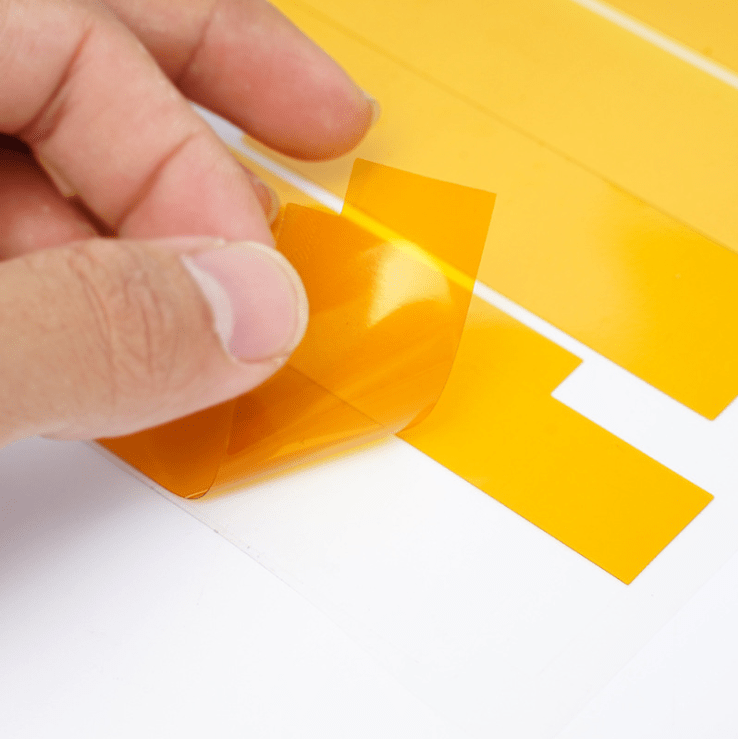
Die cut polyimide tape starts with the same basic material logic as high-temperature polyimide tape: a polyimide film backing that offers thermal stability, dimensional integrity, chemical resistance, and dielectric insulation, combined with a pressure-sensitive adhesive suitable for demanding assembly conditions. The difference is in the converting stage. Instead of supplying only master rolls or slit rolls, the material is processed into custom geometric formats such as pads, discs, spacers, windows, strips, and shaped insulation pieces. :contentReference[oaicite:3]{index=3}
That converting step matters because many electronic and electrical applications do not fail due to raw material limitations, but due to inaccurate placement, inconsistent trimming, dimensional variation, or low repeatability in manual assembly. A properly engineered die cut polyimide tape component helps solve those issues by providing repeatable geometry, controlled placement, and integration with automated feeding or liner-based positioning systems. :contentReference[oaicite:5]{index=5}
The product page lists polyimide film as the base material, high temperature silicone adhesive as the main adhesive system, 0.03 mm to 0.20 mm total thickness, adhesive strength of 3.5–5.0 N/25 mm, tensile strength ≥120 N/cm², and elongation at break of 40%–70%. It also states −40°C to +260°C with peak 280°C in the technical table, while the top summary says −60°C to 260°C continuous and short-term peaks up to 300°C for 2 hours. Because both appear on the same page, buyers should confirm the actual approved process window for the selected construction before mass use. :contentReference[oaicite:7]{index=7}79318view0
The listed model structure also helps clarify the range. Thin substrate series includes PI2540, PI2545, PI2550, PI2560, PI2565; medium-thickness series includes PI5075, PI5080, PI50100, PI75100; thicker variants include PI10120, PI10150, PI12180; and a special double-sided version includes DPI50100. This indicates that die cut polyimide tape is not a single fixed product but a converting family built around different substrate and adhesive thickness combinations. :contentReference[oaicite:9]{index=9}
Engineering note: for die cut PI parts, the critical variables are not only material thickness and temperature class, but also liner structure, release behavior, tolerance capability, placement method, and whether the part must act as insulation, masking, spacing, or all three. :contentReference[oaicite:10]{index=10}turn679318view0
| Property | Published / Typical Value | Notes |
|---|---|---|
| Base Material | Polyimide film | Product-page specification |
| Adhesive Type | Silicone PSA | Acrylic available for <150°C per page header |
| Total Thickness | 0.03 mm – 0.20 mm | Customizable |
| Temperature Resistance | −40°C ~ +260°C, peak 280°C | Technical table value |
| Alternate Temperature Statement | −60°C to 260°C continuous, 300°C peak for 2 hours | Appears in the page summary; confirm for the selected construction |
| Adhesive Strength | 3.5 – 5.0 N/25 mm | Plate value on technical table |
| Tensile Strength | ≥120 N/cm² | Substrate value listed on page |
| Elongation | 40% – 70% | Technical table value |
| Color | Amber / Black | Customization option on page |
| Width Range | 3 mm – 500 mm | Customization option for converted formats |
For reference, the page cites standards including ASTM D882, ASTM D3330, ASTM D374, and IEC 60243. Buyers often use these as a framework when comparing converted insulation materials, while general electrical tape context may also refer to ASTM D1000 and electrical tape guidance such as IEC 60454-1. Formal qualification should still be based on the selected construction and actual part geometry. :contentReference[oaicite:12]{index=12}

Industrial Applications
1. PCB and FPC insulation
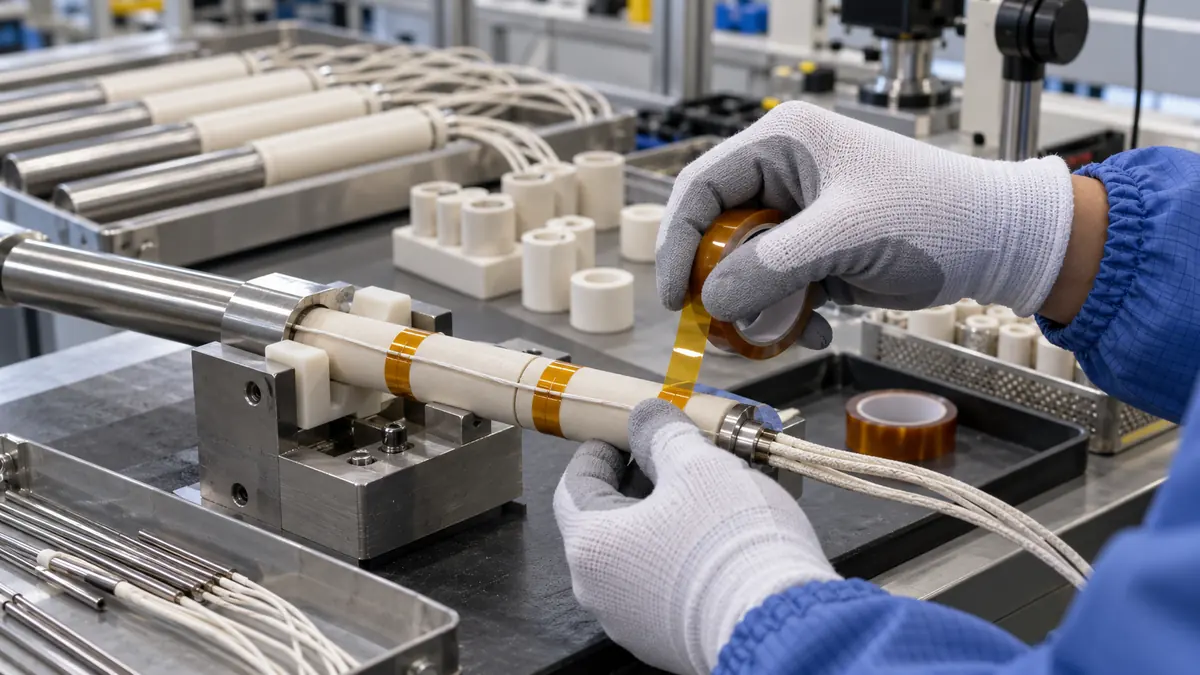
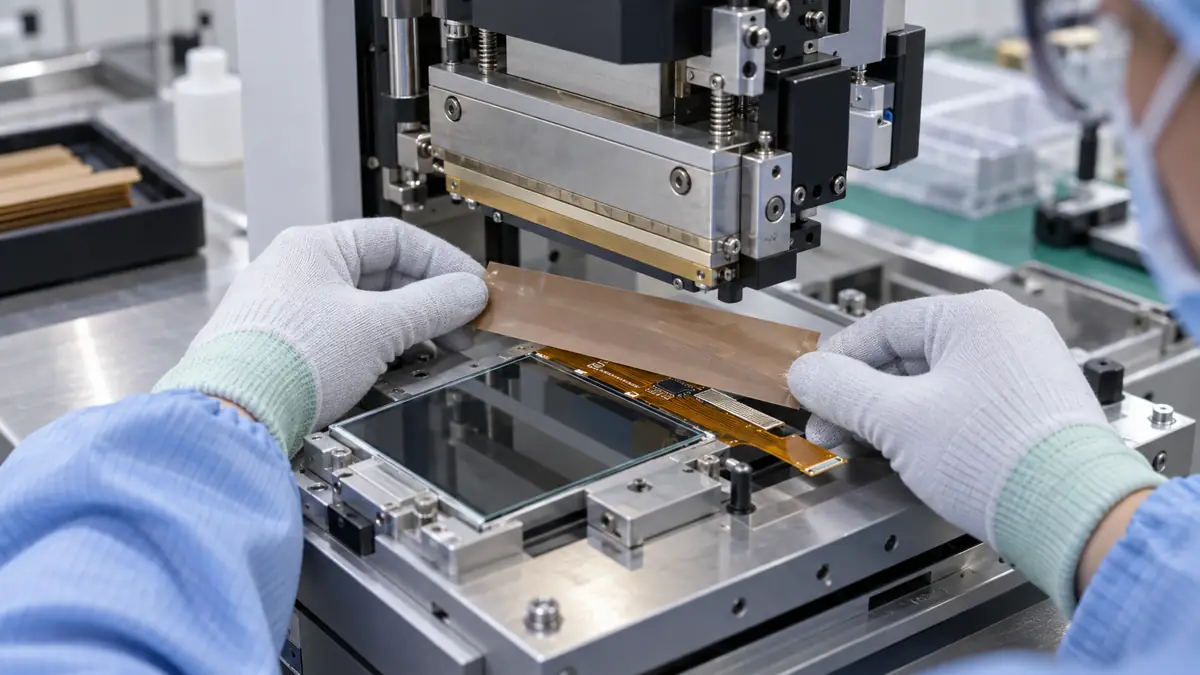
In PCB and flexible circuit work, standard roll tape often creates unnecessary manual cutting, inconsistent placement, or dimensional waste. Die cut polyimide tape solves that by supplying pre-defined insulating parts that match component zones, trace layouts, connector areas, or shielding boundaries. That improves repeatability and lowers assembly variability. :contentReference[oaicite:13]{index=13}
2. Battery module insulation and spacing
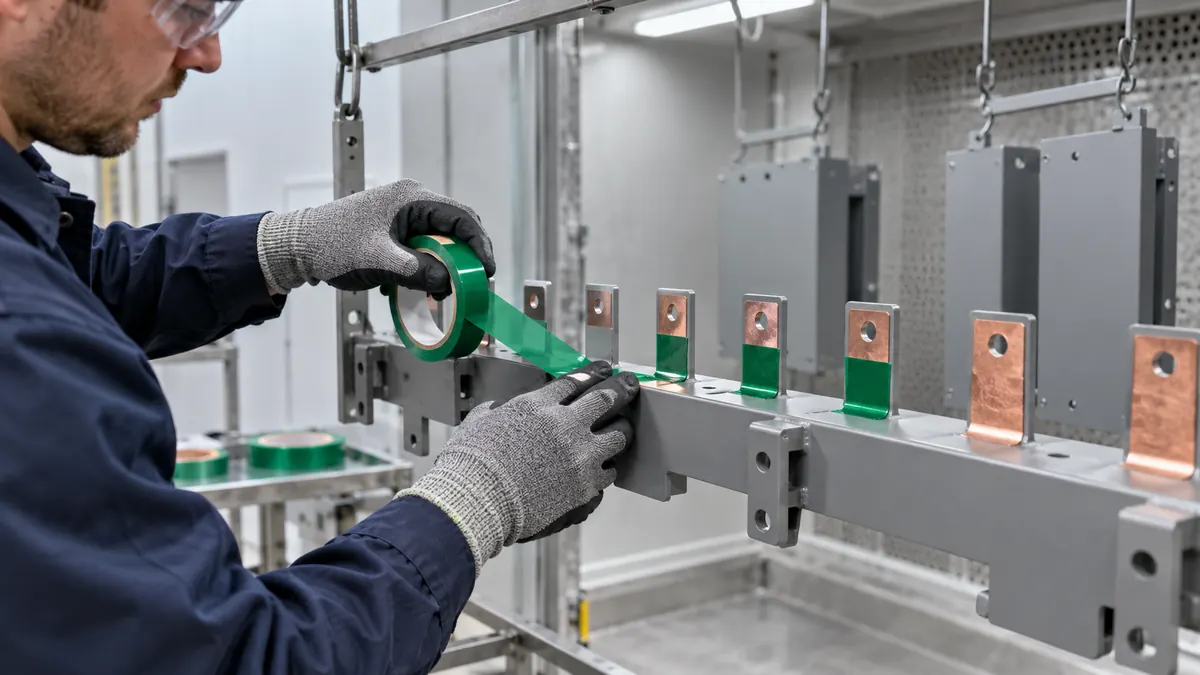
Battery modules require materials that can deliver thermal stability, electrical insulation, and controlled geometry. In this application, die cut PI parts are useful as insulation pads, separators, and local protection elements because they can be designed to match cell, tab, housing, or busbar areas without operator-side trimming. :contentReference[oaicite:14]{index=14}79318view0
3. Motor and transformer insulation
In motors and transformers, insulation components often need to fit around slots, windings, or local barriers with tighter dimensional requirements than roll tape can deliver efficiently. Die cut polyimide tape improves positioning accuracy and supports repeatable insulation layer placement under elevated temperature conditions. :contentReference[oaicite:16]{index=16}turn679318view0
4. Automation-friendly electronic assembly
The page explicitly notes that die cut tape is suited for automated placement and complex electronic assemblies. That matters because automation requires consistent release, accurate pitch, stable liner handling, and repeatable cut geometry. A good die cut part reduces manual handling and makes high-mix or scaled production more consistent. :contentReference[oaicite:18]{index=18}>
5. Precision industrial processing
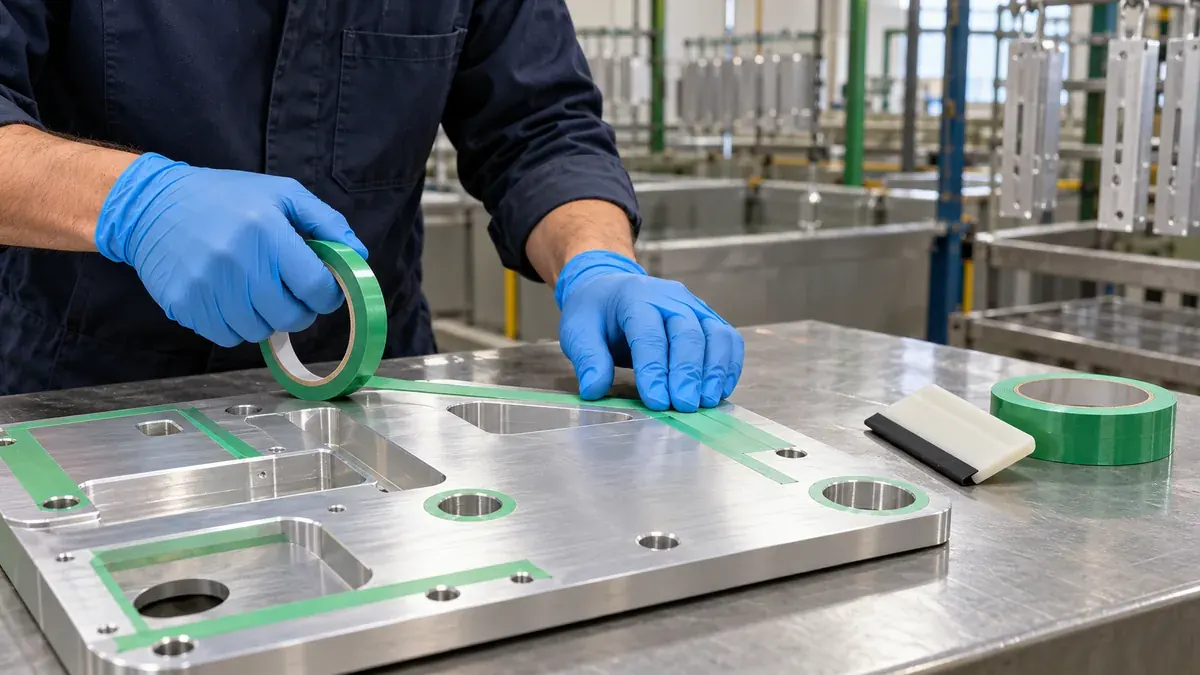
Beyond electronics, die cut polyimide tape is also used in precision industrial operations where custom masking, thermal shielding, or insulation must be applied in specific shapes. In such cases, the value comes from converting accuracy as much as from the polyimide material itself. :contentReference[oaicite:20]{index=20}679318view0
Selection insight: engineers do not choose die cut PI parts only to save labor. They choose them when placement accuracy, part-to-part consistency, assembly speed, and thermal / electrical reliability must all be controlled together. :contentReference[oaicite:22]{index=22}turn679318view0
Material Comparison
Die Cut Polyimide Tape vs. Standard Roll Polyimide Tape
| Comparison Item | Die Cut Polyimide Tape | Standard Roll Polyimide Tape |
|---|---|---|
| Format | Custom pads, discs, strips, spacers, windows | Continuous roll or slit roll |
| Placement accuracy | Higher | Dependent on manual cutting or process alignment |
| Automation suitability | Better for repeatable automated placement | Better for general masking and wrapping |
| Use case | Localized insulation, precision parts, repeatable geometry | General insulation or masking from a roll format |
Silicone adhesive vs. acrylic adhesive
For die cut PI parts, silicone adhesive is generally preferred where higher heat resistance is required. The page also notes that acrylic adhesive is available for applications below 150°C. That gives buyers a choice between higher-temperature capability and alternative bonding behavior depending on the final process. :contentReference[oaicite:24]{index=24}turn679318view0
Customization & Supply Capabilities
The page makes clear that this is a manufacturer-direct converting service, not only a stock material listing. That distinction matters because die cut polyimide tape is usually purchased as a semi-engineered component. Buyers often need supplier support on raw material selection, adhesive system matching, liner choice, tolerance design, and packaging format. :contentReference[oaicite:26]{index=26}>
- Custom shapes: pads, discs, insulation spacers, windows, tabs, strips
- Custom widths: 3 mm – 500 mm
- Thickness options: 0.03 mm – 0.20 mm
- Color options: amber / black
- OEM logo cores and private-label packaging
- Prototype development and mass production support
- Slitting, die cutting, inspection, and converted-part supply
- Vacuum-sealed or anti-static inner wrap and export packing
Procurement tip: when ordering die cut PI parts, it is useful to provide drawing files, tolerance requirements, liner direction, application surface, and placement method. That helps the manufacturer recommend the correct converting route and minimize trial loss. :contentReference[oaicite:28]{index=28}

FAQ
1. What is the main advantage of die cut polyimide tape over standard roll tape?
The main advantage is precision format control. Instead of trimming roll tape on the line, buyers receive parts in the required geometry. That improves positioning accuracy, repeatability, assembly speed, and process consistency, especially in PCB, battery, and electrical insulation work. :contentReference[oaicite:29]{index=29}turn679318view0
2. What temperature can die cut polyimide tape withstand?
The product page shows two temperature statements: a technical table listing −40°C to +260°C with peak 280°C, and a summary stating −60°C to 260°C continuous with short-term peaks to 300°C for 2 hours. Buyers should confirm the approved value for the selected construction. :contentReference[oaicite:31]{index=31}
3. Is it suitable for PCB and FPC insulation?
Yes. The page explicitly lists die cut polyimide tape for PCB and FPC insulation. This format is especially useful when the insulating area has a fixed geometry and repeatable placement is important for quality control or automated assembly. :contentReference[oaicite:32]{index=32}
4. Can the tape be supplied in custom shapes and sizes?
Yes. The page states that the material can be supplied in custom shapes and sizes based on drawings or samples. It also supports pads, discs, insulation spacers, custom widths, and OEM packaging options. :contentReference[oaicite:33]{index=33}79318view0
5. Does die cut polyimide tape leave residue after removal?
The product overview states that the die cut tape provides clean removal without residue. Actual residue performance still depends on substrate type, exposure temperature, dwell time, and adhesive selection, so sample validation remains important for critical surfaces. :contentReference[oaicite:35]{index=35}ew0
6. Is acrylic adhesive available for die cut polyimide parts?
Yes. The top summary states that acrylic adhesive is available for applications below 150°C. That gives buyers an option when the process does not require the full thermal range of silicone adhesive but needs an alternative bonding profile. :contentReference[oaicite:37]{index=37}79318view0
7. What information should be sent before requesting a quotation?
For accurate quoting, buyers should send drawing files or samples, target dimensions, tolerance expectations, thickness preference, substrate details, temperature exposure, and the intended placement method. For converted insulation parts, these details significantly affect manufacturability and unit cost. :contentReference[oaicite:39]{index=39}
Conclusion & B2B CTA
Die Cut Polyimide Tape is not just a high-temperature tape in a different format. It is a precision-converted insulation component designed for applications where thermal resistance, electrical insulation, dimensional accuracy, and assembly repeatability must work together. That makes it particularly useful for PCB/FPC insulation, battery assemblies, motors, transformers, and automated production lines. :contentReference[oaicite:40]{index=40}
Request a Data Sheet | Get a Free Sample | Contact Manufacturer Directly
Product Link: Die Cut Polyimide Tape
WhatsApp / WeChat: +86-136 1277 5969
Email: simon@jiaotaotao.com
Official Website: www.clothadhesive.com
Silicone Adhesive Polyimide Tape for PCB Masking
Anti-static Polyimide Tape for PCB Masking
Related Article
Need help choosing the right industrial tape?
Send us your application details, including temperature, surface material, size, quantity and current problem. Our team will help recommend a suitable tape material or custom die-cut solution.

simon@jiaotaotao.com


+86-136 1277 5969

+86-136 1277 5969
