
Clear Polyimide Tape Parameter Guide

Clear Polyimide Tape Parameter Guide: Structure, Thickness, Temperature, and Electrical Insulation Data
Table of Contents
Direct Answer & Quick Facts
What is Clear Polyimide Tape? It is a high-temperature insulation tape made from polyimide film coated with silicone pressure-sensitive adhesive, designed for electronics masking, insulation, and heat-resistant process protection. In parameter terms, buyers usually evaluate it through film thickness, temperature class, dielectric strength, adhesive system, and removal behavior after heat exposure.
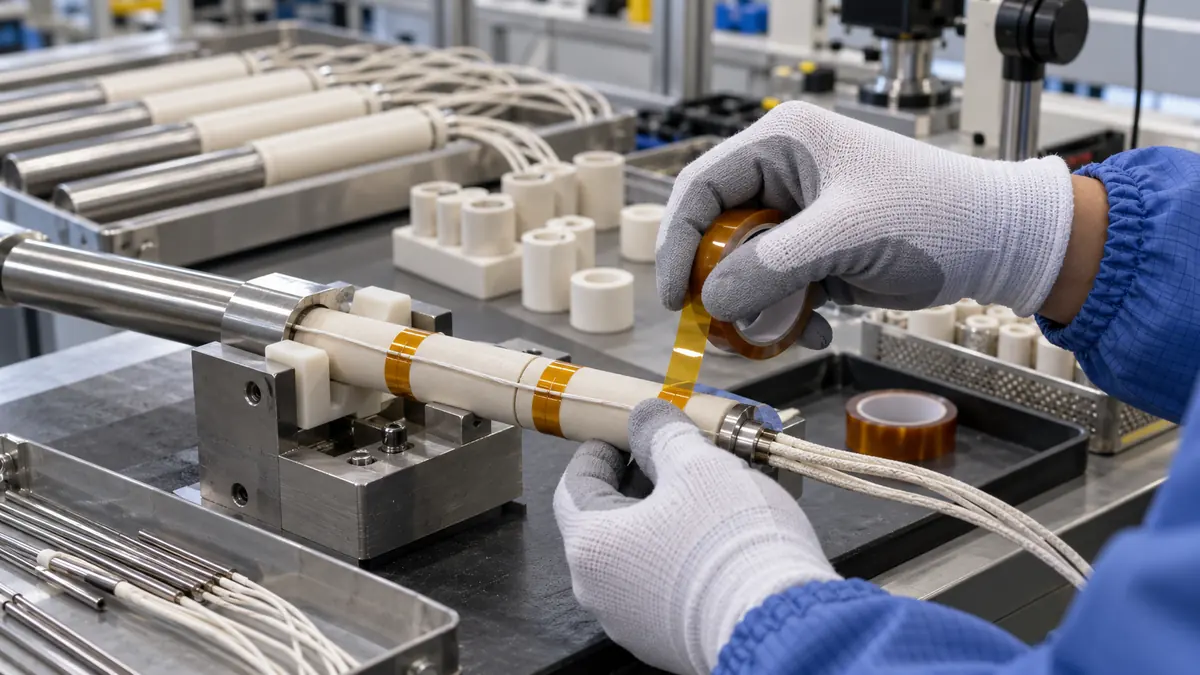
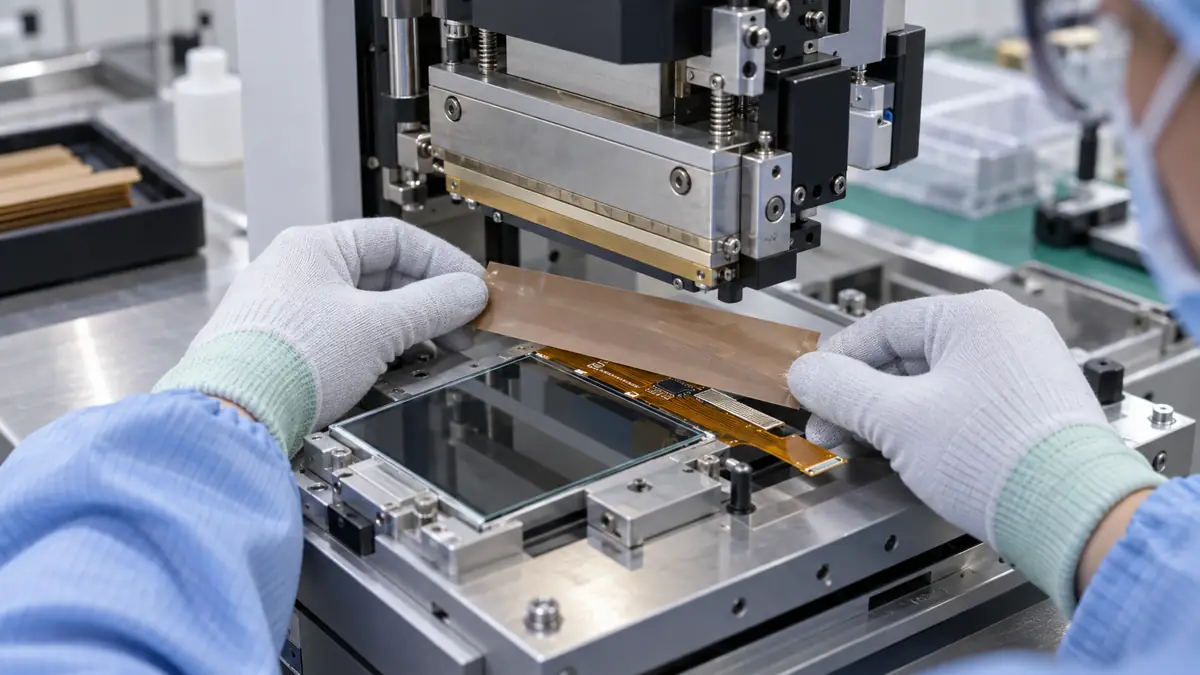
Although the product family on the page is presented as amber silicone polyimide tape, the same parameter-reading logic applies when buyers search for clear polyimide tape specifications. The most important point is not only the color description, but whether the tape delivers the required thermal, electrical, and converting performance for the target process.
- Material type: Single-sided polyimide film insulation tape
- Adhesive system: Silicone pressure-sensitive adhesive
- Continuous temperature: Up to 260°C
- Short-term peak: Up to 300°C+
- Dielectric strength: ≥ 6.5 kV/mm
- Thickness range: 0.025 mm – 0.125 mm
- Core uses: PCB masking, SMT processing, motor winding, electrical insulation, electronics repair
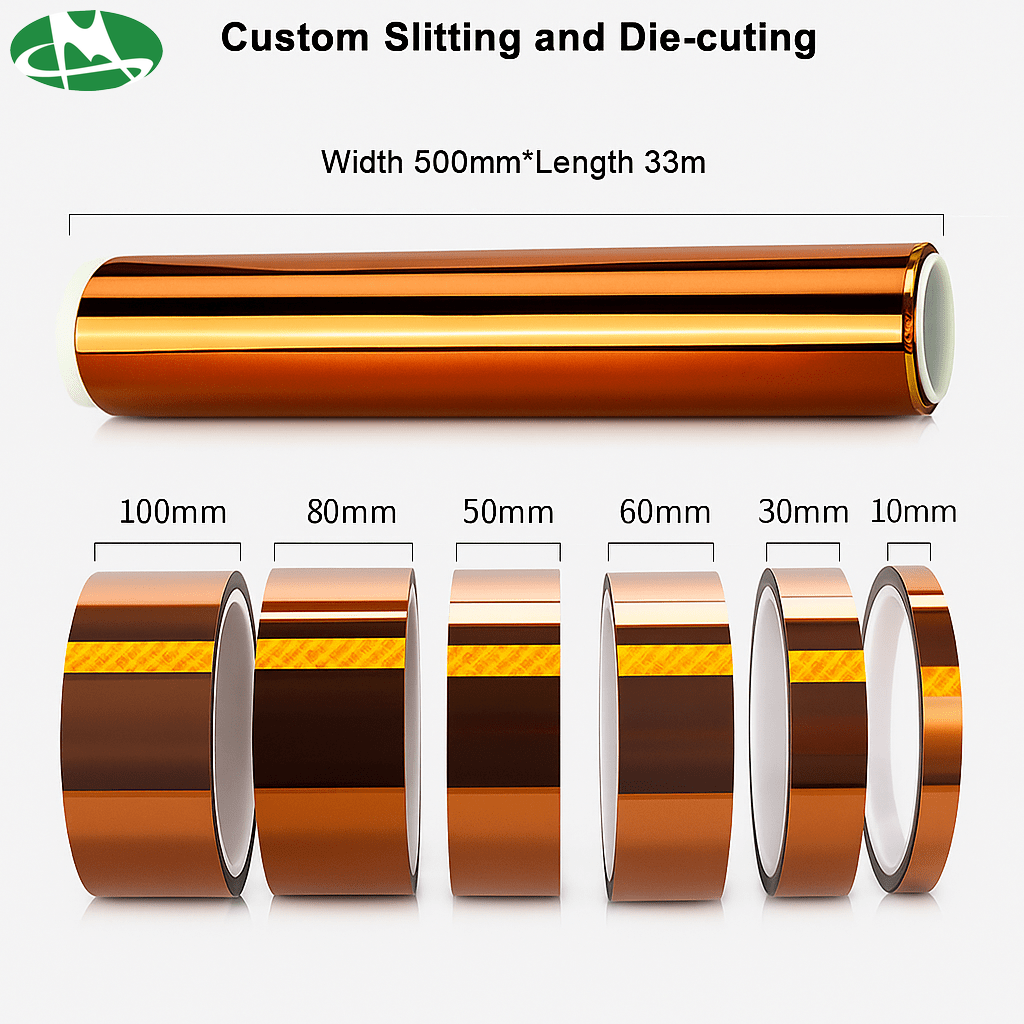
Parameter Definition & Material Structure
1. Backing material
The page identifies the backing as polyimide film. This is the structural layer that provides the tape’s thermal resistance, dielectric performance, chemical stability, and dimensional integrity. For parameter analysis, the backing material determines the upper process ceiling more than the adhesive alone.
2. Adhesive type
The published adhesive system is silicone pressure-sensitive adhesive. In high-temperature tape selection, this parameter matters because silicone adhesive generally performs more reliably than lower-temperature systems in elevated-heat masking and insulation processes, especially where clean removal is required after heating.
3. Thickness range
The page gives a 0.025 mm to 0.125 mm thickness range. This is not a minor parameter. Thickness directly affects handling, conformability, insulation build, and final assembly tolerance. Thin grades are usually chosen for precision masking and low build-up, while thicker grades may be selected for additional handling strength or higher insulation stack requirements.
4. Temperature rating
The published thermal data is continuous use up to 260°C and short-term peak up to 300°C+. These are two different process parameters. Continuous rating is relevant to stable operating exposure, while short-term peak rating is more relevant to brief process steps such as solder masking, SMT exposure, or thermal spikes during electronics manufacturing.
5. Dielectric strength
The page publishes ≥ 6.5 kV/mm as the typical dielectric strength. This parameter is especially important in electrical insulation, motor winding, transformer protection, and any design where the tape is used not only as a masking material but as an insulating barrier.
Parameter reading tip: for polyimide tape, buyers should not evaluate thickness, temperature, or dielectric strength in isolation. The correct approach is to match film thickness + adhesive system + heat profile + electrical requirement + removal requirement as a combined specification set.
Technical Parameter Table
| Parameter | Published Value | Interpretation |
|---|---|---|
| Backing Material | Polyimide Film | Base layer providing thermal and electrical stability |
| Adhesive Type | Silicone Pressure-Sensitive Adhesive | Suitable for high-temperature masking and clean removal |
| Thickness Range | 0.025 mm – 0.125 mm | Affects build, handling, and insulation design |
| Continuous Temperature | Up to 260°C | Relevant to stable long-duration exposure |
| Short-Term Peak | Up to 300°C+ | Relevant to brief thermal process spikes |
| Dielectric Strength | ≥ 6.5 kV/mm | Key electrical insulation parameter |
| Electrical Insulation | Excellent | Suitable for electronics and electrical uses |
| Chemical Resistance | Excellent | Useful in harsher processing environments |
| Adhesion Performance | Stable at High Temperature, Clean Removal | Important for masking and post-process cleanliness |
| Color | Amber | Standard listed color on the page |
| Width | Customizable | Relevant for line-ready converting and roll format matching |
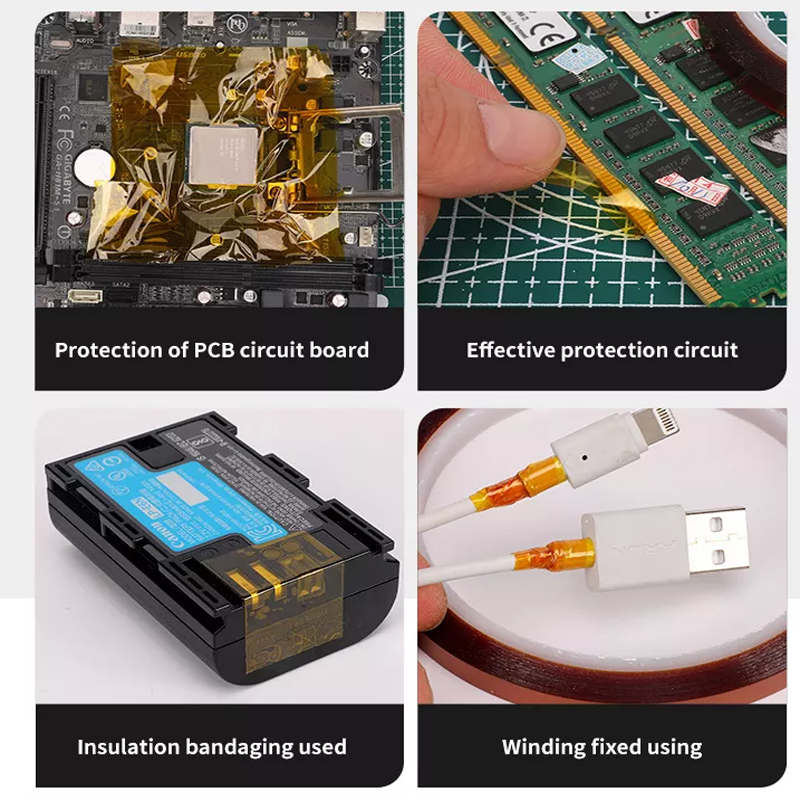
How to Read the Main Parameters
Thickness selection logic
For parameter-based selection, thinner constructions such as the lower end of the published range are generally more suitable for precise masking and tight tolerance assemblies. Mid-range thicknesses often balance handling and insulation, while thicker constructions may be more appropriate where added mechanical integrity or increased insulation build is required.
Temperature parameter logic
Engineers should distinguish between continuous temperature and short-term peak. A process that briefly touches a very high temperature may still be suitable, while a long-duration hot process needs to be evaluated against the continuous rating rather than the peak number.
Dielectric parameter logic
A dielectric strength value of ≥ 6.5 kV/mm supports the tape’s use as more than a masking product. It indicates that the tape can also function as a meaningful insulation layer in electrical and electronics assemblies, provided the rest of the design stack is compatible.
Adhesive parameter logic
Silicone adhesive is not only a bonding parameter. It is also a process parameter. It affects how the tape behaves after heat, whether it removes cleanly, and how stable the bond remains during short-term thermal exposure.
Key conclusion: the most important parameter set for this product family is not a single number. It is the combination of 0.025–0.125 mm thickness, 260°C continuous rating, 300°C+ short-term peak, ≥ 6.5 kV/mm dielectric strength, and silicone clean-removal adhesive system.
Representative Model Reference
The product page lists representative models such as JTT01-04, JTT01-06L, JTT01-07(50), PI-50120, and PI-100150. The catalog also shows the wider single-sided silicone polyimide series, including standard thickness grades such as 0.03 mm, 0.04 mm, 0.05 mm, 0.06 mm, 0.07 mm, 0.08 mm, 0.10 mm, 0.12 mm, 0.15 mm, and 0.18 mm, with liner-based variants like JTT01-02L and JTT01-06L. This confirms that the parameter range is part of a broader standardized product family rather than a one-off SKU.
FAQ
1. What is the most important parameter in clear polyimide tape?
There is no single most important parameter. Buyers should evaluate thickness, temperature rating, dielectric strength, adhesive type, and removal behavior together. For high-temperature electronics work, those parameters operate as one specification set rather than separate isolated values.
2. Why does thickness matter so much?
Thickness affects handling, insulation build, masking precision, and final assembly tolerance. Thin grades are often better for precision masking, while thicker grades may provide additional insulation build or easier handling in manual application environments.
3. What is the difference between continuous temperature and short-term peak?
Continuous temperature describes stable long-duration exposure. Short-term peak refers to brief process spikes. A tape may tolerate a short thermal event but still be unsuitable for extended hot exposure above its continuous-use rating.
4. Does dielectric strength mean the tape is suitable for electrical insulation?
It is a strong indication, especially when the page also states excellent electrical insulation. However, engineers should still validate the full insulation stack, substrate condition, and real operating environment rather than relying on a single dielectric value alone.
5. Why is silicone adhesive important in parameter analysis?
Because adhesive chemistry affects heat stability and clean removal. In polyimide tape, silicone adhesive is commonly selected when engineers need stable bonding during elevated-temperature processing and minimal residue after removal.
6. Can width be treated as a technical parameter?
Yes. Width is also a process parameter because it affects line setup, local masking coverage, application efficiency, and converting compatibility. A customizable width option is useful for matching the tape to actual production geometry.
7. How should buyers verify parameter suitability before mass purchase?
The most reliable method is to test the selected thickness and roll format under real process conditions. Buyers should validate heat exposure, removal behavior, cleanliness, insulation requirement, and handling performance on the actual substrate.
Conclusion & B2B CTA
Clear Polyimide Tape should be evaluated through its full parameter profile, not by product name alone. For this product family, the most relevant published parameter set is polyimide film + silicone PSA + 0.025–0.125 mm thickness + 260°C continuous + 300°C+ short-term peak + ≥ 6.5 kV/mm dielectric strength.
Request a Data Sheet | Get a Free Sample | Contact Manufacturer Directly
Product Link: Clear Polyimide Tape Product Page
WhatsApp / WeChat: +86-136 1277 5969
Email: simon@jiaotaotao.com
Official Website: www.clothadhesive.com
What Is Polyimide Tape? Types, Properties & PCB Uses
Silicone Adhesive Polyimide Tape for PCB Masking
Related Article
Need help choosing the right industrial tape?
Send us your application details, including temperature, surface material, size, quantity and current problem. Our team will help recommend a suitable tape material or custom die-cut solution.

simon@jiaotaotao.com


+86-136 1277 5969

+86-136 1277 5969
