
PTFE Tape for Composite Mold Release Surfaces
PTFE Tape for Composite Mold Release Surfaces
PTFE tape for composite mold release is an adhesive-backed release-surface option for selected tooling flanges, edge zones, caul-contact areas and repeat-contact locations. It can reduce sticking and simplify cleanup, but it is not a universal replacement for a qualified mold-release system. The right choice depends on PTFE construction, cure exposure, tool geometry, surface preparation and how the tape edge interacts with the laminate or vacuum bag.
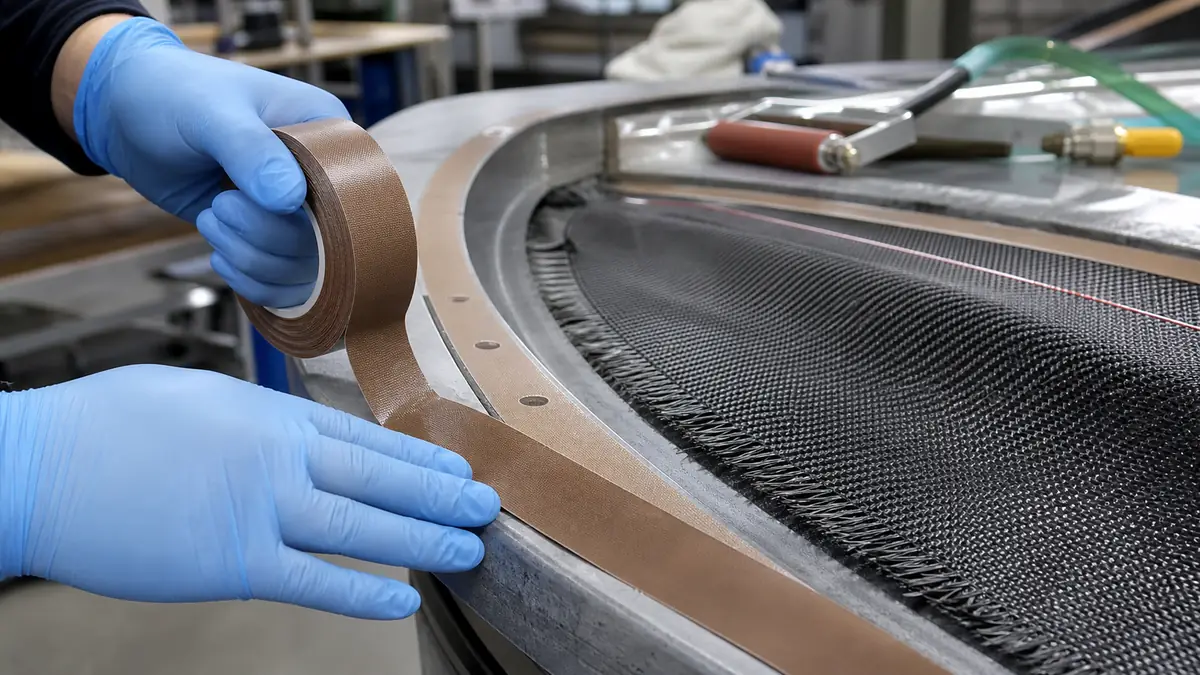
Where Adhesive-Backed PTFE Tape Fits in Composite Tooling
PTFE-coated fiberglass tape combines a non-stick PTFE surface with woven reinforcement and an adhesive backing. On composite tooling, it is commonly evaluated for localized release surfaces that need mechanical stability, such as straight or gently curved flanges and repeated-contact zones. Pure PTFE film tape may offer a smoother surface for precision areas, while reinforced tape generally handles repeated contact and wider spans more robustly.
Use the tape only where its thickness, seam and edge are acceptable. A tape ridge can print through thin laminates or interfere with bag sealing, and an exposed edge can collect resin. Tooling engineers should place seams outside critical cosmetic and dimensional surfaces whenever possible.
Selection Table for Composite Mold Release Tape
| Parameter | Questions to Answer | Selection Impact |
|---|---|---|
| Tape construction | PTFE film or PTFE-coated fiberglass? | Balances surface smoothness, strength and dimensional stability |
| Total thickness | Can the process tolerate a tape step or seam? | Affects print-through, edge transition and tooling clearance |
| Cure profile | What part temperature, dwell and cycle count occur? | Guides heat screening for both backing and adhesive |
| Tool substrate | Metal, composite tool, coated tool or repair surface? | Influences adhesion and removal behavior |
| Geometry | Flat flange, radius, corner or compound curve? | Determines conformability, slit width and seam layout |
| Service plan | Temporary trial or repeated production cycles? | Sets inspection and replacement frequency |
PTFE Film Tape vs PTFE-Coated Fiberglass Tape
| Requirement | PTFE Film Tape | PTFE-Coated Fiberglass Tape |
|---|---|---|
| Release surface | Smooth film surface for precision contact zones | Textured reinforced surface suited to many tooling and handling zones |
| Mechanical stability | More sensitive to stretching or damage during installation | Fiberglass reinforcement improves handling and dimensional control |
| Compound geometry | May conform well in narrow widths but can wrinkle | Best on flat or gently curved zones unless converted to fit |
| Replacement | Thin edge can be useful where clearance is limited | Reinforcement can make removal and repositioning easier |
Application Method
1. Define the release zone
Mark the exact area that requires a non-stick surface and keep the tape outside critical laminate surfaces unless the design explicitly allows the step. Confirm the planned seam direction against resin flow, bag movement and demolding direction.
2. Prepare the tool surface
Remove loose release residue, dust, oil and damaged coating using a process approved for the tooling material. The surface must be dry and stable. Do not use an unapproved solvent that could attack a composite tool or leave contamination.
3. Apply without stretch
Position one end, then lay the tape down with controlled pressure. Avoid pulling the tape tight around a radius because stored tension can cause edge lift during heating. Use narrower converted strips where geometry demands better conformity.
4. Finish seams and edges
Butt or overlap seams according to the process risk and locate them away from the critical surface. Press edges firmly and remove wrinkles, trapped debris or bridging before layup.
5. Validate under the real cure cycle
Run a representative tool section through the complete temperature, pressure and chemical exposure. Inspect for resin pickup, adhesive movement, edge lift, surface marking and clean removal before approving production use.
Common Failure Modes
- Edge lift: often linked to contamination, excessive stretch, tight radii or an unsuitable adhesive.
- Resin at the seam: caused by poor seam orientation, gaps or an edge placed in a resin-flow path.
- Print-through: the tape step is too close to a cosmetic surface or too thick for the laminate.
- Adhesive transfer: the tape grade, dwell, temperature or tool coating is incompatible.
- Short service life: abrasion or repeated demolding damages the PTFE surface before the backing fails.
FAQ
Is this the same PTFE tape used for plumbing?
No. Composite tooling normally uses adhesive-backed PTFE film or PTFE-coated fiberglass tape. Plumbing thread-seal tape has a different construction and purpose.
Can PTFE tape replace liquid mold release?
Only in approved localized applications. It should not be treated as a blanket replacement for a qualified release system without tooling and laminate trials.
Which PTFE tape is better for a mold flange?
Reinforced PTFE-coated fiberglass tape is often evaluated for stable flange coverage, while PTFE film tape may suit smoother or thinner contact zones. Geometry and cure exposure decide the better route.
How often should mold release tape be replaced?
Set replacement by inspection and process performance rather than a universal cycle count. Replace it when edges lift, the surface is damaged, resin builds up or release becomes inconsistent.
Related Products and Articles
- High-temperature PTFE tape product range
- What PTFE coating adds to industrial surfaces
- PTFE-coated fiberglass cloth selection guide
Request a Tooling Trial Sample
Share the mold material, flange geometry, cure profile, resin system contact risk, target tape width and expected production cycle. JIAO TAO TAO can help screen PTFE film and reinforced PTFE tape options for a controlled tooling trial. Send your application details.
Custom Die-Cut Tape for LED Lighting Assembly
High Temperature Tape for Powder Coating Masking
Related Article
Need help choosing the right industrial tape?
Send us your application details, including temperature, surface material, size, quantity and current problem. Our team will help recommend a suitable tape material or custom die-cut solution.

simon@jiaotaotao.com


+86-136 1277 5969


+86-136 1277 5969
