
PET Silicone Tape for Automotive Connector Masking During Paint Bake
PET Silicone Tape for Automotive Connector Masking During Paint Bake
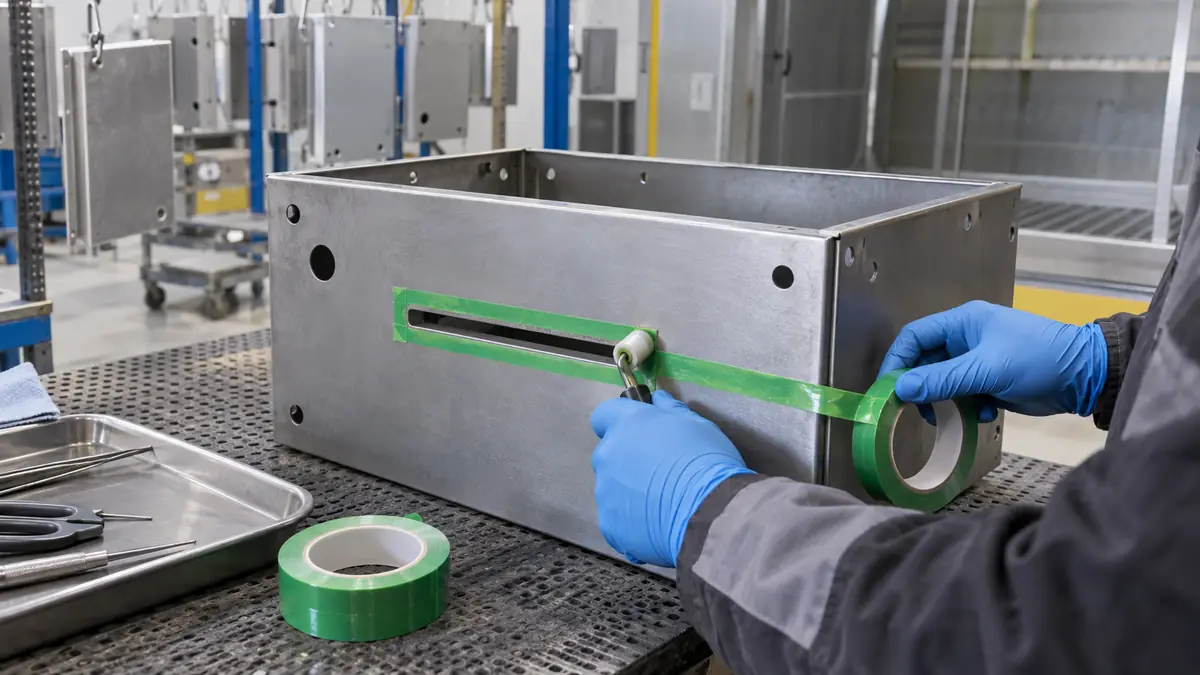
PET silicone tape for automotive connector masking during paint bake can protect a connector face, terminal cavity, clip interface, or electrical keep-out area while a bracket or body component receives a heated coating. The tape is a temporary process mask, not a substitute for the connector supplier's temperature limit or the finished assembly's electrical inspection. The exact tape grade, geometry, surface, oven profile, removal window, and acceptance criteria must be qualified together.

Key Takeaways
- Define the connector keep-out area from an approved drawing rather than masking by eye.
- Measure the real component temperature and dwell; an oven setpoint alone is not a qualification profile.
- Check the connector housing, seal, wire insulation, clips, and tape as one exposed assembly.
- Use a removal tab and a released peel direction so the connector and fresh coating are not damaged.
- Inspect mating surfaces and terminal cavities after removal before the harness is connected.
What Automotive Connector Masking Must Protect
Vehicle bodies, battery enclosures, seat frames, brackets, and subassemblies may carry electrical connectors before liquid paint, powder coating, primer, sealer, or another heated finish is applied. Overspray or coating at a connector opening can interfere with a seal, latch, clip, datum, or electrical contact. A well-designed mask keeps the released area clear while allowing the surrounding part to receive the intended finish.
PET film with a silicone pressure-sensitive adhesive is often screened for temporary heated masking because the film is thin, dimensionally stable, and easy to see during inspection. That general description does not prove compatibility with every connector polymer, elastomer seal, paint chemistry, or thermal cycle. Review the current supplier data sheet and run representative parts through the complete production sequence.
Connector Masking Formats Compared
| Mask format | Useful for | Main control point |
|---|---|---|
| Slit PET silicone tape | Simple rectangular faces, clip slots, and short production runs | Operator overlap, wrinkles, and repeatable alignment |
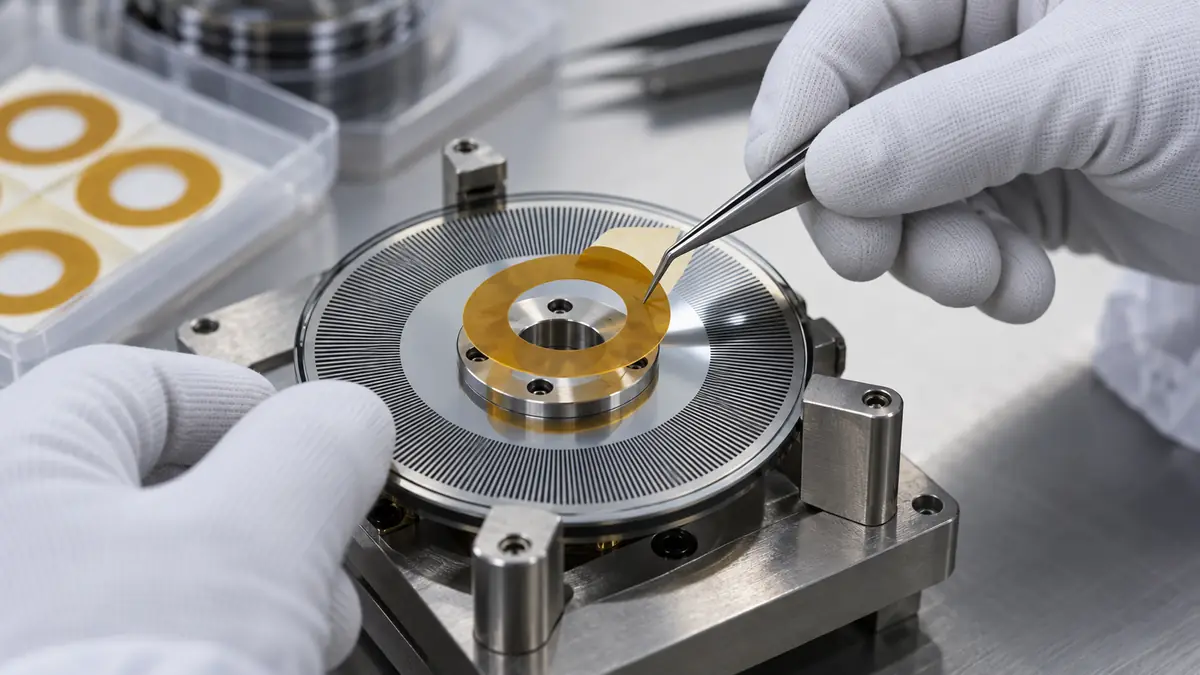
| Die-cut cap shape | Repeated connector faces with defined latch or seal clearance | Outline tolerance, orientation, and full perimeter contact |
| Kiss-cut array on liner | High-volume stations using several identical connectors | Part count, pick sequence, and liner release |
| Tape plus reusable cover | Complex housings where a rigid cover protects the cavity and tape seals an edge | No open path between the cover and tape |
| Temporary mated dummy | Interfaces approved by the connector or process owner | Fit, contamination control, and removal access |
Information Required Before Selecting PET Silicone Tape
| Parameter | What to document | Why it matters |
|---|---|---|
| Connector materials | Housing resin, seals, secondary locks, clips, wire insulation, and labels | Each material can respond differently to heat and adhesive contact |
| Surface condition | Mold release, dust, oil, moisture, and previous handling | Contamination can cause edge lift or adhesive transfer |
| Coating sequence | Wash, pretreatment, primer, spray, flash, bake, cooling, and any repeat cycles | The tape experiences the entire process, not only the oven |
| Thermal exposure | Measured connector temperature, ramp, dwell, peak, and cool-down | Connector parts may heat differently from the metal carrier |
| Keep-out geometry | Mask boundary, tolerances, latch clearance, seal land, pull tab, and datum | Controls the functional opening and repeatability |
| Acceptance plan | Overspray, residue, terminal contamination, seal condition, fit, and electrical checks | Defines whether the masking process is acceptable |
Start With the Released Connector Interface
The mask should protect only the areas designated by the product and process owners. Covering too little can admit coating into the cavity; covering too much can leave an unintended bare area on the bracket or housing. Include die-cut tolerance and placement tolerance in the boundary stack-up. If a latch, CPA device, seal lip, or mounting clip must remain movable, show that requirement on the work instruction.
Do Not Qualify From Oven Setpoint Alone
Metal brackets can heat faster or slower than a connector body, and a heavily loaded rack can behave differently from a single trial part. Measure representative locations with the approved temperature method. Compare the recorded exposure with the tape data sheet and the connector assembly's released limits. If the component has already passed through another heated step, include cumulative exposure in the review.
Choose Adhesion for the Lowest-Risk Surface
A stronger adhesive is not automatically better. The mask needs enough holding force to resist spray, airflow, handling, and the thermal cycle without pulling a seal, label, or surface treatment during removal. Where possible, terminate the tape on a robust housing surface rather than a delicate seal. Use a pull tab that stays outside the coating boundary and does not fold into the connector cavity.
Recommended Application and Inspection Workflow
- Confirm part identity. Verify the connector, harness revision, coating route, and approved mask drawing.
- Inspect the incoming connector. Reject damaged seals, open locks, contamination, or bent terminal protection features before masking.
- Apply to a dry released surface. Align from the defined datum, avoid stretching the PET film, and keep adhesive away from terminals.
- Press the perimeter. Use the approved tool and pressure pattern, especially around corners, ribs, and wire exits.
- Perform a pre-coat check. Confirm mask presence, orientation, edge seal, pull-tab location, and clearance to latches and fixtures.
- Run the complete process. Use representative rack loading, spray direction, oven profile, and cooling conditions.
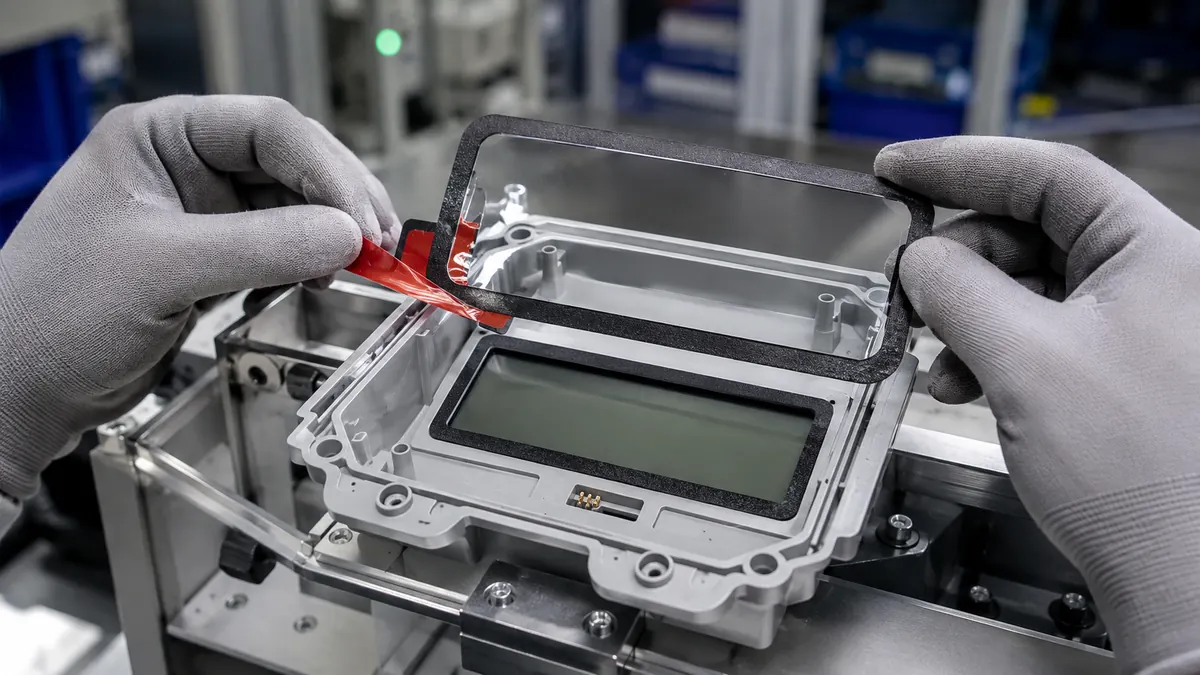
- Remove in the released window. Peel from the tab at the approved angle without levering against the connector or fresh finish.
- Inspect and function-check. Check for overspray, residue, housing distortion, seal damage, terminal contamination, latch movement, and correct mating.
Common Defects and Corrective Directions
| Observed defect | Likely checks | Corrective direction |
|---|---|---|
| Overspray under an edge | Dust, molded texture, insufficient pressure, corner bridging, or unsuitable geometry | Stabilize cleaning and edge application; test a fitted die-cut shape |
| Tape lifts during bake | Stretching, high local temperature, low contact area, or incompatible surface | Release tape tension, enlarge robust contact zones, and re-screen the grade |
| Adhesive remains on housing | Excess exposure, aged tape, incompatible polymer, or late removal | Check storage, thermal history, adhesive type, and removal window |
| Connector seal pulls or rolls | Tape overlaps the seal or removal direction loads the elastomer | Move the bond line to the housing and redesign the pull direction |
| Paint chips at the boundary | Coating bridge, thick film build, blunt peel angle, or cold removal | Review mask edge, coating thickness, scoring prohibition, and removal timing |
Related Products and Articles
- Explore the polyester tape range for PET masking constructions.
- Review the high-temperature masking tape guide for material-selection fundamentals.
- For repeatable connector-face shapes and pull tabs, see custom die-cutting capabilities.
- Send the connector drawing and measured bake profile for a trial-format discussion.
Frequently Asked Questions
Can PET silicone tape protect an automotive connector in a paint-bake oven?
It can be screened as a temporary mask when the exact tape grade, connector materials, coating chemistry, measured thermal profile, geometry, and removal method are tested together. The connector supplier's temperature limits still apply.
Should tape touch the connector terminals?
No. The mask should normally protect the connector opening without placing adhesive on terminals or inside contact cavities. Use the approved interface drawing and contamination controls.
Is a die-cut mask better than a slit strip?
A die-cut shape is often easier to align on repeated complex faces, while slit tape can be practical for simple geometries or low volume. Compare placement time, edge sealing, removal, waste, and defect risk.
Will PET silicone tape always remove cleanly from connector plastic?
No. Housing resin, molded texture, additives, contamination, time, temperature, and cooling can all affect removal. Test representative production parts after the complete process.
What should an RFQ include?
Provide the connector and harness drawings, contacted materials, mask boundary and tolerance, coating sequence, measured temperature profile, roll or die-cut format, annual quantity, removal timing, and inspection criteria.
Plan a Connector-Masking Trial
Share the connector-face drawing, housing and seal materials, coating chemistry, measured bake profile, keep-out tolerance, pull-tab preference, and inspection plan. JIAO TAO TAO can help shortlist a PET silicone tape construction and converted mask format for process qualification.
Contact the technical team about automotive connector masking.
Custom Die-Cut Tape for RFID and NFC Antenna Bonding
Custom Die-Cut Tape for Battery Vent Membrane Bonding
Related Article

Need help choosing the right industrial tape?
Send us your application details, including temperature, surface material, size, quantity and current problem. Our team will help recommend a suitable tape material or custom die-cut solution.

simon@jiaotaotao.com


+86-136 1277 5969


+86-136 1277 5969
