
Anti Slip Tape Peeling on Concrete: What to Check First
Anti slip tape peeling on concrete needs a surface and contact check before another strip is installed. Dusty or crumbling concrete, contamination, moisture, poor contact across a rough finish and repeated edge abrasion can each contribute to lifting. Inspect the removed strip and the floor together: grit or concrete stuck to the adhesive points to a different problem from a clean, poorly contacted underside.
Keep the affected area out of use while loose strips are inspected and removed. Covering a raised edge with another piece hides the condition that needs correcting.
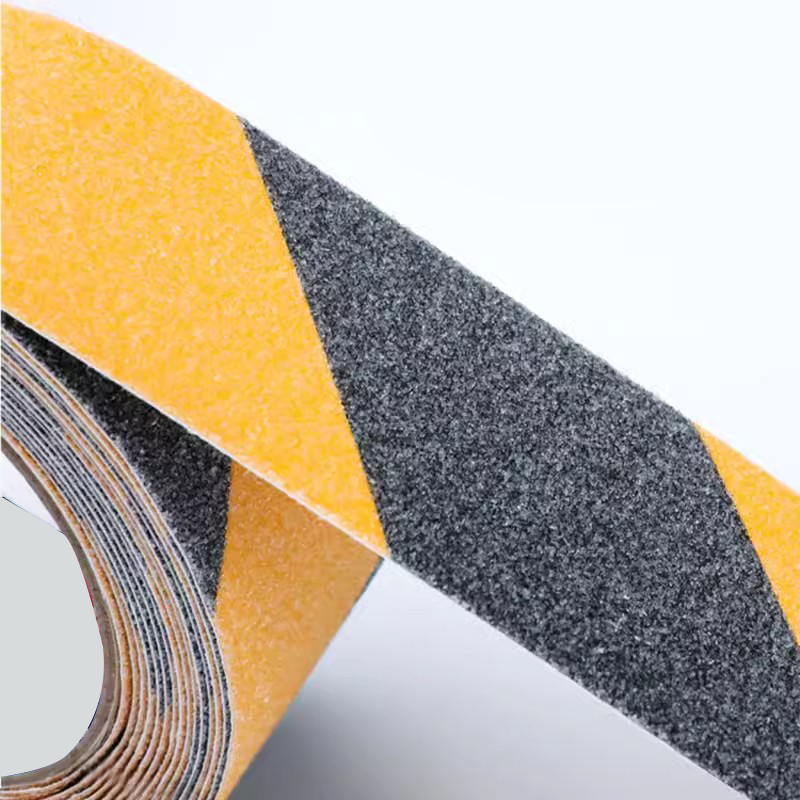
Read the underside of the failed strip
Photograph the strip before discarding it. Mark which end faced approaching foot traffic and whether the lifted edge sat near a step, joint or low spot. Compare the bonded and detached areas.
| Observation | Next check |
|---|---|
| Powder or concrete particles on the adhesive | Loose residue or a weak surface layer |
| Contact marks only on raised points | Texture, backing conformity and application pressure |
| Lifting near a wet or frequently washed area | Water exposure, drainage and drying conditions |
| Damage concentrated at the leading edge | Footwear, wheels, cleaning equipment and strip position |
None of these observations identifies a cause alone. For example, particles can remain after inadequate cleaning, or they can come from a surface that continues to break down. The corrective work is different.
Start with sound concrete and a compatible finish
An adhesive strip needs a surface layer that stays attached. Check for loose grit, flaking coating, damaged repairs and residue from previous tape. Removing visible dirt is not enough if the surface underneath still powders or sheds.
Identify any paint, sealer or floor treatment. The tape bonds to that finish rather than directly to the concrete. A new strip may remove an unsound coating even when its adhesive has made good contact.
Arrange repairs or surface preparation appropriate to the floor before trialling tape again. Porous concrete may require a compatible primer or sealer, but the product and preparation must be approved for the chosen tape system. A primer is not a repair for crumbling concrete, nor does a generic coating prove adhesion compatibility.
Separate cleaning from the moisture investigation
Remove oil, dirt and cleaning residue using a method suitable for the concrete, any coating and the tape adhesive. Follow the cleaning product's instructions, including any required rinsing and drying. Applying tape to a surface that still carries cleaner can introduce another poorly bonded layer.
Ask when the area becomes wet. Rain, washing, spills and moisture emerging through the floor need different remedies. Record whether lifting follows a cleaning shift or wet weather, and whether water collects at the same edge.
A surface that looks dry at installation does not establish that the slab will stay dry in service. Persistent dampness or seepage needs assessment before a new adhesive strip is proposed. An edge treatment cannot correct water moving beneath the bonded area.
Check contact, strip position and everyday wear
A rigid backing can bridge deep surface texture, leaving adhesive in contact with only the high points. More pressure will not necessarily close every gap. Compare the offered backing and adhesive on the actual prepared concrete rather than assuming that a thicker or more abrasive tape will bond better.
Lay out the strip where its edges can remain fully supported. Avoid spanning cracks or movement joints. On a step, check the relationship between the tape edge and the nosing so the strip is not forced around an unsupported turn. Use the selected product's layout instructions instead of a universal setback dimension.
Watch normal use. A trolley turning across a corner or a cleaning tool repeatedly catching the leading edge can damage an otherwise bonded strip. Check the walking surface too: embedded dirt, worn texture or damaged backing needs attention even if the adhesive still holds.
Run a small replacement trial before wider installation
Use a representative area with the same finish, cleaning routine and traffic. Record preparation, the exact tape construction and the application conditions. Follow the supplier's instructions for rolling, waiting time, any approved primer and return to use.
Inspect the trial after the relevant traffic and cleaning sequence. Look for lifting, trapped dirt, surface damage and changes in the exposed texture. If it fails, compare the underside with the first sample before changing another variable.
JIAOTAOTAO lists different backing, adhesive and surface-texture options in its grip tape range. Confirm one offered construction for the trial. A concrete application listed in a catalogue does not establish suitability for every floor finish, wet condition or traffic pattern.
Questions about anti slip tape on concrete
Can I stick a lifted corner back down?
A contaminated or damaged adhesive face may no longer make reliable contact. Remove the failed piece and investigate the surface and edge condition before replacing it. Pressing it down again is not evidence that the cause has been corrected.
Does all concrete need primer?
No single rule covers every finish and tape. Porous or rough concrete may need a compatible treatment, while a sound coated floor presents a different surface. Follow the selected system's preparation instructions and test the actual floor.
Will a stronger adhesive solve rough concrete?
Adhesive strength cannot compensate for a crumbling layer or large areas without contact. Check surface soundness and backing conformity first. A different preparation or walking-surface system may be needed.
Does firm adhesion prove the floor is slip resistant?
No. Adhesion and traction are separate checks. The exposed texture, contamination, footwear, water and maintenance all matter. Assess the installed walking surface under the conditions relevant to the location.
Prepare a useful sample request
Send JIAOTAOTAO photographs of the concrete, failed adhesive face and strip layout through the grip tape enquiry page. Describe the finish, wet exposure, cleaning method and traffic. Include dimensions and quantity so candidate material and sample format can be reviewed together.
Copper Tape Overlap Conductivity: What a Seam Test Shows
Hook and Loop Tape Adhesive Failure: Find the Weak Connection
Related Article

Need help choosing the right industrial tape?
Send us your application details, including temperature, surface material, size, quantity and current problem. Our team will help recommend a suitable tape material or custom die-cut solution.

simon@jiaotaotao.com


+86-136 1277 5969


+86-136 1277 5969
