
Hook and Loop Tape Adhesive Failure: Find the Weak Connection
When hook and loop tape comes off, first check which connection opened. If a strip lifts from the panel while the hook and loop remain joined, investigate the adhesive bond. If both strips stay fixed but separate from each other, investigate engagement, alignment and loading. Buying a stronger closure will not solve a weak bond to the surface.
Keep the detached pieces and photograph both faces before cleaning them. The failure surface often tells you more than another quick pull test.
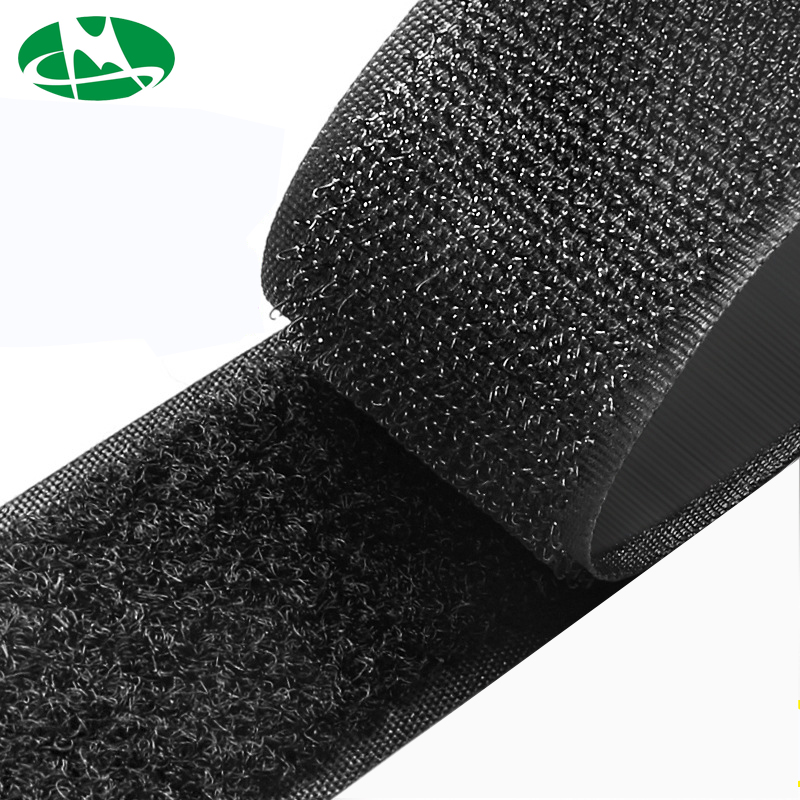
1. Find the separation before changing the tape
A self-adhesive closure has several connections: adhesive to each mounting surface, adhesive to its backing, and hooks engaged with loops. Look at all of them. A detached strip covered with paint flakes suggests that the finish came away. Adhesive remaining on both faces suggests a different failure from a clean release at one surface.
| What you see | Check first |
|---|---|
| Mated strips lift together | Adhesive contact with the mounting surfaces |
| Both strips stay attached but open | Engagement, overlap and opening direction |
| Paint or fibres come away | Strength of the surface layer |
| One edge starts lifting during opening | Local peel force and edge contact |
These observations narrow the investigation; they do not prove a cause by themselves. Record whether the problem occurred during installation, while carrying a load, or when the closure was opened.
2. Check the actual mounting surface
Identify the surface that touches the adhesive. A painted metal panel presents a paint finish, not bare metal. A fabric may have a water-repellent treatment, and a moulded plastic may carry processing residue. Material names alone do not establish that an adhesive will bond well.
Use a cleaning method compatible with the surface and the selected adhesive. Remove contamination, allow the surface to dry, and avoid touching the exposed adhesive. Press the strip evenly against a supported surface using the supplier's application instructions. Do not assume that firm pressure on a soft, unsupported fabric creates the same contact as pressure on a rigid panel.
If a coating flakes or fibres pull away, resolve that surface problem before repeating the bond. For a textile that cannot support an adhesive-backed strip, ask whether a sew-on construction or another attachment method is more appropriate.
3. Look at the load and the area actually engaged
Measure the overlap of the two strips when the part is closed. A long strip with only its end engaged does not provide the same contact area as a fully aligned pair. Check that the hooks meet the loops across the intended width rather than touching an edge or bridging a curve.
Then watch how the part moves. Sliding force along the joint, a straight pull away from it, and peeling from one corner are different loading conditions. A flexible cover can turn an ordinary opening action into concentrated peel at the adhesive edge.
Try opening the closure while supporting the mounted strip, then compare that motion with the intended use. If lifting always starts at the same corner, review access, edge contact and the opening path. Adding area may help a tested design, but strip dimensions alone cannot establish a safe holding load. Check the complete mounted closure.
4. Rebuild a controlled sample
Use the actual substrate, finish and closure pair. Changing the adhesive, cleaning method and strip layout together makes it difficult to learn which change helped.
- Record the starting condition. Note the tape grade, surface, strip dimensions, application method and where the previous sample separated.
- Mount the replacement consistently. Follow the selected grade's pressure, application-temperature and waiting-time instructions before loading or opening it.
- Check full engagement. Align the mating strips and press the closure together across its working area.
- Repeat the real movement. Include opening, closing and the expected loading direction, then inspect both the bond and the hook-and-loop faces.
- Compare after exposure. Where relevant, repeat the inspection after the planned storage, cleaning or environmental sequence.
A sample that survives its first closure has not demonstrated repeated-use performance. Keep the acceptance criteria tied to the part's intended job.
5. Select the replacement by construction
Specify the hook and loop as a mating pair, the backing attachment, the two mounting surfaces and the required opening motion. Check whether the quotation includes both halves. For adhesive-backed supply, confirm the adhesive grade, liner and supplied strip format.
The JIAOTAOTAO self-adhesive hook and loop range lists nylon/polyester and acrylic-adhesive options. Confirm the offered combination before sampling; a family listing does not make every variant suitable for the same surface or load.
Questions about hook and loop tape adhesive failure
Why does the tape come off when I open the closure?
The opening motion may peel the mounted strip before the hooks release. Check the separation surface, adhesive contact, waiting time and opening direction. Support the strip during a comparison trial to see whether the motion changes where lifting begins.
Will a wider strip fix the problem?
Only if the added width is properly bonded and engaged, and the complete joint passes the required trial. Extra width cannot repair loose paint, contamination or a poorly matched adhesive.
Can self-adhesive hook and loop be used on fabric?
Some combinations may be suitable, but fabric texture, treatments, flexibility and cleaning need checking. Test the actual fabric. A sew-on version may be more appropriate where the adhesive cannot form a dependable attachment.
How long should I wait before opening it?
Use the waiting time specified for the exact adhesive and application conditions. There is no single waiting period that applies to every hook and loop tape. Include that interval in the sample record.
Send the failure evidence with your enquiry
For a JIAOTAOTAO hook and loop tape enquiry, send photographs of both separated faces, the mounting materials, overlap dimensions and opening motion. Include the proposed quantity and supply format. That gives the material review a useful starting point before another sample is chosen.
Anti Slip Tape Peeling on Concrete: What to Check First
How to Prevent Polyimide Tape Residue After PCB Reflow
Related Article

Need help choosing the right industrial tape?
Send us your application details, including temperature, surface material, size, quantity and current problem. Our team will help recommend a suitable tape material or custom die-cut solution.

simon@jiaotaotao.com


+86-136 1277 5969


+86-136 1277 5969
