
High Temperature Resistant Tape Guide for PET Tape Applications (2026)
High Temperature Resistant Tape Guide (2026 Industrial Buying Guide)
High temperature resistant tape is an engineered adhesive tape designed to maintain adhesion, dimensional stability, and surface protection under elevated process temperatures. In many industrial applications, PET tape—also known as polyester tape—is selected because it combines heat resistance, electrical insulation, clean removal, and mechanical durability in a thin, stable film structure.
Direct Answer
What is high temperature resistant tape? It is a pressure-sensitive adhesive tape built for masking, insulation, holding, or protection in processes involving heat, solvents, or thermal cycling. In electronics, powder coating, plating, coil wrapping, and precision masking, PET tape is one of the most widely used options because polyester film offers a balanced combination of thermal endurance, dielectric performance, tensile strength, and process cleanliness.
Quick Facts
| Item | Typical PET High Temperature Tape Data |
|---|---|
| Material Type | Polyester film (PET) |
| Adhesive System | Silicone adhesive or acrylic adhesive |
| Temperature Resistance | Silicone PET tape: typically up to 220°C short term / around 150°C continuous; acrylic PET tape: typically 180°C short term / around 150°C long term |
| Dielectric Strength | Typically used for electrical insulation; some PET tape constructions are rated around 4–10 kV/mm depending on design |
| Core Industrial Uses | Powder coating masking, painting, plating, PCB/FPC protection, transformer and coil insulation, splicing, lamination, temporary holding |
- What is PET Tape
- Why PET Tape is Used for Industrial Applications
- Key Types of PET Tape
- Factors That Affect High Temperature Resistant Tape Performance
- PET Tape Specifications and Technical Data
- Industrial Applications of PET Tape
- How to Choose the Right PET Tape
- Where to Buy High-Quality PET Tape
- FAQ
- Conclusion & Industrial CTA

What is PET Tape
PET tape is an industrial adhesive tape constructed from polyester film backing coated with a pressure-sensitive adhesive, most commonly silicone or acrylic. In high-temperature manufacturing, PET film is valued because it has excellent dimensional stability, low shrinkage during short thermal cycles, high tensile strength, and good dielectric behavior. That combination makes it suitable for both masking and electrical insulation.
From a materials engineering perspective, polyester film functions as the structural carrier. It provides thickness control, tear resistance, and resistance to mechanical distortion. The adhesive layer determines the bonding profile, removability, and process temperature window. Silicone adhesive is generally preferred where cleaner removal, better high-temperature tolerance, and stronger performance on difficult substrates are required. Acrylic adhesive is commonly selected when the application requires stable long-term adhesion, cost control, and compatibility with many plastics and metal surfaces.
In practical factory use, high temperature resistant PET tape is not limited to one sector. It appears in electronics assembly, transformer manufacturing, lithium battery insulation, powder coating lines, plating operations, and automotive component processing. Because the film is thin and uniform, it is also widely converted into die-cutting parts for precise protection, insulation pads, and assembly masking shapes.
Technical summary: PET tape is a polyester-film adhesive tape designed for heat-resistant masking, electrical insulation, lamination, and process protection. Its industrial value comes from the balance of thermal stability, conformability, electrical insulation, clean removal, and residue control.
Why PET Tape is Used for Industrial Applications
High dielectric strength
One of the main reasons industrial buyers choose polyester tape is its role in electrical insulation. PET film is widely used in electrical systems because it can separate conductive elements while maintaining a thin profile. In coils, transformers, motors, battery packs, and PCB assembly, this insulation function is critical for reliability and safety. When paired with the right adhesive system, PET tape helps prevent shorting, supports dielectric separation, and enables compact component design.
Excellent heat resistance
High temperature resistant tape must tolerate process heat without excessive shrinking, lifting, or adhesive failure. PET tape is widely used in masking and insulation because it can endure elevated temperatures during powder coating, reflow-related protection tasks, painting, or other thermal cycles. Silicone-based PET constructions are especially relevant where short-term exposure may exceed 200°C. This gives engineers a practical option between general-purpose masking tapes and higher-cost specialty films.
Chemical stability and solvent resistance
Industrial processes frequently involve flux residues, cleaning chemicals, plating solutions, oils, and solvents. Polyester film offers strong chemical resistance compared with many paper-based substrates. That resistance helps maintain tape integrity during temporary masking and process protection. Where surface finish matters, a tape that resists solvent attack and still removes cleanly supports better yield and lower rework cost.
Mechanical durability
PET film is mechanically strong for its thickness. It has good tensile strength, stable elongation behavior, and low risk of tearing during unwinding or removal. This matters in automated production lines where tape must unwind smoothly, hold edge definition, and remain dimensionally consistent. In converting operations, that durability also improves performance during slitting, rewinding, and die-cutting.

Key Types of PET Tape
Industrial PET tape is not a single specification. Buyers should distinguish tape constructions by adhesive chemistry, sidedness, and functional coating.
1. Silicone adhesive single-sided PET tape
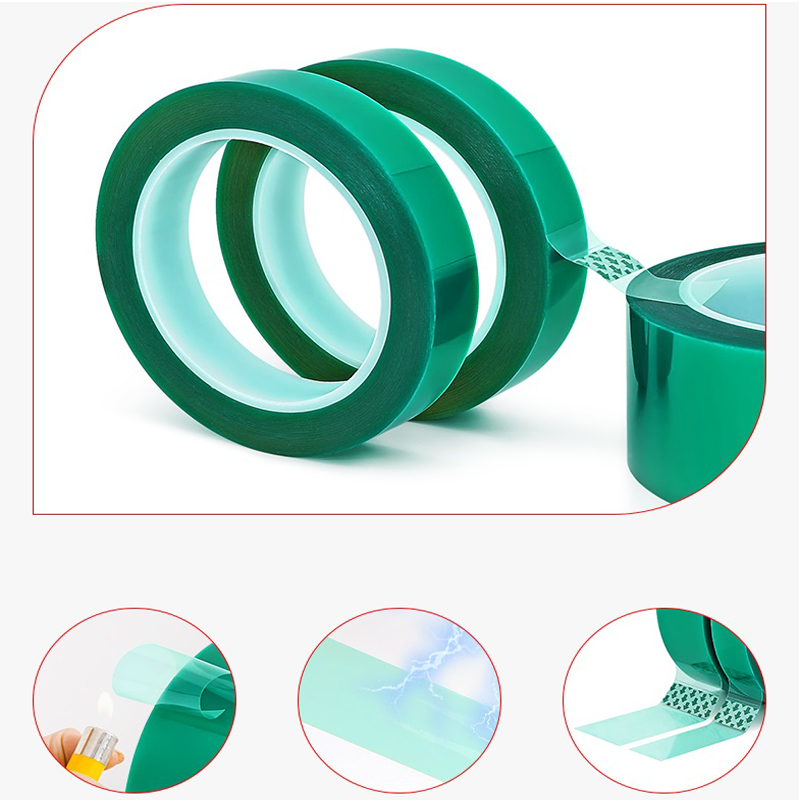
This is one of the most common forms of high temperature resistant tape. It is designed for masking and insulation tasks where clean removal, high heat tolerance, and good process stability are required. It is commonly used in powder coating, painting, plating, solder-related protection, and coil wrapping. For the user’s product direction, a 0.06 mm green PET polyester tape normally falls into this industrial category.
2. Acrylic adhesive single-sided PET tape
Acrylic PET tape is often selected when the application needs strong adhesion, stable aging performance, and lower process temperatures than silicone systems. It is common in insulation, lamination, nameplates, membrane switches, and decorative or structural holding. Acrylic systems can also meet flame-related or compliance-oriented requirements depending on the tape design.
3. Double-sided PET tape
Double-sided PET tape is built for bonding and assembly rather than only masking. It is widely used for display parts, foam lamination, panel bonding, switch components, and lightweight industrial fixing. Depending on the adhesive, it may provide better holding power, better heat resistance, or better compatibility with smooth plastics and metals.
4. Anti-static PET tape
In ESD-sensitive environments, anti-static PET tape helps reduce electrostatic buildup during handling, packaging, and component protection. It is commonly used in semiconductor packaging, cleanroom-related assembly, and electronic device transport where static control is required.
Factors That Affect High Temperature Resistant Tape Performance
The term high temperature resistant tape sounds simple, but actual field performance depends on several technical variables.
Thickness
Thickness affects mechanical strength, conformability, insulation capacity, and handling. Thinner constructions may offer sharper edge masking and better flexibility, while thicker constructions may provide stronger insulation, easier handling, and more robust protection. A 0.06 mm PET tape is often chosen as a balanced industrial grade because it remains thin enough for clean masking while still offering practical durability.
Backing material quality
Not all polyester films behave identically. Film uniformity, dimensional control, surface treatment, and tensile properties all influence tape consistency. Higher-quality backing improves slit accuracy, cleaner unwind, reduced edge curling, and better stability during heat exposure.
Adhesive type: acrylic vs silicone
Silicone adhesive is usually preferred for higher peak temperatures, cleaner residue-free removal, and stronger performance in masking and insulation processes. Acrylic adhesive is often selected for stronger permanent bonding, cost efficiency, and solid adhesion on metals and many plastics. Engineers should choose the adhesive according to substrate, dwell time, temperature, and removability requirements.
Temperature rating
Temperature claims must be read correctly. Industrial tapes often list both continuous temperature resistance and short-term peak temperature resistance. A tape that survives 220°C for 30 minutes is not automatically suitable for long-term service at 220°C. Procurement teams should match the rating to the real process profile, including heat-up rate, dwell time, cooling cycle, and number of cycles.
Important buying point: Temperature resistance alone is not enough. A correct tape specification must also consider adhesive residue, substrate compatibility, dielectric requirement, peel strength, and whether the tape is intended for temporary masking or permanent bonding.
PET Tape Specifications and Technical Data
The table below summarizes typical technical data for industrial PET tape constructions based on common polyester tape formats used in masking and insulation. Exact values should be confirmed against the supplier’s latest technical data sheet for the selected model.
| Parameter | Silicone Adhesive PET Tape (Typical Industrial Grade) | Acrylic Adhesive PET Tape (Typical Industrial Grade) |
|---|---|---|
| Thickness | 0.038 mm – 0.15 mm; common masking grade 0.05 mm – 0.06 mm | 0.038 mm – 0.15 mm |
| Backing Material | PET polyester film | PET polyester film |
| Adhesive Type | Silicone | Acrylic |
| Temperature Resistance | About 150°C continuous; up to 220°C short term, some grades higher for brief cycles | About 150°C long term; about 180°C short term |
| Tensile Strength | Typically ≥60 to ≥150 N/25 mm depending on thickness | Typically 90 – 180 N/25 mm depending on thickness |
| Elongation | Typically ≥80% to ≥120% | Application-specific; typically moderate elongation with good dimensional stability |
| Dielectric Strength | Used for insulation applications; confirm model-specific value with supplier | Typically around 4 – 5 kV/mm in standard industrial grades |
| Peel Adhesion | Typically 600 – 1500 g/25 mm depending on grade | Typically 600 – 1800 g/25 mm depending on grade |
| Typical Color Options | Green, transparent, blue, red, yellow, amber, black, white and custom colors | Yellow, transparent, green, red, black, blue, rose red, amber and others |
| Typical Compliance | Varies by model; RoHS / REACH options common | RoHS, REACH, UL94 VTM-2 in selected grades |
For buyers sourcing a 0.06 mm green PET polyester tape, the most relevant questions are whether the tape uses silicone or acrylic adhesive, what peak temperature it must withstand, whether the application requires residue-free removal, and whether electrical insulation performance is part of the design requirement.

Industrial Applications of PET Tape
Powder coating and painting masking
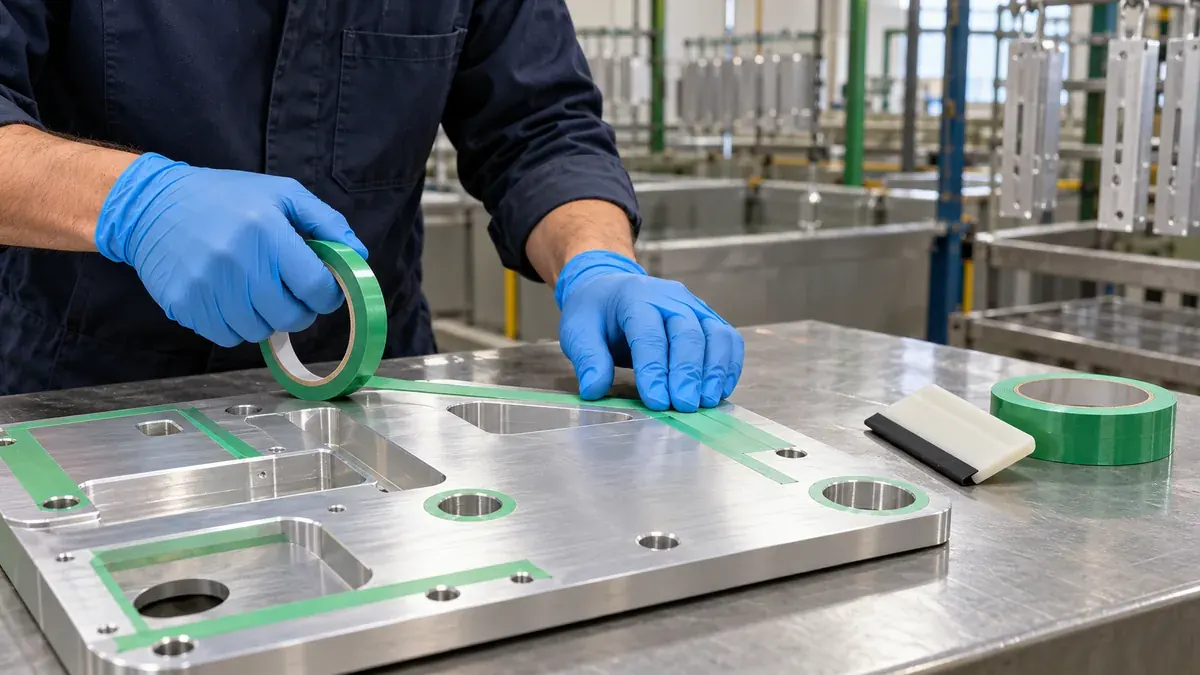
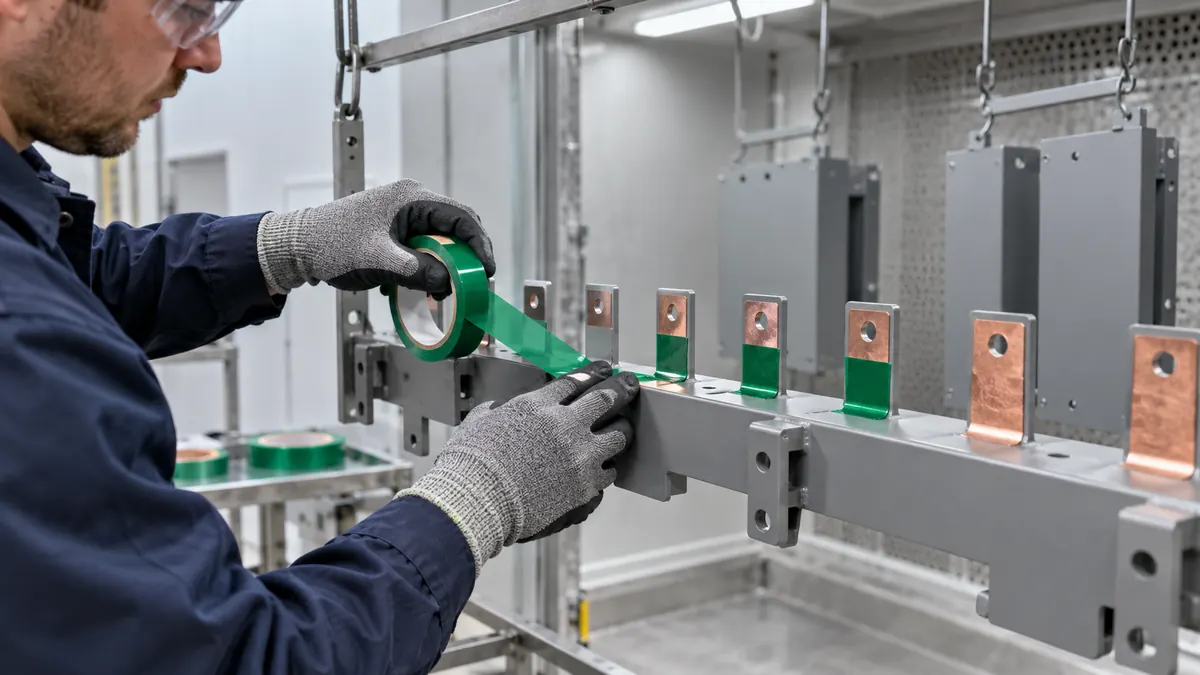
In coating operations, PET tape is used to protect threads, holes, edges, and selected contact zones from paint or powder deposition. Polyester film provides crisp edge definition, while silicone adhesive versions can often remove cleanly after the heating cycle. This improves finish quality and reduces secondary cleaning.
PCB, FPC, and electronics protection
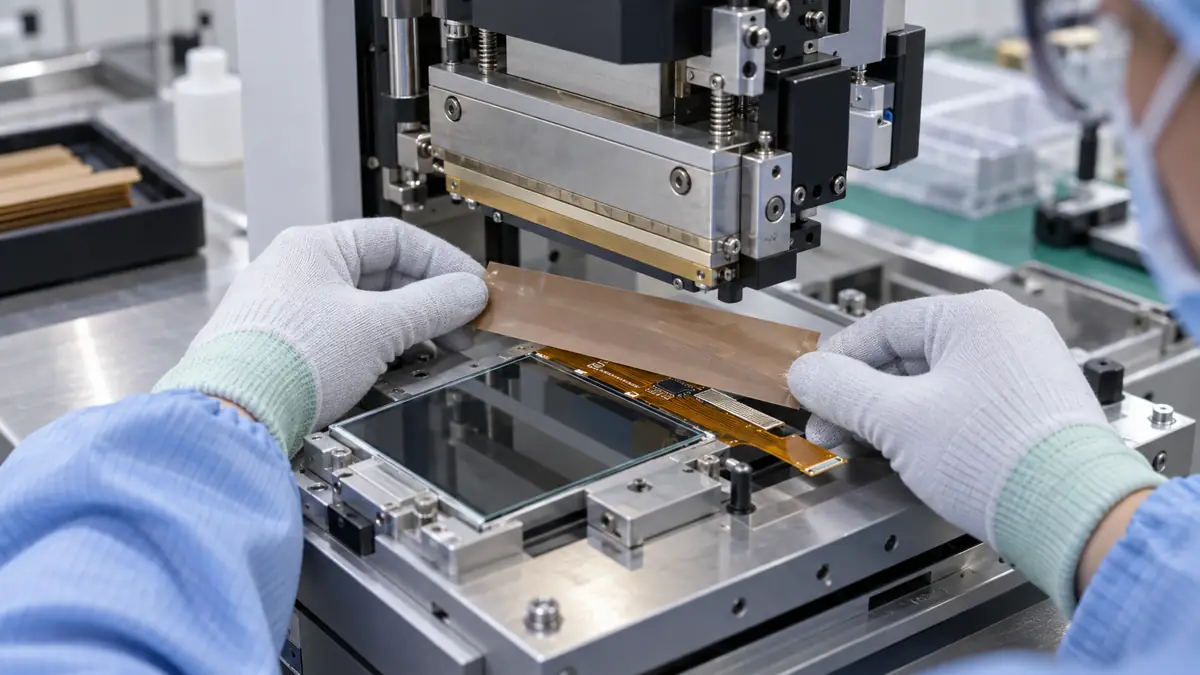
Electronics manufacturers use PET tape for temporary protection, insulation, and part fixing. It can assist in masking sensitive zones during processing, holding components during assembly, and separating conductive surfaces. Where anti-static behavior is necessary, ESD PET tape variants are also available.
Transformer, motor, and coil insulation
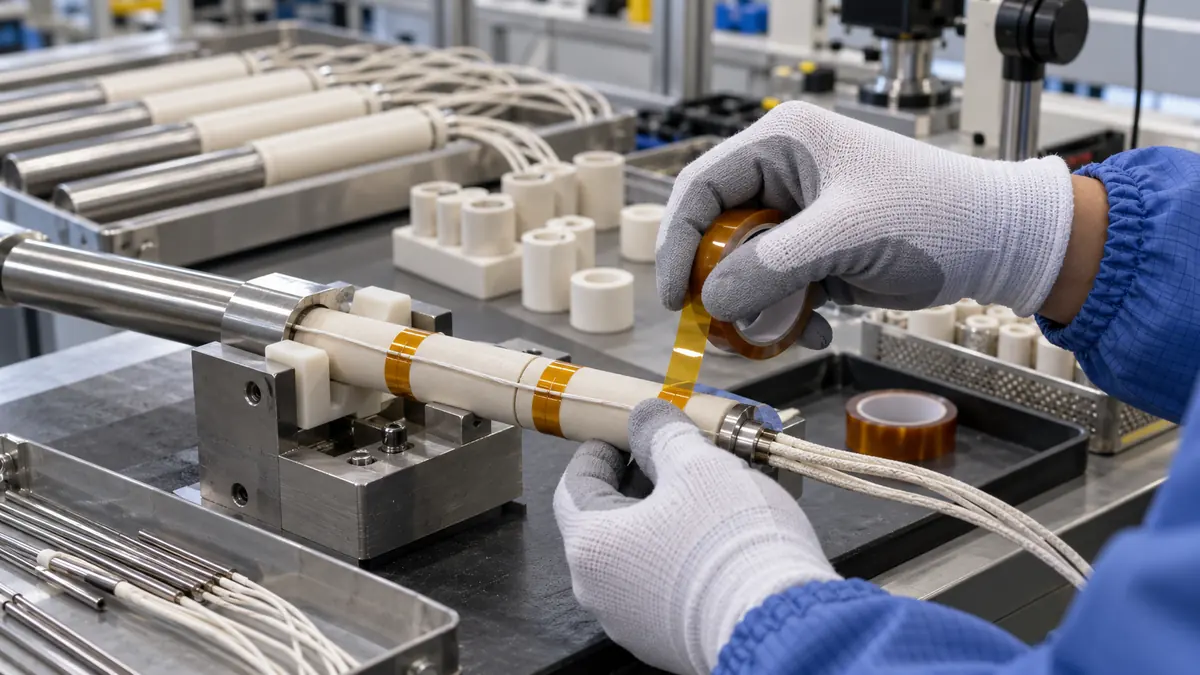
PET tape is widely used in electrical equipment because it combines a thin profile with good mechanical strength and dielectric support. It is suitable for coil wrapping, layer insulation, lead fixing, and general electrical assembly where compact structure and reliable insulation are required.
Plating and surface treatment
Electroplating and metal finishing operations need tapes that withstand chemical exposure and process heat while maintaining masking integrity. PET tape can be used for selective coverage and surface protection, particularly where accurate masking lines and clean removal matter.
General industrial splicing and lamination
In converting, packaging, and component manufacturing, PET tape can be used for splicing, membrane switch assembly, label lamination, foam bonding, and temporary holding. Double-sided PET constructions are especially useful when a thin bonding layer is required without rivets or screws.
How to Choose the Right PET Tape
Step 1: Confirm operating temperature
Start with the real thermal profile. Identify continuous temperature, short-term peak temperature, dwell time, and cycle count. If the process involves powder coating, baking, or high-heat masking, silicone PET tape is often the better choice. If the requirement is moderate-temperature bonding, acrylic PET tape may be sufficient.
Step 2: Choose backing thickness
Select thickness according to the process. A thinner tape improves conformability and precision masking, while a thicker tape may deliver better handling and insulation. A 0.06 mm PET tape is a practical middle option for many industrial masking and protection jobs.
Step 3: Select adhesive type based on substrate
For clean removal from metals, coated parts, or high-temperature process surfaces, silicone adhesive is commonly preferred. For stronger permanent bonding to plastics, films, and smooth industrial substrates, acrylic adhesive may be more appropriate. Always test on the actual substrate, especially if the surface contains coatings, oils, or release agents.
Step 4: Evaluate manufacturer certifications
Industrial buyers should review whether the manufacturer can provide compliance data, process control, and converting support. Depending on the application, relevant references may include RoHS, REACH, UL-related ratings, and test methods such as ASTM D3330 for peel adhesion. Consistent slitting, rewinding, and custom die-cutting capability are also important when the tape will be integrated into production.
For buyers evaluating product options, the following internal resources are relevant: polyester tape category for industrial masking and insulation, 0.06mm green PET polyester tape for process masking applications, and the industrial adhesive tape manufacturer homepage.
Where to Buy High-Quality PET Tape
When sourcing high temperature resistant tape for industrial use, procurement teams normally need more than a standard roll specification. They need a supplier that can support batch consistency, converting accuracy, and custom dimensions. That is particularly important when PET tape is used in automated masking, insulation wrapping, display assembly, or die-cut component production.
A qualified B2B supplier should be able to offer:
- Bulk purchase available for OEM and industrial production planning
- Custom width and length for process compatibility
- Die-cutting and custom converting for shaped insulation and masking parts
- Industrial OEM manufacturing based on adhesive, thickness, and color requirements
- Global shipping support for distributors, manufacturers, and project buyers
For a PET tape project, it is advisable to request the supplier’s technical data sheet, sample roll, and application recommendation before volume purchase. That is especially true if the tape must achieve residue-free removal, electrical insulation, conformability, or high-temperature masking consistency across multiple process cycles.
For reference on testing and certification frameworks, buyers may also review ASTM standards and UL certification resources when assessing product qualification and process validation requirements.
FAQ
Is PET tape heat resistant?
Yes. PET tape is widely used as a high temperature resistant tape in industrial masking and insulation. Exact performance depends on adhesive type and thickness. Silicone adhesive PET tape generally tolerates higher short-term process temperatures than acrylic grades and is commonly used for coating, plating, and electronics protection.
What is PET tape used for in industry?
PET tape is used for powder coating masking, painting protection, PCB and FPC insulation, transformer and motor coil wrapping, plating masking, lamination, splicing, and temporary holding. Double-sided versions are also used for component bonding, foam lamination, and display or panel assembly.
What is the difference between silicone PET tape and acrylic PET tape?
Silicone PET tape usually offers better high-temperature performance and cleaner removal after thermal processing. Acrylic PET tape often provides stronger permanent adhesion and may be better suited for general insulation, lamination, and assembly. The correct choice depends on temperature, substrate, and whether removal is required.
Can PET tape be used for electrical insulation?
Yes. PET tape is commonly used in electrical insulation because polyester film provides good dielectric support and mechanical stability. It is applied in transformers, coils, motors, batteries, and electronic devices. For critical electrical designs, buyers should confirm dielectric data and compliance requirements for the exact tape model.
Can PET tape be customized for die-cutting?
Yes. PET tape is suitable for die-cutting because polyester film has good dimensional stability and process consistency. Manufacturers commonly convert it into custom shapes for insulation pads, masking patches, battery protection pieces, and precision assembly parts. Thickness, adhesive, liner, roll width, and shape can usually be customized.
Does high temperature resistant PET tape remove without residue?
Many silicone adhesive PET tapes are designed for clean removal after heat exposure, but residue performance depends on substrate type, dwell time, temperature, and surface condition. A qualification test on the actual part is recommended before production, especially for coated metals, plastics, and sensitive electronic surfaces.
How should industrial buyers select the right PET tape specification?
Industrial buyers should confirm operating temperature, choose appropriate thickness, evaluate adhesive compatibility with the substrate, and review technical documents from the manufacturer. Sample testing is important if the project requires masking precision, electrical insulation, flame performance, or long-term process reliability in production environments.
Conclusion & Industrial CTA
High temperature resistant tape is a process-critical material in modern manufacturing, and PET tape remains one of the most practical industrial formats because it balances heat resistance, insulation, mechanical durability, and converting flexibility. For buyers working in electronics, electrical assembly, powder coating, plating, and industrial masking, a well-specified polyester tape can improve product consistency, reduce residue-related defects, and support scalable production.
If the requirement involves 0.06 mm green PET polyester tape for masking, insulation, or custom converting, the next step is to verify the adhesive system, temperature profile, and application substrate with the manufacturer. Sample evaluation and technical sheet review should always come before volume ordering.
Need industrial PET tape for masking, insulation, die-cutting, or OEM converting?
Request a quote or contact the manufacturer directly for product selection, custom width, slit rolls, and die-cut solutions.
View PET Tape Product Range
Check 0.06mm Green PET Polyester Tape
Official Website: www.clothadhesive.com
What Is Heat Resistant Tape? 0.02mm PET Tape Industrial Guide (2026)
Heat Resistant Polyester Tape for Industrial Masking & Insulation
Related Article
Need help choosing the right industrial tape?
Send us your application details, including temperature, surface material, size, quantity and current problem. Our team will help recommend a suitable tape material or custom die-cut solution.

simon@jiaotaotao.com


+86-136 1277 5969


+86-136 1277 5969
