
High Temperature Masking Tape for Automotive Spray Painting | Body Shop Distributor Guide
High Temperature Masking Tape for Automotive Spray Painting | Body Shop Distributor Guide
Introduction: Automotive Refinishing and the Heat Challenge
Modern automotive refinishing is not a room-temperature process. Waterborne basecoats, solvent clearcoats, and two-component primers are force-dried and cured in paint bake ovens at temperatures typically reaching 60–80°C for refinish ovens and up to 150–180°C for OEM or fleet coating operations. Infrared (IR) curing systems can generate localized surface temperatures even higher.
Standard masking tape — the type sold in hardware stores and general paint supply shops — fails in these environments. The rubber adhesive softens, flows, and permanently bonds to paint or metal surfaces. The backing absorbs solvent and becomes saturated, losing dimensional stability. The result is paint bleed, adhesive contamination, and tape that tears on removal instead of lifting cleanly.
For B2B distributors supplying body shops, fleet refinishing operations, and automotive OEM sub-contractors, high temperature masking tape is a high-value, high-volume product category. This guide provides the technical and commercial knowledge to serve this market effectively.
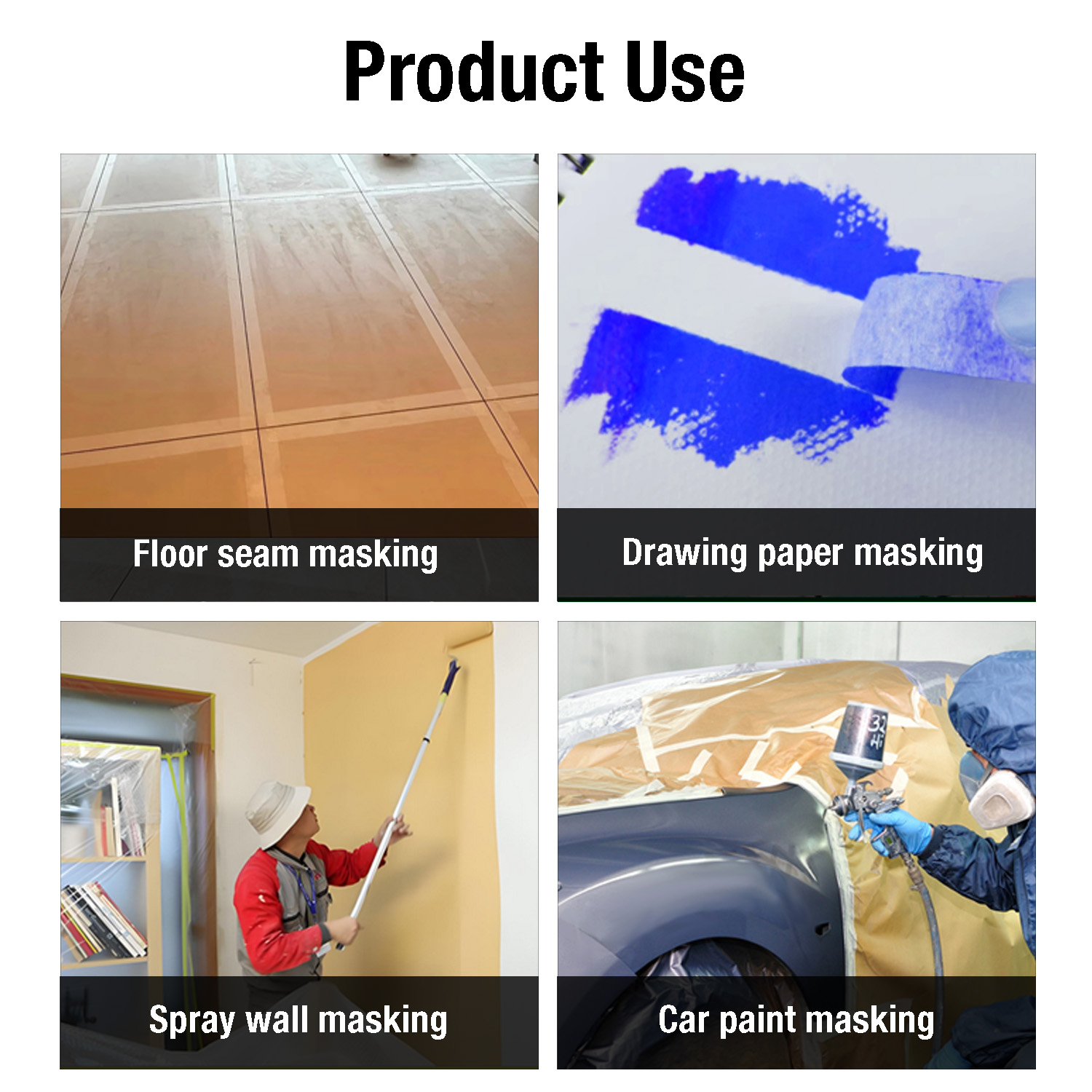
The Automotive Refinishing Process: Temperature Stages That Affect Tape Selection
Understanding each stage of the refinishing workflow helps buyers specify the correct temperature grade:
Stage 1: Surface Preparation (Ambient – 40°C)
Sanding, cleaning, and primer application at ambient or mildly elevated temperatures. Standard masking tape (rubber adhesive, 80–100°C rating) is adequate for this stage.
Stage 2: Primer/Sealer Baking (60–80°C, 20–30 min)
Primers and sealers are often force-dried at 60–80°C. This is the margin at which standard tape begins to fail. Medium-high temperature tape (acrylic adhesive, 120°C rating) is sufficient; silicone tape is the safe specification.
Stage 3: Basecoat Flash-Off (Ambient – 60°C)
Waterborne basecoat requires a flash-off period before clearcoat application — typically with forced air and mild heat. Low to medium temperature exposure; masking tape must maintain adhesion and edge seal.
Stage 4: Clearcoat Baking (60–80°C refinish, up to 140°C OEM)
Two-component clearcoats are cured in paint bake ovens. Refinish operations: 60–80°C. OEM and fleet operations with industrial ovens: up to 140°C. Silicone masking tape rated to 180°C provides safe margin across all automotive bake applications.
Stage 5: IR Curing (Localized Surface Temperatures 100–160°C)
Infrared curing systems are increasingly common in refinish and OEM applications for rapid cycle times. IR creates localized high surface temperatures that can exceed oven air temperature. High temperature silicone tape is required.

Why Silicone Adhesive Masking Tape Is the Correct Specification for Automotive
The Failure Modes of Standard Tape in Automotive Bake Ovens
When standard rubber-adhesive masking tape enters a paint bake oven:
-
Adhesive migration: Rubber adhesive softens at 80°C+ and flows laterally, creating a contamination band at the tape edge. This contamination prevents proper clearcoat adhesion and creates a visible edge defect.
-
Bleed-through: As the adhesive softens, it loses the edge seal, allowing clearcoat to flow beneath the tape and onto masked areas — creating hard, stepped paint edges that require additional correction.
-
Permanent bonding: At temperatures above 100°C, degraded rubber adhesive bonds covalently with paint and primer surfaces. Removal requires solvents, risking paint damage.
-
Backing saturation: Solvent-rich primer and clearcoat environments soften the crepe paper backing, causing it to tear during removal rather than lifting in one piece.
How Silicone Adhesive Solves These Problems
Silicone adhesive is chemically stable at temperatures up to 200°C. It:
- Does not flow or migrate at automotive bake oven temperatures
- Maintains edge seal throughout the cure cycle, preventing bleed-through
- Releases cleanly after cooling without residue transfer to paint or metal
- Does not require solvents for removal — saving labor and reducing chemical exposure
The JTT-HTMT-180 silicone masking tape, rated to 180°C for 30–60 minutes, provides a safe temperature margin above any automotive refinish or OEM bake process.
Key Application Areas in Automotive Refinishing
Door Jambs and Shut Lines
Body repair often involves painting door faces while protecting door jambs and shut lines. These areas require masking that maintains a sharp boundary through bake, since the paint line at shut lines is visible when doors are opened. High temperature tape maintains edge definition through the cure cycle.
Glass and Rubber Trim Protection
Masking windshields, rear glass, side windows, and rubber seals during full vehicle respray requires tape that:
- Adheres to glass (smooth, low-energy surface)
- Maintains adhesion on rubber (flexible surface with varying adhesion)
- Releases cleanly from both surfaces without adhesive residue
Silicone adhesive provides reliable performance on both glass and rubber — substrates where rubber adhesive often fails.
Two-Tone and Stripe Masking
Specialty vehicles, commercial fleet vehicles, and sports cars frequently use two-tone paint schemes or decorative stripes. Masking for two-tone requires: precise edge definition, clean removal, and performance through the full bake cycle of the second color application.
Engine Bay Masking
Engine bay refinishing for restoration and custom vehicle builds requires masking components (wiring, sensors, hydraulic lines) during high-temperature powder coating or engine enamel application. Temperatures in engine bay oven cycles can reach 150–180°C. Silicone masking tape is the only appropriate specification.
Wheel and Rim Refinishing
Alloy wheels are increasingly refinished using powder coat or high-temperature paint systems. Wheel refinishing involves oven cure at 160–180°C, requiring full-spec high temperature masking tape for hub center, valve stem area, and any cosmetic inserts that must be protected.

Product Specifications for Automotive High Temperature Masking Tape
For B2B buyers and distributors, here is the complete specification framework for automotive-grade silicone masking tape:
| Parameter | JTT-HTMT-180 Specification | Application Implication |
|---|---|---|
| Substrate | Crepe paper | Conformable on curved body panels |
| Adhesive | Silicone | Thermally stable, clean removal |
| Thickness | 0.135–0.16 mm | Low profile at paint edge |
| Adhesion | 600–800 g / 25 mm | Secure on metal, glass, rubber |
| Max Temperature | 180°C | Safe margin above all auto bake processes |
| Oven Dwell | 30–60 minutes | Covers complete automotive cure cycles |
| Color | Beige / Green / Custom | Green provides high-visibility masking lines |
| Elongation | Conformable | Adapts to body panel curves |
| Removal | Clean, no residue | No solvent cleaning required post-removal |
Width Selection Guide for Automotive Masking Tape Programs
Body shop distributors need a complete width range to serve varied masking applications:
| Width | Application |
|---|---|
| 12–18 mm | Fine line tape for stripe and two-tone edges; door jamb inner edges |
| 24–36 mm | General body panel masking; glass edge masking |
| 48–50 mm | Wide body panel masking; trim protection |
| 75–100 mm | Large surface coverage; interior protection during external bake |
| 150–200 mm | Hood, roof, and large panel protection |
Fine-line (flexible) versions: For curved trim lines and complex panel geometry, narrow (6–12 mm) flexible silicone tape allows tight radius curves without wrinkles.

The Body Shop Distribution Market: B2B Opportunity Analysis
Market Structure
The automotive refinishing supply market is served through a tiered distribution structure:
- Paint manufacturer distributors: Supply paint, primers, and associated consumables (tape, masking film, abrasives) as a bundled offering
- Specialty auto body supply distributors: Independent distributors focused on body shop consumables
- MRO/industrial distributors: Supply tape across multiple industrial verticals including auto body
High temperature masking tape is a consumable with high replenishment frequency — body shops use tape on every vehicle. A body shop processing 20–30 vehicles per week may consume 20–50 rolls of masking tape per week. This creates a predictable, recurring revenue stream for distributors.
Value Proposition for Distributors
Switching customers from standard masking tape to high temperature silicone tape:
- Eliminates rework caused by tape failure — one prevented rework job covers the cost premium of silicone tape for many production cycles
- Reduces solvent use for removing adhesive residue — improving shop economics and worker safety
- Improves paint quality — cleaner tape removal means fewer edge defects requiring wet sanding and polish
The premium price of silicone masking tape (typically 3–5× the cost of standard rubber tape) is justified by the quality improvement and rework reduction it enables.
Packaging Formats for Auto Body Shop Supply
Individual Rolls (Retail / Counter Supply)
Standard for direct-to-shop supply. 18 mm–50 mm × 50 m rolls, individually wrapped. Allows body shop to purchase by roll or small quantities.
Case Pack (12–24 Rolls)
Standard distributor stocking unit. Consistent carton configuration enables efficient warehouse management and delivery.
Mixed-Width Cases
For body shop accounts using multiple widths simultaneously, mixed-width cases reduce order complexity and storage space at the shop.
Private Label / Custom Branded
Distributors building branded product lines can source JTT-HTMT-180 in custom-branded packaging — differentiating their supply program from commodity competitors.
Sourcing and Supply Chain Considerations for Global Distributors
Minimum Order Quantities
Factory-direct suppliers typically offer:
- Standard stock widths (18 mm, 24 mm, 36 mm): 500–1,000 rolls MOQ
- Custom widths: 1,000–2,000 rolls MOQ per width
- Custom branded: 5,000+ rolls
Lead Times
- Standard product from factory stock: 2–4 weeks
- Custom width / custom color: 4–6 weeks
- Custom branded OEM: 6–8 weeks (includes artwork approval)
Quality Certification
For distributors supplying automotive OEM sub-contractors and fleet operators, ISO 9001 manufacturing certification is typically required. Confirm certification scope covers masking tape production.
REACH Compliance
For EU market distribution, confirm silicone adhesive formulation is REACH compliant and free from restricted substances under SVHC (Substances of Very High Concern) list.
Conclusion: High Temperature Masking Tape Is a Quality-Critical Consumable
In automotive refinishing, masking tape failure is not a minor inconvenience — it creates rework that costs multiples of the tape saving. High temperature silicone masking tape, specified correctly and sourced reliably, is a competitive advantage for the body shops that use it and the distributors that supply it.
For B2B distributors targeting the automotive refinishing and vehicle finishing market, the JTT-HTMT-180 silicone masking tape — rated to 180°C for 30–60 minutes with clean removal and conformable crepe paper backing — represents a technically complete, commercially compelling product to anchor your high-temperature tape offering.
Related Articles:
- High Temperature Masking Tape for Powder Coating: Industrial Oven Masking Guide
- Artists Masking Tape for Professional Studio and Fine Art Applications
- UV Masking Tape for Automotive Outdoor Storage and Weatherproofing
Product Reference: JTT-HTMT-180 Silicone Masking Tape — 180°C Rated
PE Foam Tape: 2026 Industrial Buying Guide for Engineers & Procurement Managers
High Temperature Masking Tape for Powder Coating | 180°C Silicone Tape Industrial Guide
Related Article
Need help choosing the right industrial tape?
Send us your application details, including temperature, surface material, size, quantity and current problem. Our team will help recommend a suitable tape material or custom die-cut solution.

simon@jiaotaotao.com


+86-136 1277 5969


+86-136 1277 5969
