
Acetate Cloth Tape for Toroidal Transformer Core Wrapping
Acetate Cloth Tape for Toroidal Transformer Core Wrapping
Acetate cloth tape for toroidal transformer core wrapping provides a conformable textile layer around a circular core, winding transition, lead exit, or finished coil assembly. It can support handling, surface protection, bundling, and selected insulation functions when specified as part of the transformer design. Tape width, overlap, tension, edge coverage, adhesive, varnish compatibility, and finished dimensions should be validated together.

Key Takeaways
- Define whether the tape is a core cushion, winding wrap, lead-exit reinforcement, holding layer, or outer finish.
- Select tape width from the toroid geometry and wrapping access, not from roll availability alone.
- Control overlap and tension so the finished build remains even without distorting windings or narrowing the center opening.
- Qualify the complete transformer construction with the specified electrical, thermal, chemical, and mechanical tests.
Where Acetate Cloth Tape Fits on a Toroidal Transformer
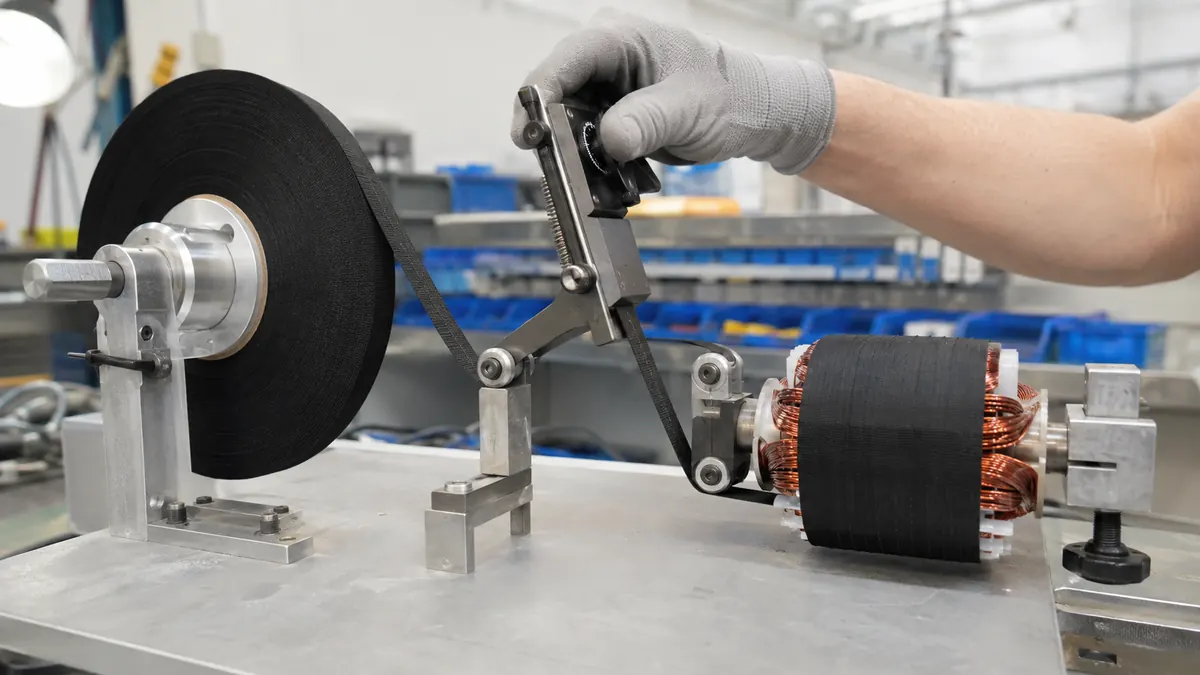
Toroidal transformers use a ring-shaped magnetic core with windings distributed around the circumference. Depending on the design, tape may be applied before winding to cushion or isolate the core surface, between winding stages to hold an insulation layer, around lead transitions, or as an outer wrap that protects the completed coil during handling and assembly.
Acetate cloth tape is attractive where a woven backing must conform around curves and remain easy to tear or place. The textile structure can provide a soft handling surface compared with a stiffer film, while the adhesive holds the wrap during production. Those practical advantages do not define an electrical or thermal rating; the exact tape must be evaluated within the released insulation system.
Wrap Locations and Design Questions
| Wrap location | Typical purpose | Questions to confirm |
|---|---|---|
| Bare core wrap | Cushioning, edge coverage, or holding a specified barrier | Core coating, edge radius, center opening, layer count, and winding pressure |
| Interlayer or stage holding | Keep insulation or winding sections organized during assembly | Electrical role, overlap, added build, adhesion, and next-process compatibility |
| Lead exit | Bundle, position, or protect a localized transition | Lead insulation, bend radius, strain, spacing, and exposed adhesive |
| Outer winding wrap | Handling protection, containment, appearance, or holding before impregnation | Coverage, tension, varnish wetting, dimensional limit, and mounting interface |
| Localized patch | Protect a defined contact point or hold a component | Patch shape, edge lift, local pressure, liner, and repeatable placement |
RFQ and Selection Inputs
| Input | Information to provide | Why it matters |
|---|---|---|
| Toroid geometry | Outside diameter, inside diameter, height, corner radius, and available center opening | Defines usable tape width and wrapping path |
| Surface | Core coating, existing insulation, magnet wire, varnish state, and cleanliness | Controls adhesion and the risk of surface damage |
| Tape function | Cushioning, holding, bundling, protection, insulation-system layer, or appearance | Prevents a general cloth tape from being assigned an undefined role |
| Thermal sequence | Drying, impregnation cure, operating temperature, cycles, and hot-spot conditions | Guides backing and adhesive qualification |
| Chemicals | Varnish or resin, cleaners, oils, humidity, and expected service contaminants | May change adhesion, softness, color, and dimensional behavior |
| Wrap method | Manual or machine, tape width, overlap, tension, turns, start, finish, and termination | Controls final build and repeatability |
| Finished limits | Maximum outside diameter, minimum center opening, lead position, mounting clearance, and appearance | Connects the wrap process to final assembly fit |
How to Choose Tape Width and Overlap
Balance coverage with conformity
A wide tape covers more area per pass but has to travel around both the outer and inner circumferences. On a small toroid it may wrinkle near the center opening or bridge a radius. A narrower tape conforms more easily but increases the number of overlaps and the potential for build variation. Trial widths should be compared on the actual core geometry.
Set overlap from the required function
Overlap affects coverage, final thickness, stiffness, varnish access, and material consumption. A visual outer wrap may use a different pattern from a layer defined by an insulation-system drawing. Document the target overlap and its tolerance in the work instruction rather than relying on operator judgment.
Control tension around the center opening
Excessive tension can compress windings, move insulation, pull leads, or create a hard edge at the termination. Insufficient tension can leave wrinkles and loose areas. Use a repeatable hand technique or machine setting and inspect the finished outside diameter and center opening.
Protect lead exits and terminations
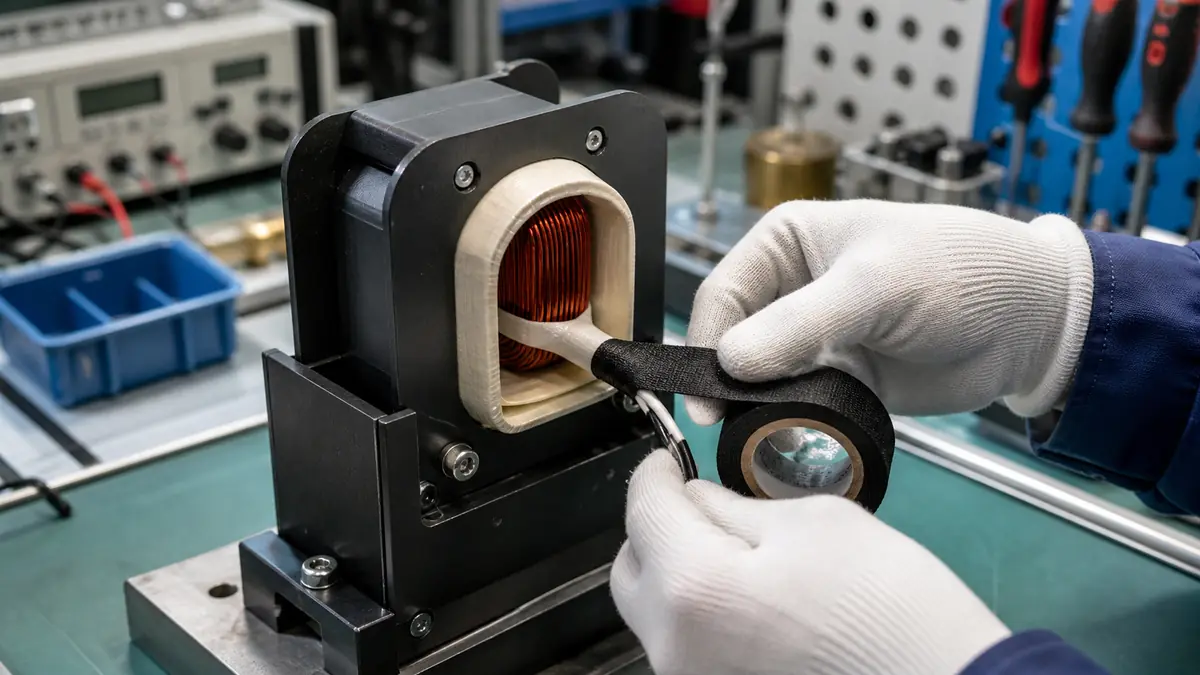
Keep tape edges from creating a sharp fold at a lead exit. Define the lead bend radius, spacing, exit direction, reinforcement, and tape termination. Exposed adhesive, lifted corners, or a bulky knot can interfere with impregnation or mounting.
Recommended Wrapping and Validation Workflow
- Confirm the construction drawing. Identify every tape location and state its mechanical, production, and electrical role.
- Inspect the toroid. Check core coating, edge condition, winding placement, lead exits, cleanliness, and dimensional limits.
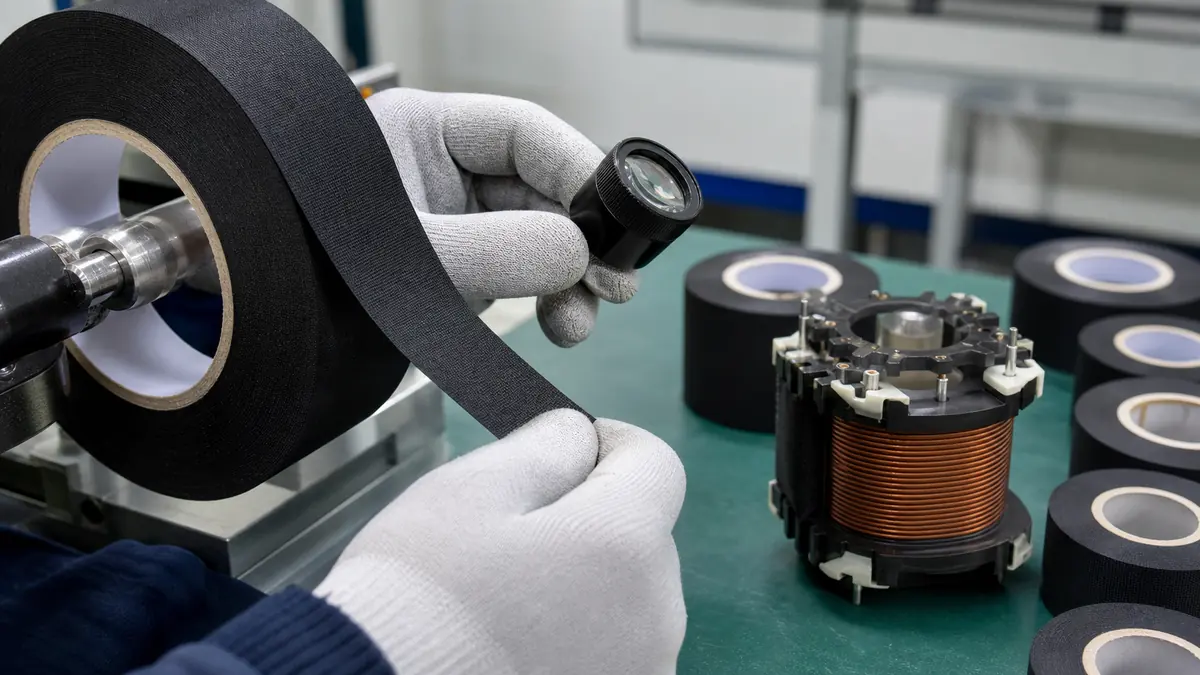
- Screen tape samples. Compare backing weave, thickness, adhesive, width, color, unwind, and tear behavior through the real process.
- Define the wrap pattern. Set start point, direction, overlap, tension, number of passes, lead handling, and termination.
- Measure the finished build. Record outside diameter, center opening, height, lead position, and any mounting contact area.
- Run impregnation or cure. Evaluate wetting, bubbles, discoloration, edge lift, adhesive movement, and dimensional change.
- Inspect and test the transformer. Complete the manufacturer's electrical, thermal, vibration, noise, handling, and aging sequence.
- Release controlled materials. Specify the tape code, width, roll format, wrap instruction, storage, lot traceability, and change control.
Failure-Mode Review
| Observed issue | Tape checks | Process checks |
|---|---|---|
| Wrinkles near the center opening | Width, backing conformability, thickness, and adhesive grab | Wrap angle, tension, overlap, core radius, and operator access |
| Outer diameter exceeds the limit | Tape caliper, adhesive thickness, overlap build, and number of layers | Wrap pattern, winding variation, measurement point, and compression |
| Edge lifts after varnish cure | Adhesive compatibility, termination length, backing saturation, and thermal exposure | Surface condition, tension, cure fixture, dwell, and lead movement |
| Lead position changes | Tape width, local patch geometry, and adhesive hold | Lead bend, wrap direction, pulling force, fixture, and handling |
| Loose fibers or debris appear | Cut edge, backing finish, roll quality, and packaging | Hand tearing, tools, workstation control, storage, and inspection |
Use published tape data only as a screening reference. Final approval must cover the exact acetate cloth construction, transformer materials, wrapping process, impregnation chemistry, electrical design, and service conditions.
Related Products and Articles
- Browse the acetate cloth tape product family.
- Review common acetate cloth tape uses and selection factors.
- Compare a higher-temperature film option in the polyimide tape product guide.
- Send the toroid drawing and wrapping process for a tape-width review.
Frequently Asked Questions
Why is acetate cloth tape used on toroidal transformers?
Its woven backing can conform around circular geometry and support holding, bundling, surface protection, or a specified insulation-system function. The exact role must be defined and qualified in the transformer design.
What tape width is best for a toroidal core?
Width depends on the outside and inside diameters, core height, corner radii, access, wrap function, and allowed overlap. Trial several widths on the real core and compare wrinkles, build, and cycle time.
Can acetate cloth tape be impregnated with varnish?
Compatibility depends on the exact backing, adhesive, varnish chemistry, cure profile, and transformer process. Evaluate wetting, adhesion, bubbles, dimensional change, and electrical performance through the full sequence.
Should the tape be hand-torn or cut?
A controlled cutting method generally improves termination consistency and reduces loose fibers. If hand tearing is allowed, define the approved technique and inspect the edge condition and debris risk.
What information is needed for a tape recommendation?
Provide the toroid dimensions, surfaces, tape function, temperature and cure profile, varnish or chemicals, wrap pattern, finished dimensional limits, quantity, and qualification requirements.
Prepare a Toroidal Transformer Wrap Trial
Share the core and winding dimensions, tape location, insulation role, varnish system, thermal sequence, wrap pattern, width limits, quantity, and acceptance tests. JIAO TAO TAO can help prepare acetate cloth tape samples in practical slit widths for your own transformer validation.
Contact the technical team about toroidal transformer core wrapping.
Acetate Cloth Tape for Ignition Coil Wrapping
Acetate Cloth Tape for Relay Coil Wrapping and Insulation
Related Article
Need help choosing the right industrial tape?
Send us your application details, including temperature, surface material, size, quantity and current problem. Our team will help recommend a suitable tape material or custom die-cut solution.

simon@jiaotaotao.com


+86-136 1277 5969


+86-136 1277 5969
