
Acetate Cloth Tape for Film Capacitor Outer Wrapping
Acetate Cloth Tape for Film Capacitor Outer Wrapping
Acetate cloth tape for film capacitor outer wrapping can provide a conformable retaining and protective layer around selected wound-film capacitor packs before lead dressing, case insertion, potting, or final assembly. It does not define the capacitor's electrical rating or automatically provide a certified insulation system. Tape grade, adhesive, thickness, wrap pattern, process heat, impregnation materials, and end-product requirements must be reviewed together.

Key Takeaways
- Define whether the wrap retains the winding, protects an edge, controls handling, or separates the pack from a later assembly.
- Confirm compatibility with film, foil, paper, impregnant, potting compound, case material, and cleaning process.
- Specify width, overlap, tension, end position, and lead keep-outs on the work instruction.
- Do not infer flammability, dielectric, or thermal-class compliance from tape color or generic product names.
- Qualify the complete capacitor construction and manufacturing sequence.
What the Outer Wrap Is Intended to Do
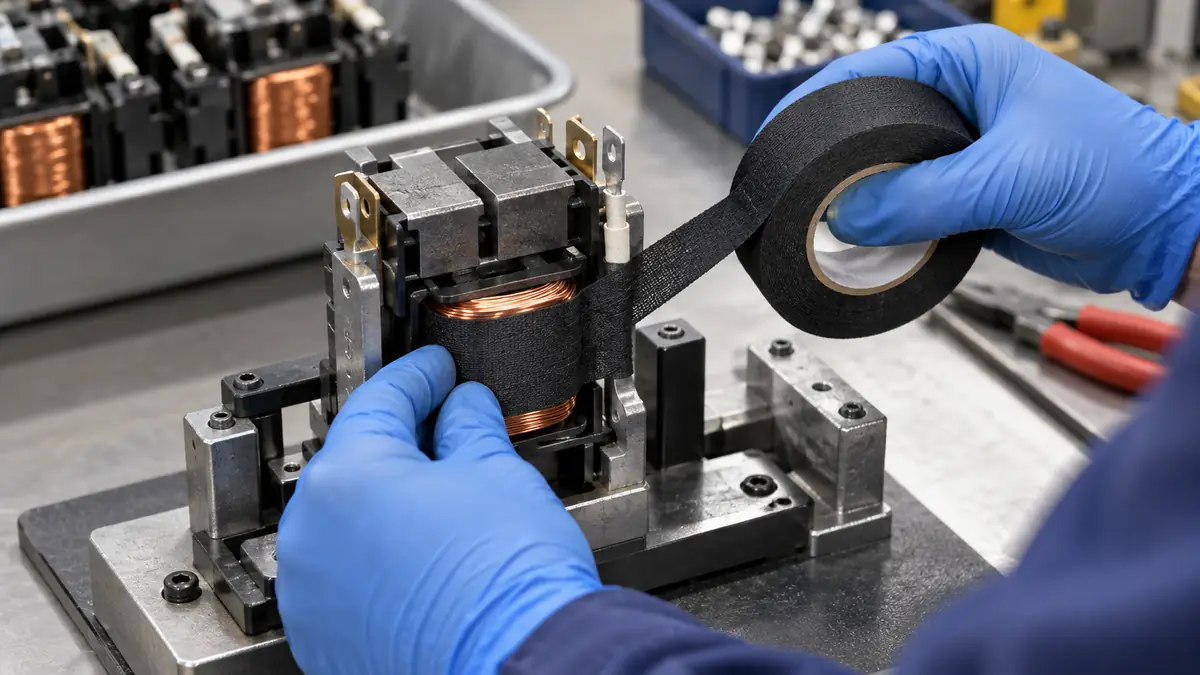
A wound-film capacitor element can have exposed film edges, foil transitions, terminal leads, and a pack geometry that must remain stable during transfer to later operations. A cloth tape wrap may help retain the element, protect selected surfaces from handling, and provide a conformable interface. Its function should be written clearly so that operators do not treat it as a cure for a loose winding, damaged edge, or incorrect lead design.
The wrap can also influence pack dimensions, impregnation flow, potting wet-out, heat transfer, and case fit. A tape that performs well on a dry bench sample may behave differently after vacuum impregnation, thermal curing, or contact with a resin system. Representative trials must include the downstream process.
Materials to Compare for Capacitor Pack Wrapping
| Material | Potential role | Main qualification point |
|---|---|---|
| Acetate cloth tape | Conformable retaining wrap and local surface protection | Adhesive, thickness, chemical compatibility, and certified construction needs |
| Polyester film tape | Thin, dimensionally stable wrap | Edge conformity, heat exposure, and tearing behavior |
| Polyimide tape | Thin insulation where a higher thermal margin is required | Cost, adhesive compatibility, and actual system approval |
| Glass cloth tape | Mechanical reinforcement and high-heat support | Bulk, fiber edges, resin wet-out, and abrasion |
| Non-adhesive film or paper | Engineered interlayer retained by another method | Movement, overlap control, and impregnation behavior |
Inputs Required Before Selecting Acetate Cloth Tape
| Input | What to document | Why it matters |
|---|---|---|
| Capacitor construction | Film and foil family, winding shape, edge condition, leads, terminals, and interlayers | Defines the surfaces and damage risks |
| Downstream process | Impregnation, potting, curing, case insertion, welding, and cleaning | Tape remains part of the full process stack |
| Electrical design | Required clearances, insulation coordination, partial-discharge controls, and approval path | Generic tape data cannot replace system design |
| Mechanical limits | Pack dimensions, compression, winding retention, lead clearance, and case fit | Wrap build-up changes geometry |
| Quality criteria | Wrinkles, loose edges, overlap, contamination, exposed zones, and traceability | Creates repeatable inspection standards |
Match the Adhesive to the Process
Acetate cloth tapes can use different adhesive systems. The correct choice depends on the winding surface, assembly dwell, process heat, impregnant or potting chemistry, storage, and final environment. Ask for construction-specific technical and regulatory documentation, then confirm it against the capacitor manufacturer's actual qualification plan.
Control Width, Tension, and Build-Up
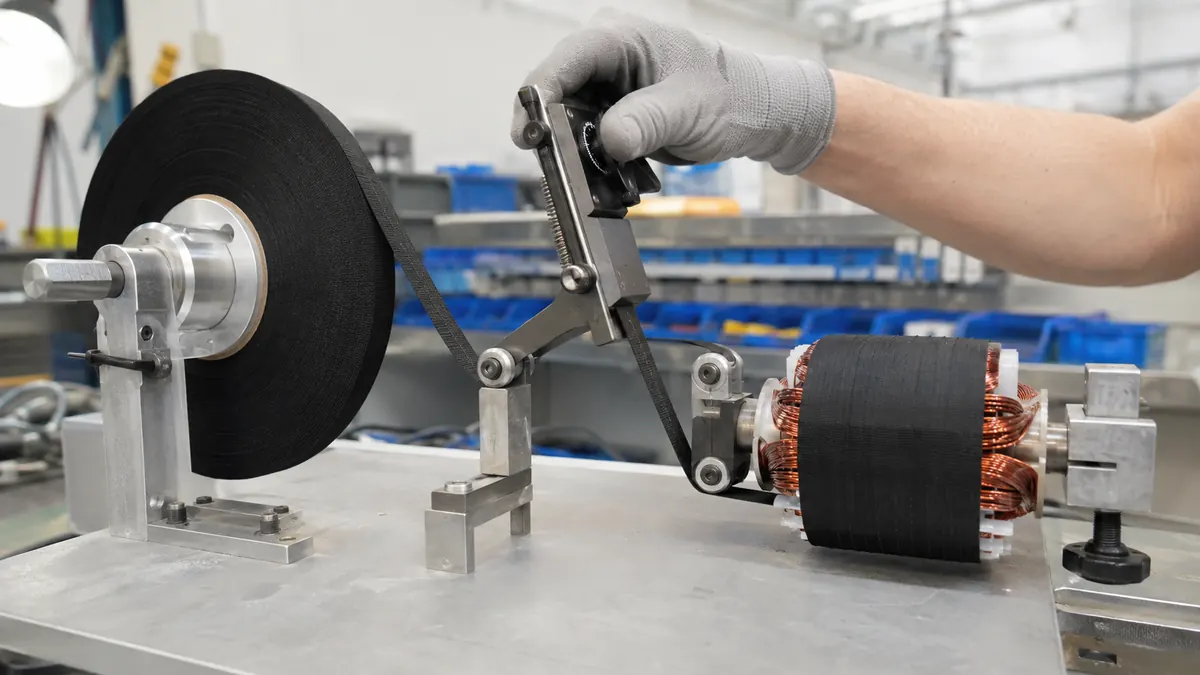
Tape width should support the required coverage without interfering with leads or defined exposed areas. Excessive tension can distort a soft pack, move an interlayer, or load a lead exit. Insufficient tension can leave wrinkles or a loose termination. Define acceptable overlap and the maximum build-up where the pack enters a case or fixture.
Protect Lead Exits and Corners
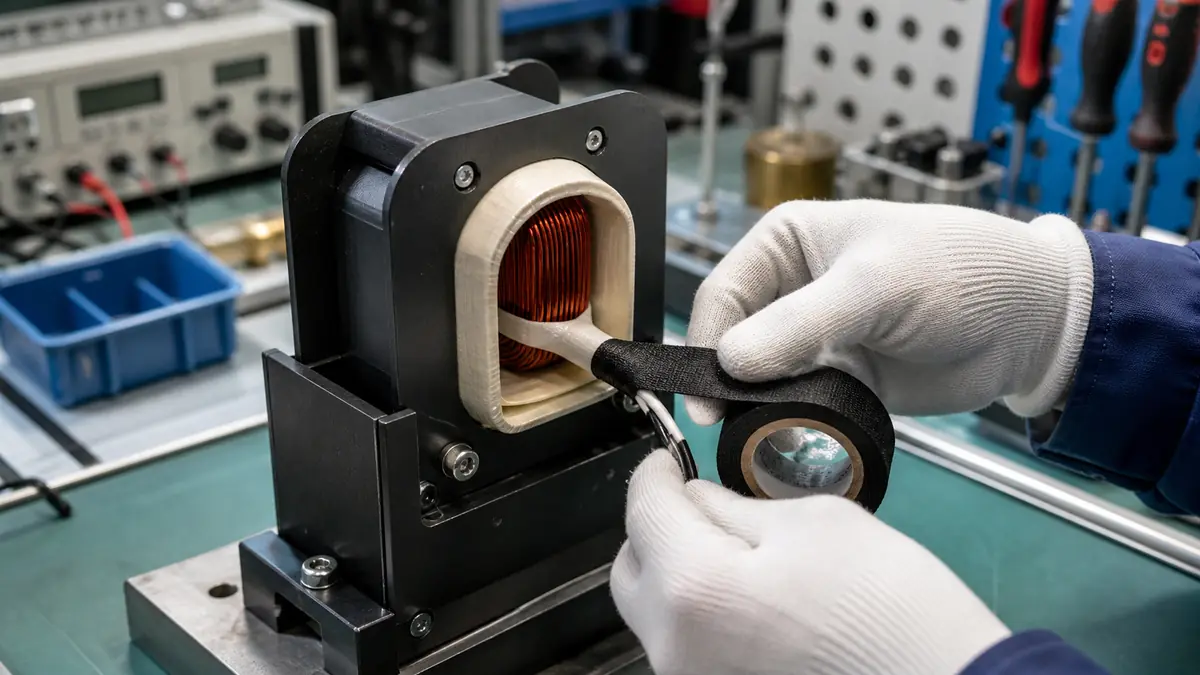
Lead exits should have defined keep-outs and strain-control features. Do not force cloth tape into a sharp corner with a tool that could damage film or conductor insulation. If repeated geometry is difficult to wrap, consider a converted patch or pre-cut length with controlled ends rather than tearing tape at the station.
Recommended Wrapping Workflow
- Confirm the released materials. Verify capacitor revision, tape construction, width, color if relevant to inspection, lot, and storage condition.
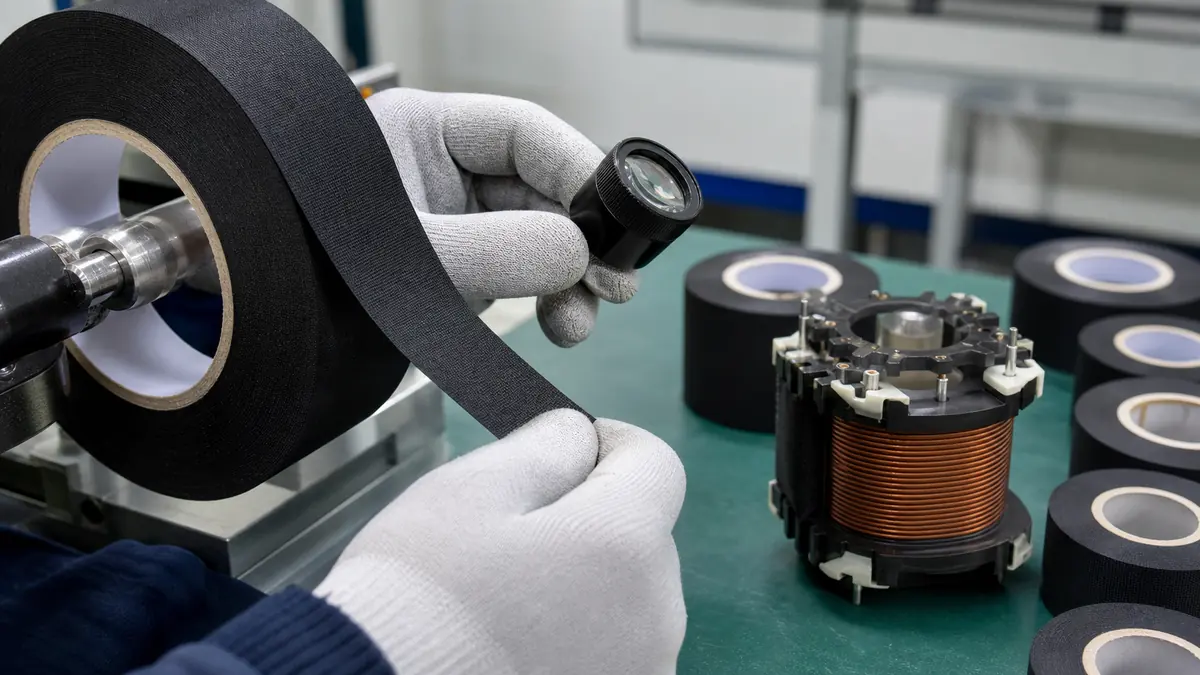
- Inspect the wound pack. Check for telescoping, loose layers, damaged film edges, displaced leads, contamination, or geometry outside the approved limit.
- Load a non-damaging fixture. Support the pack without crushing it or contacting sensitive edges.
- Start from the defined datum. Keep the first edge away from terminals and other keep-outs.
- Wrap with controlled tension. Maintain the specified path and overlap without wrinkles or bridged corners.
- Terminate at the approved face. Press the final edge using the approved tool and avoid a seam where later tooling will lift it.
- Measure the wrapped pack. Confirm dimensions, lead position, overlap, and edge condition before downstream processing.
- Maintain traceability. Record tape lot, equipment or operator, date, inspection result, and any authorized deviation.
Common Failure Modes
| Observed issue | Checks | Corrective direction |
|---|---|---|
| Loose final edge | Surface contamination, pressure, seam location, adhesive, and dwell | Improve preparation or revise the termination position |
| Pack distortion | Wrap tension, fixture load, soft winding, and number of layers | Reduce mechanical load and define tension control |
| Wrinkle or bridged corner | Tape width, corner radius, application angle, and operator access | Use a narrower width, pre-cut, or converted shape |
| Lead insulation damaged | Tool contact, sharp tape edge, excessive tension, and keep-out | Revise the lead-exit design and wrapping method |
| Resin or impregnant incompatibility | Swelling, lift, trapped voids, cure heat, and chemical contact | Test the full chemistry and consider another construction |
Qualification and Purchasing Checklist
Trial parts should represent minimum and maximum pack dimensions, material lots, wrap conditions, downstream chemistry, cure cycles, and case-fit limits. Examine the wrap before and after downstream operations. Electrical or safety acceptance must use the capacitor manufacturer's approved methods and applicable product requirements; it should never be inferred from a visual inspection alone.
An RFQ should include the capacitor-pack drawing, exposed materials, tape width and thickness constraints, wrap pattern, process temperatures and times, impregnant or potting family, case dimensions, required documentation, packaging format, roll or pre-cut preference, quantities, and sample-validation plan.
Related Products and Articles
- Explore the acetate cloth tape range.
- Read what acetate cloth tape is used for.
- Review custom die-cutting options for patches and controlled pre-cut lengths.
- Send the pack drawing and process sequence for a material discussion.
Frequently Asked Questions
Why use acetate cloth tape on a film capacitor pack?
It may provide a conformable retaining wrap and local handling protection. The exact role must be defined because it does not automatically establish the capacitor's electrical rating or insulation-system approval.
Can acetate cloth tape contact impregnation resin or potting compound?
Only after compatibility testing with the exact adhesive, cloth, resin family, cure cycle, and downstream assembly. Swelling, lift, voids, and changes in wet-out should be evaluated.
How much overlap should be used?
The released work instruction should define overlap, tension, start position, termination face, and maximum build-up. There is no universal overlap for every capacitor geometry.
Does black acetate tape mean it is flame-retardant?
No. Color does not prove a flame-retardant rating, thermal class, or certification. Verify the exact product documentation and the finished product's approval requirements.
Should the tape be supplied as rolls or pre-cut lengths?
Rolls can suit flexible or low-volume work. Pre-cut lengths or converted patches can improve material control, seam position, takt time, and traceability when geometry is repeated.
Plan a Film Capacitor Wrapping Trial
Share the pack drawing, film and foil construction, wrap purpose, downstream resin or potting process, dimensional limits, documentation requirements, and acceptance plan. JIAO TAO TAO can help shortlist an acetate cloth construction and supply format for evaluation.
Acetate Cloth Tape for Small Transformer Bobbin Wrapping
Acetate Cloth Tape for Loudspeaker Voice Coil Lead Insulation
Related Article
Need help choosing the right industrial tape?
Send us your application details, including temperature, surface material, size, quantity and current problem. Our team will help recommend a suitable tape material or custom die-cut solution.

simon@jiaotaotao.com


+86-136 1277 5969


+86-136 1277 5969
