
What is the Difference Between Kapton Tape and Polyimide Tape?
What is the Difference Between Kapton Tape and Polyimide Tape?
If you are an engineer, a B2B procurement manager, or a manufacturing technician, you have likely seen the translucent, amber-colored tape used in high-temperature applications. You will often hear it referred to interchangeably as "Kapton tape" and "polyimide tape." But is there an actual engineering difference between the two?
The Quick Answer
The difference comes down entirely to branding. "Kapton" is a registered trademark of DuPont for their specific formulation of polyimide film. Therefore, all Kapton tape is polyimide tape, but not all polyimide tape is the Kapton brand. Functionally, high-quality generic polyimide tape and branded Kapton tape offer highly comparable heat and electrical resistance.
Understanding the Material Science
To understand why the names are used interchangeably, we must look at the underlying material chemistry. Both tapes are manufactured using a high-performance polymer class known as polyimides.
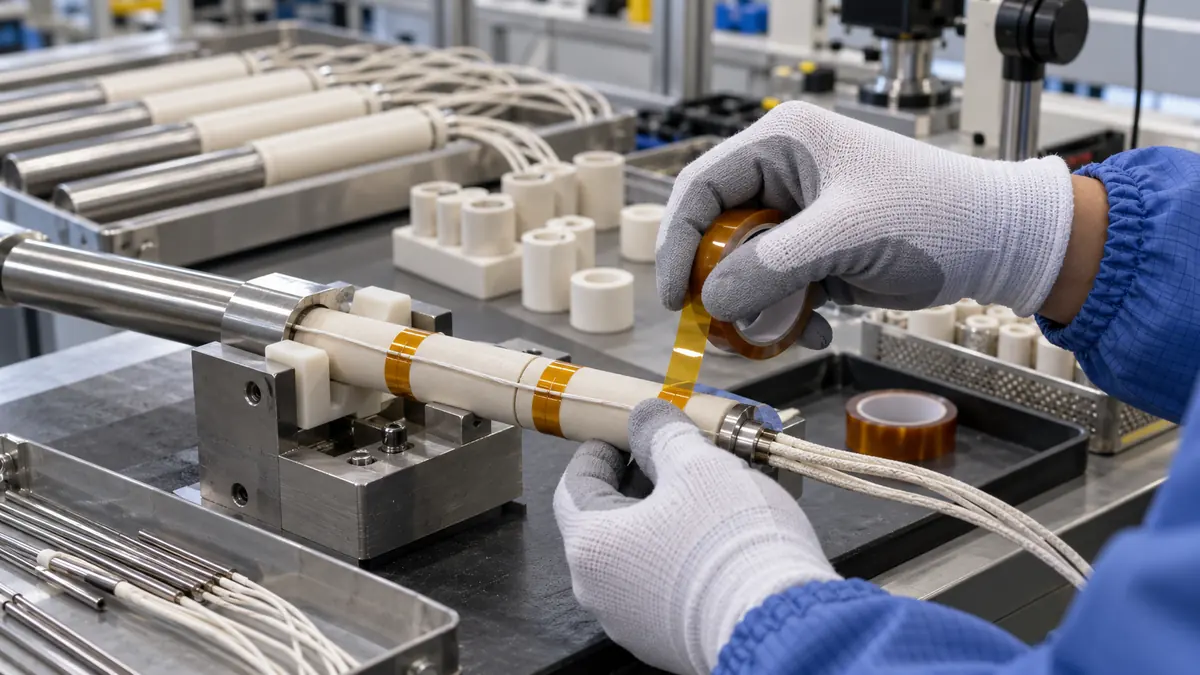
Specifically, the film is usually synthesized by polymerizing an aromatic dianhydride (like PMDA) and an aromatic diamine (like ODA). The resulting polymer film is highly thermally stable, chemically resistant, and possesses excellent dielectric (insulating) properties. When coated with a high-temperature silicone adhesive, it becomes the industrial tape we rely on for wave soldering, 3D printing, and aerospace wire insulation.

Kapton® (The Brand)
Invented by the DuPont Corporation in the 1960s, Kapton was the pioneering polyimide film that revolutionized the aerospace and electronics industries. Because it was the first and most prominent product of its kind, "Kapton" became a genericized trademark—much like "Kleenex" for tissues or "Band-Aid" for adhesive bandages.
Polyimide Tape (The Material)
This is the technical, generic name for the product. Today, numerous advanced chemical manufacturers produce polyimide film to the exact same rigorous industrial standards (Class H insulation, RoHS compliance) as the original DuPont formulation.
Are They Truly Identical in Performance?
For 99% of B2B manufacturing and industrial applications, high-quality generic polyimide tape and branded Kapton tape will perform identically. Here is a side-by-side look at the critical engineering specifications you can expect from both:
| Engineering Specification | DuPont Kapton® Tape | Premium Generic Polyimide Tape |
|---|---|---|
| Continuous Operating Temp | -269°C to +260°C | -269°C to +260°C |
| Short-Term Heat Resistance | Up to 400°C (752°F) | Up to 400°C (752°F) |
| Dielectric Strength | Very High (Typically ~6-7 kV/mil) | Very High (Typically ~6-7 kV/mil) |
| Adhesive Type | Thermosetting Silicone | Thermosetting Silicone |
| Residue Upon Removal | None (Clean peel) | None (Clean peel) |
Note: The key to matching performance lies in the adhesive. Always ensure your generic polyimide tape supplier uses a high-grade silicone adhesive, rather than a cheaper acrylic substitute that will leave residue at high temperatures.

B2B Procurement Advice: Which Should You Choose?
If you are drafting a bill of materials (BOM) or negotiating a procurement contract, how do you decide whether to specify "Kapton" or "Polyimide"?
- When to specify Kapton®: In highly regulated industries such as aerospace, defense, or deep-space satellite manufacturing, engineering blueprints may strictly dictate "DuPont Kapton®" for rigorous compliance, traceability, and liability reasons. If the spec sheet demands the brand name, you must use it.
- When to specify Polyimide: For general electronics manufacturing, PCB wave soldering, EV battery insulation, powder coating masking, and 3D printing, generic polyimide tape is the industry standard. By sourcing from a reliable factory, manufacturers can drastically reduce their consumable costs while maintaining perfectly identical yield rates and safety profiles.

The Bottom Line
Do not let terminology confuse your supply chain. All Kapton tape is polyimide tape. Focus less on the brand name printed on the inner core, and focus more on the Technical Data Sheet (TDS) provided by your tape manufacturer to ensure it meets your specific thermal and dielectric thresholds.
How Much Heat Can Kapton Tape Withstand?
What is Kapton Tape Used For?
Related Article
Need help choosing the right industrial tape?
Send us your application details, including temperature, surface material, size, quantity and current problem. Our team will help recommend a suitable tape material or custom die-cut solution.

simon@jiaotaotao.com


+86-136 1277 5969


+86-136 1277 5969
