
PTFE Tape for Leather Embossing: Cleaner Platen Release
Jiaotaotao PTFE tape for leather embossing provides a replaceable release surface on the flat contact platen of a heated embossing press. The PTFE-coated glass cloth separates the leather from the supporting metal surface, helping address sticking, finish pickup, and repeated platen cleaning.
This article focuses on the flat platen that supports the leather during embossing. Trapped debris, seams, and wrinkles can mark finished pieces. The practical task is to install a flat release covering, preserve the intended pressure and heat transfer, and replace worn material before defects repeat across a production batch.
In this guide — jump to a section
What the Tape Does at the Embossing Platen
Keep tape edges and joints outside the visible leather impression wherever the platen layout allows.
A release face for leather contact
PTFE glass cloth tape presents a low-stick surface between the leather and the platen. This helps the operator lift the workpiece without dragging it across exposed metal or pulling against localized deposits. The glass cloth reinforces the covering, while the adhesive attaches it to the machine surface.
Thickness and surface condition affect the impression
A platen covering becomes part of the pressing stack. Extra thickness, an overlapping joint, or a folded edge changes local contact and can produce a visible line.
Choose the construction around the required surface finish and the existing platen arrangement. Jiaotaotao supplies PTFE-coated glass cloth tape and converted formats for industrial release surfaces. Specify the finished tape thickness rather than describing only the glass cloth backing.
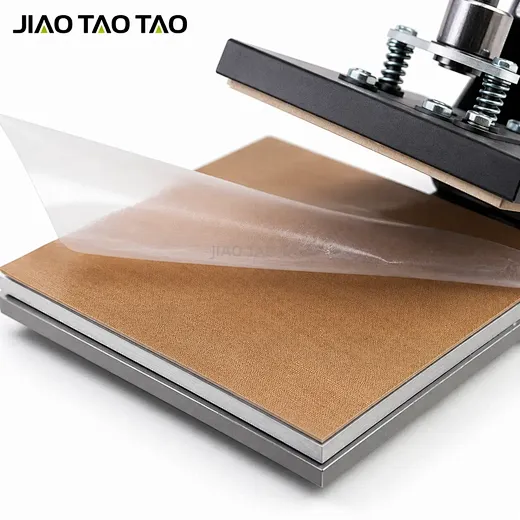
Applying PTFE Tape to a Leather Embossing Platen
Prepare a clean, flat supporting surface
A clean platen gives the adhesive continuous contact and prevents particles from printing through the leather. Stop the press, isolate its movement, and let the platen reach a safe handling temperature before replacing the covering. Remove the old material and deposits with the machine's suitable cleaning method.
Inspect the surface under angled light. Remove loose particles and identify scratches, raised adhesive patches, or damaged corners. Wipe the surface dry. Tape placed over a raised deposit will reproduce that unevenness rather than correct it.
Fit a continuous covering across the working area
A continuous, wrinkle-free covering prevents seams from becoming unwanted embossing lines. Measure the actual contact area, identify the loading direction, and position the tape edges outside the visible leather area wherever the platen layout allows.
Use this installation sequence:
- Cut the piece on a clean bench before approaching the platen.
- Align one edge with a repeatable platen reference.
- Remove the liner progressively while laying the tape without stretching.
- Smooth from the center toward the edges with a clean application tool.
- Inspect for bubbles, folds, trapped particles, and lifted corners.
- Keep the covering clear of sensors, guides, clamping faces, and moving parts.
Avoid cutting directly against the platen. A blade can score the supporting surface and leave damage that remains after the tape is removed.
Keep seams away from the leather impression
Overlapping strips create a step that can transfer into the leather under pressure. Use a piece wide enough for the contact zone when possible. If the platen requires multiple sections, place joints outside the visible workpiece area and keep the joint arrangement consistent between replacements.
Do not stretch the tape to pull a wrinkle flat. Lift and reposition the affected section during installation or replace the piece.
Prevent Sticking Without Creating New Surface Defects
Control heat, dwell, and pressure together
Stable embossing depends on the release covering and the press settings working together. Keep the established settings recorded so that a new covering is not followed by several uncontrolled adjustments. Compare the impression, surface appearance, and release behavior on the first pieces after replacement.
If a pattern becomes shallow, inspect for double layers, air pockets, and an incorrect covering thickness before increasing platen temperature. If an edge becomes glossy or dark, check localized pressure and dwell as well as the release surface. More heat is not a general remedy for poor release.
Protect coated leather from dragging and contamination
Lift the leather clear of the platen rather than sliding its finished surface across the covering. Dragging can move loose deposits into the next pressing position and can pull at an exposed tape edge. Keep trim waste, adhesive fragments, and cleaning cloth fibers away from the contact zone.
For coated leather, separate finish pickup from mechanical sticking. A tacky deposit can come from excessive exposure or a damaged finish, while a repeating line may come from a seam or debris. Inspect both the removed workpiece and the matching platen location before changing the tape layout.
Replace damage instead of covering it with a patch
A smooth release surface is more useful than a covering that remains attached but has become rough. Replace material when it has cuts, exposed cloth, persistent deposits, blisters, or edges that no longer lie flat. Remove loose fragments before the next workpiece enters the press.
Troubleshooting Leather Embossing Release Problems
The position and repeatability of a defect help identify its source. A mark that repeats at the same platen location points toward the contact surface, while defects that follow individual leather pieces suggest differences in the workpiece or its handling.
Swipe the table sideways to view all columns →
| Production problem | Likely contact-surface cause | Practical corrective action |
|---|---|---|
| Leather sticks at one location | Deposit, damaged coating, or exposed metal | Clean the location and replace the damaged covering |
| A straight line repeats on finished pieces | Tape seam, overlap, or folded edge | Move the joint outside the impression area or use a continuous piece |
| Small raised marks repeat | Particles beneath the tape or on its surface | Remove the covering, clean the platen, and install a fresh piece |
| A corner lifts during loading | Contamination, application tension, or edge snagging | Clean and refit the covering; move the edge away from the loading path |
| Embossing depth changes after replacement | Different thickness, double layers, or trapped air | Restore the specified construction and flatten the installation |
Record the defect location before stripping the covering to distinguish installation issues from platen damage.
Specify a Repeatable Platen Covering
An effective purchasing description includes the contact geometry and the production problem. Send Jiaotaotao the platen dimensions, heated contact area, leather type, surface finish, operating temperature, dwell time, pressure settings, and current defect photographs.
Include the desired tape thickness, cut shape, edge clearances, quantity, and replacement method. For repeated platen sizes, custom-cut pieces reduce variation in where operators place edges and corners. Keep a reference drawing at the workstation so replacement coverings follow the same layout.
Frequently Asked Questions
Can PTFE tape stop leather sticking to the embossing platen?
Jiaotaotao PTFE tape provides a low-stick release surface on the flat platen. Keep the covering smooth and clean so damaged areas and deposits do not become new sticking points.
Should PTFE tape cover the engraved embossing die?
Keep fine engraved detail clear of an added covering unless the tooling design includes it. Tape on a patterned face can change the detail transferred to the leather.
Why does a tape line appear on embossed leather?
A seam, overlap, or folded edge creates a thickness step under pressing pressure. Use a continuous covering across the visible work area and move joints beyond that area.
Can I add another layer when the platen covering wears?
Remove the worn covering and install a fresh piece. Stacked layers can trap debris and change the pressing surface height.
When should the platen tape be replaced?
Replace the covering when it develops cuts, exposed cloth, persistent deposits, bubbles, or lifted edges. Base the change on surface condition rather than a universal cycle count.
Can Jiaotaotao supply custom-cut platen coverings?
Jiaotaotao supports custom slitting and die-cutting for PTFE adhesive tape. Send the platen drawing, contact-area dimensions, and quantity for a supply proposal.
Contact Jiaotaotao for Leather Embossing Tape
PTFE tape for leather embossing helps create a manageable release interface at the flat contact platen. The useful production controls are straightforward: start with a clean surface, install a continuous covering without tension, keep joints out of the visible pressing area, and replace damaged material promptly.
Jiaotaotao (Guangdong) New Material Co., Ltd. supplies industrial PTFE adhesive tape and custom-converted pieces. Contact Jiaotaotao with the platen drawing, leather finish, pressing conditions, and production problem to discuss samples, dimensions, and bulk supply.
ESD Tape for Component Trays: Secure Lids During Handling
How to Qualify PET Silicone Tape for Anodizing Masking
Related Article

Need help choosing the right industrial tape?
Send us your application details, including temperature, surface material, size, quantity and current problem. Our team will help recommend a suitable tape material or custom die-cut solution.

simon@jiaotaotao.com


+86-136 1277 5969


+86-136 1277 5969
