
Polyester Tape for Powder Coating and Clean Masking
Polyester Tape for Powder Coating and Clean Masking
Polyester tape is widely used when clean masking, stable heat resistance, and precise edge definition matter. This article explains how green polyester acrylic tape works, where it performs best, and why it is often selected for powder coating, anodizing, PCB processing, and other demanding industrial masking tasks. If you are comparing tape materials for production use, this guide will help you understand application fit, temperature limits, and selection points before you buy.
What Is Polyester Tape and Why Is It Used?
In industrial environments, polyester tape usually refers to a PET film tape designed for masking, insulation, and surface protection under heat, chemicals, or mechanical stress. Compared with general-purpose tapes, it offers better dimensional stability, a smoother backing, and more consistent edge performance during demanding processes. The green version is especially common in finishing lines because operators can quickly see where the tape has been applied and confirm full removal after the cycle is complete. When coated with an acrylic adhesive, the tape can provide reliable adhesion on metal, plastic, and selected electronic surfaces while still peeling away cleanly after use.
For buyers looking at green polyester acrylic tape, the material combination matters. The PET backing helps the tape maintain shape and edge accuracy, while the solvent-based acrylic adhesive supports chemical resistance and clean removal in coating and plating environments. This makes it suitable for powder coating masking, anodizing, electroplating, and PCB-related processes where sharp masking lines and low residue are important. On the referenced product page, this tape is positioned for continuous use up to 150°C and short-term exposure up to 180°C, with thickness options from 0.038 mm to 0.15 mm, giving users flexibility for both light masking and more demanding production tasks.
How High Temp Masking Tape Supports Production
The value of high temp masking tape becomes clear when the production line involves ovens, heated curing stages, or chemical treatment baths. In these situations, ordinary masking products may soften, curl, shift, or leave adhesive residue behind. That creates rework, inconsistent coating edges, and unnecessary waste. A well-designed polyester masking material reduces those risks by maintaining stable adhesion during the active process and then releasing cleanly when the job is done. This balance is essential in industries where part finish, dimensional tolerance, and throughput all affect final cost.
In practical terms, this type of tape is used to protect threads, holes, mating surfaces, conductive zones, and selected finished areas that must remain free from coating or treatment. A High temperature masking tape solution based on PET film can also contribute to cleaner production flow because it is easier to inspect, easier to cut into narrow widths, and more stable across long runs than lower-grade alternatives. For production buyers, that means fewer interruptions and more predictable masking results. When the tape also provides electrical insulation, as this product does, it gains added relevance for electronics and light electrical applications where temporary protection and dielectric performance both matter.

Why Green Powder Coating Tape Is Preferred
In coating operations, green powder coating tape is preferred not only because of heat resistance, but also because of visibility and process control. The green color contrasts well against metal surfaces, helping workers inspect masking placement before the coating cycle and verify complete tape removal afterward. That visual advantage may seem small, but on busy lines it can improve accuracy and reduce mistakes. When paired with an acrylic adhesive system, the tape can remain stable through coating and curing while resisting chemical exposure in adjacent processing steps such as anodizing and electroplating.
Another reason buyers choose this format is edge quality. A good green powder coating tape should help create sharp paint or powder boundaries without significant lifting or shrinkage. That matters for threaded holes, bonding zones, sealing areas, and contact points that must remain coating-free. The referenced product also highlights clean removal after oven cycles, which is especially important when finished surfaces must stay free from adhesive marks. For overseas consumers and smaller industrial buyers, this combination of clear visibility, stable masking, and reduced cleanup makes green polyester acrylic tape a practical option when process reliability matters more than the lowest upfront unit price.
How to Choose Polyester Masking Tape for Your Application
Choosing the right polyester masking tape starts with understanding the actual process, not just the product label. First, check the temperature profile. If the tape only needs to tolerate short curing exposure, a product rated for 150°C continuous and 180°C short-term may be enough. Second, review chemical contact. Acrylic adhesive systems are often selected when resistance to plating chemicals, anodizing acids, or coating-related solvents is part of the job. Third, consider substrate shape and finish quality. Precision masking on holes, edges, and curved parts requires stable film backing and consistent slitting quality so the tape does not distort during use.
Next, evaluate dimensions and conversion options. Width, length, thickness, core size, release liner, and die-cutting support can all affect production efficiency. The product page for this polyester masking tape lists customizable widths from 1 mm up to 1250 mm, lengths of 33 m or 66 m, and multiple thicknesses from 0.038 mm to 0.15 mm. That gives buyers room to match the tape to manual masking, narrow strip work, or OEM converting needs. If your operation includes repeated shapes or high-volume masking points, die-cut formats may reduce labor time and improve repeatability compared with hand-applied strips.
Finally, think about the end result. Do you need residue-free removal, reliable electrical insulation, strong tensile performance, or better process visibility? A tape that performs well in all four areas can simplify purchasing decisions. This is why green polyester acrylic tape is often chosen for mixed-use environments, where one masking material may need to support surface finishing, electronics handling, and general industrial protection. For many buyers, the best choice is not the most complex tape, but the one that matches temperature, chemistry, and precision requirements without adding unnecessary cost.
Common Uses of Green Polyester Acrylic Tape
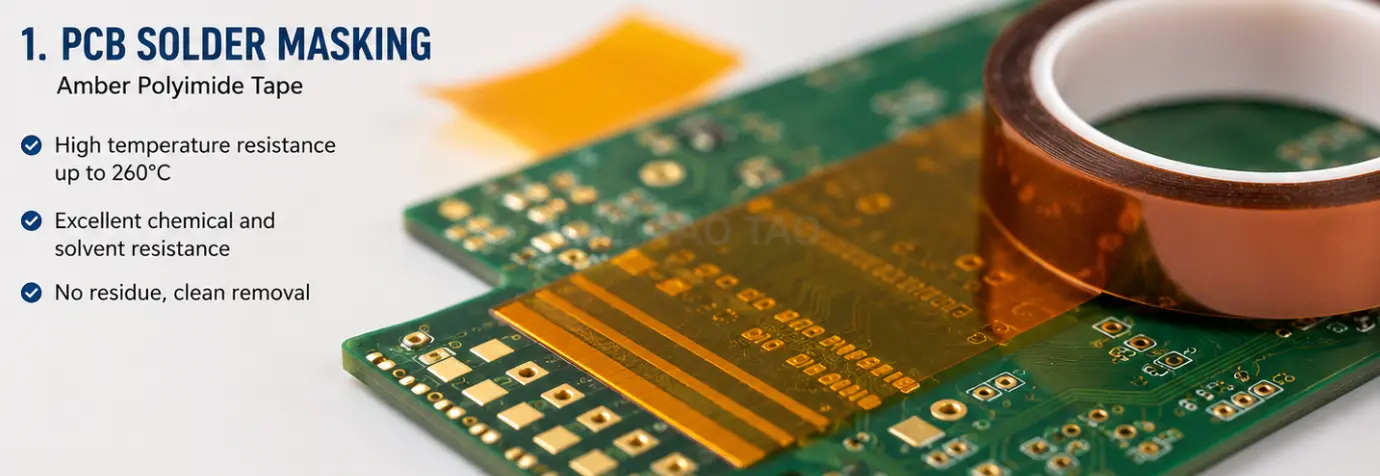
One of the strongest selling points of polyester tape is application range. In industrial finishing, it is commonly used for powder coating lines, anodizing processes, electroplating, and paint baking where selected areas must stay protected. In electronics-related work, it can serve in PCB plating and selected masking tasks where clean removal and insulation are needed. In light electrical environments, it may also be used around transformer coils, motor windings, and related assemblies that benefit from heat resistance and dielectric strength. Because the tape combines a thin PET backing with stable adhesion, it can adapt to precision work without becoming difficult to unwind or position.
For product promotion, this versatility matters because it broadens the buyer base. A customer searching for high temp masking tape may be focused on coating lines, while another searching for polyester masking tape may be looking for cleaner edges, better visibility, or a more economical alternative for repeated masking jobs. By presenting the tape as a solution for both finishing and light insulation applications, the product page can speak to small manufacturers, maintenance teams, workshop buyers, and distributors who want one dependable material that covers several common needs.
Selection tip: If your main concern is clean removal after curing, focus on adhesive type, residue performance, and actual process temperature rather than color alone. Green is useful for visibility, but process compatibility should always come first.
Summary
Polyester tape remains a practical choice for buyers who need heat resistance, precise masking, and clean removal in industrial processes. For powder coating, anodizing, electroplating, PCB work, and similar operations, green polyester acrylic tape offers a useful balance of visibility, dimensional stability, chemical resistance, and process-friendly performance. If you are evaluating a masking solution for overseas supply, it is worth looking closely at temperature rating, adhesive system, available thicknesses, and conversion options. A properly matched polyester masking tape can improve process consistency, reduce cleanup, and make day-to-day masking work more efficient.
Request Product Details or a Sample
Want to learn more about this green polyester acrylic tape for powder coating, anodizing, or PCB masking? Review the product page or contact the supplier for specifications, customization details, and sample support.
View Product Page Browse Polyester Tape Series
Contact: simon@jiaotaotao.com
Transparent Polyester Acrylic Tape for Clear PET Uses
High Temp Painter's Tape 180–220°C
Related Article

Need help choosing the right industrial tape?
Send us your application details, including temperature, surface material, size, quantity and current problem. Our team will help recommend a suitable tape material or custom die-cut solution.

simon@jiaotaotao.com


+86-136 1277 5969


+86-136 1277 5969
