
Kapton Tape Datasheet: Key Specifications and Technical Properties

Kapton Tape Datasheet: Key Specifications and Technical Properties
A Kapton tape datasheet provides engineers and buyers with essential technical data for evaluating performance in high-temperature and electrical insulation applications.
Unlike general product descriptions, a datasheet focuses on verified material properties, operating limits, and compliance information.
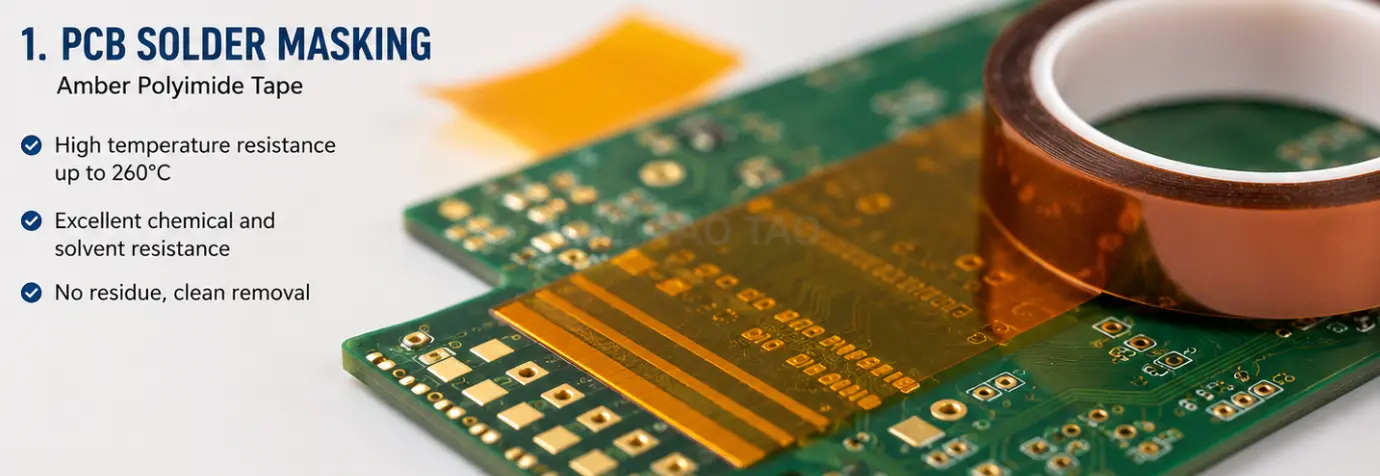
Kapton tape is widely used in electronics manufacturing, SMT processes, and industrial masking where reliable thermal stability is required.
What Information Does a Kapton Tape Datasheet Contain?
A standard Kapton tape datasheet typically includes:
-
Backing material and construction
-
Adhesive system type
-
Total thickness
-
Continuous and peak temperature ratings
-
Adhesion to steel
-
Tensile strength
-
Dielectric properties
-
Chemical resistance
-
Regulatory compliance (RoHS, REACH)
These parameters allow accurate comparison between different polyimide tape options.
Typical Kapton Tape Datasheet Specifications
The following values represent common ranges found in industrial Kapton tape datasheets:
-
Backing Material: Polyimide Film
-
Adhesive: Silicone
-
Total Thickness: 0.05–0.10 mm
-
Continuous Temperature Resistance: −73°C to +260°C
-
Short-Term Peak Temperature: Up to 280–300°C
-
Adhesion to Steel: 6–10 N/25 mm
-
Tensile Strength: ≥120 N/25 mm
-
Dielectric Performance: Excellent electrical insulation
-
Color: Amber
-
Compliance: RoHS, REACH
Actual specifications may vary depending on model and manufacturing process.
Adhesive System in Kapton Tape Datasheet
The adhesive type listed in a Kapton tape datasheet plays a critical role in thermal performance.
-
Silicone adhesive offers superior heat resistance, stable adhesion at elevated temperatures, and clean removal after heating cycles.
-
Acrylic adhesive provides higher initial tack but lower maximum temperature tolerance.
For high-temperature electronics and SMT applications, silicone adhesive is generally specified in the datasheet.
Kapton Tape Datasheet for Electronics and SMT Applications
In electronics manufacturing, Kapton tape datasheets are reviewed to confirm:
-
Stability during reflow soldering
-
High dielectric strength for insulation
-
Minimal shrinkage under heat
-
Residue-free removal after processing
Datasheets designed for SMT environments typically specify continuous operation at 260°C.
Thickness Considerations in Kapton Tape Datasheet
Datasheet thickness values influence mechanical behavior rather than temperature limits.
-
Thinner tapes are suitable for fine components and precision masking.
-
Thicker tapes provide improved tear resistance and durability.
Thickness does not increase the inherent temperature rating of Kapton tape.
Using Kapton Tape Datasheet for Proper Selection
When reviewing a Kapton tape datasheet, it is important to evaluate:
-
Continuous temperature rating rather than peak values
-
Adhesive system compatibility with process conditions
-
Electrical insulation requirements
-
Compliance with industry regulations
-
Performance under real operating cycles
A datasheet should be treated as a technical reference supporting informed material selection.
powder coating tape|Powder Coating Tape Guide for Aluminum Extrusion Industry
Electronic Shielding Tape Solutions for SMT and PCB Manufacturing
Related Article

Need help choosing the right industrial tape?
Send us your application details, including temperature, surface material, size, quantity and current problem. Our team will help recommend a suitable tape material or custom die-cut solution.

simon@jiaotaotao.com


+86-136 1277 5969


+86-136 1277 5969
