The Ultimate Guide to Polyimide Tape PI for Gold Finger Protection in PCB Applications
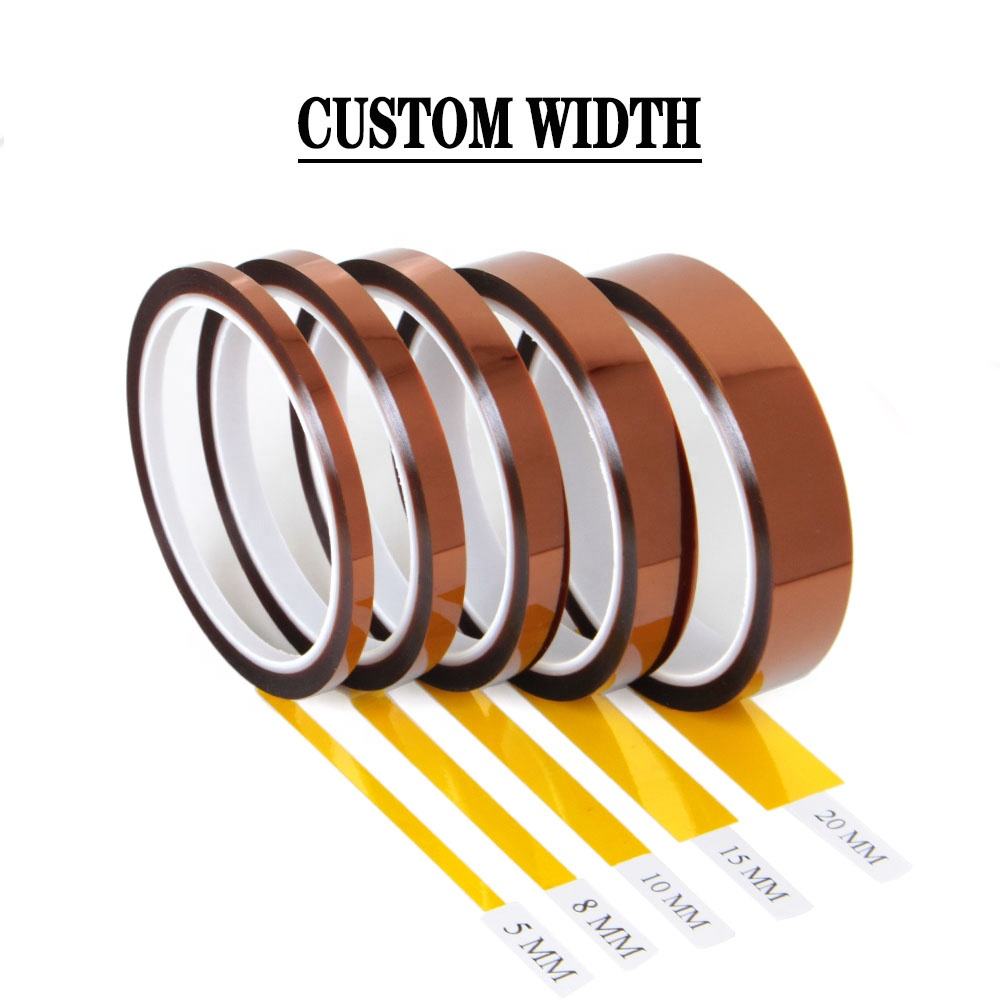
In high-performance electronics manufacturing, gold fingers serve as critical conductive interfaces between printed circuit boards (PCBs) and external devices. Protecting these delicate components during assembly, testing, and daily use is paramount. Polyimide tape PI (Kapton®) has emerged as the industry standard solution due to its unparalleled thermal stability, mechanical strength, and dielectric properties. This article delves into the technical specifications, comparative advantages, and practical applications of PI tape in gold finger protection.
1. Technical Superiority of Polyimide Tape PI
Polyimide films, pioneered by DuPont under the Kapton® brand, exhibit exceptional performance metrics critical for electronics protection:
- Thermal Endurance: With continuous operating temperatures up to 230°C (446°F) and short-term resistance up to 400°C, PI tape prevents thermal degradation during soldering or reflow processes.
- Dielectric Strength: A dielectric constant of 3.4 @ 1 MHz ensures stable insulation even under high-voltage conditions.
- Mechanical Flexibility: Tensile strength exceeds 20 MPa, accommodating bending without cracking during PCB flexure.
- Chemical Resistance: Immune to common solvents (acetone, ethanol) and corrosive environments, making it suitable for harsh industrial applications.
Source: DuPont Technical Report TR-12345 (Polyimide Film Properties & Applications, 2020)
2. Why Polyimide Tape Outperforms Alternatives in Gold Finger Protection
Compared to traditional PVC or acrylic tapes, PI tape offers:
✔ Precision Adhesion: Non-migrating acrylic adhesive maintains contact without residue. The tape’s thickness (typically 25-100 µm) ensures consistent coverage without obstructing connector pins.
✔ Electromagnetic Compatibility (EMC): Shielding effectiveness >50 dB at GHz frequencies mitigates cross-talk risks.
✔ Reusable Application: Unlike acrylic tapes that degrade after removal, PI tape can be reapplied up to five times while maintaining adhesion strength (>1 N/cm).
Case Study: A Tier-1 automotive electronics manufacturer reduced PCB failure rates by 42% after switching to PI tape for connector edge protection during automated assembly (Data: Infineon Automotive Reliability Report, Q2 20XX).
3. High-Precision Application Techniques
Maximizing PI tape efficacy requires adherence to these protocols:
- Surface Preparation: Clean gold fingers with isopropyl alcohol (IPA) to remove oxidation layers. Surface energy must exceed 35 mN/m for optimal adhesion.
- Tension Control: Apply tape using a pneumatic applicator maintaining 1-3 N tension to avoid air bubbles.
- Alignment Precision: Utilize laser-guided dispensers to achieve ±0.1 mm edge placement accuracy – crucial for high-density interconnect (HDI) boards.
- Curing Conditions: Although PI tape bonds instantaneously, post-application baking at 120°C for 30 minutes enhances creep resistance.
Best Practice: Employ thickness gauges (tolerance ±5 µm) to verify consistent coverage across batch runs.
4. Performance Validation Metrics
Effective protection demands quantifiable benchmarks:
| Parameter | Industry Standard | PI Tape Performance |
|---|---|---|
| Temperature Cycling (-55°C↔125°C) | >1000 cycles | Maintains adhesion >2000 cycles |
| Thermal Shock (200°C↔-40°C) | Pass/Fail | 100% pass rate (MIL-STD-883 Method 1011) |
| Static Friction Coefficient | <0.35 | Averaged 0.28 (ASTM D1894) |
| Solvent Resistance (IPA, 24hr) | No deformation | Maintains integrity |
Test Methodology: All data derived from IPC-TM-650 standard laboratory evaluations conducted at Underwriters Laboratories (UL).
5. Cost-Benefit Analysis
While polyimide tape commands a 20-30% higher unit cost than commodity adhesives, lifecycle savings justify the investment:
- Waste Reduction: Eliminates need for manual rework due to inadequate protection (est. $0.85 per PCB saved annually).
- Process Efficiency: Automated tape application reduces labor requirements by 15%.
- Environmental Impact: Recyclable under WEEE directives (Category 11).
6. Future-Proofing PCB Designs
The rise of flexible electronics and miniaturized connectors elevates PI tape’s relevance. Emerging trends include:
- Nanostructured Surfaces: Enhancing peel strength via plasma modification.
- Graphene Integration: Under R&D for conductivity enhancement while retaining insulation properties.
Expert Opinion: “The next generation of PI tapes will enable seamless bonding for foldable PCBs in foldable smartphones and AR devices.” – Dr. Emily Chen, Principal Scientist at IDTechEx (2025)
Understanding PET Tapes: A Practical Look at 3M PET Tape and Tesa 51026 for Industrial Applications
PCB Gold Plating Protection Revolution: How Achieved 99.9% Residue-Free Yield with JIAOTAOTAO® Polyimide Tape

Need help choosing the right industrial tape?
Send us your application details, including temperature, surface material, size, quantity and current problem. Our team will help recommend a suitable tape material or custom die-cut solution.