
What is the difference between glass cloth tape and Teflon tape?

The differences between Glass fiber tape tape and Teflon tape are as follows:
Material
- Glass fiber tape: It uses fiberglass cloth as the base material and is coated with pressure - sensitive adhesive (such as acrylic adhesive, silicone adhesive, etc.) on the surface. Fiberglass cloth has the characteristics of high strength and high temperature resistance, and the adhesive layer provides adhesion.

- Teflon Tape: It takes polytetrafluoroethylene (PTFE, commonly known as Teflon) film as the base material, usually with a silicone adhesive layer, and some products may also use other high - temperature - resistant adhesives. PTFE material has unique chemical inertness and a low coefficient of friction.
Performance
- High - Temperature Resistance: Glass fiber tape can generally withstand temperatures from 150℃ to 260℃, depending on the type of adhesive layer (for example, silicone adhesive has better high - temperature resistance than acrylic adhesive). Teflon tape has a wider temperature - resistant range, which can withstand extreme temperatures from - 200℃ to + 260℃. The PTFE material can still maintain stable performance at high temperatures.
- Chemical Resistance: Fiberglass cloth tape has certain resistance to common solvents and oils, but its resistance to strong acids and alkalis is weak. Prolonged exposure to highly corrosive substances may affect its performance. Teflon tape has extremely strong chemical inertness and hardly reacts with any chemical substances. It is resistant to strong acids, strong alkalis, aqua regia, and various organic solvents.
- Insulation: Both fiberglass cloth and the adhesive layer of fiberglass cloth tape are insulating materials, which are suitable for electrical insulation scenarios, but their insulation level is lower than that of Teflon tape. PTFE is an excellent insulating material with a low dielectric constant and can still maintain good insulation performance in high - frequency environments, making it suitable for high - demand electrical scenarios.
- Surface Characteristics: The surface of fiberglass cloth tape is relatively rough, with strong adhesion, which is suitable for scenarios that require firm pasting, but its wear resistance is average. The surface of Teflon tape is smooth, with an extremely low coefficient of friction (≤0.05), and has non - stickiness. It is not easy to adhere to dust, oil, or other substances.
- Flexibility: Fiberglass cloth has good flexibility, but it is slightly harder than Teflon tape, and slight wrinkles may appear when bent. PTFE film has excellent flexibility and can be bent repeatedly without damage, which is suitable for complex surface bonding.
Performance Comparison Table
| Dimension | Fiberglass Cloth Tape | Teflon Tape |
|---|---|---|
| High-Temperature Resistance | 150℃–260℃ (depending on adhesive type, e.g., silicone > acrylic) | -200℃–+260℃ (PTFE maintains stability at extreme temperatures) |
| Chemical Resistance | Resistant to common solvents/oils; weak against strong acids/alkalis | Extremely inert; resistant to strong acids, alkalis, aqua regia, and organic solvents |
| Insulation | Insulating (suitable for general electrical use, lower insulation grade) | Excellent insulator (low dielectric constant, suitable for high-frequency applications) |
| Surface Characteristics | Rough surface with strong adhesion; moderate wear resistance | Smooth surface (friction coefficient ≤0.05); non-stick, resistant to dust/oil adhesion |
| Flexibility | Good flexibility, slightly stiffer than Teflon tape; may wrinkle when bent | Excellent flexibility, withstands repeated bending without damage |
Application
- Glass fiber tape: In industrial manufacturing, it is used for insulating and wrapping electrical equipment such as motors and transformers, and for fixing wire harnesses in high - temperature environments. In pipe insulation, it is used to wrap high - temperature pipes and heating elements to prevent heat loss or scalding of personnel. In electronic maintenance, it is used to temporarily fix components and protect circuit boards, and can withstand the high temperature of soldering tin (short - term contact). In the packaging field, it is used for sealing cartons in high - temperature environments (such as packaging in industrial ovens).
- Teflon Tape: In high - end industries, it is used for sealing chemical equipment (reaction kettles, pipes) to resist highly corrosive media; in food processing equipment (baking trays, conveyor belts), it is used as an anti - stick coating, which meets food - grade safety standards. In the electrical field, it is used for insulating and protecting high - frequency cables and aerospace equipment, with stable insulation performance at high and low temperatures. In laboratory scenarios, it is used for sealing and anti - sticking treatment of corrosive - resistant experimental equipment, such as the interfaces of beakers and test tubes. In special requirements, it is used in clean rooms in semiconductor manufacturing (dust - free, low - volatile), and for high - temperature sealing of solar panel junction boxes.
Other Differences
- Price: Due to the high cost of the material (the production process of PTFE is complex), the price of Teflon tape is usually higher than that of fiberglass cloth tape.
- Environmental Friendliness: If Teflon tape uses food - grade silicone adhesive, it is more suitable for scenarios that come into contact with food or in the medical field. The environmental friendliness of fiberglass cloth tape depends on the type of adhesive layer, and some products may contain VOCs (volatile organic compounds).
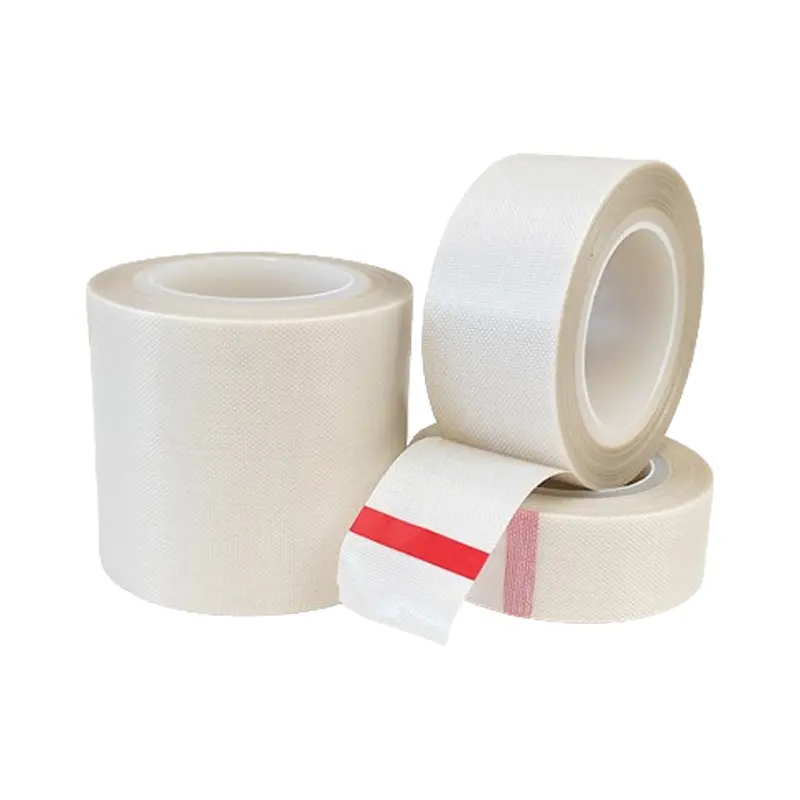
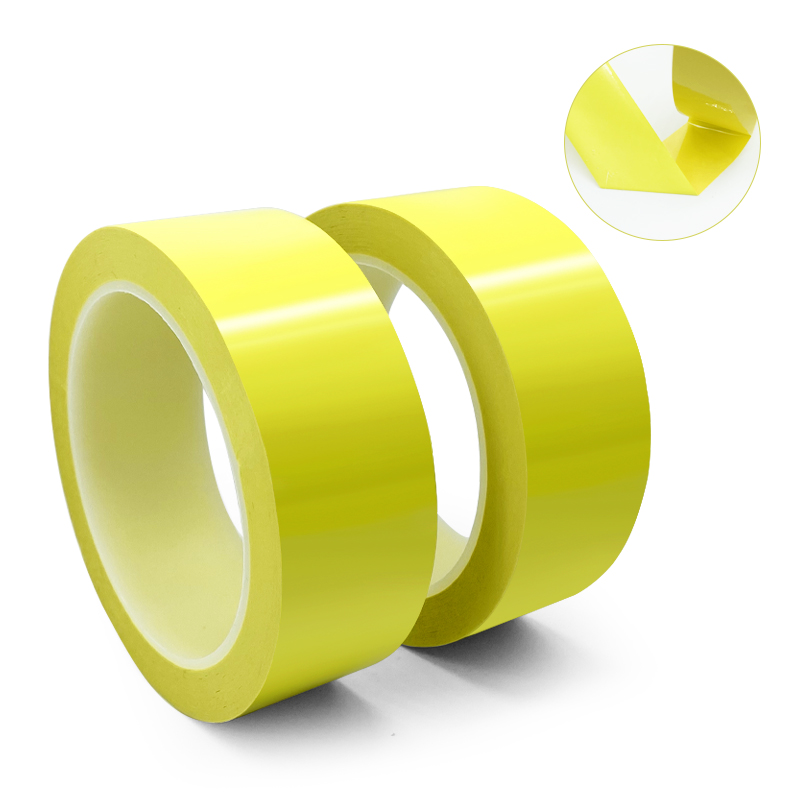
- Appearance: Common colors of fiberglass cloth tape are white, yellow, or green, and the surface has a fibrous texture. Teflon tape is mostly white, with a smooth surface without texture and low transparency.
In general, if the requirements are for moderate high - temperature resistance, conventional insulation, or pasting, and the budget is limited, fiberglass cloth tape can be selected. If extreme high - temperature resistance, strong chemical resistance, non - stickiness, or high insulation performance is required (such as contact with strong acids, high - frequency electrical equipment, food - grade scenarios), Teflon tape is preferred.
Transparent Double-Sided Tape: The Ultimate Guide for Clean, Strong, and Invisible Bonding
The Ultimate Guide to Fiberglass Mesh Tape: Reinventing Industrial Strength & Precision

Need help choosing the right industrial tape?
Send us your application details, including temperature, surface material, size, quantity and current problem. Our team will help recommend a suitable tape material or custom die-cut solution.

simon@jiaotaotao.com


+86-136 1277 5969

+86-136 1277 5969
