
PET Silicone Tape for Electroplating Rack Contact Masking
PET Silicone Tape for Electroplating Rack Contact Masking
PET silicone tape for electroplating rack contact masking helps keep selected rack surfaces, hooks, and no-plate zones free from unwanted metal buildup while preserving the electrical contact path required by the process. The tape is a temporary mask, not a universal plating stop-off. Bath chemistry, cleaning stages, current path, immersion time, part geometry, and removal method must be qualified together on the actual line.

Key Takeaways
- Separate current-carrying contact areas from zones that require protection from metal buildup.
- Evaluate the complete pretreatment, plating, rinse, drying, and removal sequence rather than the bath alone.
- Use drawings or controlled samples to define tape edges, overlaps, pull tabs, and acceptable plating boundaries.
- Inspect rack conductivity and exposed contact condition after every masking and stripping cycle.
- Confirm the exact PET silicone construction with representative chemistry before production release.
What Electroplating Rack Contact Masking Must Control
Plating racks provide mechanical support and an electrical path between the rectifier and the workpiece. Metal can deposit on exposed rack areas during repeated cycles, increasing cleaning work, changing contact geometry, or creating buildup near moving or locating features. A temporary tape mask can protect selected zones while leaving the required current path uncovered.
The masking drawing must distinguish three functions: surfaces that must remain conductive, surfaces that may receive deposit, and surfaces that must remain protected. Covering a true electrical contact can reduce current transfer; leaving a no-plate area exposed can produce unwanted buildup. Process engineering should approve the boundary before operators begin masking.
PET Silicone Tape, Stop-Off, and Reusable Covers Compared
| Masking method | Potential fit | Main control point |
|---|---|---|
| Slit PET silicone tape | Straight rack arms, collars, and short-run local protection | Overlap direction, wrinkles, edge pressure, and removal tab |
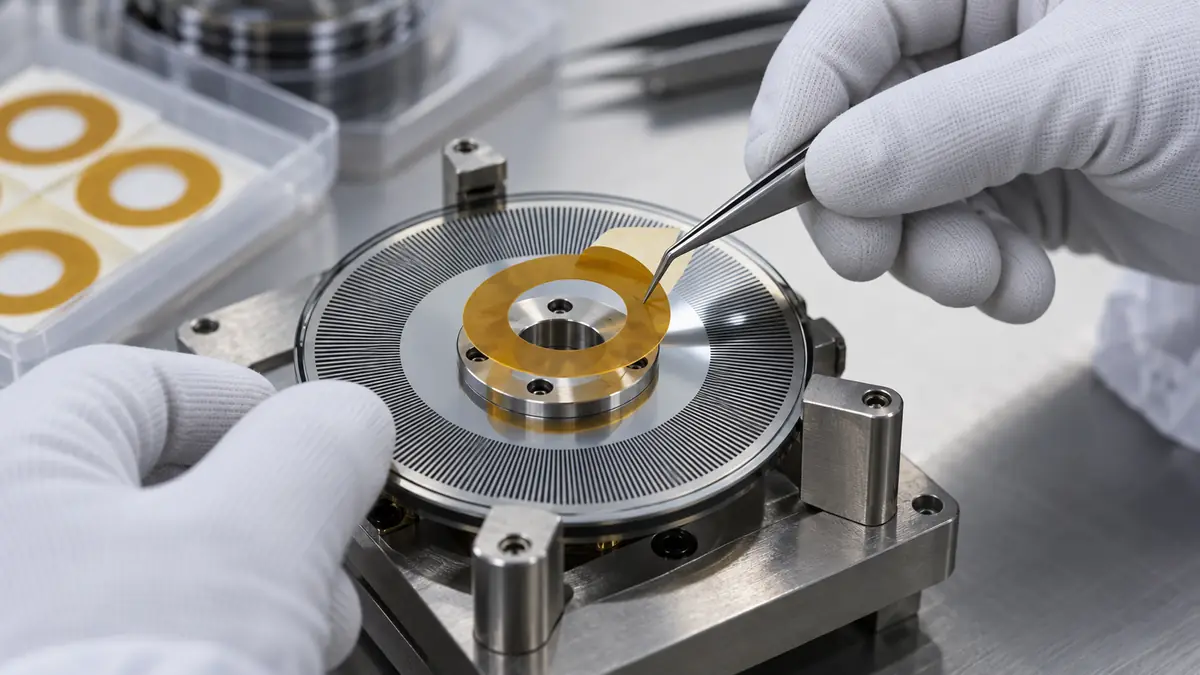
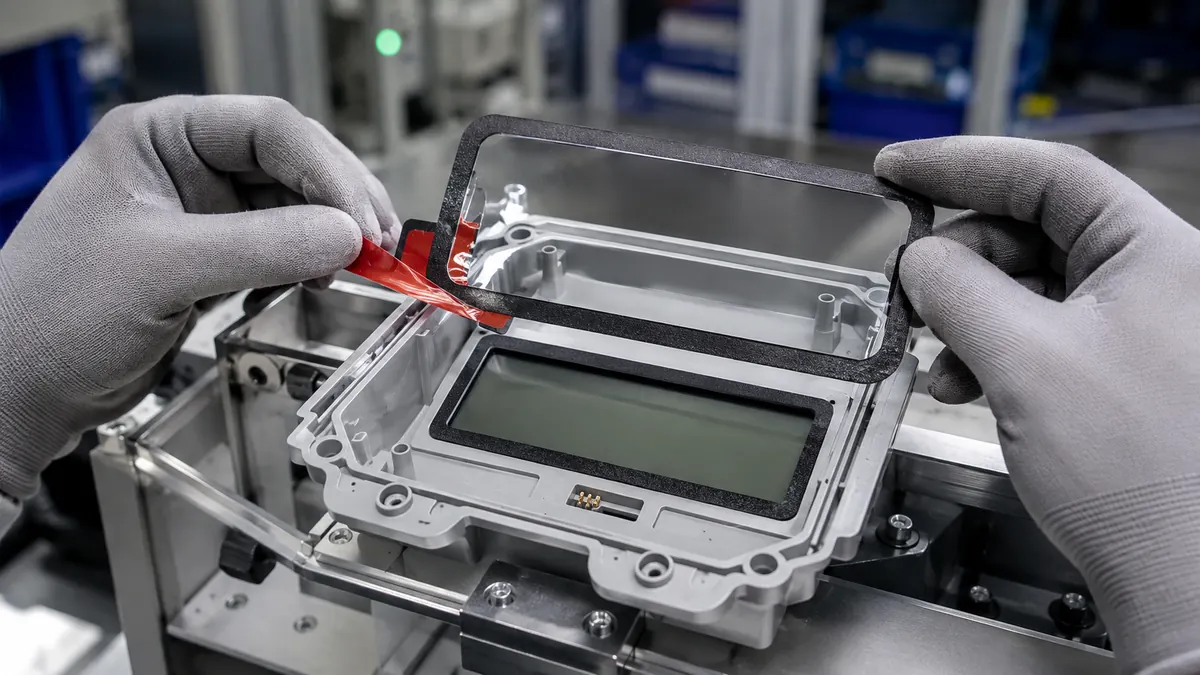
| Die-cut PET mask | Repeated contact geometries and defined exposed windows | Drawing tolerance, orientation, and liner handling |
| Liquid stop-off | Irregular shapes approved for the specific plating chemistry | Cure, thickness, repair, stripping, and contamination control |
| Reusable boot or cap | Robust recurring shapes with room for a fitted cover | Seal path, fit after buildup, and cleaning between cycles |
| Permanent rack coating | Broad rack-body protection designed into the rack | Repair method and exposed contact maintenance |
Information Required Before Selecting PET Silicone Tape
| Parameter | What to document | Why it matters |
|---|---|---|
| Plating sequence | Cleaner, activation, plating baths, rinses, drying, and repeat cycles | The tape and adhesive encounter every stage |
| Chemistry exposure | Chemical family, concentration range, temperature, agitation, and dwell | Film and adhesive compatibility cannot be inferred from the word “plating” |
| Rack materials | Base metal, existing coating, oxide, roughness, welds, and previous deposits | Surface condition controls wet-out and edge sealing |
| Electrical function | Contact path, clamping points, current density plan, and allowable resistance checks | Masking must not isolate the intended conductive route |
| Geometry | Exposed window, edge tolerance, corners, holes, overlaps, and pull tabs | Defines the protected area and repeatability |
| Removal plan | Removal timing, peel direction, stripping tools, and residue criteria | Prevents rack damage and contamination after processing |
Choose the Mask Boundary From the Current Path
Begin with the rack drawing and the actual contact arrangement. Tape should terminate away from the intended electrical interface and should not bridge spring contacts, threaded adjustments, locating surfaces, or drainage paths. If a protected collar sits beside an exposed contact tip, include both tape placement tolerance and rack wear in the boundary calculation.
Evaluate Chemical Exposure as a Sequence
A mask that survives one plating bath may still lift after alkaline cleaning, activation, rinsing, or heated drying. Record the complete route and test representative racks through the maximum expected number of cycles. Look for edge curl, trapped solution, film embrittlement, adhesive transfer, and changes in peel behavior.
Use the Lowest Practical Number of Seams
Every overlap or butt joint is a possible path for liquid entry. Place seams away from the critical no-plate boundary when geometry allows, and orient overlaps so flow and spray do not drive chemistry into the edge. Do not stretch PET film around a radius; tension can later pull the tape away from the surface.
Recommended Rack-Masking Workflow
- Identify the rack and process route. Confirm revision, rack material, plating sequence, contact points, and approved mask drawing.
- Strip and inspect the surface. Remove old masking by the released method and check for deposits, sharp edges, corrosion, damaged coating, or loose contacts.
- Prepare the bond area. Use the approved cleaning method, allow complete drying, and keep the conductive contact surface free from adhesive.
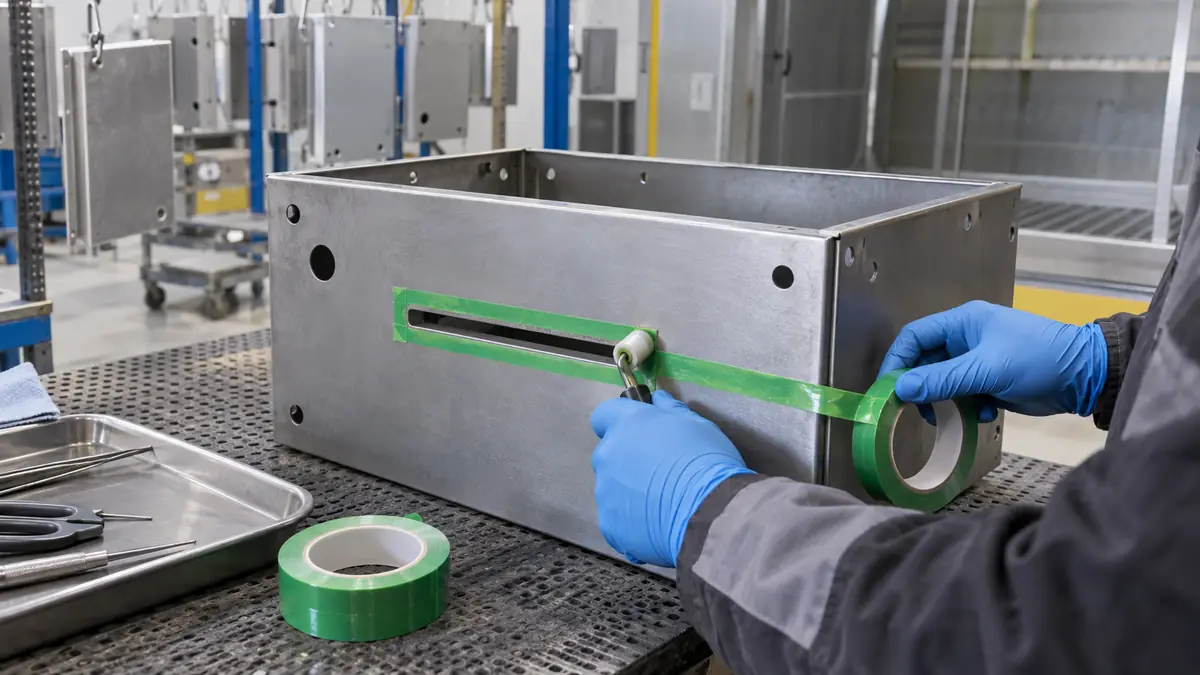
- Apply without stretching. Align from a fixed datum, form the tape around the rack, and use controlled overlaps or a converted shape.
- Burnish the perimeter. Press edges and transitions with a suitable tool while avoiding wrinkles, punctures, and bridged corners.
- Verify before immersion. Inspect mask presence, exposed contact area, seam position, pull tab, and drainage clearance.
- Run representative processing. Include normal agitation, rack movement, transfer time, rinses, and drying.
- Remove and inspect. Check the protected boundary, residue, rack coating, contact condition, and conductivity before reuse.
Common Masking Problems and Corrective Directions
| Observed problem | Likely checks | Corrective direction |
|---|---|---|
| Metal deposit under a tape edge | Contamination, seam position, bridged radius, puncture, or chemical ingress | Improve preparation and edge pressure; revise the mask geometry |
| Low or unstable rack current | Contact partly covered, buildup, loose hook, oxide, or worn spring feature | Restore the released current path and inspect rack hardware |
| Tape lifts during transfer | Stretch, low wet-out, sharp corner, trapped liquid, or incompatible chemistry | Apply without tension and screen a better-fitting construction |
| Adhesive remains after removal | Excess exposure, aged tape, rough surface, chemical attack, or removal timing | Review storage, exposure sequence, substrate, and removal method |
| Solution trapped beneath overlap | Poor seam orientation, open channel, excessive overlap, or incomplete burnishing | Relocate or redesign the seam and improve visual inspection |
Related Products and Articles
- Explore the polyester tape range for PET masking constructions.
- Review the high-temperature masking tape guide for broader process-selection principles.
- For controlled windows, collars, and pull tabs, see custom die-cutting capabilities.
- Send the rack drawing and plating sequence for a trial-format discussion.
Frequently Asked Questions
Can PET silicone tape be used to mask an electroplating rack?
It can be screened for selected rack areas when the exact film, adhesive, rack surface, chemistry sequence, immersion time, and removal method are tested together. It should not cover the current-carrying contact unless the process design specifically requires it.
Should the tape cover the rack contact tip?
Normally the required electrical contact must remain exposed. Protect adjacent no-plate zones according to an approved drawing and verify rack conductivity after masking.
Is PET tape compatible with every plating bath?
No. Bath family, concentration, additives, temperature, cleaning stages, and dwell can affect both the PET film and silicone adhesive. Test the complete process route.
Is a die-cut mask better than wrapping narrow tape?
A die-cut can improve repeatability on recurring geometries, while slit tape may suit simple shapes and maintenance quantities. Compare boundary tolerance, application time, seams, liner handling, and removal.
What information should an RFQ include?
Provide the rack drawing, base metal and coating, exposed contact geometry, plating and cleaning sequence, temperatures, dwell times, current-path requirements, mask tolerances, quantity, and removal criteria.
Plan a Rack-Masking Trial
Share the rack drawing, contact locations, no-plate boundaries, complete chemistry sequence, exposure times, surface condition, masking frequency, and inspection method. JIAO TAO TAO can help shortlist a PET silicone construction or converted mask for controlled line evaluation.
Contact the technical team about electroplating rack masking.
Custom Die-Cut Tape for Pressure Sensor Port Masking
Custom Die-Cut Tape for RFID and NFC Antenna Bonding
Related Article

Need help choosing the right industrial tape?
Send us your application details, including temperature, surface material, size, quantity and current problem. Our team will help recommend a suitable tape material or custom die-cut solution.

simon@jiaotaotao.com


+86-136 1277 5969


+86-136 1277 5969
