
Kapton Tape Electrically Conductive?
Kapton Tape Electrically Conductive?
When engineering high-density circuit boards, electric vehicle batteries, or aerospace wire harnesses, material selection is critical. Applying the wrong adhesive tape in a high-voltage environment can result in catastrophic short circuits. So, where does polyimide (Kapton) tape fit into electrical engineering?
The Quick Answer
No, Kapton tape is not electrically conductive. It is an excellent electrical insulator. It features a very high dielectric strength, meaning it can block high voltages without breaking down. This makes it a go-to material for wrapping wires, insulating capacitors, and preventing short circuits in tightly packed electronics.

Understanding Dielectric Strength
To understand why Kapton tape is the industry standard for electrical insulation, B2B procurement managers and engineers must look at a metric called Dielectric Strength. This measures the maximum electrical field that a pure material can withstand before its insulating properties break down and it begins to conduct electricity.
Polyimide film boasts a phenomenally high dielectric profile. A standard 1-mil (0.025mm) thick piece of Kapton tape can generally withstand up to 6,000 to 7,000 volts before electrical breakdown occurs. Furthermore, because polyimide is a Class H insulation material, it maintains this insulating capability even when exposed to continuous operating temperatures of 260°C (500°F).
| Electrical Property | Typical Value (Polyimide Film) | Industrial Benefit |
|---|---|---|
| Dielectric Strength | ~6,000 - 7,000 V/mil | Prevents electrical arcing in high-voltage applications. |
| Dielectric Constant | ~3.4 (at 1 kHz) | Ensures minimal signal distortion in sensitive electronic circuits. |
| Volume Resistivity | 10^16 Ohm-cm | Almost zero electrical leakage through the tape material. |
Core Industrial Electrical Applications
Because it is a robust insulator that refuses to melt under thermal stress, polyimide tape is deployed in the most demanding electrical environments:
🔋 EV Battery Cell Insulation
Electric vehicle battery packs consist of hundreds of tightly packed lithium-ion cells. Polyimide tape is used to wrap individual cells, providing a non-conductive, heat-resistant barrier that stops short circuits and prevents the spread of thermal runaway.
⚙️ Motor & Transformer Coils
In high-performance electric motors and industrial transformers, copper windings generate immense heat. Kapton tape is used as phase insulation and coil wrapping because it will not conduct electricity or degrade under continuous thermal loads.
💻 PCB Wave Soldering
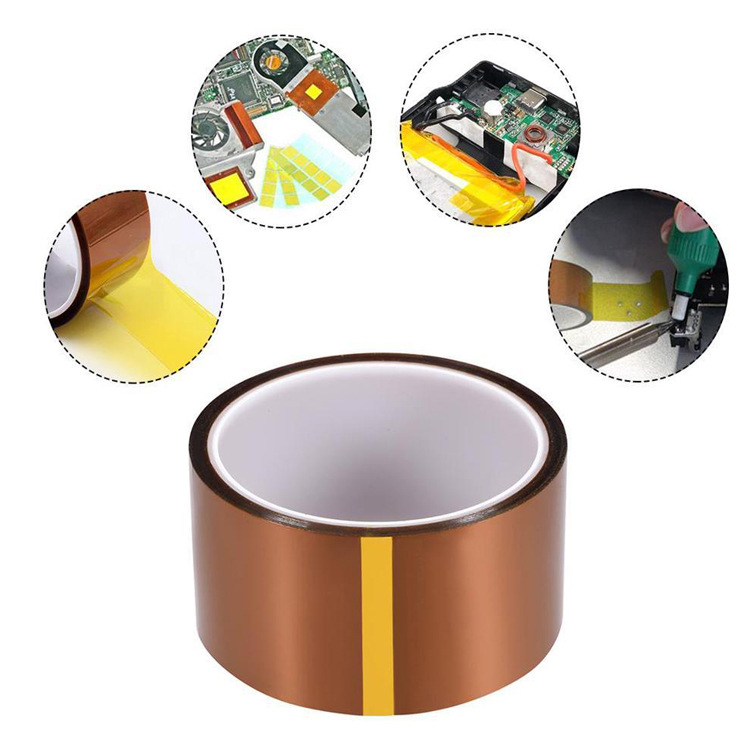
During the manufacturing of Printed Circuit Boards (PCBs), gold fingers and contact points must be masked before entering the 250°C wave solder bath. The tape protects the contacts from conductive liquid solder.
Need Bulk Polyimide Tape for Manufacturing?
Stop paying premium markups for brand names. We manufacture industrial-grade polyimide tape featuring exact dielectric specifications and heat resistance up to 400°C. Custom slitting and die-cuts available.
An Important Engineering Caveat: Static Electricity
While polyimide film is non-conductive, its highly insulative nature presents a different challenge: Triboelectric charging. When you unroll standard Kapton tape or peel it off a surface, it can generate a significant static electrical charge (ESD).
If you are working with static-sensitive microchips or semiconductors, a sudden electrostatic discharge from the tape could fry the component. For these specific cleanroom and semiconductor applications, manufacturers produce Anti-Static (ESD) Polyimide Tape. This specialized version features an additive that safely dissipates static charges while maintaining the film's core thermal and dielectric properties.
Does Kapton Tape Leave a Residue?
A common question B2B buyers have when assessing electrical tapes is whether the adhesive will contaminate their circuit boards. High-quality Kapton tape does not leave a residue.
The secret lies in the adhesive chemistry. While cheap masking tapes use rubber or acrylic adhesives that melt into conductive "goo" under high temperatures, industrial polyimide tapes utilize a thermosetting silicone adhesive.
During a high-heat manufacturing cycle (like a reflow oven), this silicone adhesive actually cures and cross-links, bonding tighter to the polyimide film itself rather than the PCB substrate. When the process is finished, the tape peels off cleanly in one piece, leaving the electrical contacts pristine and ready for final assembly.
Pro-Tip for Procurement: If your current "high-temp" tape is leaving a sticky residue on your components, it is likely an inferior acrylic-based counterfeit. Always ensure your supplier specifies a silicone-based adhesive system.

PET Film for Electronics: Industrial Guide (2026)
How Much Heat Can Kapton Tape Withstand?
Related Article

Need help choosing the right industrial tape?
Send us your application details, including temperature, surface material, size, quantity and current problem. Our team will help recommend a suitable tape material or custom die-cut solution.

simon@jiaotaotao.com


+86-136 1277 5969

+86-136 1277 5969
