
High Temperature Masking Tape: Uses, Types and Selection Guide
High Temperature Masking Tape: Uses, Types and Selection Guide
High temperature masking tape is used to protect surfaces during processes that involve elevated heat, chemical exposure, or demanding production conditions. It is widely used in powder coating, electronics assembly, automotive painting, metal finishing, and electrical insulation. The right tape must hold securely during processing and remove cleanly after the job is complete.
What Is High Temperature Masking Tape?
High temperature masking tape is a pressure-sensitive industrial tape developed for temporary surface protection in heat-related manufacturing processes. Its job is to cover selected areas so that coating, plating, solder, paint, or other process materials do not affect those surfaces. After processing, the tape should peel away without tearing, shrinking, or leaving adhesive residue.
Compared with standard masking tapes, this type of tape is made with more stable backing films and higher-performance adhesive systems. These materials allow it to withstand demanding temperatures for short production cycles or, in some cases, for longer continuous exposure. The exact performance depends on the tape structure, the substrate, and the operating environment.

Why It Is Important in Industrial Applications
In industrial production, surface masking is not only about protection. It directly affects dimensional control, coating precision, product appearance, and rework cost. If the tape fails during the process, overspray, powder, adhesive contamination, or solder penetration may damage functional areas or cosmetic surfaces. This can increase scrap rates and reduce production efficiency.
High temperature masking tape helps manufacturers maintain process consistency. It supports cleaner edges, more accurate coating boundaries, and better part quality. In industries such as electronics and automotive manufacturing, it may also serve as a temporary insulation or bundling aid during assembly and thermal processing. A well-matched tape improves productivity because operators spend less time cleaning residue or correcting masking defects.
Common Backing Materials and Adhesives
The performance of high temperature masking tape depends largely on two factors: backing material and adhesive chemistry. Different combinations are suitable for different industries and process temperatures.
1. Polyester Film Tape
Polyester film tape is widely used in powder coating, electrical insulation, and general industrial masking. It offers dimensional stability, smooth surface finish, and good resistance to heat. It is often chosen when users need clean paint lines or reliable insulation in electrical assemblies.
2. Polyimide Tape
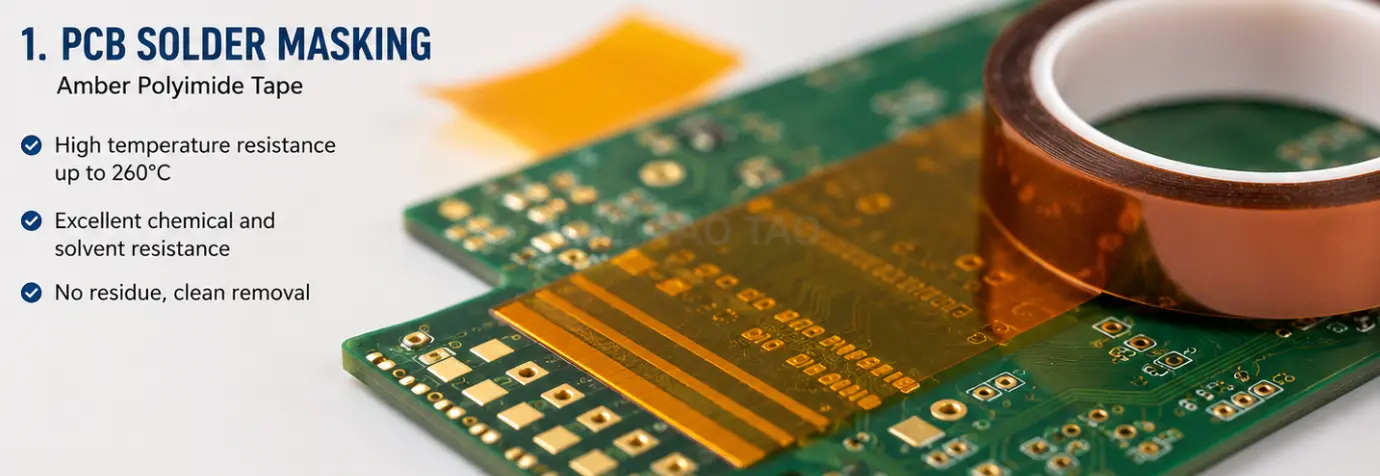
Polyimide tape is commonly used in electronics, PCB masking, wave soldering, and reflow-related applications. It is known for its excellent heat resistance, dielectric properties, and chemical stability. When the process temperature is especially high, polyimide is often preferred over polyester.
3. Crepe Paper or Special Paper Masking Tape
Some high temperature masking tapes use treated paper backings. These are often selected for automotive refinishing or paint shop work where flexibility, hand tearability, and conformability are important. However, paper tapes usually have lower heat resistance than film tapes and should be matched carefully to the process.
4. Silicone Adhesive
Silicone adhesive is frequently used when higher temperature performance and cleaner removal are required. It is common in polyester and polyimide masking tapes used for powder coating, electronics, and insulation applications.
5. Acrylic Adhesive
Acrylic adhesive can provide strong adhesion, good solvent resistance, and stable bonding on selected surfaces. It is often used in industrial tapes where balanced heat resistance and reliable adhesion are needed, although its clean removal performance depends on exposure conditions and substrate type.
Typical Applications
High temperature masking tape is used across many industrial sectors. The exact tape type should always be selected according to temperature range, exposure time, substrate, and removal requirements.
| Application | Typical Requirement | Common Tape Type |
|---|---|---|
| Powder coating | Clean removal after baking, sharp masking lines | Polyester tape with silicone adhesive |
| PCB masking | Heat resistance, insulation, chemical stability | Polyimide tape |
| Automotive painting | Conformability, paint edge definition, residue-free removal | Special paper masking tape or film masking tape |
| Electrical insulation | Dielectric strength, dimensional stability | Polyester or polyimide tape |
| Metal finishing | Resistance to process heat and chemicals | High temperature film masking tape |
How to Choose the Right Tape
Selecting the correct high temperature masking tape requires more than checking one temperature number. Buyers and engineers should review the full process profile and end-use requirements before making a decision.
Process Temperature and Duration
A tape may tolerate high temperature for a short cycle but fail under longer exposure. Always evaluate both peak temperature and dwell time. A curing oven, soldering line, or heating chamber can produce different demands even when the nominal temperature seems similar.
Surface Type
Adhesion can vary greatly depending on whether the tape is applied to metal, glass, plastic, powder-coated surfaces, or textured substrates. Some surfaces require stronger initial tack, while others require lower adhesion for clean removal.
Masking Precision
If the application needs sharp paint lines or narrow die-cut shapes, film tapes are usually more suitable than paper tapes. Film backings provide smoother edges and better dimensional stability.
Removal Performance
In many industrial processes, residue-free removal is essential. If adhesive remains on the substrate, cleaning time increases and sensitive surfaces may be damaged. Removal performance should be tested under actual process conditions, especially when using plastics, coated metals, or delicate components.
Electrical or Chemical Requirements
Some processes require more than masking. In electronics or insulation applications, dielectric strength may matter. In plating or chemical environments, resistance to solvents, acids, or process chemicals may be equally important.
Ask suppliers for the backing material, adhesive type, thickness, temperature range, and recommended applications. If possible, request samples and validate the tape on the actual substrate and production line before bulk purchase.

Common Mistakes to Avoid
One common mistake is using general-purpose masking tape in a heat process simply because it is cheaper. This often leads to adhesive transfer, edge lifting, shrinkage, or tearing during removal. Another mistake is choosing tape based only on a catalog temperature figure without considering time, pressure, surface energy, and post-process removal conditions.
Users should also avoid assuming that all high temperature masking tapes perform the same way. Polyester tape, polyimide tape, and heat-resistant paper tape each serve different functions. The best tape is not the one with the highest theoretical temperature resistance, but the one that matches the actual application most accurately.
Frequently Asked Questions
What is high temperature masking tape used for?
It is used to protect surfaces during industrial processes such as powder coating, painting, soldering, electrical insulation, and metal finishing where heat resistance and clean removal are required.
What is the difference between polyester tape and polyimide tape?
Polyester tape is often used for powder coating, general masking, and electrical insulation, while polyimide tape is more common in electronics and PCB processes that require higher thermal and chemical stability.
Will high temperature masking tape leave residue?
A properly selected tape should remove cleanly under the conditions it was designed for. However, residue can still occur if the tape is used beyond its performance range, left in place too long, or applied to sensitive surfaces without testing.
Can it be used for powder coating?
Yes. Polyester masking tape with silicone adhesive is widely used for powder coating because it can handle curing cycles and provide clean paint separation lines.
How should buyers evaluate tape performance?
Buyers should check the backing material, adhesive chemistry, thickness, temperature range, substrate compatibility, and removal performance. Sample testing in the real process is the most reliable evaluation method.
Conclusion
High temperature masking tape plays an important role in industrial surface protection, process control, and production efficiency. It is not a single universal product, but a category of tapes designed for different thermal, chemical, and mechanical conditions. Understanding the differences between polyester, polyimide, and other heat-resistant masking materials helps buyers and engineers choose more accurately.
A good masking tape should match the process, protect the substrate, maintain stability during heat exposure, and remove cleanly after use. For industrial users, careful selection can reduce defects, improve consistency, and support more efficient manufacturing operations.
What Is High Temperature Masking Tape?
High Temp Masking Tape for Powder Coating Guide
Related Article

Need help choosing the right industrial tape?
Send us your application details, including temperature, surface material, size, quantity and current problem. Our team will help recommend a suitable tape material or custom die-cut solution.

simon@jiaotaotao.com


+86-136 1277 5969


+86-136 1277 5969
