
High Temperature Masking Tape: Industrial Guide & Specs
High Temperature Masking Tape: Technical Guide for Industrial Procurement
By JTT-Tape Engineering Team | Updated: 2026 | View Product Range →
What Is High Temperature Masking Tape?
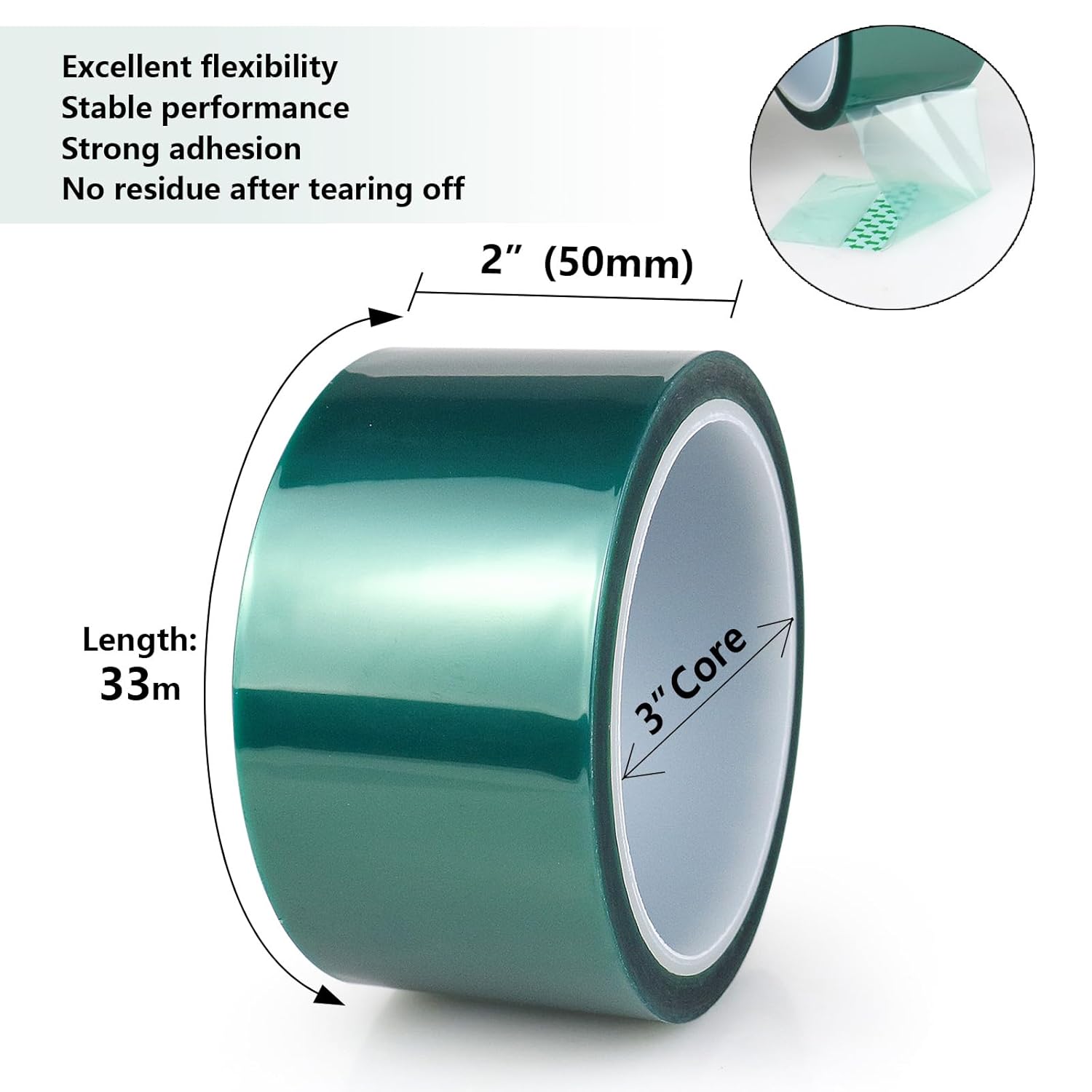
High temperature masking tape is a pressure-sensitive adhesive tape constructed with a thermally stable backing—typically biaxially oriented polyester (PET) film—coated with a silicone or high-performance acrylic adhesive system. It is designed to protect surfaces, threads, bores, and connectors from paint, powder, plating chemistry, or solder during high-heat industrial processes, then remove cleanly without adhesive residue. Operating temperature range spans 150°C to 260°C depending on adhesive specification. Unlike general-purpose masking tapes, it maintains edge sealing integrity and dimensional stability throughout the thermal cycle.
Quick Facts
- Backing material: Biaxially oriented PET film (BoPET), 36–75 µm
- Adhesive system: Silicone (rated 200–260°C) or Modified Acrylic (rated up to 150°C)
- Continuous service temperature: 200°C (silicone); 150°C (acrylic)
- Dielectric strength: ≥ 5,000 V (per ASTM D1000)
- Residue-free removal: Confirmed after full thermal cycle at rated temperature
- Core industrial uses: Powder coating masking, anodizing, PCB wave soldering, transformer winding, heat sublimation printing
- Standard roll length: 33 m; custom lengths available
Technical Specifications & Material Science
Backing: Biaxially Oriented PET Film
The BoPET backing is produced by stretching polyethylene terephthalate simultaneously along machine and transverse directions, aligning polymer chains in two axes. The result is a film with high tensile strength (>150 N/25 mm), low thermal shrinkage (<1.5% at 150°C / 30 min per ASTM D1504), and a dimensionally stable platform that prevents tape-edge curl during sustained oven exposure. Curl-free edges are critical for masking: even 0.2 mm of lift allows paint or powder ingress beneath the tape, contaminating protected surfaces.
Silicone Adhesive: Why It Outperforms Acrylic at High Temperatures
Silicone adhesives are cross-linked polydimethylsiloxane (PDMS) networks. The Si–O backbone bond energy (~450 kJ/mol) far exceeds C–C (~346 kJ/mol) or C–O (~360 kJ/mol) bonds found in acrylic systems. This structural advantage gives silicone adhesives thermal stability to 200°C continuous and short-term tolerance to 260°C without degradation into sticky residues. Acrylic adhesives soften and transfer adhesive mass to substrates above 150°C, requiring solvent cleaning before subsequent finishing steps—a costly and time-consuming process in production environments.
Standard Technical Parameters — JTT-Tape PET Silicone High Temperature Masking Tape
| Parameter | Value | Test Standard |
|---|---|---|
| Total Tape Thickness | 0.055 mm (55 µm) ± 5% | ASTM D1000 |
| PET Backing Thickness | 36 µm | ASTM D374 |
| Adhesive Type | Cross-linked silicone | — |
| Adhesive Thickness | 19 µm ± 2 µm | ASTM D1000 |
| Continuous Service Temperature | 200°C (392°F) | IEC 60454-2 |
| Short-Term Peak Temperature | 260°C (30 min max) | IEC 60454-2 |
| Tensile Strength | ≥ 150 N/25 mm | ASTM D1000 |
| Elongation at Break | ≥ 80% | ASTM D1000 |
| Dielectric Strength | ≥ 5,000 V | UL 510 / ASTM D149 |
| Adhesion to Steel (180° Peel) | ≥ 8 N/25 mm | PSTC-101 |
| Thermal Shrinkage (150°C / 30 min) | < 1.5% | ASTM D1504 |
| Flame Retardancy (film) | UL94 V-0 | UL 94 |
| Standard Roll Length | 33 m | — |
| Available Widths | 3–1,200 mm (custom slit) | — |
| Shelf Life | 24 months (5–30°C, RH ≤ 65%) | — |
Industrial Applications
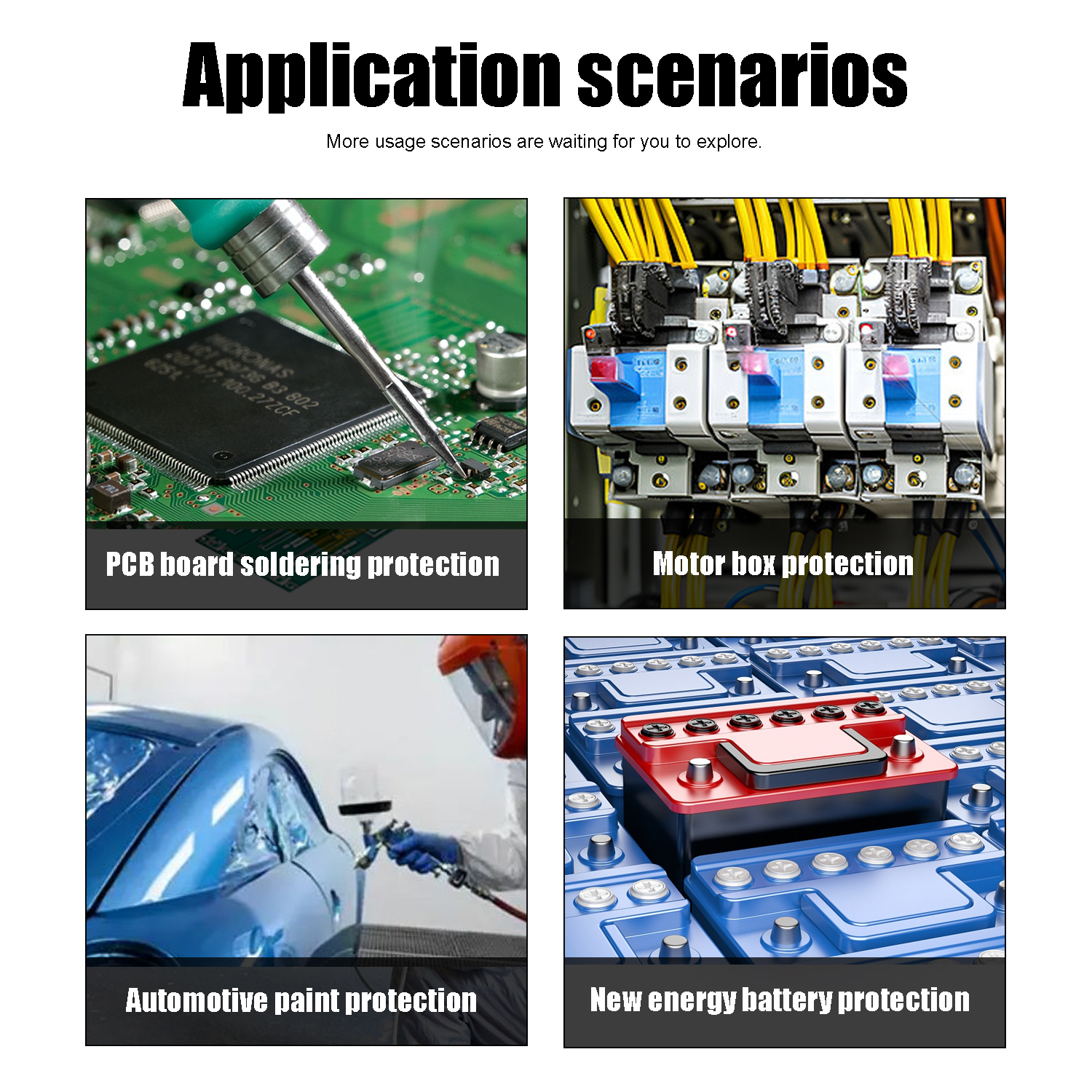
1. Powder Coating Masking (180–220°C Oven Cure)
Powder coating cure ovens operate at 180–220°C for 15–30 minutes. The masking tape must seal edges against electrostatically charged powder particles while withstanding the full cure cycle without softening, lifting, or bleeding adhesive onto the substrate. PET silicone high temperature masking tape maintains edge bleed tolerance <0.1 mm throughout the cycle and removes cleanly post-cure, leaving threaded holes, datum surfaces, and O-ring grooves contamination-free. Standard acrylic masking tapes fail above 120°C, leaving carbonized adhesive that requires abrasive or chemical removal.
2. Anodizing & Electroplating Line Protection
Anodizing processes involve alkaline etch baths (50–70°C), sulfuric acid anodizing tanks (18–22°C), and post-process oven drying (80–120°C). The masking tape must resist both chemical attack from acid/alkali media and moderate thermal exposure across these sequential steps. PET film's inherent resistance to dilute sulfuric acid and alkaline solutions, combined with silicone adhesive's non-reactive surface chemistry, ensures the tape protects precision bores, threads, and cosmetic faces without delaminating mid-process.
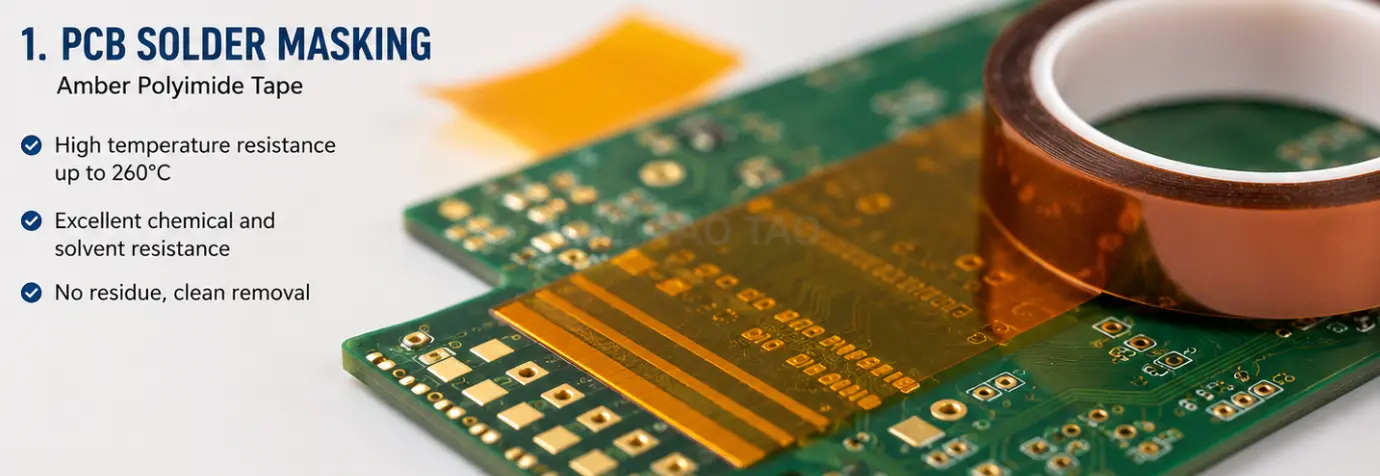
3. PCB Wave Soldering & SMT Reflow Protection
Wave soldering exposes PCBs to molten solder at 250–260°C for 3–7 seconds. SMT reflow profiles peak at 245–260°C per IPC-J-STD-020. Components, gold-plated contacts, and pre-populated connector housings that must remain solder-free require masking tape that survives the complete thermal profile without delaminating or depositing adhesive on sensitive surfaces. PET silicone tape rated at 260°C short-term is the qualified solution, removed within 30 seconds of oven exit while still warm to minimize adhesive buildup from cooling.
4. Transformer Winding & Electrical Coil Insulation
Distribution and high-frequency transformers generate winding hotspot temperatures classified under IEC 60085 thermal class F (155°C) or class H (180°C). High temperature masking tape serves double duty here: as a hold-down tape during winding operations and as a permanent interlayer insulation barrier between winding layers. With dielectric strength ≥5,000 V and elongation ≥80%, the tape conforms over wire bundles and maintains insulation continuity under vibration and thermal cycling without cracking.
5. Heat Transfer & Dye-Sublimation Printing Fixture
Dye-sublimation heat presses operate at 180–200°C for 30–60 seconds. Masking tape registers and secures transfer paper on substrates—textiles, ceramic tiles, aluminum panels—during the press cycle. The tape must release after pressing without ink migration, adhesive ghosting, or physical embossing of the printed surface. PET silicone tape's smooth, low-profile backing (<60 µm) and clean-release silicone adhesive prevent all three failure modes.
Silicone vs Acrylic vs Polyimide: How to Select the Right High Temperature Masking Tape
Three tape constructions dominate the high temperature masking market. The following comparison addresses the parameters most relevant to procurement engineers specifying tape for industrial processes.
| Parameter | PET + Silicone (JTT-Tape) |
PET + Acrylic | Polyimide (Kapton) + Silicone |
|---|---|---|---|
| Continuous Temp Limit | 200°C | 150°C | 260°C |
| Short-Term Peak | 260°C / 30 min | 180°C / 10 min | 300°C+ |
| Residue-Free Removal | ✓ Confirmed | ⚠ Risk >150°C | ✓ Confirmed |
| Dielectric Strength | ≥ 5,000 V | 3,000–5,000 V | ≥ 7,000 V |
| Backing Thickness | 36–75 µm | 36–75 µm | 12.5–50 µm |
| Chemical Resistance | Good (acid/alkali) | Moderate | Excellent |
| Unit Cost (relative) | Medium | Low | High (3–5×) |
| Optimal Application | Powder coating, PCB, transformer, sublimation | Paint masking <150°C | Aerospace, >260°C continuous |
| Width Availability | 3–1,200 mm | 3–1,200 mm | 3–610 mm (typical) |
Procurement guidance: For the majority of industrial masking applications operating at 150–200°C—powder coating, anodizing, wave soldering, transformer insulation, sublimation printing—PET silicone tape delivers the optimal balance of thermal performance, chemical resistance, clean removal, and cost efficiency. Polyimide tape is warranted only where continuous operating temperatures exceed 200°C or where backing thickness below 25 µm is required. Acrylic-adhesive PET tape is appropriate only where process temperatures reliably remain below 150°C.

Customization & Supply Capabilities
JTT-Tape is manufactured by JIAOTAOTAO New Materials Co., Ltd. (Dongguan, Guangdong), a source factory established in 2009 with 8 automated coating lines across a 6,000 m² production facility. Certifications held: ISO 9001:2015, SGS, UL94 V-0. The following OEM and custom supply services are available directly from the manufacturer:
- Custom Width Slitting: 3 mm to 1,200 mm in 0.5 mm increments, tolerance ±0.5 mm. Jumbo master rolls slit to customer-specified finished width.
- Custom Roll Length: Standard 33 m; OEM options at 50 m, 100 m, or any specified yardage. Core ID: 25 mm / 50 mm / 76 mm.
- Die-Cutting: Custom shapes, masking frames, gasket profiles, and kiss-cut sheet formats for automated dispense equipment. Die-cut tolerance: ±0.2 mm.
- Color Options: 13+ standard colors in the silicone series. Custom color matching available for production runs requiring color-coded masking systems.
- Private Label / OEM Packaging: Custom core labeling, carton printing, and spool packaging for distributor and branded product programs.
- Free Qualification Samples: 1–3 width samples dispatched within 5 business days. Include application description for adhesive weight and width recommendation.
- MOQ: 1 carton (approximately 20–50 rolls, width-dependent) for standard specifications. Blanket orders with scheduled call-off accepted.
- Lead Times: Standard widths in stock specifications: 7–15 business days ex-factory. Custom die-cut or non-standard constructions: 15–25 business days.
FAQ for Engineers & Procurement

Q1: What temperature can high temperature masking tape withstand continuously?
JTT-Tape PET silicone masking tape is rated for 200°C continuous service per IEC 60454-2, with short-term tolerance to 260°C for up to 30 minutes. Beyond 260°C, PET film undergoes dimensional distortion and silicone adhesive begins to carbonize. For applications with sustained temperatures above 200°C, polyimide (Kapton) tape rated to 260°C continuous should be evaluated instead.
Q2: Does high temperature masking tape leave residue on powder-coated or anodized surfaces?
Silicone adhesive does not transfer at rated temperatures. The cross-linked silicone network retains full cohesive strength throughout the thermal cycle, enabling clean removal with zero adhesive residue. This is verified by 180° peel testing on stainless steel panels post-30-minute soak at 200°C per PSTC-101. Acrylic adhesive tapes used above 150°C undergo thermal decomposition, leaving carbonized deposits that require solvent or abrasive cleaning.
Q3: Can this tape be used in both wave soldering and SMT reflow processes?
Yes. With a 260°C short-term rating, JTT-Tape PET silicone masking tape is qualified for wave soldering (bath temperature 250–260°C, contact duration 3–7 seconds) and SMT reflow (peak 245–260°C, IPC-J-STD-020 profile). Remove the tape within 30 seconds of exiting the oven while still warm—delaying removal as the board cools increases peel force and raises residue risk.
Q4: Is high temperature masking tape suitable for electrical insulation in transformers?
Yes. PET silicone tape provides ≥5,000 V dielectric strength per ASTM D149 / UL 510, meeting minimum requirements for IEC 60085 Class F (155°C) and Class H (180°C) winding insulation. The tape's elongation ≥80% allows it to conform over wire bundles without cracking. For winding temperatures exceeding 180°C or voltage requirements above 7,000 V, specify thicker PET constructions (75 µm backing) or polyimide alternatives.
Q5: What custom sizes are available and what is the minimum order quantity?
Width range: 3 mm to 1,200 mm in 0.5 mm increments, ±0.5 mm tolerance. Standard roll length 33 m; custom lengths (50 m, 100 m) available. MOQ is 1 carton (~20–50 rolls for standard widths). Die-cut shapes require a one-time tooling fee; no MOQ premium thereafter. Free qualification samples—1 to 3 specified widths—dispatched within 5 business days upon receipt of application details.
Q6: How should high temperature masking tape be stored, and what is its shelf life?
Store at 5–30°C, relative humidity ≤65%, away from direct sunlight, UV sources, and ozone-generating equipment. Keep rolls in original packaging, stored horizontally or on a mandrel to prevent core ovalization. Shelf life: 24 months from manufacturing date under stated conditions. Do not freeze below 0°C. Rolls exposed to temperatures above 40°C in storage should be re-qualified before use in critical masking applications.
Q7: How does JTT-Tape's high temperature masking tape compare to 3M 8905 or Nitto 973UL?
3M 8905 and Nitto 973UL are PET/silicone constructions with 200°C continuous ratings, 55–60 µm total thickness, and dielectric strength in the 4,500–5,500 V range—specifications equivalent to JTT-Tape's silicone series. JTT-Tape is manufactured at source (Dongguan factory, ISO 9001:2015, SGS verified) with direct-factory pricing, eliminating distributor margins of typically 30–60%. OEM width slitting, die-cutting, and private labeling are available without minimum tooling commitments for qualified buyers.
Request a Data Sheet, Free Sample, or Factory Quote
PET silicone high temperature masking tape—200°C continuous / 260°C short-term, ≥5,000 V dielectric strength, residue-free removal, UL94 V-0—covers powder coating, anodizing, PCB wave soldering, transformer winding, and sublimation printing applications within a single specification. Width range 3–1,200 mm, custom die-cut shapes, and private label supply are available direct from the manufacturer.
Contact the Manufacturer Directly:
- 📋 Request Technical Data Sheet (TDS): simon@jiaotaotao.com
- 🧪 Free Qualification Sample: State width, length, and application — dispatched within 5 business days
- 💬 WhatsApp / WeChat: +86-136 1277 5969
- 🔗 Full Product Range: www.clothadhesive.com/polyester-tape.html
- 📝 Online Inquiry Form: Send Inquiry →
PCB Masking Tape 280°C: PET Silicone Guide for Wave Soldering
Heat Resistant Tape: A Technical Buyer's Guide for Industrial Applications
Related Article

Need help choosing the right industrial tape?
Send us your application details, including temperature, surface material, size, quantity and current problem. Our team will help recommend a suitable tape material or custom die-cut solution.

simon@jiaotaotao.com


+86-136 1277 5969


+86-136 1277 5969
